Liu Hongcheng: The Lively Human Atmosphere at Huogongdian
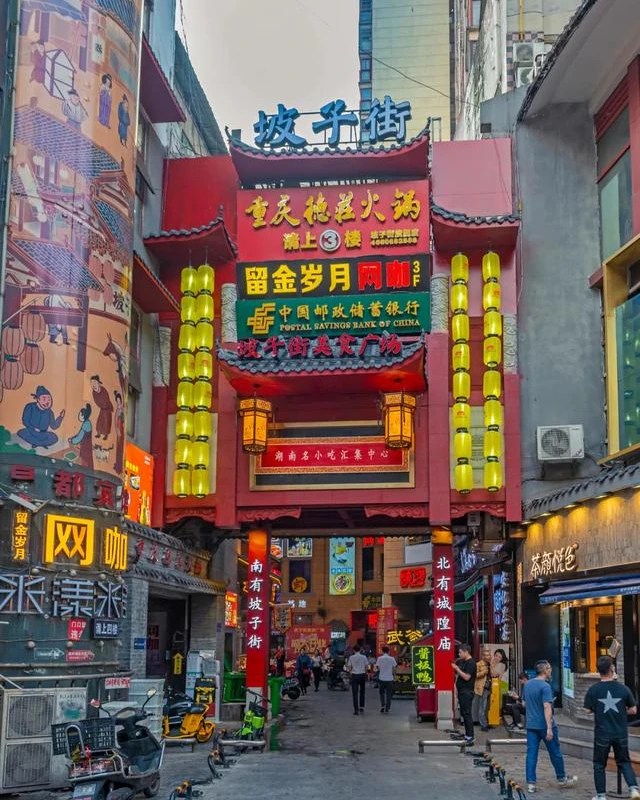
On Pozi Street in Changsha, Hunan, there was once a temple to the Fire God called 'Huogongdian', also known as Qianyuan Palace, built over 400 years ago during the Ming Dynasty. After several rounds of damage and restoration, it has become a public space integrating traditional folk culture, Fire God temple culture, and food culture. Its snacks are especially renowned throughout Hunan and across China. Mao Zedong once praised its stinky tofu, saying, 'Huogongdian stinky tofu smells offensive but tastes delicious.' Many national leaders and Chinese and foreign celebrities have tasted the snacks here, adding to its fame.
I recently had the fortune to stay in Changsha for two days, and an old friend from Changsha invited me to visit Huogongdian. Passing through the memorial archway and entering the courtyard, I felt as if I had stepped back in time: the courtyard was filled with deep-red traditional Chinese buildings. To the left stood a golden statue of Mao Zedong standing upright, with his comment on stinky tofu inscribed on the base in his calligraphy style. I wondered whether this was a genuine handwritten inscription or a replica. If genuine, it shows that the great leader truly connected with the common people—his endorsement of stinky tofu was unprecedented, and Changsha's stinky tofu must be eternally honored. In the center of the courtyard were stalls selling folk handicrafts: dough figurines, sugar paintings, paper cuttings... but the content had evolved with the times, including Barbie doll figurines, paper cuttings with trendy phrases, Transformers crafts, and so on. Yet the young artisans worked meticulously on each piece. There were also several places for worship in the courtyard, dedicated to the Fire God and Guanyin Bodhisattva, as well as a workshop for making stinky tofu; I didn't go in to examine them closely. On the right side of the courtyard, a traditional opera stage was preserved, antique and elegant, with a couplet hanging on both sides: 'Images are formed from emptiness, containing many worldly sentiments; seek reality within the void. Flavor emerges from bitterness; see loyal ministers and filial sons through the ages, all find sweetness after hardship.' It is said to have been written by a calligrapher of the Qing Dynasty, offering a profound summary of opera and life. As dusk fell, a Hunan opera troupe began performing on stage; the first piece was 'Borrowing Shoes,' with the locals pronouncing 'shoes' as 'hai.' There were many spectators in front of the stage sitting on long benches, watching with great interest. A characteristic of many traditional operas is the slow narrative pace, detailed storytelling, and lingering, melodic singing. The charm was there, but it required patience to appreciate. My old friend suggested we go to the restaurant on the left to eat while watching, so we chose a seat facing the stage, and I ate and watched simultaneously. After downing a bottle of beer, the opera was still not over. I couldn't make out the singing on stage, but I could feel that the Hunan opera actors in ancient costumes were performing earnestly. Yet I was completely captivated by the Changsha snacks on the table.
Stinky tofu, Zimei Tuanzi (sisters rice balls), braised pig trotters, Longzhi pig blood, crayfish... all were a feast for the eyes and taste buds. Each dish had its history; each had a unique flavor. No wonder it's often hard to get a seat here. But the crayfish were so spicy that I was drenched in sweat after eating just three; I dared not eat more. My old friend, also originally from Northeast China, said her eating habits had been assimilated, and this level of spiciness was nothing to her. I stopped eating spicy food, but I loved the feeling: sitting in an antique seat with several exquisite snacks that left a lingering aftertaste. Raising a glass of wine, I clinked it lightly with my friend's tea, and stories of love and friendship from the past began to unfold in our conversation. Time slowly flowed backward, life experiences spread out, and stories rose and fell in the misty steam, while friendship across time intensified imperceptibly. On stage, someone was still singing in Hunan dialect; I couldn't understand the lyrics, but they clearly served as an accompaniment to drinking, with a rhythm that made one sway. I thought to myself: those ancient emperors, generals, and literati, faced with such a beautiful scene and old friends, even as a mere traveler, they would likely feel as I did—thinking 'one must not not get drunk, yet not get too drunk,' but already finding 'it's not the wine that intoxicates, but the person intoxicates themselves.' Outside the window, the light gradually dimmed, and under the warm yellow glow, people flowed by. The lively human atmosphere emanated from Huogongdian, drifting between the high-rise buildings and the streets and alleys, walking alone yet converging into a stream.
From Jinmen Net by Liu Hongcheng


