Hunan Travel Notes: Orange Isle Head in Changsha
At 4:40 p.m. on the 18th, 2021, we took Metro Line 1 and transferred to Line 2, getting off at Orange Isle Head. Around 5 p.m., since it was overcast, the sky was dim and the light was insufficient. Before it got dark, we decided to walk to the head of the isle, where there is a statue of Mao Zedong in his youth, which would look more impressive at night. So we first took in the island scenery along the way. By the time we reached the isle head, dusk had fallen and the lights were all on—perfect timing to enjoy the night view of Orange Isle Head.
This was my second visit to Orange Isle. On the first visit, due to time constraints, we only saw the tail of the isle and missed the head. This time I wanted to make up for it.
There is a sightseeing car in the scenic area, costing 40 yuan per person for a round trip. The distance to the isle head is about 3 kilometers. I thought we would walk there while it was still light to see the scenery, and then take a single trip back. Unexpectedly, the scenic area was not reasonable at all—a single trip costs the same as a round trip, so we had to walk back. Many tourists complained about this. Why can't the scenic area be more flexible? In fact, most tourists would choose a single trip, which would increase revenue and give ordinary people more options. Why not do that?
Orange Isle Head is located at the southern end of Orange Isle, which lies in the middle of the Xiangjiang River opposite the Changsha city center. It is one of the many alluvial sandbars in the lower reaches of the Xiangjiang River, formed in the second year of Yongxing of Emperor Jin Hui (AD 305), with a history of over 1,700 years.
Orange Isle Head faces Yuelu Mountain to the west and Changsha city to the east, surrounded by water, stretching for dozens of li. The narrowest part is about 40 meters across, and the widest is about 140 meters. It is a long island and one of Changsha's famous landmarks. Sitting between famous mountains and the city, floating gracefully on the waves, it is known as "China's First Isle."
Orange Isle is a painting showcasing customs. With Yuelu Mountain as its neighbor and the Xiangjiang River as its companion, its scenery is incomparably beautiful, forming a unique landscape of "a mountain on one side and a city on the other." To the west, it overlooks the layered green peaks of Yuelu Mountain, adjacent to Yuelu Academy, Aiwan Pavilion, and the under-construction Yuelu Mountain University City; to the east, it looks down on the Xiangjiang River scenery belt, taking in the bustling city. From west to east, mountains, water, isle, and city merge into one, like a flowing painting or a magnified bonsai. Tourists step onto the isle, listen to evening fishing songs, watch the red maple leaves of Yuelu Mountain, see the soaring pavilion of Tianxin, admire the orange-laden trees, and recite the poems of ancient sages—all in joy and harmony.
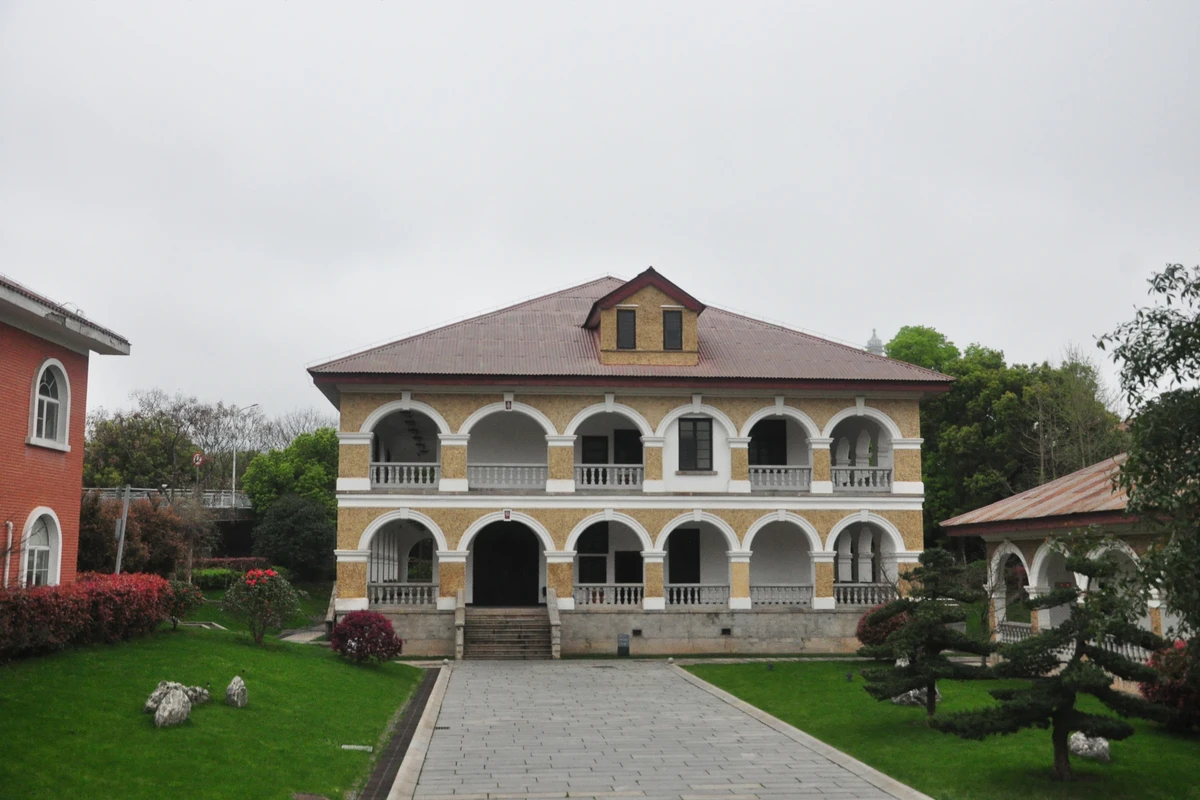
Orange Isle is a bridge connecting history. It is steeped in Hunan culture, forming a deep historical heritage. To the south, Zhu Zhang Ferry, where Zhu Xi and Zhang Shi traveled between Yuelu Academy and South City Academy to lecture, explains the grand scene of Hunan students studying eight hundred years ago; Shuilu Temple and Gongjilou tell of the prosperity of religious culture during the Yuan Dynasty; the shouts of Zeng Guofan training the Hunan Navy on the Xiang River still seem to echo over the isle; the weathered foreign consulates and luxury villas bear witness to the history after Changsha's opening as a port; Mao Zedong's heaven-shaking question from Orange Isle Head—"I ask the vast earth, who decides your rise and fall?"—changed the course of Chinese history.
Orange Isle's fame became overwhelming largely due to Mao Zedong's poem "Changsha·To the Tune of Qinyuanchun." "Alone I stand in the autumn cold, / Over the Xiangjiang River flowing northward, / At Orange Isle Head. / I see a thousand hills crimsoned through / By their serried woods deep-dyed, / And a hundred barges vying / On the river crystal-clear. / Eagles strike the sky, / Fish glide in the shallows, / Under freezing skies all creatures strive for freedom. / Vast and dim, I ask the vast earth: / Who decides your rise and fall?"
"Hundreds of companions once came here to roam, / The years of bygone days were thick with bloom. / Young we were, schoolmates, / In life's prime, / Full of scholarly enthusiasm, / Bold and unrestrained. / Pointing to the mountains and rivers, / Stirring writings, / We despised the lords of the land. / Do you still remember, / Swimming midstream, / The waves staying the flying boats?"
The young Mao Zedong, with his heroic spirit, was exactly as the poem describes. He and his generation of revolutionaries steered the course of China's ship of state, founded the People's Republic of China, and wrote a new chapter in Chinese history. So, setting foot on Orange Isle Head is not just about sightseeing—every visitor will seek the original aspiration of the revolution.
When we reached Orange Isle Head, the lights were already shining. The first thing that caught our eye was the bust of young Mao Zedong, with bright eyes gazing forward. We felt reverence and admiration. Many tourists, especially young people, took photos, posed, and offered fresh flowers, cherishing the beautiful moment.
Further ahead was the very end of Orange Isle, where we could see the rolling waters of the Xiangjiang River. The neon lights on the high-rise buildings on both banks twinkled and shifted in countless patterns.
At 6:30 p.m., we began our return trip. Since the sightseeing car didn't offer a single trip, we had to walk. On the way, we kept meeting tourists heading toward the isle head, who presumably would also have to walk back. When we reached the sightseeing car station at 7:30 p.m., the staff had already finished work and closed up. We took Metro Line 2 to Furong Square, arriving after 8 p.m. We got off, had a simple meal of wontons and dumplings nearby, then walked back to the hotel to rest. Having visited three scenic spots that day, we were indeed exhausted.


