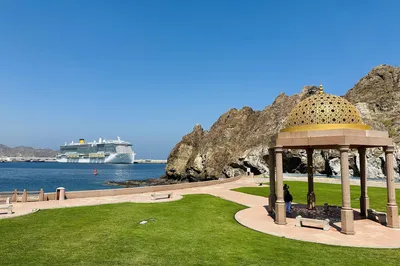
On the Road Series: Dubai & Abu Dhabi Independent Travel
Introduction to the United Arab Emirates (UAE):
The UAE is an Islamic country, 4 hours behind Beijing time. The capital is Abu Dhabi, and the official currency is the Dirham (AED). 1 Dirham is approximately 1.98 RMB. Standard power outlets are British three-pin, so a plug adapter is needed. The best time to travel is from November to March of the following year, with temperatures around 30°C. Flights, hotels, and attraction tickets can be booked in advance through Ctrip. Since November 1, 2016, the UAE has implemented a visa-free policy for Chinese citizens.
Day 1: At 06:50, take Emirates flight EK309 from Terminal 3 of Beijing Capital International Airport, aircraft type Airbus A380-800, to Dubai.
Arrive at Dubai International Airport Terminal 3 at 11:40 local time.
Grateful to relatives who took time to pick us up from the airport and take us to the hotel.
Check in at JW Marriott Marquis Hotel Dubai. Address: Sheikh Zayed Road, Business Bay, Dubai, Dubai Administrative Region, 121000, UAE.
Take the hotel's free shuttle to Dubai Mall, located next to the world's tallest building, Burj Khalifa. It is a landmark in the new city center of Dubai, known as the world's largest shopping and entertainment center, with over 1,200 stores and 160 restaurants, gathering world-renowned brands and many entertainment facilities for tourists.
Top luxury car exhibition at the mall.
Visit the Dubai Aquarium and Underwater Zoo. The huge blue aquarium wall is 51 meters long, 32.88 meters wide, and 8.3 meters high, making it the world's largest indoor aquarium, housing 85 species and 33,000 different marine creatures. Walk through the 270-degree underwater tunnel, take the elevator directly to the second floor to enjoy the beautiful underwater world, and take a glass-bottom boat to get up close with marine fish.
Burj Khalifa, Dubai's landmark, 828 meters tall, with 162 floors, 28,000 glass panels, opened in 2010. Book the best time to go up, take the direct elevator from the basement level of Dubai Mall, and in less than a minute, reach the world's highest observation deck. A 360-degree glass wall offers an unobstructed panoramic view of the Persian Gulf and all of Dubai.
Dine at The Cheesecake Factory, a well-known American chain restaurant, right across from the aquarium. The restaurant is spacious but crowded, with large portions and high prices.
Watch the world's most magnificent and dreamy musical fountain show and dazzling light show at the artificial lake in front of Burj Khalifa.
Day 2: Take a taxi to the Bur Dubai Souk by Dubai Creek, wandering through the market with its unique atmosphere.
Dubai Creek is a symbol of Dubai, a vital waterway in the city center. Sit at a riverside café, taste a local specialty drink, and watch the abras shuttling across Dubai Creek. On the opposite side is the Deira district's Gold Souk, Spice Souk, and Perfume Souk. Due to time constraints, we did not take an abra across the creek.
Dubai Museum is nearby, built on the original site of Al Fahidi Fort, which was built in 1799, the oldest existing building in Dubai. It became a museum in 1971, dedicated to the history of the Arab countries in the Middle East.
Exhibition halls of musical instruments, weapons, bows, and arrows in Dubai.
Ancient Arab houses and early wind towers.
Imitation of ancient merchant houses and an ancient-style market, displaying early Dubai handicrafts.
Dhow Square outside Dubai Museum.
Nearby are the old Dubai heritage sites - the Al Fahidi Historical Neighbourhood, a cluster of Arab historical buildings. Stroll through this renovated heritage area to truly experience the long-standing Arab architecture and culture. Walk through a maze of narrow alleys lined with sand-colored houses, Arabesque windows, and artistic small craft shops, museums, and galleries.
Return to the hotel, have lunch, and rest. In the afternoon, take a booked ride to the desert conservation area for a series of activities including desert dune bashing. On the way, see skyscrapers and quad bike dune bashing spots.
Desert dune bashing is the most authentic way to experience Arab culture. Ride a Land Rover across the vast red desert, accelerating to the top of dunes and then descending with a feeling of weightlessness, thrilling and exhilarating.
At the dune bashing base camp, enjoy an Arabic-style BBQ meal, watch performances full of Arabian charm, and experience the unique desert atmosphere.
Refuel the car on the way back to the hotel. As an oil-rich country, fuel prices are indeed cheap.
Day 3: Enjoy the outdoor scenery, have breakfast, check out, take a taxi to Dubai Bus Station, then take a bus to Abu Dhabi. [Al Ghubaibah Bus Station is located in Bur Dubai, diagonally opposite a large Carrefour supermarket. The nearest metro station is Al Ghubaiba on the Green Line, about a 3-5 minute walk from the bus station.]
Queue at Dubai Bus Station; men and women queue in separate lines. At first, not understanding, we stood in the wrong line, then re-queued and finally boarded the intercity bus to Abu Dhabi.
Two hours later, arrive at Abu Dhabi Main Bus Station, and check buses for the return trip two days later.
Take a taxi to the booked hotel, passing the iconic Five Towers complex.
Check in at Emirates Palace Hotel Abu Dhabi. Address: West Corniche Road, Abu Dhabi Corniche, Abu Dhabi, Abu Dhabi Administrative Region, 39999, UAE. This is an eight-star hotel, the largest in the Gulf region, built to host heads of state. It has 1,002 crystal chandeliers, 400 luxurious rooms and suites. Reportedly built at a cost of $6 billion, marble and gold are the main building and decorative materials. The hotel is surrounded by meticulously manicured gardens with fountains, and features a marina, helipad, and 1.3 km of beach. Its proud motto: "Satisfy all your wishes, fulfill your dream of being a king."
After a short rest, head to Capital Gate, certified by Guinness World Records as the "world's furthest leaning man-made tower." Address: 30th Street, Abu Dhabi. This mixed-use building, called Capital Gate, has 35 floors and stands 160 meters tall. Its structure begins to lean westward from the 12th floor at an angle of 18 degrees, nearly five times the tilt of the Leaning Tower of Pisa (which tilts at about 4 degrees). Unlike the Leaning Tower of Pisa, Capital Gate was designed from the start to be the "world's most inclined building."
Visit Sheikh Zayed Grand Mosque. Address: 2nd Shaikh Rashid Bin Saeed Al Maktoum St, Abu Dhabi. It is the largest mosque in Abu Dhabi (commonly called the Grand Mosque) and the world's third largest mosque. Built to commemorate the founding president of the UAE, it took 13 years, cost $5.5 billion, and its exterior walls are made of Greek white marble inlaid with shells and gemstones, surrounded by pools of clear blue water.
The world's largest hand-woven Persian wool carpet, woven by about 1,200 Iranian workers over one and a half years.
The world's largest chandelier made of gilded brass and Swarovski crystals, worth tens of millions of dollars, with thousands of Swarovski crystals manufactured in Germany.
The courtyard is paved entirely with white marble of nearly uniform color and texture. The floor patterns use natural materials such as lapis lazuli, carnelian, amethyst, and abalone shell.
Take a taxi back to the hotel. Here is the night view of the Five Towers complex.
Sit in the hotel's public area and have a cup of gold-leaf coffee; it was too expensive, so we ended up drinking the world's most expensive Coca-Cola.
Day 4: Stroll around the Palace Hotel in the early morning. After checking into Jumeirah at Etihad Towers, visit Ferrari World and Louvre Abu Dhabi.
Outside is the coast of the Arabian Gulf.
Free camel rides available.
The main entrance of the Palace Hotel.
Across the street from the Palace Hotel is the Qasr Al Watan, the Presidential Palace of the UAE. It is the official meeting place of the UAE Cabinet and the Federal Supreme Council, the highest authority, and hosts official state visits and heads of state events. It opened to the public on March 11, 2019.
Check out and change hotels, check into Jumeirah at Etihad Towers. This is the filming location for the "Fast & Furious 7" scene where cars fly between skyscrapers. It is part of the iconic Five Towers complex, overlooking the Arabian Gulf and the Corniche. Guests can enter The Observation Deck on the 74th floor free of charge, which is one of Abu Dhabi's tourist attractions and the highest point in Abu Dhabi.
After a short rest, take a taxi to Ferrari World. The world's only Ferrari theme park, also the largest indoor theme park in the world, virtually a replica of Ferrari's headquarters in Maranello.
Go-karting: experience the roar of engines and the thrill of drifting after turns, feeling the excitement of speed!
Ride a mini version of the Ferrari 250 California on the track; the vehicle drives autonomously along the track.
The world's fastest roller coaster, reaching a top speed of 240 km/h, an assault on your senses.
The largest Ferrari racing car exhibition outside Maranello, showcasing many classic and contemporary Ferrari racing models.
In the afternoon, visit Louvre Abu Dhabi on Saadiyat Island. This museum is built directly on the water by the sea, featuring a steel structure with a hollow dome and white walls standing in blue seawater, perfectly integrated and beautiful. Under the direction of Pritzker Prize-winning French architect Jean Nouvel, a museum city covered by a giant silver dome appears on Saadiyat Island. The museum city resembles a traditional Arab medina, where you can stroll on the walkway beneath the dome and overlook the sea.
Louvre Abu Dhabi has about 700 exhibits, of which 300 are on loan from French museums, and the rest are directly purchased by the museum. From the origins of humanity to modern art, the collection is divided into 12 sections, all genuine artifacts, including works by Leonardo da Vinci, Van Gogh, Picasso, and ancient treasures.
"Bactrian Princess" from Central Asian civilization, dating back to between 2200-1700 BC. They usually represent noble women and goddesses.
"Dancing Shiva" - from the 7th to the 16th century AD, Hindu art flourished. Hinduism has three major gods: Brahma, Vishnu, and Shiva, with their incarnations appearing frequently in Indian sculptures of that period, Shiva being the most common. The typical image of Shiva has many fixed postures, becoming a model of ancient Indian religious and artistic traditions. In Hindu scriptures, Shiva wears a "crown of flames," the god presiding over destruction and procreation, with three eyes and four arms. He practices asceticism in the Himalayas, learns to dance, and becomes the creator of both vigorous and graceful dances, later revered as the "King of Dance."
"Head of Buddha," Eastern Wei (534-550 AD) or Northern Qi (550-577 AD). One of the exhibits on loan from the Centre Pompidou in France to Louvre Abu Dhabi.
"Ain Ghazal" double-headed statue, circa 6500 BC, provided by the Jordan Department of Antiquities, an 8,000-year-old double-headed statue from Ain Ghazal.
Ancient Egyptian goddess Isis, a goddess in ancient Egyptian religion, whose worship spread throughout the Greco-Roman world. She was revered as the ideal mother and wife, guardian of nature and magic. She was a friend to slaves, sinners, artisans, and the oppressed, and also heard the prayers of the wealthy, maidens, nobles, and rulers. Isis is often described as the mother and protector of the falcon-headed god Horus (though some legends say Horus's mother is Hathor), and also the protector of the dead and young children.
Statue of Pharaoh Ramesses II (1279-1213 BC), originally exhibited in the "Egyptian Antiquities" section of the Louvre Museum in Paris, represents the image of the early empire.
Chinese bronze dragon carving, a fine piece rarely seen even in China.
"Marlene Lion Statue" (bronze lion statue from 1000-1200 AD from Spain or Italy).
"Archaic sphinx" (mythical sphinx) - an ancient Greek sphinx, history dates back to the 6th century BC. The sphinx is a winged monster in Greek mythology with a human head and a lion's body. This work is made of limestone and originates from Greece.
"Gandhara statue." Gandhara was a state in South Asia that existed as early as the 6th century BC, one of the sixteen great states of the Mahajanapada era. Its core area included present-day eastern Afghanistan and northwestern Pakistan. It was not only one of the cradles of Indian civilization but also played an important role in world civilization due to its location at the junction of Eurasia.
Water basin inscribed with the name Boniface (Italy, circa 1300).
"Self-Portrait" - one of Van Gogh's many self-portraits, on loan from the Musée d'Orsay in France.
"Virgin and Child" - an oil painting original by Giovanni Bellini (1480-1485), the founder of the Venetian school, depicting the Virgin Mary and her son Jesus Christ.
"Woman with a Mirror" by Titian (Tiziano Vecellio) - a painting of a woman combing her hair in front of a mirror. It is said that this girl was Titian's fiancée, although the small ring on her left hand finger indicates she was "not a marrying woman."
"La belle ferronnière" by Leonardo da Vinci - the market value has reached $450 million.
"Napoleon Crossing the Alps" by Jacques-Louis David. This painting was loaned by the Musée national des châteaux de Versailles et de Trianon to Louvre Abu Dhabi for one year. The exhibition label reads: "First Consul Napoleon Crossing the Alps, 20 May 1800."
"Wrestling Boys" by Paul Gauguin.
"Saint-Lazare Train Station" by Claude Monet (1877), an oil painting based on the actual scene. The Saint-Lazare train station is in the northwest of Paris. The steam rising from the arriving trains, mingling with the sunlight streaming through the glass roof, becomes pale blue, and everything around seems to be covered in a dreamy golden hue.
"The Fife Player" by Édouard Manet (1866), an oil painting depicting a young fife player in the Imperial Guard band.
"The Gypsy" by Édouard Manet.
"The Orchestra of the Opera" by Edgar Degas (1870), an oil painting of "epoch-making" significance, on loan from the Musée d'Orsay. In this painting, the orchestra musicians are fully focused on their performance—clarinets, cellos, violins... Viewing the painting, one can almost hear the symphony.
"A Young Emir in Reading" by Osman Hamdi Bey.
"Composition" by Piet Mondrian, a pioneer of geometric abstraction, purchased at Christie's in 2009 for $27.9 million. It is a permanent collection of Louvre Abu Dhabi.
Among the sculptures, the best is "Athena, Protective Deity of Athens."
"Goddess in a Shell," circa 150 AD.
"The Orator" (Roman Empire statue).
"Apollo Belvedere" by Primaticcio, a sculpture of the sun god Apollo by Michelangelo. The return of natural aesthetics, the human body became a popular subject.
Works by Cy Twombly (famous American abstract artist) are known for their magical use of white, combining scribbled writing, drawing, and graffiti with painting.
"Fountain of Light" by Ai Weiwei, a crystal and steel work. Ai Weiwei, ancestral home in Zhejiang, born in Beijing, lived in the US for 12 years, active in architecture, art, video, Twitter, and social and cultural commentary. This work is based on the Tower of Babel as its blueprint, one of his greatest works. A 7-meter-high steel sculpture, a slightly tilted conical structure with spiraling curved steel frames accompanied by crystal prisms and flashing bulbs, like a giant inverted chandelier.
Return to the hotel for dinner at the buffet restaurant.
Visit the supermarket upstairs in the hotel; prices are extremely high.
Day 5: Get up early and stroll around the hotel. Check out and take a bus back to Dubai.
"Palm Jumeirah" in Dubai, UAE, built at a cost of $14 billion, is the world's first palm tree-shaped island, constructed entirely from sand and rock. The island covers 12 square kilometers, extending 5.5 kilometers into the Arabian Gulf. It consists of four island clusters: The Palm Jumeirah, Palm Jebel Ali, Palm Deira, and The World. Viewed from above, Dubai appears to have two giant palm trees floating on the blue sea. Upon closer inspection, the palm trees are made up of a patchwork of different-sized islands. Completed in 2010, it is the world's largest artificial island. A sightseeing helicopter can be taken to view the entire island.
Check into Sofitel Dubai the Palm Resort & Spa, located on the iconic Palm Jumeirah. It is a Polynesian-themed resort with 170 species of plants from France covering the walls. The guest rooms contain Hermès bathroom amenities. The hotel manager, a foreigner who speaks Chinese, humorously said to us: "If you hadn't come, my Chinese might have been forgotten."
Take the hotel's free shuttle to the Atlantis Hotel to explore The Lost Chambers Aquarium and the commercial area.
Atlantis, The Palm in Dubai is themed on the legendary lost city of Atlantis, covering 113 acres, costing $1.5 billion, located on the world's largest man-made island, Palm Jumeirah. It has an 800-meter private beach and offers stunning views of the Arabian Gulf. Opened in 2008, it has 1,537 rooms. The hotel features the largest water park in the Middle East and a giant aquarium, offering guests the opportunity to swim with dolphins.
The Lost Chambers Aquarium uncovers the mystery of the ancient city of Atlantis, which has been lost in the deep sea for millennia. It consists of underwater halls, corridors, and tanks, with 30 interactive displays of various sizes, housing over 86,000 marine animals from more than 280 species. Through transparent viewing walls, explore beluga whales, sharks, rays, and other unique marine life.
The Palm at sunset, on the way back to the hotel.
Day 6: Enjoy the views at the hotel. After breakfast, check out and go to Atlantis Monorail Station to leave the Palm.
Atlantis Monorail Station, single fare is 15 AED.
Take the driverless monorail off the Palm. Only 4 stops, less than 10 minutes.
Transfer to a taxi, check into Madinat Jumeirah - Dar Al Masyaf (Summer House). This is located on Jumeirah Beach, and its most distinctive feature is its canal system. Guests can choose to travel by boat, electric buggy, or on foot. The hotel rooms are in villas, each with 9 rooms, with dedicated butler service during the stay. The room balcony overlooks the canal. From 7-9 PM daily, the villa offers happy hours with free drinks and snacks in the villa's living room.
Walk to a small boat dock by the river and take an abra (traditional wooden boat) to start a canal tour.
Arrive at Jumeirah Beach Park for a close-up view of the Burj Al Arab.
Madinat Jumeirah Souk, a retro Arabian market located within the luxurious Madinat Jumeirah hotel. Stroll among ancient towers, lantern-lit corridors, and narrow waterways, feeling as if time has reversed. The market is even more pleasant at night—numerous restaurants and cafés, each with its own character, are ideal rest stops. Have dinner at a Turkish restaurant.
Day 7: Early morning view of the main entrance of Madinat Jumeirah.
Walk to the hotel's buffet breakfast area for a complimentary breakfast.
Check out and change hotels, check into Ibis One Central Dubai. Address: Trade Centre District, Dubai International Financial Centre, Dubai, Dubai Administrative Region, 9914, UAE.
Visit relatives in Dubai's Chinatown.
The shop run by relatives, filled with a dazzling array of goods.
Day 8: After breakfast at the hotel, head to Dubai International Airport Terminal 3 to take Emirates flight EK308 (Dubai→Beijing) at 11:00, arriving at Beijing Capital International Airport Terminal 3 at 22:30 Beijing time. The trip to Dubai and Abu Dhabi concludes successfully.
On the Road Series: Next episode even more exciting. Stay tuned!