A Fated Encounter with Putuo Mountain's Heavenly Buddha Land, Check-in at Baishuiyang for Surfing, Balancing Pilgrimage and Family Fun
Every scenic spot on a journey is like a pearl, and itinerary planning is like the thread that strings them together, creating a route. Putuo Mountain is a supreme sacred place in the hearts of many Buddhists, a lifelong dream for the elderly in the family. As the bodhimanda of Guanyin Bodhisattva, it is both a peaceful Buddhist sanctuary and an excellent tourist attraction. Baishuiyang, currently the world's 'shallow water plaza,' is a water paradise for children and not to be missed. This trip lasted only six days, from Guangdong to Zhejiang, crossing three provinces. We considered planes and high-speed trains but finally chose to drive. The farthest destination was Putuo Mountain, with Baishuiyang on the way home as a midway stop. Taking a train to Baishuiyang would require first going to Ningde and then transferring for another three hours to reach Shuangxi Town. Driving was much more convenient. After three years of the pandemic, we finally made the trip.
2023.7.15 - Drive from Chaozhou to Putuo Mountain, overnight stay in Fenghua City
2023.7.16 - Fenghua City - Putuo Mountain - Luojia Mountain - Nanhai Guanyin
2023.7.17 - Puji Temple - Foding Mountain - Huiji Temple - Fayu Temple - Ningbo Drum Tower - Old Bund - Tianyi Square
2023.7.18 - Moon Lake - Tianyi Pavilion Museum - Ningbo Museum - Shuangxi Town
2023.7.19 - Mandarin Duck Creek - Baishuiyang - Xiaotao Town Yudai Hot Spring
2023.7.20 - Drive back to Chaozhou
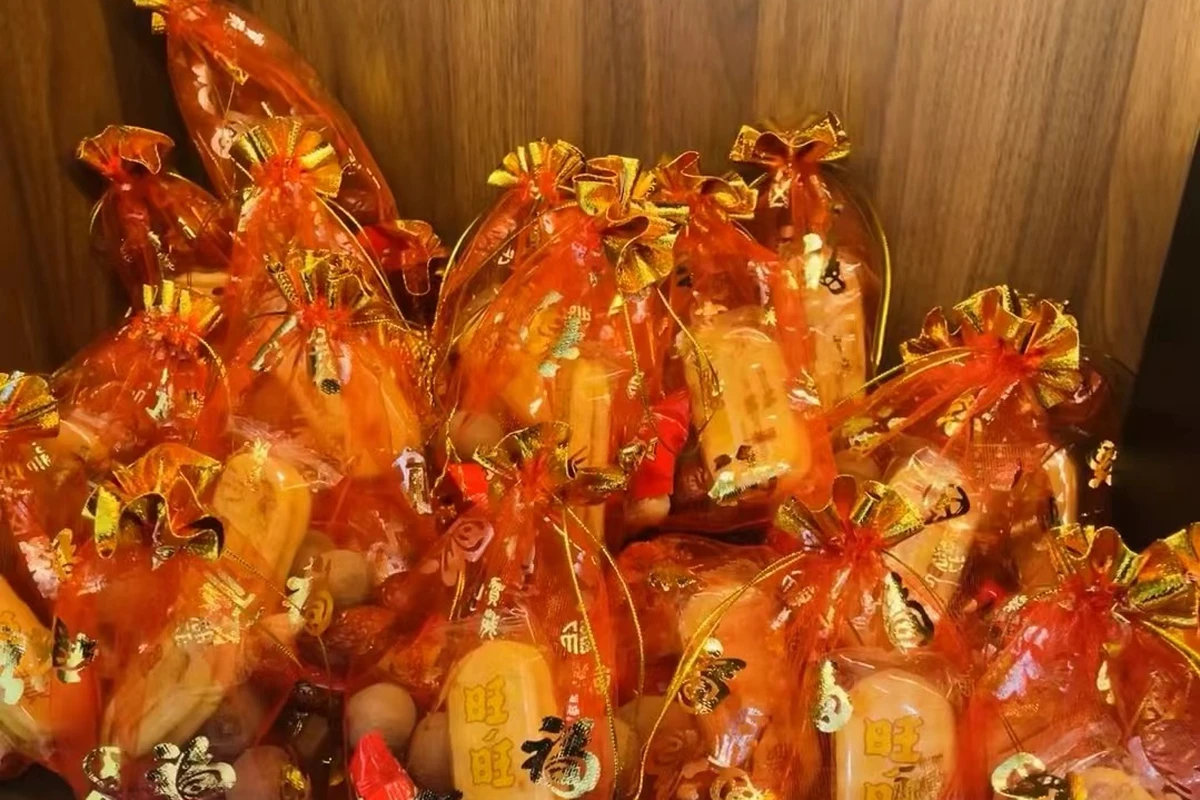
Pre-trip preparations: ID cards, disposable raincoats, hats, comfortable walking shoes, heatstroke medication, cash (for purchasing incense tickets), prayer incense (bought a large bucket in advance), small gift bags for prayer, big oranges, red dates, peanuts, candies, Wangwang snow cakes (symbolizing good things happening). Prepared 30 small offerings and four large offerings.
Putuo Mountain is an island. Besides public buses, the only transportation on the island is walking. Residents only use bicycles. If time is limited to 1-2 days, you need to clarify whether your purpose is to pray, seek wealth, or sightsee. Then focus accordingly—it's impossible to visit every spot.
Putuo Mountain sees heavy crowds year-round. On the 1st and 15th of the lunar month, or major Buddhist festivals, it's even more crowded, and plans often change. We traveled during summer vacation, with large crowds. Waiting times are unpredictable, especially during the morning peak for entering the island and evening peak for leaving. It's better to arrange accommodation on the island.
At noon, five of us set off by car. By 10 p.m., we stopped in Fenghua City for the night, just two hours away from Zhujiajian Pier in Zhoushan.
Arriving at Zhujiajian Pier at 10 a.m., the ticket hall still had a few manual windows, but there were many people. It's recommended to pre-book tickets online via the 'Zhoushan Haixing Ferry' WeChat official account. The main entrance ticket is 160 yuan/person, round-trip ferry ticket 60 yuan/person. Boarding with an ID card is quick and convenient. The crowd wasn't too heavy today; we waited about 10-15 minutes to board the ferry. The ferry ride took about 15 minutes, all on large boats, not very rocky.
Exiting the hall, the bus station is in the middle. To the left is the West Heaven Scenic Area, mainly for accommodation—West Sand Area 1 and 2 are there, with few attractions. To the right is the South Heaven Gate Scenic Area, near the Purple Bamboo Forest. Entering through the Putuo Sacred Land gate, we had booked Jinsha Xiaoyuan. We called the owner ahead to take our luggage to the hotel, and just brought offerings and personal items. Walking forward from Putuo Sacred Land for 5 minutes brought us to the Luojia Mountain ferry terminal. Opposite is a small food street. We found a random restaurant. Island prices are really high—we ordered 6 vegetable dishes and 5 bowls of white rice for over 200 yuan.
Our first stop was Luojia Mountain. Tickets for Luojia Mountain (including ferry) are also booked via the 'Zhoushan Haixing Ferry' official account, at 70 yuan per person. Staff informed us we had 1.5 hours to visit and had to return on the same boat. In reality, many people didn't adhere to the time, and no one checked tickets on return.
Luojia Mountain is located about 5.3 km southeast of Putuo Mountain. Legend says it is the sacred place where Guanyin Bodhisattva attained enlightenment and practiced. The Avatamsaka Sutra states: 'In this place there is a mountain called Potalaka, where a bodhisattva named Avalokitesvara resides.' According to the Republic-era 'New Record of Putuo Luojia,' 'Luojia Mountain is an isolated island in the sea, southeast of Putuo Mountain. Those who pilgrimage to worship the mountain must also visit this island.' Since ancient times, Putuo and Luojia have been inseparable, with the saying, 'If you haven't reached Luojia Mountain, you haven't completed your pilgrimage to Putuo.' To distinguish the two islands, one is called Putuo Mountain, the other Luojia Mountain.
Luojia Mountain has only one uphill path on the left, all stone steps. The first section has no temples or attractions; later sections include Earth God Temple, Wensi Pavilion, Maitreya Hall, Miaozhan Pagoda, Qielan Hall, Pumen Song, Yuanrong Zen Court, Great Compassion Hall including Crystal Palace, Forty-eight Vows Pagoda, and Dajue Zen Court. The famous 'Dripping Water Guanyin' on Luojia Mountain is inside the Crystal Palace, behind the right side of the Great Compassion Hall. It's small and easy to miss. Water drips from the lotus vase in Guanyin's hand. Many people collect a few drops in their own bottled water. If you don't have a cup, you can just wipe it on your face.
Arriving at 'Entering Liberation Gate,' continue until exiting the back mountain gate to see the Luojia Mountain stele and panoramic sea views. After worship, return the same way to see the 'Leap Out of Suffering' archway. The round trip involves two ascents and two descents, and completing it within 85 minutes is not easy.
[Nanhai Guanyin]
Return to the pier from Luojia Mountain ferry, walk to the right for 15 minutes to reach the Purple Bamboo Forest Scenic Area. Main attractions include 'Bukenqu Guanyin Temple,' Chaoyin Cave, Purple Bamboo Forest, Guangming Pool, and the Nanhai Guanyin statue. Another 15 minutes brings you to the must-visit spot: the Nanhai Guanyin Sacred Site. Right by the sea, aside from the heat, the scenery along the way is nice.
The Nanhai Guanyin statue is a landmark of Putuo Mountain. The entire statue is 33 meters tall, with a 13-meter base, an 18-meter bronze statue, a 2-meter lotus seat, and weighs over 70 tons. Made of imitation gold bronze precision casting, composed of 96 copper panels, incorporating 6500 grams of gold for the face. No matter the angle, it feels like Guanyin is looking at you. The statue features Amitabha on the crown, holding a dharma wheel in the left hand, the right hand in the abhaya mudra, with a solemn and compassionate expression, embodying Guanyin's 'dharma body of wisdom eyes viewing all beings and vast vows as deep as the sea.'
Entering Nanhai Guanyin requires a incense ticket of 6 yuan per person, cash only. Opening hours: 6:00-17:30. Plan your time accordingly.
From here, you can also see Luojia Mountain across the water, resembling a large Buddha lying peacefully on the misty Lotus Ocean, with head, neck, chest, abdomen, and feet clearly distinguishable, hence known as the 'Great Reclining Buddha on the Sea.'
Returning from Nanhai Guanyin to the Purple Bamboo Forest Scenic Area, we were exhausted and skipped Bukenqu Guanyin Temple. Fortunately, our accommodation was near the Purple Bamboo Forest parking lot in Longsha Community, a 5-minute walk away, right by the sea. In the evening, we could go down to play in the sand and surf. That day we walked 19,000 steps—really not easy.
Early the next morning, we set out and walked 25 minutes from the inn to Puji Temple.
Puji Zen Temple, also known as Front Temple, was first built in the 36th year of Qianlong's reign (1771) and renovated in 1937 by Living Buddha Sheng Lu, the head lama of Puji Temple, with copper tiles on the main hall. It has a history of 251 years. In 1731, 70,000 taels of silver were granted for expansion, making it the largest temple on Putuo Island and the main shrine dedicated to Guanyin. Entering Puji Temple requires a incense ticket of 5 yuan per person, cash only. At the entrance, you can hire a guide for worship, but I think sincerity is what matters—just devotion is enough.
In front of Puji Temple is the Lotus Pond, called Haiyin Pond, also known as the Release Pond, built during the Ming Dynasty. There are three bridges over the pond. The eastern bridge is an arch bridge called Yongshou Bridge, built in 1586. The middle bridge connects the main gate of Puji Temple to the Imperial Stele Pavilion. In the center is a pavilion called Eight-Sided Pavilion, facing the temple gate. The third bridge is Xiaoyao Bridge; crossing it is said to bring freedom.
After leaving Puji Temple, the Duobao Pagoda is by the Lotus Pond. It is the oldest well-preserved structure on Putuo Mountain, built in 1334 during the Yuan Dynasty. The pagoda is 32 meters tall, with four sides and five stories, no eaves. The upper three stories each have a carved ancient Buddha on each side, with gentle and beautiful expressions, especially the Guanyin statue, appearing calm and dignified. The background features the Eighteen Arhats, each with distinct expressions.
Duobao Pagoda, along with the Nine-Dragon Hall (the only surviving Ming Dynasty palace from the Forbidden City in Nanjing) at Fayu Temple, the Yangzhi Guanyin Stele (carved based on a painting by the famous Tang painter Yan Liben) at Yangzhi Nunnery, and the rare species of hornbeam tree on Foding Mountain, are collectively known as the 'Four Treasures of Putuo.'
From Puji Temple, walk left for 5 minutes to the bus station, take Bus No. 2 to the cable car station, then take the cable car to Foding Mountain. There are two ways to reach Foding Mountain: climb the 1,088 steps along Xiangyun Road, or take the cable car. We chose the cable car up and walked down. The Putuo Mountain cable car operates from 6:30-17:00 in summer-autumn and 7:00-16:30 in winter-spring. One-way ticket is 40 yuan, round-trip 70 yuan, also pre-booked via the official account.
The highest point on Putuo Mountain is Foding Mountain, also called Bodhisattva Summit, at 291.3 meters above sea level. Not going to Foding Mountain means you haven't truly visited Putuo. After the cable car, follow signs to Huiji Temple.
Huiji Temple, commonly known as Foding Mountain Temple, was first established by Ming monk Yuanhui and became a temple in 1793. It has been expanded to its current large scale and is one of the three must-visit temples on Putuo. It is the highest temple on the island. Entry requires a 5 yuan incense ticket, cash only.
Huiji Temple's mountain gate is simple, inscribed with 'Huiji Zen Temple.' The main hall, Mahavira Hall, enshrines a statue of Sakyamuni Buddha, with Ananda and Kasyapa standing on either side. On both sides are ten statues representing the 'Twenty Devas.' Behind are wooden statues of Guanyin and Thousand-Armed Guanyin.
The Guanyin Treasure Hall houses a 2.7-meter Guanyin statue and 123 carved stone Guanyin images embedded in the walls, collected from famous painters of Tang, Song, Yuan, Ming, and Qing dynasties. It is said to be 'responsive to all prayers' and is considered the most efficacious temple on Putuo.
After leaving Huiji Temple, head left to Xiangyun Road. This stone-paved road connects Fayu Temple and Foding Mountain, with 1,088 steps, the only route before the cable car was built.
The most famous attraction on Xiangyun Road is the 'Sea and Sky Buddha Land' rock carving, located at a turn midway. The four characters, inscribed by Ming general Hou Jigao, are bold and vigorous. This phrase has become synonymous with Putuo Mountain, as significant as 'Unique Under Heaven' on Mount Tai. On top of that rock is another stone, high and precarious, inscribed with 'Cloud Support Stone.' To the right, a large rock bears the inscription 'Namo Avalokitesvara Bodhisattva.'
It took over 30 minutes to descend the 1,088 steps to Fayu Temple. Looking back at pilgrims making three prostrations every step on Xiangyun Road, I felt moved and admired.
[Fayu Temple: The Supreme Honor of the Nine-Dragon Caisson]
Fayu Temple, also known as Back Temple, was named after receiving the imperial plaque 'Tianhua Fayu' in 1699. The Nine-Dragon Hall is the most splendid, housing one of Putuo's three treasures: the 'Nine-Dragon Caisson.' Upon entering, you first see the vivid Nine-Dragon Wall beside the lotus pond.
Fayu Temple was our last stop on Putuo. Around noon, we had a simple vegetarian meal there for 5 yuan per person. The taste was slightly salty but okay. After eating, we washed our own dishes—the most affordable meal on Putuo.
After lunch, we queued for the bus to the pier, called the innkeeper to have our luggage sent to the pier, and ended our Putuo pilgrimage, heading to Ningbo city center.
[Ningbo] Drum Tower - Old Bund - Tianyi Square
Arriving in Ningbo city center, we checked into Boju Hotel (Drum Tower branch), near Moon Lake Park and the Drum Tower, a 5-minute walk away. It was evening, so we rested and then started the nightlife.
Ningbo isn't a typical tourist city, but it has a deep cultural heritage. The nightlife of a metropolis must be experienced. Our first stop was the Drum Tower.
Also called Hailou Tower, the Drum Tower is the only remaining ancient city gate tower in Ningbo. Its architecture is a blend of Chinese and Western styles, with a traditional base topped by a Western-style clock tower—'making the past serve the present, and foreign things serve China.'
Today, the area around the Drum Tower is a pedestrian shopping street with traditional architecture. We had dinner there, tasting the famous Master Pan fried chicken leg (crispy skin, juicy meat), youzanzi (salted twisted dough sticks), and the renowned Ningbo tangyuan (sweet dumplings, similar but with added fruit fillings).
After dinner, we took a taxi to Ningbo Old Bund. How to describe it? This port opened 20 years earlier than Shanghai's Bund and once overshadowed it. Now it's a young people's hangout, especially the bar street, vibrant and lively. Order a suitable drink and wait for the right crowd.
Walking slowly along the riverside, the early summer river breeze blew gently, the water splashed under tidal pressure, the thin night was lit by colorful neon lights, and the European-style buildings along the bank added an exotic charm.
Moving on, we reached Tianyi Square. This is a bustling commercial area in central Ningbo, with shopping malls and restaurants. In the evening, crowds of tourists stroll and enjoy the sights. The musical fountain in the square adds a beautiful way of life to the square—a very worthwhile place to visit.
The day's itinerary ended. Counting steps, we had walked a solid 30,000 steps. I admired the elderly and children in our group for persisting all the way.
The next morning, we had breakfast near the hotel and then walked to Moon Lake, a 10-minute walk.
Moon Lake is a crescent-shaped lake in central Ningbo, an important green lung of the city. The park, combined with the adjacent renovated ancient houses, blends nature and culture beautifully—every step offers a view.
Moon Lake Park is large, divided into north and south sections by Liuting Street. According to history, the lake was dug in 636 AD during the Tang Dynasty, and the Ten Islands of Moon Lake were completed in the Song Dynasty. The lake is beautiful, with few tourists in the morning, ideal for photographers. A 10-minute walk from the lake brings you to Tianyi Pavilion Museum.
With Mr. Yu Qiuyu's description of 'The Stormy Tianyi Pavilion' in mind, I knew about its steadfast preservation over millennia, but also the burdens it carried. I was eager to see its current state. This year we finally made it. Adult ticket is 30 yuan; seniors over 70 and students under 18 are free but need to purchase a real-name ticket. This is a popular stop for tour groups.
Tianyi Pavilion was once China's oldest, most extensive, and best-preserved private library museum. Its founder, Fan Qin (1506-1585), was a renowned Ming dynasty bibliophile from Yin County (now Ningbo). He, along with Zhang Shiche and Tu Dashan, were known as the 'Three Simas of the East Sea.'
After over 430 years, Tianyi Pavilion is a model of Ningbo's book culture and a symbol of Chinese book culture. It's not just a library; the courtyard is deep and layered, with Jiangnan-style garden landscapes, ponds with Taihu stones. The courtyards are mostly interconnected; sometimes you wander and suddenly find yourself back where you started. Inside, there is a unique mahjong museum built on the Chen Clan Ancestral Hall, displaying the origins of mahjong and its connection to Ningbo, with mahjong sets from around the world.
The Tianyi Pavilion scenic area is quite large. You can follow the main tour route for a complete visit, with simple text descriptions at each spot. For more detail, scan QR codes for audio guides, or eavesdrop on tour guides—more fun with actual scenes.
[Ningbo Museum]
After visiting Tianyi Pavilion, we returned to the hotel, packed our luggage, and drove to the next stop: Ningbo Museum. Besides the museum's own value, it was also a filming location for the recent 'Three-Body Problem' series. The familiar architecture and large staircase were instantly recognizable. The building itself is an 'exhibit'; many come just to see it. The exterior walls use old bricks and tiles dismantled from old Ningbo buildings, some walls are slanted, and you can still see marks from firing.
Admission is free, but you need to follow its official account and make a reservation in advance. Scan a QR code to enter. Closed on Mondays.
The museum's exhibitions include thematic displays, special exhibitions, and temporary ones. Total exhibition area is 8,000 square meters, with a 2,600-square-meter temporary hall on the first floor. The second and third floors are permanent exhibition halls totaling 5,400 square meters, featuring 'Eastern Divine Ship: Ningbo Historical Exhibition,' 'Old Ningbo: Folk Customs Exhibition,' and 'Bamboo Carving Art: Qin Cheng-nian's Donated Collection of Ming-Qing Bamboo Carvings.'
Ningbo Museum is large with much to see. Originally planned for 1 hour, we spent a full 2 hours before realizing it was past 1 p.m. and we hadn't had lunch. We hurried to Tan Yu for a hearty meal and then continued driving to Shuangxi Town, a 6-hour journey, halfway back home.
Fujian is mostly tunnels; the longest tunnel took over ten minutes to drive through. The kids said it felt like Buzz Lightyear. Finally, at 8 p.m., we arrived in Shuangxi Town, Pingnan County, the closest town to Baishuiyang. We checked into a hotel and had dinner.
Because it's near Baishuiyang, the town was lively at night, mostly with tourists preparing for the next day. Prices were reasonable. Water guns, slippers, and waterproof phone pouches for the next day's water play could be bought here. Accommodation was average but had to be booked.
Mandarin Duck Creek Scenic Area is China's main Mandarin duck reserve. It features wild mandarin ducks, macaques, and rare plants, integrating streams, waterfalls, peaks, rocks, and caves. The highlight is 'Baizhangji Water Curtain Cave,' ranked first among the country's five largest water curtain caves.
Mandarin Duck Creek is a pure natural landscape, with spectacular canyons and waterfalls. Although not as famous as some major waterfall attractions, it is still beautiful. The morning mountain path was cool and refreshing, perfect for hiking.
Mandarin Duck Creek and Baishuiyang are 12 km apart, an 18-minute drive. Individual tickets are expensive, so it's better to buy a combined ticket with the electric cart, at 145 yuan for adults.
Unfortunately, the cliffside walkway was closed for maintenance, reducing the attractions and requiring more climbing—not good for legs. But for those with acrophobia, it was a blessing. We no longer saw mandarin ducks. The entire hike took over four hours, first downhill then uphill, generally steady and manageable.
When we arrived, there were many tour groups, but they soon disappeared. They didn't do the full route; they turned at Lianxin Terrace toward Baizhangji Water Curtain Cave, missing the Biyi Peak, Fairy Waterfall, and Qianji Waterfall—one reason we dislike group tours.
After reaching the Immortal Bridge, we started a strenuous climb. Just before Baizhangji, it started raining. With no shelter, we had to brave it. Luckily, the rain was light; mountain rain comes and goes quickly. At Baizhangji, the rain stopped and the sun came out, creating a post-rain fairyland.
Then came the Haohan Slope, said to take half an hour. Lacking courage, we opted for the vertical cave elevator at 40 yuan per person, reaching the exit in one minute. The cave elevator at Mandarin Duck Creek is built inside the canyon, costing over 23 million yuan, with a height of 120 meters (equivalent to 40 stories), entirely hidden within the mountain. It's a rare shaft elevator in East China.
Exiting the elevator, it was another 20-minute walk to the main gate.
We happily encountered many macaques, plump and jumping to snatch bags from tourists. We bought a bag of buns (15 yuan) from staff to feed them, enjoying the spectacle.
Leaving Mandarin Duck Creek past noon, we ate instant noodles in the car for lunch to save time, then headed straight to Baishuiyang.
Baishuiyang is praised as 'a unique landscape,' 'the world's wonder, a cosmic mystery,' and currently the world's 'shallow water plaza.' The riverbed distributes water evenly, clean without gravel. Walking on it, water just covers the ankles. Under sunlight, the glistening water appears bright white, hence the name Baishuiyang.
From the parking lot to the water play area, you must take the scenic electric cart for 15 minutes; walking is not feasible, and a ticket for the cart is basically required. For seniors over 70, a ticket costs 10 yuan with ID—very reasonable. Upon entering, each person receives a pair of white cotton socks to wear over shoes for slip resistance in the water—a first for us. Remember to change into slippers, bring waterproof phone pouches, and a change of clothes.
Other parts of Baishuiyang also have nice scenery, but the water play plaza is amazing. The kids' water guns came in handy, and they had a blast. Other attractions were mostly ignored.
Between the middle and lower sections, there is a nearly 100-meter natural slide, safe for bare skin, known as the 'natural surfing pool.' Sunlight, white water, and erosion marks create a colorful riverbed. Kids tried surfing at 75 yuan per person, with unlimited rides—a great deal. They were exhausted but refused to rest.
We finally got out around 4 p.m., completely soaked. The waterproof phone pouches worked well even submerged. After changing into dry clothes, we exited and drove to the next stop: Yudai Longquan Hot Spring Hotel in Xiaotao Town, Yong'an—a 3.5-hour drive. Every trip ends with a hot spring, and this was no exception.
Yudai Longquan Hot Spring Hotel is located in Hukou Basin, Xiaotao Town, Yong'an, built around the Yudai Longquan spring. The hot spring water naturally emerges from underground and is pumped directly to the pools. Surrounded by mountains, it's elegant. As long as you book a room, you can use the outdoor hot springs and swimming pool for free. There is also a Yiju campsite with 1.5-meter beds.
In the evening, after soaking in the hot spring, we had a beer and some barbecue skewers, feeling wonderfully relaxed, all fatigue gone.
The next morning, after the hotel's buffet breakfast, we drove home. We heard that Ganru Rock and Taoyuan Cave are nearby, to be explored next time.
Travel Diary
1. 2023.7.15 - Drive from Chaozhou to Putuo Mountain, overnight in Fenghua City
2. 2023.7.16 - Putuo Mountain - Luojia Mountain - Nanhai Guanyin
3. 2023.7.17 - Puji Temple - Foding Mountain - Huiji Temple - Fayu Temple - Ningbo Drum Tower - Old Bund - Tianyi Square
4. 2023.7.18 - Moon Lake - Tianyi Pavilion Museum - Ningbo Museum - Shuangxi Town
5. 2023.7.19 - Mandarin Duck Creek - Baishuiyang - Xiaotao Town Yudai Hot Spring
Travel Information
Hotel Index
Attraction Guide
Ticket Index
Website Navigation
Travel Index
Cruise Index
Corporate Travel Index
Franchise Cooperation
Distribution Alliance
Friendship Links
Corporate Gift Card Procurement
Insurance Agency
Agent Cooperation
Hotel Franchise
Destination and Scenic Area Cooperation
More Cooperation
About Ctrip
Ctrip Highlights
Contact Us
Careers
User Agreement
Privacy Policy
Business License
Security Center
Ctrip Content Center
Intellectual Property
Trip.com Group Algorithm Disclosure