2025 September Quanzhou + Shishi + Xiapu 8-Day Self-Drive Trip
This post is mainly for record-keeping, and I'll share some personal feelings. If you don't like it, feel free to skip it. Please no hate!
Time: August 30 to September 6, traveling off-peak (school started, so there were significantly fewer people)
Transportation: Self-drive from Shanghai to Quanzhou, one-way distance 1,000 km. Two people alternated driving, with only meal stops at rest areas—no other breaks, 11–12 hours total. I accepted ride-sharing orders both ways. On the way there, I stopped in Yiwu for lunch, totaling 13 hours. On the return trip, I started from Xiapu and stopped in Huzhou, totaling 8 hours. Japanese car with a 40-liter tank, used 4 tanks round trip (~1,000 RMB), tolls ~1,100 RMB.
Notes: Sun protection! Sun protection! Sun protection! (Bring a hat, arm sleeves, and sunscreen)
August 30: Self-drive from Shanghai to Quanzhou
August 31–September 1: Quanzhou Licheng District (Qingjing Mosque, Guanyue Temple, Tianhou Palace, Chengtian Zen Temple, Confucian Temple, Bell Tower, West Street, Kaiyuan Temple, Puppet Show, Luoyang Bridge, Xunpu Flower Hairpin)
September 2: Shishi City (Yongning Ancient Town, Luoji Temple, Xiangzhi Pier Little Weihai)
September 3–4: Xiapu (Gaoluo Bay, Haiwei Cape, Dajing Beach, Xiawei Island, Lvxia Lighthouse)
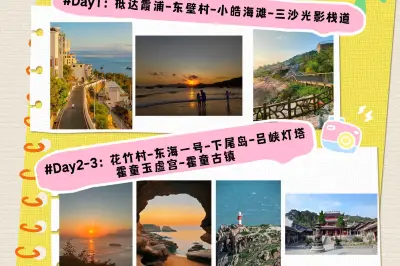
September 5: Xiapu Dongbi Village, Huazhu Village (Dongbi, Liuyun Zen Temple, Huazhu Sunrise)
September 6: Return to Shanghai
Quanzhou may not be large, but it is a very distinctive city with an excellent overall tourism atmosphere. I would love to visit again if I have the chance.
Accommodation: I stayed in a homestay near the Confucian Temple (Sanbu Wushi). The Confucian Temple is roughly central among the many attractions, surrounded by many food stalls and snacks. It was recommended by a friend who had recently visited Quanzhou. During peak season, it costs about 300 RMB per day, but since we just missed summer vacation, it was less than 200 RMB per day. It was an ordinary homestay, convenient for transportation, with decent bathroom and space. The host also recommended nearby parking and even came to pick us up on arrival. The service was pretty good. I suggest choosing a hotel near the attractions—convenient transportation is important.
Food: There are many Minnan delicacies, mostly light in flavor, and plenty of snacks, many of which are soups or broths. I hardly had any big meals in Quanzhou. Also, Quanzhou's creative cultural products are excellent. There are many shops selling such items, and even chain stores or unique shops have their own designs. Most give them away for free upon checking in, and some require a review. The quality is decent—items include fridge magnets, bag charms, figurines, postcards, coasters, etc. Freebies are worth grabbing; if buying, shop around first.
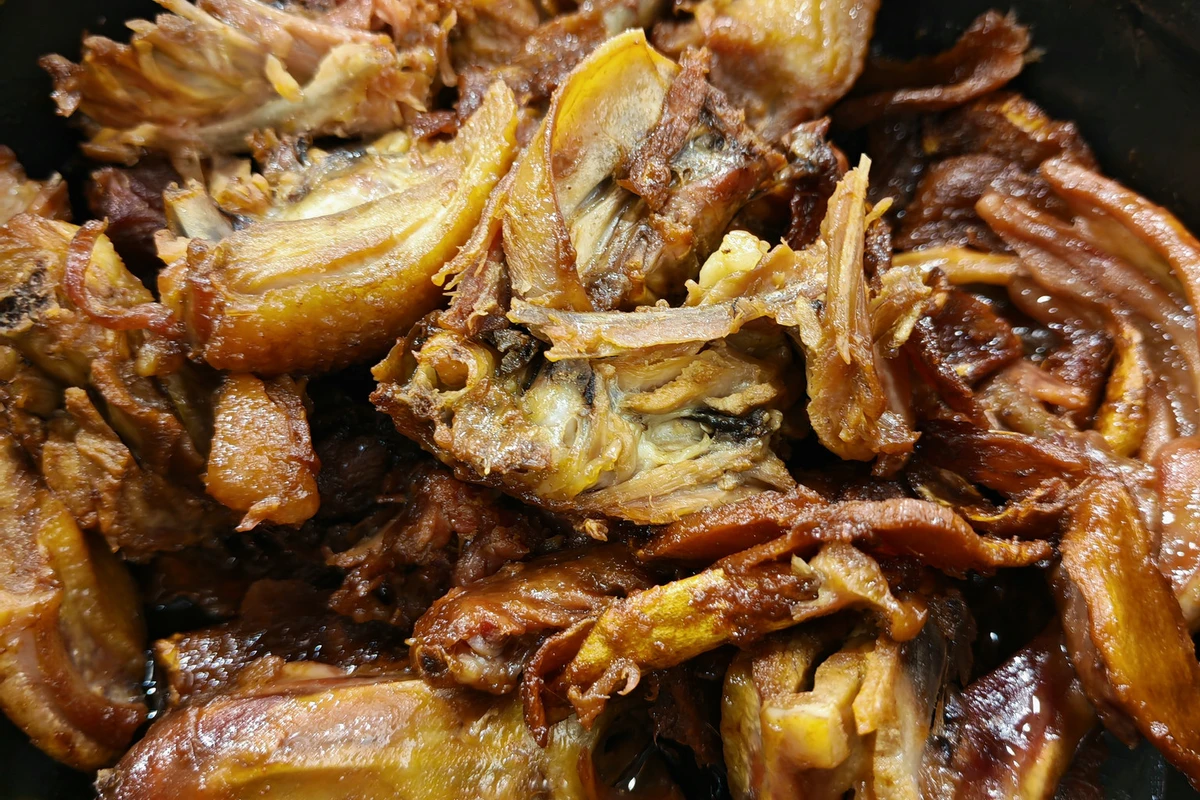
Ginger Duck (I ate at Sidan's; it seems there are several branches. I went to the main branch near Qingjing Mosque. They only serve ginger duck with a few sides—around a hundred clay pots cooking at the entrance, quite impressive).
Soup-style items: Meat Swallow (rouyan), Bian Shi (small wontons), Mianxian Hu (thin noodles in soup), various fish ball soups (Wen A Fish Balls).
Deep-fried Vinegared Pork (vinegar-marinated small crispy pork, with a vinegar aroma but not sour).
Various pastries (I bought the Lilin brand—mung bean, taro, chestnut—each available in both savory and sweet. Personally, I recommend the savory ones, especially the savory meat pastry).
Preserved fruits (there are many brands and varieties—olives, kumquats, Buddha's hand, etc., which are quite distinctive. I bought from Tan Da Qian, a chain store slightly more expensive but with uniform pricing and good quality. Highly recommend the 8-year old aged old golden kumquat, which is kumquat preserved with aged tangerine peel—good for the throat, digestion, and hangovers. Buddha's hand and salty taro chips are also good. After returning, I asked the shop to send more to give as gifts).
Oyster Cake and Fu Guo (deep-fried, filled with oysters, minced meat, and vegetables. One has a flour batter outer layer, the other a starch batter—one crispy, one chewy, somewhat like Shanghai's You Dunzi. I ate at Zhuang Laodie near the Confucian Temple—not sure if it's a chain).
Shanhai Zongzi (savory zongzi filled with meat, dried shrimp, peanuts, and mushrooms. The one I tried was lightly flavored and served with peanut sauce and sweet chili sauce—not bad, but not my taste, though my friend liked it).
Stone Flower Desserts and Drinks (stone flower is a type of seaweed. After washing, boiling, and filtering, it solidifies into a light yellow jelly-like substance. It's tasteless with a light fragrance, usually served with honey water or fruit. It's said to have cooling properties. A glass on a hot day is refreshing. Bingzheng Tang seems to be a century-old chain, but roadside stalls are also good).
Bamboo Shoot Jelly (actually sandworm jelly—savory and umami. If you're not afraid, try it. But I think this is more of a Xiamen specialty).
Quanzhou Licheng District is the city center, with many concentrated attractions, most of which are free. They are not far apart—walking takes 3–5 minutes for nearby spots and 10+ minutes for farther ones. However, I don't recommend walking. On my first day, I walked exclusively and my legs were destroyed. Licheng has “Little White” cars, similar to shuttle carts in parks—open-air electric cars with 4 rows and 8 seats. You can flag them down on the roadside. Anywhere the driver says is reachable costs 2 RMB per person per ride. You can also use WeChat to search for the mini-program “小白约租,” enter pick-up and drop-off points, and a driver usually arrives within 1–3 minutes. If there are many people, you can choose “Direct Express” or “Ancient City Tour” mode. All the attractions listed except Luoyang Bridge are in Licheng District and accessible by Little White cars. For farther places, consider ride-hailing. Luoyang Bridge is in the suburbs—my hotel was about 20 km away, costing around 30 RMB. Taxis are slightly more expensive (I heard the flagfall is 10 RMB). Don't consider unlicensed cabs—they're unsafe.
1. Qingjing Mosque: A mosque, filming location for the 1986 version of Journey to the West. It was under extensive renovation when I visited. It was the only attraction among those I visited that charged an entrance fee—3 RMB/person. Women must wear knee-length clothing to enter. Since I was wearing shorts, I was asked to buy a silk scarf to cover my legs. Also, the open area was too small, so I didn't enter.
2. Guanyue Temple: Dedicated to wealth, so incense is very strong. Many locals visit. It's not large—10–15 minutes is enough unless you explore every detail.
3. Tianhou Palace: Dedicated to Mazu, for safety. It's larger than Guanyue Temple. I went at a bad time, so there were few people, but it's nice for a quiet stroll.
4. Chengtian Zen Temple: A peaceful spot in the midst of bustle. It's quite large, as famous as Kaiyuan Temple. The Master Hongyi Memorial Hall left a deep impression—very quiet inside, not empty of people, but naturally calming. Worth a slow visit.
5. Confucian Temple: Covers 8,000 square meters, the largest and best-preserved Confucian temple in Southeast China. My homestay was right next to it. I visited over two days. It happened to be August 31, which was both Manjushri's birthday and just before school started. Local custom has it that children entering first grade visit Confucius before school begins, and they receive free red eggs. Parents also let their children do the “opening of the brush” ceremony to pray for academic progress. The brush set costs 8 RMB, including a writing brush, a ballpoint pen, and a wish tag. In the side corridors of the main hall, there are stone inkstones; after wetting the brush, you write the character “一” (one) to symbolize being first in exams. You can hang the wish tag on a rack. That day the temple was full of little children. I even performed the ceremony for my friends' kids. It was a unique experience. I went back the next day when there were far fewer people and strolled leisurely. There is also a Scholar's Shrine next to it worth visiting.
6. Bell Tower and West Street: A small pedestrian street lined with shops, mostly snacks and drink stalls, with some restaurants in alleys. If you go to Kaiyuan Temple, you can enter from the south gate on West Street. It's a popular photo spot. Some shops with rooftop terraces offer views of the twin pagodas of Kaiyuan Temple, but you need to buy a drink (20–30 RMB) to go up. The Bell Tower stands at the intersection at the entrance to West Street—it looks great in photos at night. Many paid photographers solicit business there, but honestly, you can just take photos with your phone.
7. Kaiyuan Temple: Built in the Tang Dynasty, originally called Lotus Temple. Emperor Xuanzong ordered each prefecture to build a Kaiyuan Temple, hence the name. Quanzhou's and Chaozhou's are the most famous. Quanzhou Kaiyuan Temple covers a large area. Its most famous features are two stone pagodas: the East Pagoda (Zhenguo) and the West Pagoda (Renshou), the tallest surviving pair in China. They were the filming locations for the twin pagodas in the anime Black Myth: Wukong. If arriving by car, enter from the west gate; if walking, from the south gate on West Street. Free admission. Photography enthusiasts should go to the East Pagoda—it's very photogenic.
8. Xunpu Flower Hairpin: Made popular by Zhao Liying, now flower hairpins are everywhere, but the origin is Xunpu. It's about 10 km from Quanzhou city center, a 30-minute drive. If you specifically want a flower hairpin, you can go to the village, but it's more expensive there. The city also has many shops. A 199 RMB package (outfit + makeup + photos, 4–8 photos, 2–4 retouched) is standard. Photo sessions are quick, usually 30 minutes to an hour, often at West Street or Kaiyuan Temple. We took ours at Kaiyuan Temple, then walked around and took more ourselves. You can keep the hairpin for 6–7 hours without issue.
PS: Pay attention! Photographers are often average—many used to work at studios and will just pose you stiffly. After 2–3 poses, check the photos yourself. Don't believe them if they say, “You look great, add some money for more retouches at a discount, it's cheaper than going through the shop.” Later, if you want to add, they'll still be willing—just negotiate the price. This is our hard-earned lesson. Take your own photos; take plenty and you'll get some good ones. We went to Fengyi Flower Hairpin Shop on Zhongshan Street. The owner did the hairpin herself—skillful. I suggest getting the hairpin in the morning, taking photos, then returning the outfit by noon and removing makeup. It's too hot to wear makeup for long.
9. Luoyang Bridge and Anping Bridge: Anping Bridge is the longest surviving cross-sea stone bridge in China, located in Jinjiang City, about 35 km from Quanzhou city center (about 1 hour drive). We were a bit tired, so we skipped it and went to Luoyang Bridge instead. Luoyang Bridge (Wan'an Bridge) is China's first cross-sea stone bridge, built three times before completion, dating from the Northern Song Dynasty. It's 15 km from the city, 30 minutes by taxi. A round trip on foot takes 30 minutes to an hour. It's quite impressive.
10. Puppet Show: An intangible cultural heritage of Quanzhou. I really wanted to go, but it requires booking well in advance, and we didn't get a reservation. If you want to see it, be sure to book early!
Part Three: Shishi (September 2)
Shishi is about 35 km from Quanzhou, about 1 hour drive. It's convenient by car and enough for a day. There are not many attractions, mainly two areas: Yongning Ancient Town and Luoji Temple. Hongta Bay's ten-mile coastline and Guanyin Mountain are nearby. Also, Xiangzhi Pier (Little Weihai) is about 7–8 km from Luoji Temple, 20 minutes by car. If driving, you can visit both; if taking a taxi, focus on one.
1. Yongning Ancient Town: Quite a desolate spot. Mostly local residents. Only a City God Temple is an ancient structure. The alleys and old houses are worth a stroll. There are a few homestays and bars, but almost no commercial activity—not even shops selling Yiwu souvenirs. We went during the day and saw nothing special. Note: If driving, don't park at the western parking lot (paid). There's a small fork in the road east of the south gate that looks like it leads into the village—take that uphill to the free parking lot in front of the City God Temple. Overall, not highly recommended, but if you have time, it's okay.
2. Luoji Temple: Recommended!!! It's surrounded by the sea on three sides; at high tide, the temple appears to be in the sea. I went at low tide, but the scenery was still beautiful and very photogenic. There are small boats for sea trips outside. Be sure to use sun protection—I got sunburned like a red shrimp that day. Many photographers solicit business inside—I didn't ask about prices; I took my own photos. The rocky beach to the left outside the temple is also photogenic. Just walk around the temple and see how others pose. Don't park at Luoji Temple's paid parking lot; there's a nearby Binhai Huayuan residential area where the north and east sides have seafood stalls, and you can park for free at the south gate. We ate at a seafood stall—similar everywhere, seafood not cheap, taste okay.
Guanyin Mountain has a large Guanyin statue—I didn't go. Golden Beach I also skipped. Went to Xiangzhi.
3. Xiangzhi Pier Little Weihai: Added this after Luoji Temple because it's popular on Xiaohongshu and Douyin for photogenic spots. My travel companion likes photography, and it was convenient by car. Scenery was great. When driving, don't navigate to Xiangzhi; navigate to Shishi Little Weihai or Lighthouse Park. Park on the coastal road (free). Lighthouse Park is a small hill to the north—you can climb it for a good view (we didn't). Little Weihai is a big slope south of the coastal road—good for photos taken from above. The coastal road is lined with colorful food trucks selling drinks and snacks. Some photogenic spots are cordoned off by drink shops—you must buy something to enter.
Xiapu is a county under Ningde City. The county town is about 330 km from Quanzhou, about 3.5–4 hours drive.
Xiapu attractions are divided into three areas:
1. The Sishuang Islands off the southeast coast: These are in the open sea and require a boat. Two docks available: one at Jishi Pier (ticket ~100 RMB, one boat per day, usually in the morning). This dock is small—they depart when enough people, generally between 9–10 am. You can call ahead to confirm. Note that there's only one round trip per day, so you must stay overnight on the island. The other dock is near Dongbi, tickets 150–180 RMB, more frequent boats.
There are four islands total—one can only be viewed from afar, two allow short landings, and one can be visited. Usually, you take a circular boat tour (~200 RMB). Staying overnight on the island lets you eat seafood and watch the sunrise. We originally planned to go for one day, stay one night, watch the sunrise, then return directly to Xiapu, but we felt it was too tiring and skipped it. It would be more suitable to stay two or three days.
2. The southern inner islands of Xiapu: About 40 km from the county town, about 1 hour drive. From north to south: Gaoluo Bay, Jishi Beach, Haiwei Cape, Dajing Beach, Xiawei Island, Lvxia Lighthouse.
I read many guides—most recommended Haiwei Cape, Dajing Beach, Xiawei Island, and Lvxia Lighthouse. We stayed in a small fishing village (Midou Village) on the inner island. The advantage was low cost; disadvantage was inconvenient transportation. Since we were driving, it was fine. If you're not driving, I don't recommend staying in the village. Also, driving skills need to be good—the village is in the mountains, with hairpin turns and steep slopes.
I didn't find any guide for Gaoluo Bay. It's the first beach we passed when entering the island and the closest to the county. There were many people and water activities, but we didn't go there. After Gaoluo Bay, we drove along the scenic coastal road—every 1–2 km there was a viewing platform with great views. You can stop and take photos.
As for other attractions, they are really photo deceptions—promotion and reality are severely mismatched. Haiwei Cape is just another viewing platform, slightly larger than others, with white and blue huts built by the public. They look photogenic, but in person, they are very crude, not much different from other platforms along the road. It takes 10 minutes to snap a photo and leave—there's not even a drink stall. That's how barren it is. You can stop if you pass by, but it's not worth a special trip.
Dajing Beach is actually very small, with few activities. The sea doesn't look very clean. We spent about an hour, took a photo, and left. Parking is charged—about 10 RMB per hour. There are many snack stalls at the entrance, but since it was off-season and we arrived at 3 pm, most were closed. If you've been to Gaoluo Bay, there's no need to go here. Special note: The sand near the water is fine, but the sand closer to the land is very coarse. I wore flip-flops and they hurt so much I almost turned back.
Xiawei Island is worth a visit. There are sea erosion caves, very photogenic. Many homestays and small restaurants nearby. Check the tide table beforehand—you need low tide to see the caves; at high tide there's nothing to do. You can spend half a day there. There's a scenic shuttle from the entrance to the top (8 RMB one way, 15 RMB round trip)—worth it. Private cars must park outside; there are many private parking lots near the entrance; off-season you can negotiate—usually 10 RMB, we paid only 5 RMB.
Lvxia Lighthouse was very disappointing. We navigated by Amap and drove about 30 minutes. The last 2–3 km road was terrible—bumpy and full of gravel. Our family car felt like an off-road vehicle. Then we arrived at a small platform that looked like it had barbecue stands during peak season—there was nothing when we were there. To see the lighthouse, we had to walk along a narrow path for a while, only to find it still far away. Very disappointing. Maybe we were at the wrong spot. Be cautious about this attraction!
Summary: The inner islands of Xiapu are over-marketed and severely mismatch reality. I recommend staying in the county town for convenience in dining and better accommodation. Spend one day at Gaoluo Bay and one at Xiawei. There are no decent restaurants on the inner islands, making dining inconvenient.
3. The northern area: Dongbi Village, Liuyun Zen Temple, Sansha Village, Huazhu Village.
Dongbi Village is a homestay village, full of homestays and restaurants. It's by the sea with great scenery. The homestays are very unique and colorful—any photo is photogenic. You can spend one or two days roaming the village. From Dongbi to Huazhu is about 30 minutes by car.
Special recommendation: Liuyun Zen Temple. You can spend half a day there. It's large and very peaceful—I haven't seen such a tranquil temple in a long time. No crowds, no monks following you. There are many guide photos online; we explored on our own. Note: We went in the afternoon—the dappled tree shadows are best captured in the afternoon. Morning also has its charm.
Sansha Village is a small village between Dongbi and Huazhu. Many locals live there, lively at night with many restaurants and food stalls. We stayed in a homestay here. It's very close to Huazhu Village—only a 7–8 minute drive to see the sunrise.
Huazhu Village is purely for watching the sunrise—nothing else. It's a very small village with many homestays near the viewing platform, about 3–5 minutes walk. If you're specifically coming for sunrise, stay here.
The viewing platform for sunrise is large but crowded. To get a good spot, go early. The sunset is also very beautiful. We watched the sunset the day before and tried for sunrise the next day, but unfortunately it was cloudy, so we didn't see the sunrise.
Below are photos taken at sunrise.
1. Self-driving has its advantages: flexible itinerary, can be adjusted freely. For a one-way trip of about 1,000 km, I suggest going straight there and taking your time on the return if you have extra time.
2. Recommended route: Quanzhou Licheng, Shishi Luoji Temple, Dongbi Huazhu.
3. For long drives, prepare plenty of water, snacks (sour plum type to stay awake), and essential oils like Fengyoujing. Get enough sleep before driving. If traveling with others, keep talking to the driver—driving alone in silence easily leads to drowsiness.
Travel Notes Directory:
1. Overview
2. Quanzhou, Shishi (August 31–September 2)
3. Xiapu (September 3–6)
4. Conclusion
Travel Information:
Hotel Index
Attraction Guide Index
Flight Index
Website Navigation
Travel Index
Cruise Index
Corporate Travel Index
Affiliate Cooperation
Distribution Alliance
Friendship Links
Corporate Gift Card Procurement
Insurance Agency
Agency Cooperation
Hotel Chain Partnership
Destination & Scenic Area Cooperation
More Partnership Information
About Ctrip
About Ctrip
Ctrip Hot Topics
Contact Us
Careers
User Agreement
Privacy Policy
Business License
Security Center
Ctrip Content Center
Intellectual Property
Trip.com Group Algorithm Disclosure