Hong Kong has over 200 outlying islands. If only one is a must-visit, it's Cheung Chau Island.
Hong Kong, with 262 outlying islands, ranks second among cities in the Greater Bay Area for the number of islands. Though you can't fulfill the dream of visiting them all, Hong Kong's island trips are simple, convenient, and cost-effective. Many islands have regular year-round ferry services, even allowing day trips. Ferry tickets are inexpensive, and the cost of food, accommodation, and transport on the islands is often lower than that of mainland China's islands, making Hong Kong the most cost-effective urban island destination in the Greater Bay Area.
Hong Kong's balance between environmental protection and tourism development on its islands is a benchmark for the Greater Bay Area. The natural ecology of the many large and small outlying islands is nearly perfectly preserved, and the exploration of tourism development, cultural heritage, and natural knowledge has been taken to the extreme. The Tai O fishing village, known as the 'Venice of Hong Kong'; Cheung Chau Island, with both food and fun; Lamma Island, a hiker's paradise; Po Toi Island, the 'Antarctica' of Hong Kong; Stanley seaside, a favorite leisure spot for locals and tourists; Ha Pak Nai, a sunset-viewing haven; the pristine Huang Mao Chau, Kiu Tsui Chau, Tap Mun Island, Sam Sing Wan, and countless others. Hong Kong's outlying islands are not only beloved weekend getaways for Hong Kong residents but also popular outdoor destinations for mainland tourists.
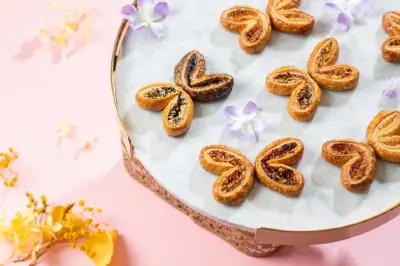
Among Hong Kong's more than 200 outlying islands, if only one is a must-visit, it has to be Cheung Chau Island. Hong Kong locals also love spending weekends on Cheung Chau. The streets are lined with cha chaan tengs, serving both Hong Kong-style delicacies and Western cuisine. Not to mention the seafood—even the snacks alone are enough to fill you up. Baked pastries, durian fruit pudding, grilled squid, maltose candy, grass jelly, silken tofu pudding, chicken屎藤 (a herb), giant taro sticks, turtle jelly… an endless variety of snacks, all much cheaper than in the city. Full of eateries, Hong Kong-style snacks, and paths encircling the island, the island scenery is abundant.
Special mention goes to fish balls. Hong Kong people love fish balls—on average, each person eats over a hundred a year—and Cheung Chau has an especially large number of them. There's a shop called 'Kam Wing Tai Fish Balls' with a line stretching half a mile. For just over ten Hong Kong dollars, you get a big skewer, and people buy and eat them standing on the street. On Tung Wan Road, a small shop sells fish balls bigger than ping-pong balls, and it often has a long queue in front. On both sides of the Cheung Chau ferry pier, there are seafood stalls with prices similar to those on the mainland. At night, the seaside food street is brightly lit, and sitting in the open-air stalls by the sea is especially enjoyable. Every year-end, foodies from Zhongshan, Zhuhai, Panyu, and Foshan flock here.
Everywhere on the island, you see signs and posters for 'Bun Snatching' and 'Peace Buns.' Small stalls sell Peace Buns. The 'Cheung Chau Bun Festival' with its bun-snatching event is famous throughout Hong Kong. Every year from the fifth to the ninth day of the fourth lunar month, the Pak Tai Temple and Yuk Hui Temple host the bun-snatching activity. Young and strong men climb three tall bun mountains to snatch Peace Buns—the more they snatch, the luckier they are, and eating a Peace Bun is believed to bring safety.
There are also colorful parades, processions, dragon boat races, lion dances, and unicorn performances. Local residents participate wholeheartedly. During the festival, ferry rides to the island are free. The atmosphere is joyous and peaceful, even surpassing the New Year. The Cheung Chau Bun Festival has become the most important traditional event of the year and a national intangible cultural heritage. Together with the annual dragon boat races, it attracts a large number of tourists.
Cheung Chau has many temples: the Yuk Hui Temple, the Pak She Tin Hau Temple, the Nam Tung Tin Hau Temple, the Tai Shek Hau Tin Hau Temple, the Sai Wan Tin Hau Temple, the Hung Shing Temple, the Shui Yuet Temple, and the Kwan Kung Chung Yi Pavilion. All are Qing Dynasty structures, and their names carry a strong historical drama vibe.
Hiking on Cheung Chau is a lung-cleansing and heart-soothing activity. The longest loop route takes about 6 to 7 hours: Cheung Chau Ferry Pier, Cheung Chau Market, Cheung Chau Sai Tai Road, Sai Wan Tin Hau Temple, Cheung Po Tsai Cave, Ng Hang Shek, Por Yu Wan, Cheung Chau Family Trail, Pak Tsar Wan, Shan Teng Road West, Cheung Chau Cemetery, Shan Teng Road West, See Ko Road, Cheung Chau Family Trail, Little Great Wall, Kwun Yam Wan Beach, Cheung Chau Rock Carvings, Cheung Chau Tung Tai Road, Tung Wan Beach, Pak Tai Temple, Yuk Hui Temple, Pak She Pui Road, Sun Hing Street, Cheung Chau Ferry Pier. It's worth spending a whole day, and if you get tired, you can always retreat to the streets for food and drink.
The calm Sai Wan is a natural typhoon shelter, and the Cheung Chau ferry pier is here. Tung Wan, with its waves that constantly bring in fine sand, forms Tung Wan Beach, which has better sand quality and location than the small beaches of Sai Wan, Kwun Yam Wan, Tai Kwai Wan, and Tung Wan Tsai. After getting off the ferry, turn right and walk along the seaside Tai Hing Dai Road, which leads to the Family Trail and Sai Tai Road—paved walkways forming a relaxed coastal promenade. This section is bike-friendly, but if you plan to circle the island, don't rent a bike, because some sections are impassable for bicycles and you'd have to return the same way.
After walking along Cheung Chau Sai Tai Road, you reach Por Yu Wan and Pak Tsar Wan. The southern part of Cheung Chau, due to strong waves, is covered with strange rocks, also known as Cheung Chau Quirky Rock Forest. Bypassing the jagged seaside rocks, you'll find Cheung Po Tsai Cave, a narrow cave that only allows one person to pass. Cheung Chau Island was a hideout for pirate Cheung Po Tsai and his men fleeing from the authorities, and legend has it that this is also one of the secret treasure hiding spots.
On the hillside opposite Cheung Po Tsai Cave is Ng Hang Shek (Five Elements Stones). By the sea, five huge rocks several meters high, with the largest perched on the edge of the cliff, as if about to topple into the sea. Weather-beaten and ancient, walking among them feels like being in a martial arts novel stone formation. Paths leading to the seaside are extremely narrow or dead ends, but once you cross the beach to the large granite estuary, both adults and children will pick up seashells. Passing Por Yu Wan, standing on the hilltop overlooking the small bay, the picture of Cheung Chau's green forests, blue sea, and red rocks unfolds.
The eastern part of Cheung Chau is different from the western pier—it has few tourists. After walking a forest path without seeing the sea for a while, you reach Cheung Chau Kam Kong Primary School, and residential houses gradually appear. Through the gaps in the eaves on the hillside, you can look down at the rows of old houses, still in their original state. Not far away, the Concordia Lutheran Seminary stands amidst bauhinia flowers, clean and quiet. If you come in spring, near the Kwan Kung Chung Yi Pavilion on Cheung Chau, there is a cherry blossom grove, the largest in Hong Kong, introduced from Taiwan—worth a visit.
The Little Great Wall section takes about half an hour to walk. It's part of the Cheung Chau Family Trail hiking route, named for its winding path and unique granite pillar railings. Near the seaside walking path, there are several holiday camps, such as the 'Salvation Army Bradbury Camp' and 'Caritas Jockey Club Ming Fai Camp,' which host Hong Kong students. Walking along the Little Great Wall to the seaside, through blooming wildflowers, you can see the sea and Lamma Island in the distance. Waves crash against the rocks, with white spray and a gentle blue sea breeze.
Going down the steps, you reach the Bottle Rock, which doesn't quite look like a bottle. On one side is an observation deck, and on the other is the Imperial Seal Rock. Between the Head Rock and the Bottle Rock, there is a coastal rock platform where you can see the submerged rocks in the sea below. Shaded by trees, you can rest here in the breeze and admire the clear blue waters. Crossing the top of the hill, you continue along the Cheung Chau Family Trail downhill, passing Ming Fai Camp, and then reach Kwun Yam Wan Beach.
At the Kwun Yam Wan Water Sports Centre, you can rent sailboats, kayaks, or other windsurfing equipment. The training ground of Hong Kong's first Olympic gold medalist, windsurfing champion Lee Lai-shan, is here. Adjacent Kwun Yam Wan is Tung Wan, the largest beach on Cheung Chau, with clear water and beautiful scenery. After sunset, you can see the enchanting lights of Aberdeen and Lamma Island. It's only a few minutes' walk from Tung Wan to Sai Wan, which is also the narrowest part of Cheung Chau.
Among Hong Kong's many outlying islands, Cheung Chau is the liveliest. The streets are packed with small stalls and shops, and the crowds are dense. It stands in stark contrast to the bustling international city, preserving the original appearance of a coastal island. Wandering through the alleys and side streets, savoring the simple and contented life, is precisely its charm.
Tip: Take the ferry from Central Pier No. 5 to Cheung Chau Island, with services running almost 24 hours a day. There are fast ferries (35 minutes) and slow ferries (55 minutes). If you're not in a hurry, the slow ferry is recommended, as you can enjoy the views of Victoria Harbour and the seascape along the way.
Part of this travelogue is excerpted from my newly published book 'Don't Work, Go to the Islands: A Blue Love Song of the Guangdong-Hong Kong-Macao Greater Bay Area.' Without the consent of me and the publisher, no one is allowed to republish the text and images of this travelogue (including but not limited to screenshots, screen captures, conversion to video, etc.) in any person's name.