Hong Kong's Tai O Fishing Village: A Maritime 'Kowloon Walled City' in the Metropolis
After the complete demolition of the Kowloon Walled City, another world within the bustling metropolis vanished, and the traces of Hong Kong's past have gradually been erased. Nowadays, if you want to find a Hong Kong with the warmth of human life, you might as well go to Tai O.
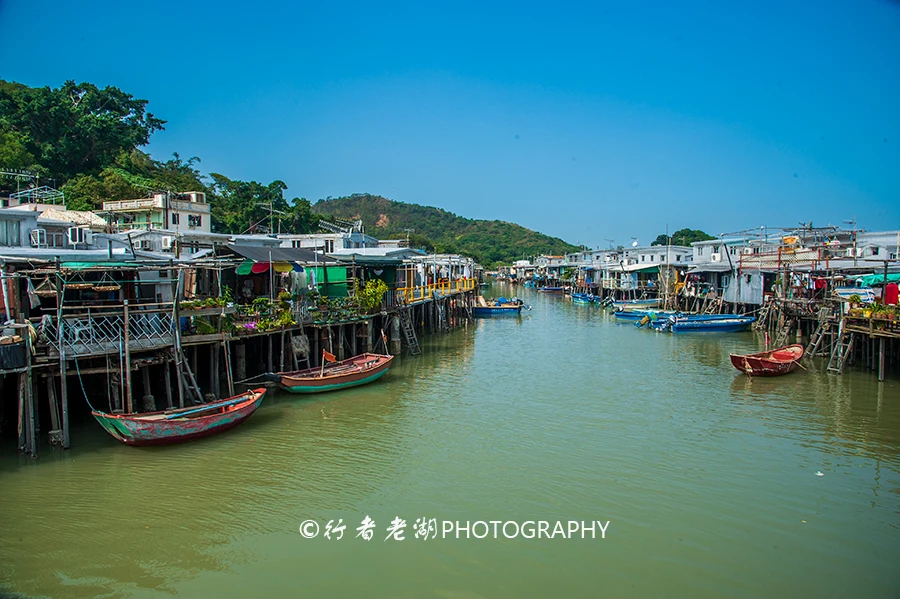
Entering the Tai O fishing village, the scale of the stilt houses on the water is astonishing. Rows of stilt houses are built on both sides of the river channel, with wooden pillars two to three meters high thrusting into the water, covered with a layer of wooden planks, bearing the lives of the stilt dwellers. At the front of the stilt house, there is a wooden ladder leading to the water surface for fetching water, washing clothes, and boarding boats. The rear of the stilt house faces the land, used for drying fish and kelp.
The stilt houses are connected by wooden planks over the water, forming interwoven waterborne communities. Tai O is also known as the 'Venice of Hong Kong.' In fact, compared to the elegance of Venice, Tai O's appearance feels more dilapidated and precarious. It is hard to imagine that in a corner of glamorous Hong Kong, such an original ecological fishing village still retains its roots.
As the symbol of Tai O, the stilt houses always carry a dystopian avant-garde feel in photos. Only by personally smelling the scent of the sea breeze here can one truly have seen Tai O. The smell of damp, rotting wooden pillars, the rust stains on dilapidated iron huts, mixed with the smell of fishy poverty. Walking on the small wooden bridges feels like traveling through time, returning to the Hong Kong of the past. Tai O is the 'Kowloon Walled City' on the sea.
Walking along the narrow wooden paths, the stilt houses seem to be on the verge of collapse, and you might accidentally step into a stilt dweller's home. In the cramped space, residents' living, kitchen, and common areas are not divided, and there is no privacy. However, the sides of the stilt houses are full of flowers, and on some residents' balconies, there is a large model of a fishing boat. If you enter a waterborne home, you will find that the stilt dwellers live more leisurely and cleanly than tourists imagine.
Tai O Island is separated from Lantau Island by a river channel. Entering Wing On Street, you first cross the Horizontal Bridge, which is often crowded with tourists. In the past, there was the Tai O ferry crossing under the bridge, where residents used ropes to pull sampans back and forth. The old ferry crossing has now become a small dock for tourist sightseeing boats. Neatly lined up on the water, sightseeing boats with bright canopies covered with various advertisements have become a new landmark of Tai O.
Sun Ki Bridge is also a great place for photography, where many classic images of Tai O are taken. The streets of Tai O are rustic and charming, satisfying the primitive scenes that tourists desire. On the white iron door of a grocery store, ancient poems in vertical calligraphy are written in traditional Chinese, while in front of a handicraft shop, shells and corals are hung, and pufferfish with puffed-up cheeks and wearing hats attract tourists, delighting both tourists and cameras.
Tai O has an inescapable nostalgic hue. Besides the stilt houses, there are many ancient temple sites. On the central square of the Tai O fishing village, the Kwan Tai Temple and Tin Hau Temple stand side by side. The Kwan Tai Temple, built during the Hongzhi period of the Ming Dynasty, is a Grade II historic building in Hong Kong. Every year on the fifth day of the fifth lunar month (Dragon Boat Festival), the people of Tai O go to the Kwan Tai Temple, Tin Hau Temple, and Yeung Hau Temple to invite out the statues.
The dragon boats carrying the statues burn paper offerings, and the dragon boats parade along the river channel. Residents in stilt houses along the shore burn incense and pray to the statues for peace. This series of ritual activities has been inscribed on the national intangible cultural heritage list. The former sites of Yeung Hau Temple, Hung Shing Temple, Lung Yan Temple, Wah Kwong Temple, Fat Ho Memorial College, Wing Tsao School, and Tai O Public School are also popular check-in spots for tourists.
On a hillside near the Shek Tsai Po Pier, a white European-style building is the Old Tai O Police Station. Built in 1902, this two-story colonial building once housed 15 police officers, with only one detention room, two prison cells, and dormitories. It has now become a high-end hotel—Tai O Heritage Hotel. Each police station room is a guest room. To stay on weekends or holidays, you need to book well in advance. This is not purely a business; it is part of Hong Kong's conservation plan for historic buildings, and the profits go towards building preservation.
The narrow streets of Tai O are lined with dried seafood shops and cha chaan tengs. Shop owners open early every day, setting up stalls offering shrimp paste for a dozen dollars a bottle, dried fish for hundreds of dollars a piece, and fish maw for tens of thousands of dollars per catty. On Shek Tsai Po Street, there is a local shrimp paste factory still in operation, and the former site of Lee Kum Kee is also here. Tai O's traditional salted fish, shrimp paste, salted egg yolks, fish maw, and shark fin are famous far and wide, all ingredients with a strong Hong Kong flavor.
On the streets of Tai O, things that look like ripe persimmons are the local specialty: salted egg yolks. They are essential for salted egg yolk fried rice and steamed dishes with salted egg yolk. Fisherman Kwok Wah Hei and his wife Ping Yi once introduced their experience making salted egg yolks on TV: crack the eggshell, pour the raw egg into the hand, toss it between the left and right hands to let the egg white run off, pinch off the umbilical cord, sprinkle the yolk with salt, and sun-dry for two to three days.
The tea cakes on Shek Tsai Po Street are very popular, and everyone tries them. Originally used for sacrifices, tea cakes are made from glutinous rice flour or rice flour, filled with red bean paste, water chestnuts, radish, and meat, becoming a snack in Hong Kong, Macau, and the Pearl River Delta region. In summer, the cold drink stalls in Tai O sell a variety of homemade beverages, including herbal teas with English labels, favored by foreign tourists. Grab a bottle of homemade pitcher plant, plantain, 'zibei', and 'tiankui' herbal tea, drink it while walking—it's both refreshing and a taste of Tai O's local flavor.
Strolling through the streets of Tai O, try chicken shit vine, tea cakes, 'heung fei kuen' (a type of roll), ginger milk curd, mountain water tofu pudding, fried small fish and shrimp, pandan egg waffles—all are Tai O style Hong Kong snacks. At noon, go to a cha chaan teng for shrimp paste with water spinach, salted fish and chicken fried rice, steamed fish belly with shrimp paste, pan-fried cuttlefish cakes, paired with a nice soup.
Although Tai O fishing village looks more like a maritime 'Kowloon Walled City' on the surface, it is actually a tourist attraction, and the public security is incomparable. On weekends, tourists from all over the world flock in. In the afternoon, find a riverside café balcony along the river, sit down with a cup of coffee, watch the tourists whizzing by on speedboats, and become part of their camera scenery.
The setting sun shines on the river channel. A fisherman casts a net to catch fish. A ray of sunlight slowly shines through, illuminating the fishing boat and the fisherman, with the hazy water village in the background. The light is as charming as a movie scene. Hong Kong's last fishing village carries a sense of vicissitude, preserving modern people's imagination of the past.
In Sylvia Chang's movie 'Three Summers,' the sister 'Half Foot' wants to leave Tai O, this remote fishing village, to venture into the bustling city of Hong Kong, yet she is reluctant to leave the peaceful life of the fishing village. Tourism has revitalized Tai O, but most local young people have gone to Hong Kong's urban areas, leaving behind empty nests and the elderly. In the evening, seabirds rest on the wooden pilings, watching the dwindling boats and departing crowds. Fishing boats draw golden ripples on the sea, spreading out from the stilt houses.
Tai O Travel Tips: A round trip from Shenzhen to Tai O takes about six hours. From Shenzhen's Futian Port, cross the border and take the MTR to Tung Chung Station, then transfer at Tung Chung bus station to Lantau Bus 11 to Tai O. Alternatively, take the high-speed rail to West Kowloon Station, then walk to Austin MTR station, take the MTR to Tung Chung, and transfer to Lantau Bus 11 to Tai O. You can also take a ferry from Central Pier 6 to Mui Wo on Lantau Island, then transfer to Lantau Bus 1 to Tai O. At the Tai O ferry crossing's small pier, you can take a sightseeing boat to tour Tai O's river channels and see Chinese white dolphins at sea. Although the chances of spotting them are not high, the price is not expensive, so it's worth a try.
Parts of this travelogue are excerpted from my newly published book 'Don't Work, Go to the Island: The Blue Love Song of the Greater Bay Area.' Without the consent of myself and the publishing house, no one is allowed to publish the text and images of this travelogue (including but not limited to screenshots, screen captures, converted videos, etc.) in any name.