Stanley, Hong Kong: Open-Air Cafés, Craft Markets, and an Old Pier Beloved by Travelers from Near and Far
Stanley is the most charming spot in Hong Kong. Locals love to visit the Stanley Market and burn incense at the temples; foreigners working in Hong Kong and tourists also flock there on weekends, enjoying coffee by the sea and soaking up the views, whiling away the hours; mainland Chinese visitors come to see the seaside town, savor Hong Kong-style cuisine, and experience the city's historic fusion of Chinese and Western cultures.
To get to Stanley, you pass by the famous Repulse Bay. Get off at Deep Water Bay stop, walk along the seaside promenade—Lily Beach Road—to Repulse Bay Beach, then take a bus from Repulse Bay to Stanley. Along the way, you can admire the yachts and sailboats on Bluff Island (Yin Po Chau), gaze across at Ocean Park on the opposite shore, and glimpse the luxury homes of Repulse Bay often mentioned in Hong Kong films. If you want to avoid the crowds of tour groups at Repulse Bay, go directly to Stanley Plaza.
Stanley Plaza is a five-story leisure shopping center with many shops. The rooftop open-air café offers a panoramic view of Stanley Bay, the Blake Pier, and Murray House. Take the escalator down to the ground level of Stanley Plaza, and you can walk straight to the Stanley waterfront. A row of café tables line the shops, always filled with customers. Between two ancient trees, people read and relax in the shade, at ease.
Next to Stanley Plaza stands Murray House, a former Grade I historic building in Hong Kong. It was relocated from Central to Stanley in 1990. With its Victorian-style corridors and Western restaurants, even though it no longer holds the status of a historic site, it still exudes an old aristocratic air. The German restaurant King Ludwig Beerhall retains traditional German flavors and is highly recommended by locals.
Dining by the sea is a romantic part of any trip to Sai Kung, but unlike foreign tourists who prefer seaside cafés, Murray House offers intoxicating sea views and is a favorite among Hong Kong people. Afternoon tea at Murray House is the best value; sipping tea and chatting is a perfect date spot, and the balcony seats are always fully occupied. Many visitors prefer to go upstairs, lean on the railing, and take in the full coastal scenery of Stanley.
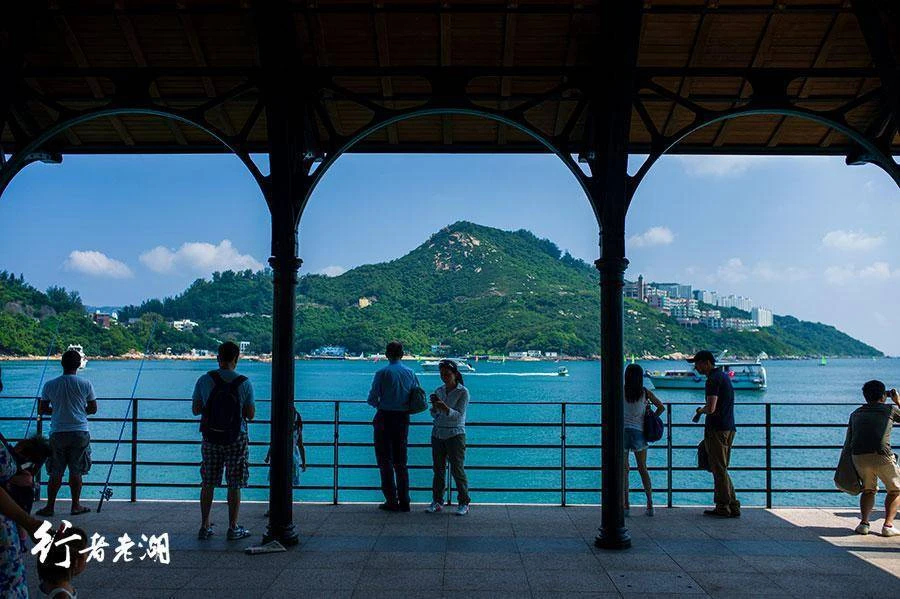
By the sea next to Murray House is the iconic Blake Pier. It was originally the pier on Pedder Street in Central before being relocated. “Blake” refers to Sir Henry Arthur Blake, the 12th Governor of Hong Kong. The antique steel canopy of Blake Pier was made in England and is the first carbon steel structural building in Hong Kong. When the old pier was dismantled, the steel canopy was taken apart, numbered, cleaned of rust, and shipped to Stanley to be reinstalled as it was, recreating its former glory. When you linger at the pier, you’ll see many people looking up at the canopy—no need to be surprised.
Blake Pier is not only a filming location for the movie “Infernal Affairs” but also a landing point for historical figures such as Sun Yat-sen. The pier extends into the sea; on summer evenings, you can lean on the railing and enjoy the cool breeze. Many locals fish here, catching small fish and shrimp but reaping a great sense of fulfillment. Blake Pier is still in use, with kaito ferries to Po Toi Island and the replica Chinese junk boat “Zhang Bao Zai” (Aqua Luna) to Central Pier.
Returning from Blake Pier, continue along the walking path uphill towards Ma Hang Park, where you’ll find an inconspicuous ancient well by the sea. The well has a couplet: “The thousand-year-old well remains today; the ten-thousand-year-old tree also gives shade.” Above it is the “Pak Tai Temple.” The open space in front of the temple is small, with the sea directly in front, offering a wide view. The temple is said to have been built by fishermen during the Qing dynasty, possibly used as a lookout point by the pirate Cheung Po Tsai. Legend has it that beneath the shrine there is a secret passage leading to Cheung Po Tsai Cave. Continue up the hill from Pak Tai Temple to reach an observation deck at the top, where you can overlook the entire Stanley Bay with its sailboats dotting the waters.
Tin Hau Temple in Stanley is quite large. To the right of Murray House, follow a row of stone pillars inscribed with “Tong Cheong Pawnshop” until you reach the temple—a two-courtyard compound built during the Qianlong era of the Qing dynasty, right next to Stanley Plaza. This Tin Hau Temple still retains an ancient bronze bell and is the largest temple in Stanley. At the other end of the Stanley Waterfront Promenade, on top of a large rock, there is a “Shui Sin Temple” (Water Immortal Temple). Though tiny, it is the only temple dedicated to the Water Immortal in all of Hong Kong. The temple honors a water deity, some say the River God (He Bo). This temple is even older than Tin Hau Temple. Standing on the huge red rock under Shui Sin Temple, you can look across at Pak Tai Temple on the opposite side.
Stanley is rich in cultural heritage; besides temples, there are many historic buildings. St. Stephen's College is the largest secondary school in Hong Kong, with several of its buildings listed as historic structures. There is also Teresa Teng’s former residence in Hong Kong, Stanley Prison, and Stanley Military Cemetery, all of which curious visitors seek out one by one.
The waterfront promenade buzzes with activity, and the architecture has a distinctly exotic feel. Bakeries and small restaurants each have their own character. Foreign visitors like to sit at open-air cafés, grab a bite, have coffee, and soak up the sun. Some Hong Kong couples even come here specifically to take wedding photos. Along Stanley Main Street, there are many street artists’ stalls; long balloons are twisted into various animal shapes in the vendors’ hands, delighting children.
Young people play self-made oversized harmonicas on the street, and when they play together, it sounds like a large band performing—truly impressive. At the very end of Stanley Main Street is the Stanley Waterfront Food Kiosk, a small street of seaside eateries and bars. Every shop’s front is filled with tourists, mostly foreigners, and the signs and menus are also in English. Strolling here feels like being in a foreign seaside town.
Don’t miss the Stanley Market. With various small shops and stalls selling Chinese handicrafts, antiques, bags, clothing, oil paintings, watches, jewelry, and more, it resembles a British weekend market. Most of the shops are run by original Stanley residents, and the small items are distinctly Hong Kong-style, reasonably priced, and popular with foreign tourists. Even locals enjoy browsing the market slowly, as if treasure hunting. The market’s narrow streets are covered and air-conditioned, so even if it’s scorching hot outside, you can leisurely wander and hunt for treasures.
Exit from the other end of Stanley Market and continue forward to reach Stanley Back Beach, a great place for seaside fun. Although the sand quality isn’t the best, for tourists, having the sea is enough, and many people come specifically to take photos. The final stop of a Stanley trip is a boat ride on the sea. Instead of taking the bus back the same way, you can board the replica Chinese junk boat “Zhang Bao Zai” at Blake Pier. The one-and-a-half-hour voyage returns to Central Pier, offering a wonderful sea journey in Hong Kong. If you depart in the late afternoon, you can enjoy the dazzling nightscape of Victoria Harbour.
Travel Tips for Stanley: From MTR Hong Kong Station Exit D, walk to the Exchange Square Bus Terminus in Central and take buses 6, 6A, 6X, 66, or 260 to Stanley Plaza stop. From MTR Causeway Bay Station Exit B, walk to Tang Lung Street and take green minibus 40 to Stanley, or take bus 973 from outside The Gateway to Stanley. Most buses heading to Stanley pass by Repulse Bay, so you can also get on/off at Repulse Bay.
Parts of this travelogue are excerpted from my newly published book "No Work, Go to the Island: The Blue Love Song of the Guangdong-Hong Kong-Macao Greater Bay Area." No part of this travelogue (including but not limited to screenshots, screen captures, or conversion into video) may be republished in the name of anyone other than myself and the publisher without permission.