A穿越 Journey on Hong Kong's Lamma Island: Multiple Crossings and a Two-Day Stay in a Rented House for Photos
Boliao Chau, I've crossed it many times and even stayed on the island for two days in a rented house, but many people don't know its original name. Boliao Chau is south of Hong Kong, the third largest island in Hong Kong, shaped like a tree fork, hence the name Lamma Island. Speaking of Lamma Island, it is a household name in the Greater Bay Area. Many people go there for weekend hiking. The island is mostly mountainous, and the easier Lamma Island Family Walk is suitable for hiking. It is one of the most popular hiking routes in Hong Kong and the Pearl River Delta region. Lamma Island has unearthed artifacts from the Neolithic to Ming and Qing dynasties, and it was also where Chow Yun-fat spent his childhood. Its historical flavor gives it a mysterious veil.
If you want to hike across Lamma Island and avoid the weekend crowds, I choose to go in reverse. Take a ferry to Lamma Island Sok Kwu Wan Pier No. 2. Turn right and follow the Family Walk to Yung Shue Wan Pier, about 5 km. The signs on the island are clear, and hikers can finish in about two hours, but if you walk and play, it takes five hours. Turning left onto Ling Kok Shan Hiking Trail, a nature route, passes through Mo Tat Wan, Shek Pai Wan, Tung O, and Sok Kwu Wan Tin Hau Temple. Looping back to Sok Kwu Wan Pier is several kilometers longer and takes two to three extra hours.
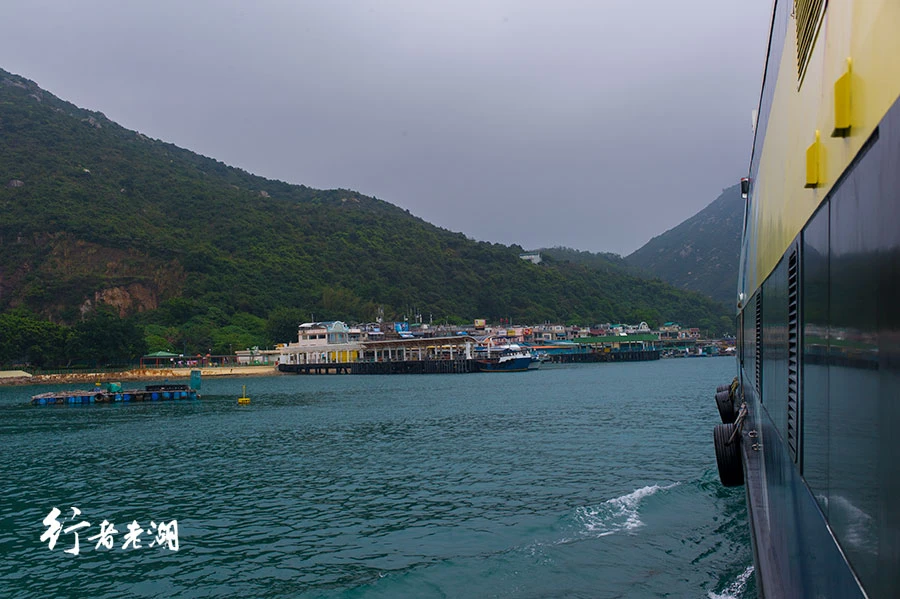
Exiting Sok Kwu Wan Pier No. 2, turning left leads to Mo Tat New Village, Shek Pai Wan, and Sham Wan, a long-distance scenic hiking route. Turning right is a shorter leisure hiking route, which is the choice of most hikers. Near the pier, there is a food street with seafood stalls and cha chaan tengs. At the end are dried seafood and Hong Kong-style snacks. Try Lamma seafood, buy Hong Kong-style pastries, drink cold beverages and tong sui. No matter what you eat, sitting in a shop by the sea is also a way to enjoy island time.
Through the seafood street is Sok Kwu Wan on the east coast, home to a 150-year-old Tin Hau Temple. The temple once housed a Qing dynasty cornucopia and an ancient bell, and also displays a specimen of an oarfish. The incense is very strong. Past the temple is a Kamikaze Cave, dug by the Japanese kamikaze unit during the Japanese occupation of Hong Kong. The cave once hid several assault speedboats used for suicide attacks on Allied ships.
When you see a beach on the right with a road turning right, leave the Family Walk and detour to "Lo So Shing Rest Area," a signature spot most Family Walk hikers easily miss. After crossing a beach, reach the Lo So Shing Rest Area, with a rain shelter and tables and chairs. Since few people come here, sit down, drink water, and enjoy the view—a place where "the view is enough to fill you up." It is my favorite scenic spot on Lamma Island. After a short rest, climb up to the Sea View Pavilion. From there, you can overlook all of Sok Kwu Wan nearby and see Repulse Bay across the East Lamma Channel in the distance. The most photogenic shots of Lamma Island are taken from here.
In Sok Kwu Wan, there is a large fish raft, the Lamma Island Fisherfolk Culture Village, where you can fish, learn net pulling and rope knotting. You need to buy a ticket at Sok Kwu Wan and take a boat to the raft. Returning to the Family Walk and continuing, there is a small village with only a few households. There are few residents, and wild boars appear. The houses in the village have huge wild boar graffiti. Follow the main road to a fork and turn left. Below the hill is Lo So Shing Beach. A round trip hike takes more than half an hour.
Along the Lamma Island Family Walk, shrubs dominate, with many wildflowers on the hillside, but not many shade trees. The path is paved with stones. Hiking in summer is very hot, and without proper sun protection, it is unbearable. There is almost no food or drink along the entire crossing of Lamma Island, so you need to bring your own. When you reach the rest pavilion at Lamma Island Bee Valley, there is a stall selling cold drinks and ice cream in summer. Eating and drinking there is an ultimate treat during the hike.
On the way to Yung Shue Wan Pier, don't hesitate to "stray from the path." Find a fork and follow a small trail. Generally, it will go farther and be more tiring, but soon you'll find some nice views—maybe a beautiful bay or a lush shrubbery area, not as exposed to the sun as the main path. Just remember the way back to the Lamma Island Family Walk.
When you reach Bee Valley, you've only covered one-third of the entire journey, but from here it's all downhill, much easier, and it gets busier as you go. That's why I chose to reverse the crossing. At Bee Valley, you can see the sea and opposite is the Lamma Power Station. The three large chimneys are a landmark of Lamma Island. Walking along the coastal Family Walk, you are always on the hill and cannot go down to the sea. Only when approaching Hung Shing Yeh Beach can you truly touch the sea.
The best beach on Lamma Island is Hung Shing Yeh Beach, which is also a free public beach in Hong Kong with free changing rooms, toilets, and other facilities. The beach is small but the sand is good. When hiking Lamma Island in summer, bring your swimsuit, swim in the sea to wash away fatigue, and grab some food, coffee, or drinks at Hung Shing Yeh Beach.
Not far from the beach, there are many residential houses. You can wander in and take photos. By the beach, there are the island's oldest hotel, the Wave Mansion Hotel, and Dayang Mini Resort Hotel, among other hotels and guesthouses. Having a coffee in the small garden in front of Wave Mansion, or eating something at Fai Kee Snacks, is also a joy during the hike. Nearby small restaurants, coffee shops, and cold drink stalls offer better value for money.
Continuing the hike, at the crossroad, the right turn leads to the Lamma Island Wind Power Station, one of Lamma Island's eco-tourism trails. Many people go specifically to see the 71-meter tall wind turbine. There are three eco-tourism trails on Lamma Island, located in the south, north, and central parts of the island. They vary in length, with walking times from 1.5 to 3 hours. Those who only come to the island for a day won't have time to experience them.
Lamma Island's Kin Hing Ah Po's Tofu Pudding is a truly representative local snack. Ah Po's Tofu Pudding has become an iconic food of Lamma Island. Under big trees full of flowers, there are small stalls offering barbecue, noodles, and other snacks—quite a variety. A bowl of tofu pudding or soy milk, and some photos.
In the village, you can stroll and rest. The walls are covered with graffiti, both childlike and artistic. The natural vegetation of the small village seems to grow wild, but it is clean. I wonder if Chow Yun-fat, who was born on Lamma Island, also played and ran here as a child. Along the way, small shops sell some handmade tourist crafts at reasonable prices. Occasionally, children beg their parents for them.
On the east coast of Lamma Island's Lo Chau Village, there is a century-old Tin Hau Temple, not far from Yung Shue Wan. Every year on the 23rd day of the third lunar month, the Tin Hau Festival features dragon boat races and rowing races. Yung Shue Wan is the most bustling area on the island. 70% of Lamma Island's residents live in the Yung Shue Wan area. When the Lamma Power Station was built in 1990, many foreign engineers moved to live in Yung Shue Wan, and later more expatriates in Hong Kong gathered here.
Many village houses have been converted into holiday homes. Small shops in front hang signs for holiday home rentals. Many holiday homes face the sea, with balconies overlooking Yung Shue Wan. One weekend, I saw a house for rent and rented one. The room was almost empty, but the balcony had a view of the sea. Since I hadn't planned to stay on the island, I didn't bring toiletries or towels. I had to go buy them on the street, but the street had everything, and the prices were not high.
On weekends and public holidays, people from Hong Kong Island take ferries to Lamma Island. Those who don't want to hike go directly to Yung Shue Wan Pier and back. Yung Shue Wan Main Street is lined with small shops—cha chaan tengs, grocery stores, fruit stalls, sundry shops, coffee shops, and bookstores—giving a rather exotic atmosphere. The alleys are crowded with people, comparable to the busy streets of Hong Kong. Lamma Island still retains its old fishing village appearance, without large-scale construction due to the influx of tourists. This, in turn, makes it a place where people escape the concrete jungle and flock to.
Lamma Island Travel Tips: Exit MTR Hong Kong Station Exit E1, walk to Central Pier No. 4, take a ferry to Lamma Island Yung Shue Wan Pier or Sok Kwu Wan Pier. Ferries run frequently, about every 20-30 minutes. Yung Shue Wan Pier and Sok Kwu Wan Pier are at opposite ends of Lamma Island. You can land at one pier, cross the island, and return to Central Pier from the other.
Part of this travelogue is excerpted from my latest book, "No Work, Go to Islands: A Blue Love Song of the Guangdong-Hong Kong-Macao Greater Bay Area." Without the consent of myself and the publisher, it is prohibited to publish the text and images of this travelogue under any other name (including but not limited to screenshots, screen captures, conversion to video, etc.).