An Island of Only Seven Thousand People, Once Home to Hundreds of Factories, Now a Hong Kong Tourist Destination After They All Closed
On February 6, 2023, Shenzhen and Hong Kong fully resumed border crossings, and with the reopening of outbound travel, crowds of tourists began pouring into Hong Kong. The Pearl of the Orient started to regain its vitality and even looked forward to renewed prosperity. But a tiny outlying island in Hong Kong has become famous in the Greater Bay Area for its "decline." This patch of land, less than one square kilometer in size, once housed over a hundred factories and served as Hong Kong's industrial center. After industry gradually faded, it gained a rare tranquility, becoming a place for people to explore Hong Kong's industrial relics.
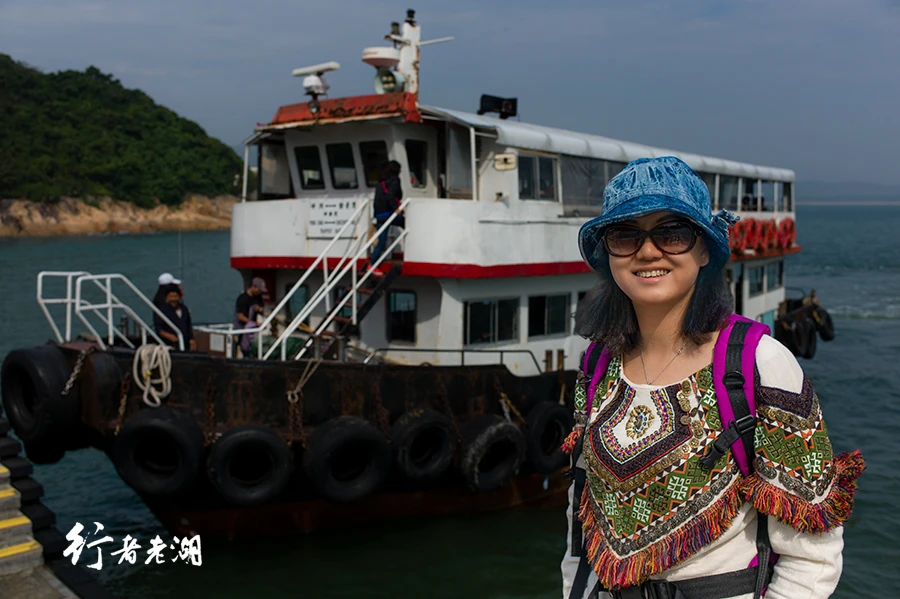
This small island is Peng Chau. The ferry to Peng Chau is small—a two-deck steel-hulled fishing boat with few passengers. Besides a handful of foreign tourists, most are island residents. We blended in quite comfortably. The famous Taiwanese stage director Stan Lai's play "The River That All Rivers Flow Into" tells the story of a male protagonist who fails in his career during the financial tsunami and, amid great upheaval, meets a little girl who takes him to Peng Chau on a spiritual journey to find the water book.
The busiest part of Peng Chau is the market near the ferry pier, with shops concentrated around the pier. Compared to the hustle and bustle of Cheung Chau, it's far from lively. As we disembarked, we happened to see young islanders practicing lion dancing—perhaps rehearsing for a traditional festival like Tin Hau's birthday, Kam Fa's birthday, Dragon Boat Festival, or Tin Hau's village tour. With raw passion and the sound of drums and gongs, it drew tourists to stop and watch.
To the right of the pier is a seaside walkway paved with bricks, smooth and clean, with a seawall and railing along the shore. This is part of the Peng Chau section of the outlying islands' nature trail. Strolling along the sun-drenched coastal path, we saw large strips of dried fish hanging by the roadside, almost smelling the aroma of steamed fish. Greeted by the warm sea breeze, we couldn't help but slow down, soaking in the fresh air.
The houses on Peng Chau are quite old, reminiscent of mainland dormitories from the 1970s and 80s, evoking a nostalgic sense of childhood home. Everything is kept very clean. Some doors have wreaths and a Santa Claus with "Merry Christmas" written in English—small details that instantly bring you back to the present moment on this Hong Kong island.
Passing by a house, we saw what looked like a pile of discarded items: old appliances, furniture, and tires. A toy car with large tires sat on top of a computer chassis, perfectly placed, more like an art display, silently telling of Peng Chau's prosperous past and its present stillness.
There are two abandoned old buildings on the island. One two-story building faintly shows the characters "Victory"—the former site of Victory Lime Kiln Factory. In the late 19th century, there were 11 lime kilns on Peng Chau. After 1950, cement became prevalent, demand for lime decreased, and the kilns gradually closed. Today, only the dilapidated factory remains as a witness to that history.
Wing On Street is the liveliest place on Peng Chau. It's a narrow alley barely wide enough for two bicycles, about 500 meters long, lined with tiny shops. The shops' awnings stretch out toward each other, covering the alley, making it feel like a dark lane in Morocco. Fortunately, it's not long, so you won't get lost. There aren't many conventional tourist souvenirs on Peng Chau, but there are some interesting trinkets like Dehua porcelain, Hui'an stone carvings, and puppets—fun discoveries to take home as souvenirs.
Heading from Wing On Street toward Kam Ping Estate for about 10 minutes, then turning left for a few minutes, you'll find the stone marker for the former "Greater China Match Factory." In 1930, Shanghai match king Liu Hongsheng established the Greater China Match Factory. At its peak, it employed up to 2,000 workers and was the largest match factory in China and Southeast Asia. The "Fei Lun" brand matches were hugely popular.
During the Anti-Japanese War, it moved to Peng Chau. With the rise of lighters, the match factory closed in the 1970s, leaving only a few boundary stones. The hundreds of factories on the island are now gone, marking the end of Hong Kong's once-thriving industrial center. At a T-junction, there is an incense altar for worship, its colors standing out vividly amid the old streets. An eternal flame still burns, showing that people often come here to burn incense and pray for safety.
Most of the houses on the island are no more than four stories high, maintaining their old appearance. The buildings are aged but brightly colored, clearly well-maintained. Many rooftops have long-outdated antennae shaped like dragon bones, once ubiquitous in the Pearl River Delta region of Guangdong. With the spread of cable TV, these receiving devices are long gone. At the end of Wing On Street is the former Peng Chau Theatre at 15 Wai Chai Street. Under its yellow-on-red sign, the theater is now closed and converted into a private residence, inaccessible. Taking a souvenir photo in front feels like a time warp.
The market on Peng Chau is inside a large building. If time permits, you can buy seafood and have it cooked at a restaurant. Peng Chau also offers plenty of seafood delicacies: pepper shrimp, steamed mud fish with tangerine peel, blanched geoduck, pan-fried sea fish, stir-fried clams with ginger and spring onion, steamed crab with eggs, and fish soup.
On the commercial street, there are only a few small eateries and tea houses, as well as Cantonese, Thai, Vietnamese, and other tea restaurants. The shops have few diners, and the prices are reasonable. At the corner, a slightly larger restaurant with ordinary decor is packed, with waitstaff bustling about. When the steamers are opened, the aroma rises, and various Cantonese dim sum are cheap and authentic.
Though small, Peng Chau has two hiking trails: Peng Yue Path and Family Trail. After disembarking, walk left for a few minutes to Peng Lei Road. To the left is Tai Lei Bridge, connecting Peng Chau to a tiny islet called Tai Lei. Tai Lei was once surrounded by coral reefs, but the lime kilns killed the coral, leaving only dead coral stones. Standing on Tai Lei Bridge, you can see Lantau Island and Disneyland in the distance. To the right is the Peng Yue Path for hiking, with a scenic spot called "Fishing Man" at its northern end.
To the right of Peng Chau Pier is the entrance to the Family Trail, leading to the island's highest peak, Finger Hill, at 95 meters above sea level. The path to the summit is not difficult. If you stay until sunset, the sea glitters with gold. From the highest point, Peng Chau looks like the Chinese character "凹" (concave). At high tide, the low-lying central area is submerged, briefly creating the illusion of two islands. A path near the coast leads down to a small beach. Though not large, the water quality is good for swimming. The descent path is narrow, lined with banana leaves, weeds, and various wild plants growing untamed.
The Tin Hau Temple at 69B Wing On Street on Peng Chau is over 200 years old. Next to it is a Qing Dynasty stele banning the sealing of boats. Turning left from the Tin Hau Temple is the Kam Fa Temple on Wing On Street, dedicated to Kam Fa, the goddess of fertility. The Sin Cheung Temple in North Bay is one of only two remaining temples in Hong Kong dedicated to the Seven Sisters. Legend has it that the Kam Fa Temple and Sin Cheung Temple are very efficacious for prayers for children. The largest temple on the island is the Lung Mo Temple (Hong Kong Yue Lung Shing Yuen) at 15 Chi Yan Street. It is said that touching the dragon bed brings good luck, and the objects you touch can predict your fortune.
Peng Chau also has some modern new buildings, but tourists still prefer to seek out the old and tranquil. By the pier, a group of people are paddling canoes and hitting a ball with their paddles—a game whose rules we didn't understand, but which seemed novel. Peng Chau has about 7,000 residents and is the island with the lowest crime rate in Hong Kong. From a bustling industrial center to a quiet island, it has undergone great changes. I wonder if those who once lived through career failures have overcome their shadows and found their own "River That All Rivers Flow Into."
Tips: Take a ferry from Central Pier No. 6 in Hong Kong to Peng Chau. Ferries run about every ten to fifteen minutes, with a journey time of about 40 minutes; the high-speed ferry takes about 25-30 minutes. Walking around the entire island, taking photos as you go, takes about an hour and a half. After visiting Peng Chau, if time permits, you can continue by ferry to Mui Wo.
This travelogue includes excerpts from my newly published book "No Work, Go to the Island: The Blue Love Song of the Guangdong-Hong Kong-Macao Greater Bay Area." Republishing this travelogue's text and images (including but not limited to screenshots, screen recordings, conversion to video, etc.) under anyone else's name without the consent of the author and publisher is prohibited.