Rediscovering Hong Kong: A City Walk After Five Years
After many years, the long-awaited trip to Hong Kong brought me many unexpected surprises. In the past, I only came to Hong Kong for shopping, missing out on another side of the city. This time, I followed the trend and took a city walk in Hong Kong, searching for the everyday Hong Kong atmosphere seen in TVB dramas.
Now there are high-speed trains from Beijing to Hong Kong, with G97 running once a day, reaching Hong Kong in 8 hours and 31 minutes—very convenient.
Here are some things to note when traveling to Hong Kong:
1. The processing time for visa endorsements varies by location; make sure your endorsement is valid before departure.
2. You need to bring a power adapter; Hong Kong uses British standard three-pin plugs.
3. For internet access, I used a Yidian Connection SIM card, which works like a regular phone card—just insert it into your phone and you're online with fast speeds.
4. The cost of living in Hong Kong is quite high; hotel rooms are generally small and do not provide disposable toiletries, slippers, or combs, so it's advisable to bring your own.
5. An Octopus card is essential for traveling in Hong Kong—it can be used on buses, the MTR, ferries, convenience stores, and many other places. It's incredibly convenient.
6. It's a good idea to exchange some Hong Kong dollars in cash; on islands like Lamma and Cheung Chau, most places except convenience stores require cash, and you'll also need cash for taxis in Hong Kong.
7. Google Maps works well in Hong Kong, and its walking navigation is pretty good too.
The Hong Kong Palace Museum is a new museum that opened in July 2022, with seven themed galleries taking you from the Forbidden City to Hong Kong.
Gallery 1: Forbidden City: Architecture, Collections, and Cultural Heritage
Gallery 2: A Day in the Forbidden City: Life in the Qing Court
Gallery 3: From Earth to Porcelain: Ceramics from the Palace Museum Collection
Gallery 4: Dragon and Phoenix: Portraits of Qing Emperors and Empresses
Gallery 5: Contemporary Design in Dialogue with Ancient Craftsmanship
Gallery 6: Shared Joy: A Journey Through Hong Kong’s Collecting History
Gallery 7: The Mountain City: Exploring New and Old Gardens (opening November 1)
When you're tired from walking, come sit here; the floor-to-ceiling windows offer a view of Victoria Harbour. Sunlight streams in, making the space bright and comfortable. Many people sit here quietly gazing out the window.
Tips: Open Monday, Wednesday, Thursday, Sunday 10:00–18:00; Friday, Saturday, and public holidays 10:00–20:00; closed on Tuesdays (except public holidays).
M+ is not just a museum; both its architecture and layout visually convey a sense of exploration and imagination. It is a comprehensive art center integrating art, design, and culture. Whether contemporary art, photography, or design, it is filled with the creativity and thoughts of artists. Artistic charm is presented in different ways; art has no fixed meaning, and from different perspectives, the artworks you see are full of infinite imagination.
Tips: Closed on Mondays; open Tuesday, Thursday, weekends 10:00–18:00; Friday 10:00–22:00. Backpacks larger than 30×42×10 cm must be checked; lockers require a fee but no deposit.
Currently, there is a special exhibition at B2: Yayoi Kusama's "Obsession with Dots - Longing for Heaven's Love." Unlike the usual high-contrast polka dots, this exhibition uses black and white to cover walls and floors, and with the reflection of mirrors, it feels like being in a magical world. Amid the endless dots, the existence of real space is blurred, leaving only dizziness and confusion about where you are, creating an infinitely extended space. Being there, the boundary between the real world and illusion seems less important.
Tips: The space is divided into two parts: the inner room with mirrors allows only five people at a time for 30 seconds, and you can queue repeatedly.
K11 MUSEA in Hong Kong is a cultural and artistic shopping center with a building area of 130,000 square meters, completed over 10 years. Inside, you can not only shop and eat but also see designs by art masters from around the world. It's hard for any visitor to Hong Kong to miss it, as it is located at 18 Salisbury Road, Tsim Sha Tsui, right next to the beautiful Victoria Harbour and the Avenue of Stars.
The large-scale installation "Untitled: Big Building; Decorated Ball" by renowned British contemporary artist Phyllida Barlow is making its Asian premiere, boldly displayed at the entrance. There are many hidden artworks inside the mall waiting for you to discover.
Exiting K11 MUSEA brings you to the beautiful Victoria Harbour; walking along the waterfront leads to the Avenue of Stars. Many well-known celebrities are represented here. Previously, the handprints were embedded in the ground, but this time they have been moved to the railings.
The Star Ferry's ticket price is a wonder in Hong Kong's high-cost environment; locals rarely take it to cross the harbor. The Star Ferry has three piers: Tsim Sha Tsui Star Ferry Pier (near K11 and the Avenue of Stars, close to the Clock Tower), Central Star Ferry Pier (Pier 7 at Central Ferry Piers, formerly known as Central Outlying Islands Ferry Pier, still used in navigation maps, but numbered to distinguish it from outlying island piers), and Wan Chai Star Ferry Pier.
The history of Central Market dates back to 1842, with a history of over a hundred years, making it one of the oldest markets in Hong Kong. After ceasing operations in 2003, the Urban Renewal Authority took over management, and with the leadership of developer Chinachem Group, the revitalization project of Hong Kong's oldest market began. On the first floor, the original red bricks and signboard of the old Central Market are displayed, along with a piano for free play. That day, I encountered a skilled elderly man playing as if there were a band behind him.
With the theme "Playground for All," the three-story building is divided into three main elements. The market houses numerous shops, old market stalls, time-honored brands, and many trendy creative boutiques, Hong Kong-style food stalls, and art market exhibitions that appeal to young people.
The staircase that was the filming location for the movie "The Name Above the Title" by photographer Fan Ho is right here! The long windows let light shine through the atrium, and the retro wall colors and handrails create a distinctly Hong Kong atmosphere. The classic large clock, however, seems to have disappeared.
The Central-Mid-Levels Escalator in Hong Kong became famous because of the film "Chungking Express." Riding it will open a new world for you, giving you a different perspective on human transportation. It is the longest outdoor covered escalator system in the world, with a total length of about 800 meters and a vertical drop of about 135 meters. Its direction changes depending on the time of day: from 6:00 to 10:00 AM on weekdays, it goes downhill; the rest of the time, it goes uphill. Since it opened in 1993, it carries about 80,000 passengers daily, making it an indispensable means of transport between Central's business district and the Mid-Levels residential area.
The former Central Police Station compound, now known as Tai Kwun, includes the Central Police Station, the former Central Magistracy, and Victoria Prison. Eight historical story spaces tell the past and present of this location.
Tai Kwun is currently free and open to the public, with various themed exhibitions held from time to time. The lounge chairs in the parade ground are free to use on a first-come, first-served basis; it's a great place to relax and daydream.
A short walk from Tai Kwun brings you to the former Hollywood Road Married Police Quarters, which has been transformed into a creative landmark in Hong Kong—PMQ. It brings together over 100 local designers who have set up art studios and creative shops here, each room offering unexpected surprises.
How can you visit Hong Kong without experiencing the night view from Victoria Peak! There are two ways to go up: the Peak Tram or bus. You can queue to buy tickets on site or purchase online. The most convenient is to use an Octopus card (essential for Hong Kong travel). When taking the tram, the best view is from the front row on the right side (the rightmost seat closest to the platform). During the ride, the buildings appear surreal and visually stunning.
At the top, besides the paid viewing platform, there are free viewing spots like Lion's Pavilion, which offers a wider view, though it tends to be more crowded. The frequently mentioned Lugard Road is about a kilometer uphill from the peak, about a 15-minute walk to the summit.
The fame of Lan Kwai Fong in Hong Kong has long been known to the public through popular Hong Kong films. It is an L-shaped alley in Central, Hong Kong. The whole Lan Kwai Fong is not as big as imagined, but it is packed with bars of all sizes. It's not very crowded on weekdays, but it gets quite lively on weekends.
The blue sea and rolling waves always have an inexplicable charm that captivates the heart. Whether it's the peace of being away from the hustle and bustle or the solitude of an island, both locals on a short trip and tourists want to visit Lamma Island or Cheung Chau to immerse themselves in the moment. The island scenery is as vivid as a painting; the lush vegetation brings a touch of coolness to the sunny weather. Wandering through the village lanes, blending into the local life, you experience a different kind of everyday atmosphere.
To go to Lamma Island, take Pier 4 at Central Ferry Piers; to go to Cheung Chau, take Pier 5. Again, the Octopus card is the most convenient for ferry tickets—highly recommended for Hong Kong travel. Both islands have plenty of dining options, but over 90% of payments require cash; convenience stores accept Octopus or credit cards. The most convenient transport on the islands is bicycles, costing about 20 HKD per hour or 40 HKD for an afternoon.
Hong Kong still preserves many traditional celebrations. Every Mid-Autumn Festival, the Tai Hang district hosts a Fire Dragon Dance (three nights around the festival: the 14th day of the eighth lunar month for welcoming the moon, the 15th for admiring the moon, and the 16th for sending off the moon). This tradition has been passed down for nearly 140 years. The fire dragon, rebuilt each year, is 67 meters long, consisting of a head, tail, and 31 body segments. Amidst the lively sounds of gongs and drums, the dragon, covered with burning incense sticks, is carried through the streets, dancing up and down like a real fire dragon.
The Tai Hang Fire Dragon Heritage Centre is subtly hidden in a small alley; without the small sign at the entrance, it would be hard to find. Yet it is also conspicuous: as you enter the alley, you see the entire street filled with colorful flags fluttering in the wind, signaling that the center is nearby. Inside, mini models of the fire dragon dance are displayed, each like a hidden "blind box." Many celebrity faces are hidden in the fire dragon procession, many of them household names you can easily recall.
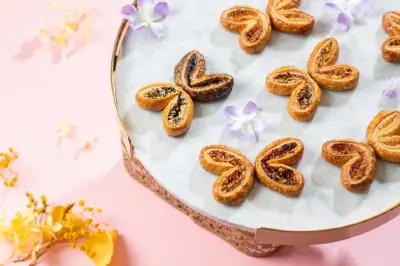
Not far from the Tai Hang Fire Dragon Heritage Centre, I came across a popular cookie shop in Tai Hang—Cookie Vission. When I arrived, there were only a few items on display, but the storefront was so charming that I couldn't resist taking a couple of photos.
In the fast-paced, land-scarce Hong Kong, look up and you'll see Lee Tung Avenue, with its street filled with colorful lanterns. There are shops both above and below ground for shopping and dining, and you can enjoy a slow moment on the benches along the street. The sky above changes with different festivals; in September, lanterns fill the sky for the Mid-Autumn Festival, creating an even more enchanting atmosphere at night.
Sun Street, Moon Street, and Star Street were originally a power plant; the street names come from the "Three Luminaries" in the Three Character Classic: sun, moon, and stars. Walking up the slope of Star Street, the tranquility here clearly separates from the bustling traffic outside. This distinctive neighborhood is home to select shops, niche designer brands, restaurants, and cafes—each with its own style. While enjoying good food, it's also a great place for photos.
In 1953, a fire broke out in Shek Kip Mei, Sham Shui Po, leaving tens of thousands homeless. It was urgent to provide long-term housing for residents, so eight buildings were built, one of which was Mei Ho House—one of the first true public housing estates in Hong Kong. The Mei Ho House Living Museum is now open to the public for free, no reservation needed. Closed on Mondays; open Tuesday to Sunday from 10:00 to 18:00. It also operates as a YHA youth hostel, with bed prices ranging from 200 to 500 HKD.
Yaumatei Police Station has appeared in many Hong Kong films. It is also a protected building, built in 1922, and is one of the oldest surviving police stations in Hong Kong. Although it is still called Yaumatei Police Station, it is no longer used as a police station. So feel free to take photos at the entrance.
Do you remember which Hong Kong film featured Yaumatei Fruit Market? This market has a history of over a hundred years and is still in operation today. The fruit here is cheaper than in the city, and there’s no issue with shortchanging—Hong Kong is very strict about such matters.
Lan Fong Yuen, famous for its milk tea, has become a must-visit shop in Hong Kong. The store is small and packed every day. If you are dining in with a group, you must wait until all your friends have arrived before entering, because the shop is so small that lingering would affect business. "Don't rush, but be quick!" That's the essence of a Hong Kong-style tea restaurant. Stick to the top five items on the drink menu, and you won't go wrong; I haven't tried the others yet.
Hong Kong also has many specialty dining spots, such as Kam's Roast Goose, a Michelin one-star roast goose restaurant for eight consecutive years. To taste it, you must queue, usually for at least half an hour. The shop is small, and tables turn over quickly. Such restaurants are not for lingering and chatting; people eat and leave, so the wait isn't too long. The average cost per person is around 200 HKD.
Finally, Ap Lei Street (Apliu Street) and Temple Street mark the end of this Hong Kong trip! These are places not only for tourists but also for locals. On Ap Lei Street, you can find cheap small electronics and parts. Portable fans like these are practically a must-have. I also noticed a distant bone-setting clinic that I'd like to check out.
Temple Street has been a place where people from all walks of life have gathered since the 1940s. Fictional characters like Nameless and Chicken from the movies “made their way” here. Today, it remains bustling, with clothing, tourist souvenirs, and dai pai dong (open-air food stalls)—the later it gets, the livelier it becomes. Every time I come to Hong Kong, I seem to be busy checking in at various spots. But I want to know what it's like when Hong Kong slows down. Every street corner, every sign, every cha chaan teng is full of stories. Many old shops need to be entered and savored slowly. My 2023 Hong Kong trip has only scratched the surface; I hope to have another opportunity to visit, slow down, and truly experience the moment.