Dabing Lücao's 2019 Autumn 30-Day 4500 km Self-Drive Slow Tour of Western Turkey (15) - Istanbul
This section introduces our travel in Istanbul, Turkey, mainly including an introduction to Istanbul, itinerary and hotel information, main attractions and highlights.
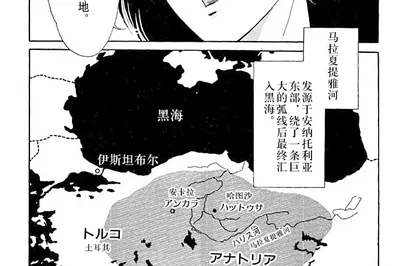
Istanbul is the political, economic, cultural, financial, news, trade, and transportation center of Turkey, a world-famous tourist destination, and one of the bustling international metropolises. Istanbul is located on the eastern tip of the Balkan Peninsula, at the southern exit of the Bosphorus Strait, commanding the entrance to the Black Sea. It is a key junction between Europe and Asia, with extremely important strategic position.
Istanbul was founded in 667 BC, originally named Byzantium. In 330 AD, Constantine I moved the capital of the Roman Empire here, initially called New Rome, but soon renamed after its founder Constantine—Constantinople. In 395 AD, after the Roman Empire split into Eastern and Western Roman Empires, Constantinople became the capital of the Eastern Roman Empire. During the Macedonian dynasty (867-1081 AD), Constantinople reached its peak of prosperity, expanding to a considerable area, filled with architectural masterpieces, considered the greatest city in the Western world. From the 10th century, Turks and Arabs began to call Constantinople Istanbul. In 1453, after the walls of Constantinople fell under the cannon attack of Mehmed the Conqueror, Constantinople became the capital of the Ottoman Empire. The names Constantinople and Istanbul were used simultaneously until the fall of the Ottoman Empire. In 1923, after the founding of the Republic of Turkey, Istanbul became the official international name.
Napoleon once said: If there is only one capital in the world, it must be Istanbul! As a world-famous city spanning Europe and Asia, Istanbul carries the historical legacy of the Roman, Byzantine, and Ottoman empires, with an incomparably splendid cultural heritage. Countless museums, mosques, churches, palaces, etc. open doors for visitors to dialogue with history, while the scenery of the Bosphorus Strait will also delight nature lovers.
We left Çanakkale on November 11, 2019, heading to Istanbul, arriving at our booked hotel around 4 p.m. After dropping off my wife and luggage, Brother Cong and I drove to Istanbul Airport to return the car, safely and smoothly ending our self-drive trip in Turkey, covering 360 km that day.
On November 12, we toured Istanbul city, mainly visiting Hagia Sophia, Sultan Ahmed Mosque, Hippodrome of Constantinople, Basilica Cistern, etc.
On November 13, we continued touring Istanbul, mainly visiting Dolmabahçe Palace (New Palace), Taksim Square, İstiklal Avenue, Galata Tower, Nusretiye Mosque, Tophane Fountain, Kilic Ali Pasha Mosque, Galata Bridge, etc.
On November 14, we continued touring, mainly visiting Topkapi Palace (Old Palace), Istanbul Archaeological Museums. At 5 p.m., we took a Bosphorus cruise to tour the Bosphorus Strait.
On November 15, we visited the Column of Constantine, Grand Bazaar, and Süleymaniye Mosque in the morning. In the afternoon, we took the M2 metro line to a shopping mall near Osmanbey Metro Station.
On November 16, we flew from Istanbul to Tel Aviv (Israel).
From November 11 to 16, 2019, we stayed at Yasmak Sultan Hotel Istanbul, a three-star hotel located in the old city area of Istanbul. The location was excellent, very close to major attractions like Hagia Sophia, Sultan Ahmed Mosque, Hippodrome, Basilica Cistern, all within a 10-minute walk. For slightly farther attractions, there was a light rail station nearby. For travel to the airport, the bus terminal was right next to Hagia Sophia, making transportation very convenient. There were many restaurants and small supermarkets around the hotel, so daily needs were well covered. The hotel facilities met its star rating. The rooms were a bit small, but for a hotel in a busy downtown area, it was good. Housekeeping was proper. Breakfast was served on the top floor with nice views, a rich variety, and quite suitable for Chinese palates, including plenty of vegetables and fruits. Recommended.
(Photos from hotel description)
1. Hippodrome of Constantinople
The Hippodrome of Constantinople (Sultanahmet Meydanı, At Meydanı) is located in the center of Istanbul's old city. It was built during the reign of Constantine. The site was about 450 meters long and 130 meters wide, with 40 rows of horseshoe-shaped seats, accommodating 4,000–5,000 people. It was the sports and social center of the Byzantine capital. After thousands of years, the former glory of the ancient hippodrome is gone. Now it is Sultanahmet Square. In the central axis stand the German Fountain, Obelisk of Theodosius (Obelisk of Thutmose III), Serpent Column, and Walled Obelisk, which are the landmarks of the square.
The German Fountain is at the northern entrance of Sultanahmet Square. It is a Byzantine-style octagonal arched fountain with a royal bearing, a gift from the German government in 1900 to commemorate German Emperor William II's visit to Istanbul in 1898.
The Obelisk of Thutmose III (also known as the Obelisk of Theodosius) is in the middle of Sultanahmet Square. It was brought from the Karnak Temple in Luxor, Egypt by Roman Emperor Theodosius I in 390 AD and erected inside the hippodrome track. The obelisk was originally erected by Pharaoh Thutmose III around 1490 BC in front of the Karnak Temple in Luxor. It is made of pink granite. To transport it to Constantinople, it was cut into three pieces.
The Serpent Column is from the Plataean Tripod at the Temple of Apollo in Delphi. This tripod was built in 478 BC to celebrate the Greek victory over the Persians at the Battle of Plataea during the Persian Wars. Its top was a golden bowl supported by three serpent heads. In 330 AD, Constantine ordered it to be moved from Delphi to the center of the Hippodrome of Constantinople. During the Fourth Crusade, the golden bowl was destroyed. The serpent heads were destroyed in the late 17th century.
The Walled Obelisk, also known as the Column of Constantine, is at the southern side of Sultanahmet Square. It is 32 meters high, built of stone. Its exact construction date is unknown, but it was repaired by Constantine VII in the 10th century. According to records, the obelisk was originally decorated with gilded bronze plaques depicting the achievements of Constantine VII's grandfather, Basil I. However, in 1204, the Crusaders stole and melted these gilded bronze plaques. Today, the stone core of the obelisk survives, known as the Walled Obelisk.
At the southwestern end of the square is a uniquely shaped building, which is Marmara University.
2. Hagia Sophia
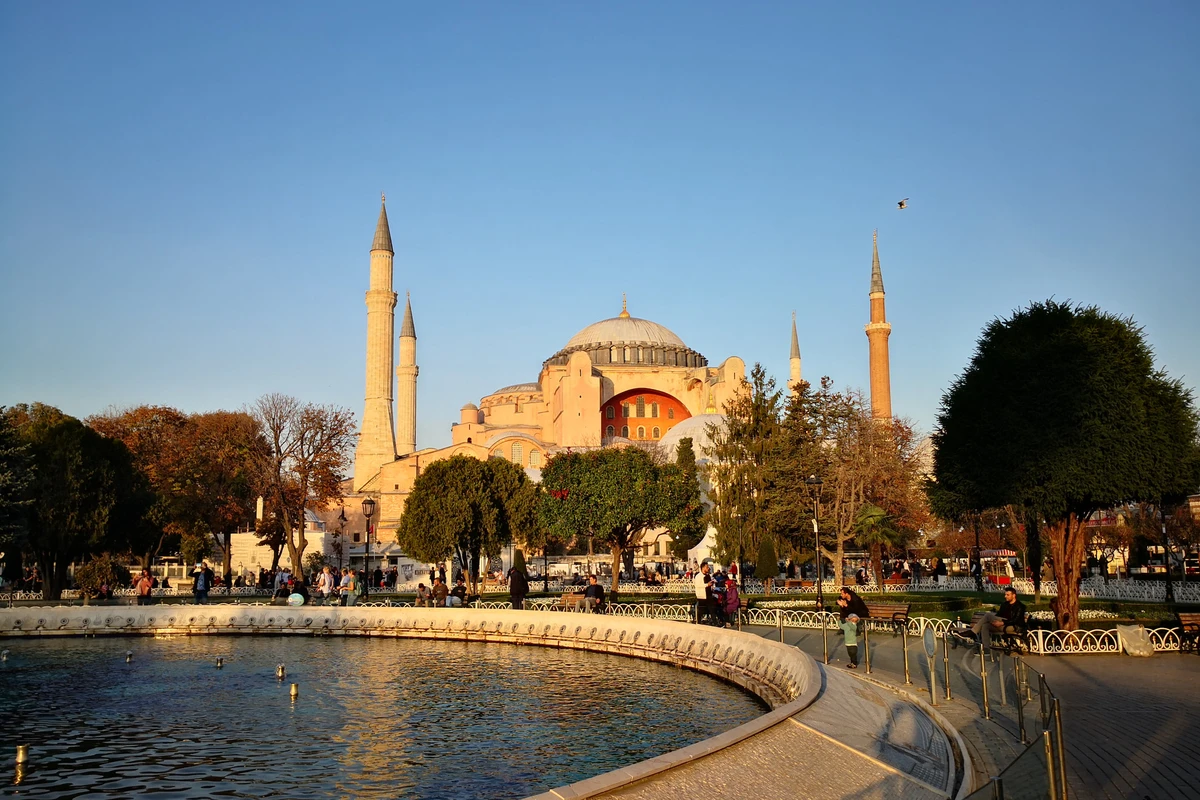
Hagia Sophia was built by Roman Emperor Constantine as a church dedicated to the goddess of wisdom, Sophia. It was constructed in 325 AD. It is 77.0 meters long east-west, 71.0 meters north-south, with a central dome 32.6 meters in diameter, 54.8 meters high from the ground. At the base of the dome are 40 large windows and 4 majestic arches, typical Byzantine architecture.
Hagia Sophia existed as a Christian church for 916 years, then was converted into a mosque for 481 years. After 1935, it was opened to the public as a museum, attracting thousands of tourists every year. In 1453, Ottoman Sultan Mehmed II conquered Constantinople, covered all Byzantine frescoes with plaster, removed all Christian statues, built four tall minarets around it, and converted the thousand-year-old church into a mosque. After the founding of the Republic of Turkey, it was turned into a museum in 1935.
3. Sultan Ahmed Mosque
Sultan Ahmed Mosque, also known as the Blue Mosque, was built in 1609. More than one-third of the walls above the base are covered with blue tiles made in İznik, a famous Turkish porcelain town, with rich patterns and designs on a white background. The blue color of these tiles gives the entire interior a blue hue, hence the name Blue Mosque.
The Blue Mosque is the largest domed structure in Istanbul. Over thirty domes rise layer by layer towards the central dome with a diameter of 41 meters, grand and elegant. The interior space alone measures 64×72 square meters. The mosque has six minarets, making it the only mosque in the world with six towers.
The mausoleum of Ahmed I is to the north of the Blue Mosque, with its gate facing Sultanahmet Square. From the interior, it seems to be a family cemetery now.
4. Basilica Cistern
The Basilica Cistern is an underground structure near Hagia Sophia, built by Byzantine Emperor Justinian in the 6th century to store water for the palace and other buildings. Later, it was closed. This underground reservoir is 140 meters long and 70 meters wide, capable of storing 100,000 tons of water. It is a huge palace supported by 336 Corinthian columns, each carved with exquisite patterns. The dim lighting and distant dripping sounds lead visitors into a mysterious world.
At the far end of the cistern, two large columns rest on the heads of Medusa, one facing downward and the other sideways. No one has yet given an answer as to why they are placed this way.
5. Dolmabahçe Palace (New Palace)
Dolmabahçe Palace is located on the European shore of the Bosphorus Strait, built by Abdülmecid I in 1843. It is called the New Palace to distinguish it from Topkapi Palace, which is called the Old Palace. The New Palace is large and imposing, stretching 600 meters along the Bosphorus, reflecting the splendor and wealth of the once-great Ottoman Empire.
The palace covers a total area of 15,000 square meters, with 285 rooms and 43 halls, divided into the ceremonial palace and the harem. All doors, windows, and ceilings are elaborately decorated, some with gold accents. The largest central hall is supported by 56 columns and hangs a huge crystal chandelier weighing 4.5 tons, with 750 bulb crystals, descending from 36 meters.
Dolmabahçe Palace served as the main administrative building for Ottoman sultans until 1922. After the founding of the Republic of Turkey, it became the office of Mustafa Kemal Atatürk, the founder of Turkey, until his death.
6. Taksim Square
Taksim Square is located on Beyoğlu Street in the center of Istanbul, the most important central square. The Independence Monument to the south commemorates the founder of the Republic of Turkey, Father Atatürk. The wide open space to the north is a green park. The mosque adjacent to the west of the Independence Monument is Taksim Mosque. Around the square, there are hotels and more. At the southwestern corner of the square is a bustling pedestrian commercial street, the famous İstiklal Avenue.
7. İstiklal Avenue
İstiklal Avenue is a fashionable pedestrian commercial street, with trendy international brand boutiques, specialty shops for Turkish products, and unique bars and cafes. More notably, there are century-old pastry shops and colorful chocolate shops that constantly tempt passersby's taste buds, drawing them in.
8. St. Anthony's Church
St. Anthony's Catholic Church (St. Antuan Katolik Kilisesi) is the largest Roman Catholic church in Istanbul, located on İstiklal Avenue. It was originally built in 1725, later destroyed. The current church was rebuilt on the same site from 1906 to 1912 in Venetian Neo-Gothic style.
In front of the church is a statue of former Pope John XXIII. Before being elected Pope, he served as a priest at this church for 10 years as the Vatican's ambassador to Turkey. He did an excellent job in Turkey, spoke fluent Turkish, and earned the nickname "Turkish Pope" in Turkey.
9. Galata Tower
Galata Tower, called the Tower of Christ by the Genoese in the Middle Ages, is a medieval stone tower built in 1348. It is 9 stories high, 66.9 meters tall. At the time of construction, it was the tallest building in Istanbul, and it remains one of the most iconic landmarks of Istanbul. From the Galata Tower, one can get a panoramic view of the magnificent Istanbul city and the Bosphorus Strait.
10. Nusretiye Mosque
Nusretiye Mosque is an ornate mosque in Istanbul, located in the Tophane district of Beyoğlu. It was built between 1823 and 1826. Although the architectural style is influenced by Islamic architecture, it retains Baroque features. The interior decoration uses soft colors, very unique among mosque decorations, earning it the nickname "Green Mosque."
11. Kilic Ali Pasha Mosque
Kilic Ali Pasha Mosque is located on Kemeraltı Street in Istanbul. It is actually a complex consisting of a mosque, a mausoleum, and a Turkish bath. It was funded by General Kilic Ali in the 16th century and is a late work of the famous Ottoman architect Mimar Sinan. He referred to the ground plan of Hagia Sophia and elements from the Ottoman Empire period to construct this building.
12. Tophane Fountain
The Tophane Fountain, also known as the Fountain of Mahmud I, was built by Sultan Mahmud I in 1723. At the time, it was the third largest fountain in Istanbul. It is located next to the Kilic Ali Pasha Mosque. The period from 1700 to 1740 was a time when square fountains transitioned from the classical Ottoman style with pointed canopies and wide eaves to Western styles, and this fountain is a work from that transition period.
13. Galata Bridge
Galata Bridge spans the mouth of the Golden Horn, connecting the old and new parts of Istanbul. The first bridge was built in 1845 but was destroyed by fire. The current bridge was completed in 1992, with a total length of 490 meters, and can be opened in the middle to allow ships to pass. Aside from being a busy traffic artery, the bridge's pedestrian walkways are lined with anglers leisurely fishing, creating a sharp contrast with the bustling traffic.
14. Topkapi Palace (Old Palace)
Topkapi Palace is located at the confluence of the Bosphorus Strait, the Golden Horn, and the Sea of Marmara, also known as the Old Palace. Sultan Mehmed II ordered its construction in 1459. Over the centuries, the palace underwent expansion and repairs, including after the 1509 earthquake and the 1665 fire. On April 3, 1924, it became an imperial-era museum, managed by the Ministry of Culture and Tourism.
The palace is magnificent, with splendid tiles. The collection of sultan-specific weapons, armor, etc., is exquisite. The clocks and tableware used in the palace are finely crafted, all showing royal elegance. The palace terrace offers a wide view of the Bosphorus and the Golden Horn.
15. Istanbul Archaeological Museums
The Archaeological Museum is located in the center of Istanbul's old city, not far from Topkapi Palace. It primarily exhibits archaeological artifacts from various historical periods excavated in Turkey, reflecting the cultural development process of the Anatolian plateau in Asia Minor. Among these ancient artifacts, the sarcophagi excavated from Sidon, Syria, are particularly precious, earning it the nickname "Museum of Ancient Sarcophagi."
16. Istanbul Sirkeci Railway Station
Istanbul's old railway station, also called Marmaray Sirkeci Station, is located southeast of the intersection of Ankara Street and Kennedy Avenue in Istanbul. It is still in use today.
17. Column of Constantine
The Column of Constantine is located on Yeniçeriler Street in the center of Istanbul's old city, between Sultanahmet Square and Beyazıt Square. It was ordered by Roman Emperor Constantine the Great in 330 AD to commemorate the renaming of Byzantium to New Rome as the new capital of the Roman Empire.
The column was originally 50 meters high, divided into nine segments made of porphyry, with a statue of Constantine on top. A strong wind in 1106 destroyed the statue and the top three segments. Roman Emperor Manuel I repaired it, but later wars and earthquakes, especially the 1779 earthquake and fire, left it with black scorch marks, earning it the name "Burnt Column."
The current Column of Constantine is 35 meters high, one of the most important Roman artifacts in Istanbul, listed as a World Heritage site.
18. Grand Bazaar
The Grand Bazaar in Istanbul is one of the largest and oldest bazaars in the world. It was built by Sultan Mehmed II from 1455 to 1461. It is said to have 26 entrances, at least 58 indoor streets, and over 4,000 shops, on a grand scale. It sells various Turkish local specialty products: jewelry, ceramics, spices, carpets, scarves, clothes, gold ornaments, carpets, blue evil eye beads, apple tea, desserts, coffee, and everything imaginable.
19. Süleymaniye Mosque
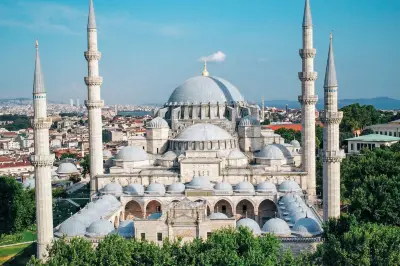
Süleymaniye Mosque (Süleymaniye Camii) is located on a hill overlooking the Golden Horn in Istanbul. It was designed and built by the famous architect Mimar Sinan, taking seven years from 1550 to 1557, a masterpiece of Sinan's mature period. The architect skillfully integrated the grand building with the complex steep hill and surroundings, placing the mosque on the city's skyline. From inside, one can overlook the Golden Horn and the entire city, while citizens look up at this "most magnificent monument."
Süleymaniye Mosque is a typical Ottoman mosque, rectangular in shape. The prayer hall consists of a front hall, main hall, and side hall, connected by three large arched spans, creating an open and bright space. Colorful, uniquely shaped glass windows and red-and-white arch bricks create a light and cheerful atmosphere. The large chandeliers and red-gold carpets add to its grandeur.
20. Bosphorus Cruise
The Bosphorus Strait connects the Black Sea to the north and the Sea of Marmara and the Mediterranean to the south, dividing Turkey into European and Asian parts. The strait is 30.4 kilometers long, with a maximum width of 3.6 kilometers and a minimum width of 708 meters. There are various Bosphorus cruises, usually departing from a pier on the European side near Galata Bridge. Short cruises go under the July 15 Martyrs' Bridge and return, about two hours. Longer cruises to the Black Sea entrance and the Princes' Islands take about five or six hours.
We took the Bosphorus cruise in the evening, when the sun was setting, the sea and sky merging, seagulls soaring. Standing on the cruise ship, the shores were bathed in twilight. Gradually, lights on the buildings on both sides lit up, colorful lights adorned the city like a dream, enchanting the visitors.
Mecidiye Mosque, also known as Ortaköy Mosque, was built by Ottoman Sultan Abdülmecid I in 1856. Its designers were the Armenian Balyan father and son, who also designed Dolmabahçe Palace. The Bosphorus Bridge is right next to it, and the mosque and the bridge complement each other impressively.
The July 15 Martyrs' Bridge, also known as the Bosphorus Bridge, is the first bridge spanning the Bosphorus, connecting Europe and Asia. It has a total length of 1,560 meters, completed on October 30, 1973, with a height of 165 meters.
In the distance is the Fatih Sultan Mehmet Bridge, also called the Second Bosphorus Bridge, built on March 7, 1988, with a total length of 1,510 meters, height 169 meters, the fifth longest suspension bridge in the world at that time. It is named after the 15th-century Ottoman Sultan Mehmed II.
---- End of this section ----
Travel Journal Directory: 1. Istanbul Introduction, 2. Itinerary and Hotel, 3. Main Attractions and Highlights, 4. Travel Tips, Tourism Information, Hotel Index, Strategy Index, Ticket Index, Website Navigation, Tourism Index, Cruise Index, Corporate Travel Index, Join Cooperation, Distribution Alliance, Friendly Links, Corporate Gift Card Procurement, Insurance Agency, Agent Cooperation, Hotel Franchise, Destination and Scenic Area Cooperation, More Cooperation, About Ctrip, Ctrip Hotspots, Contact Us, Careers, User Agreement, Privacy Policy, Business License, Security Center, Ctrip Content Center, Intellectual Property, Trip.com Group Algorithm Announcement.