Three Days, Two Nights: Discover Shanxi’s Hidden Travel Gems
Time winds the mainspring
Autumn’s glory gathers, flowing gold layered with green
The 2022 holidays may be over
But our longing to travel remains at full charge
Yearning for autumn chrysanthemums, returning wild geese, maple trees, and the scent of osmanthus…
All kinds of destinations are waiting for us to color them in
Yet a sudden outbreak in Yuncheng
Has slowed our steps to explore this city
Having journeyed across mountains and rivers, we still feel the world is worthwhile
Better to chase the wind than wait for it
In these special days
「Shanxi Human Geography」brings you
A guide to Yuncheng’s hidden travel treasures
Save this travel guide ahead of time
Quietly await the retreat of the pandemic, and let’s meet in Yuncheng
To see sun, moon, and stars, mountains, rivers, lakes, and seas
Time’s myriad scenes, historic sights and monuments
What arrives as promised is not only wonderful travels
But also the safe and sound you after the pandemic
The sea has boats to cross, the mountains have paths to tread
May we meet again in a world cleared of the “smoke”
Let’s embark on a three-day, two-night journey
Main attraction: Yuanqu Lishan
🌏▶Yuanqu Lishan
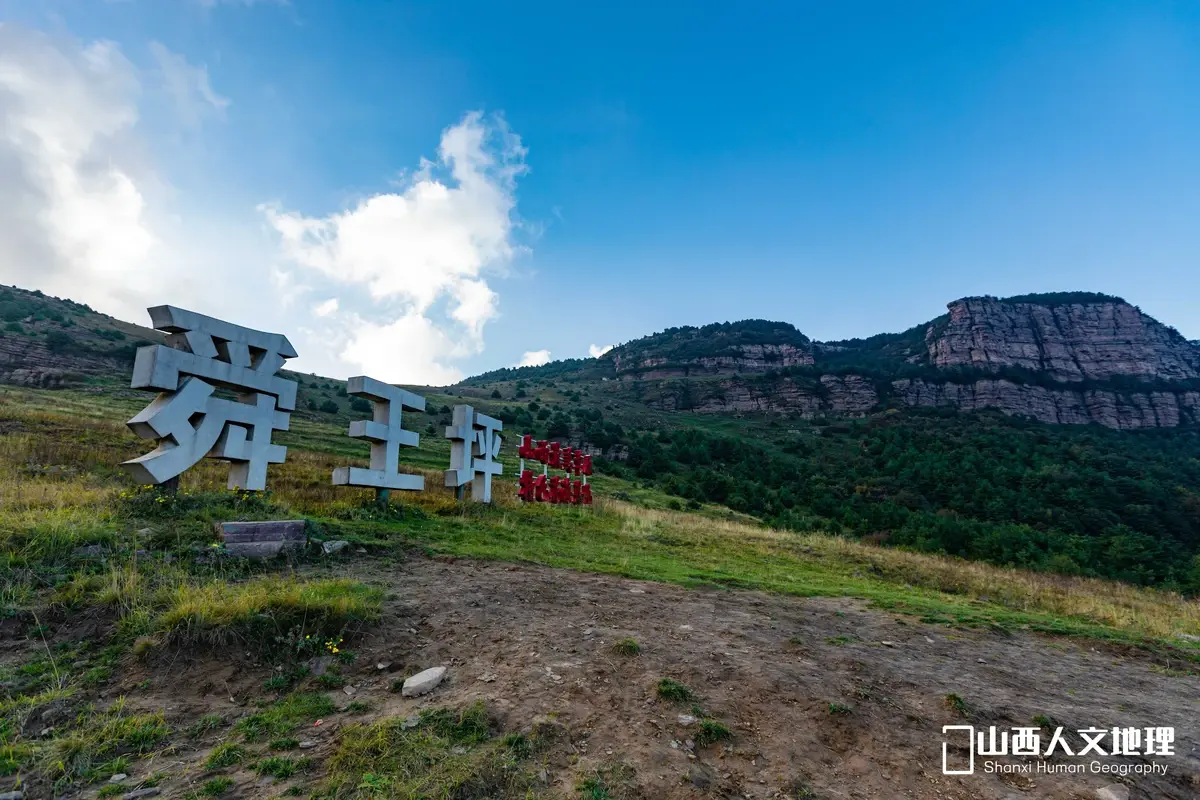
Yuanqu Lishan is situated in Wentang Village, Lishan Town, Yuanqu County, Yuncheng City, in the southern part of Shanxi Province. Nature unfurls its brush across this vast land, sometimes majestic and magnificent, sometimes open and serene.
Lishan is famous for Emperor Shun. As recorded in *Mencius*: “Shun was born in Zhufeng, moved to Fuxia, plowed at Lishan, and died in Mingtiao…” Everywhere on Lishan, the footsteps of Shun can be traced, and the ancient tales have been sung for millennia. At the flat mountaintop of the Zhongtiao range, a natural pasture has formed—a typical subalpine meadow that, together with the legend of Shun, drapes Lishan in a mysterious veil.
At Lishan, you can visit the most spectacular of the karst cave clusters formed by hundreds of millions of years of river changes—Baiyun Cave. Inside, the stalactites come in myriad shapes, and echoes linger. The Welcoming Pine, with its intertwined main branches like a dragon and phoenix leaning on each other, silently watches generations of visitors as time flows. Its over 400-year history leaves travelers deeply impressed by its rugged strength.
Macaque Source, Dragon-Slaying Platform, Royal Maiden’s Veil, Maiden’s Peak, Dragon Roar Waterfall, Cold Tears Beading… Lishan has countless magnificent sights and timeless legends. Through centuries of wind and rain, they still stand resolutely, guarding the vibrant life along the land’s edge, the myths echoing deep in the woods, and the boundless colors drifting across the high peaks.
Accommodation and food recommendations:
Yuanqu Lishan Resort sits at the foot of Lishan, constructed entirely of wood. It’s a one-stop retreat for leisure, vacation, entertainment, and sightseeing.
Local specialties: buckwheat noodles (qiaomian yilao), Yuanqu kiwifruit, Yuanqu monkey head mushroom, Yuanqu guokui (flatbread), Yuanqu miqi (millet porridge), and more.
Main attractions: Li Family Courtyard – Houtu Temple – Pujiu Temple – Guanque Tower
🌏▶Li Family Courtyard
There’s a saying: “The Qiao family is famous for fame, the Wang family for their courtyard, the Li family for their benevolence.” Li Family Courtyard is in Yanjing Village, Wanrong County. The overall architecture is a vertical-shaft, wealth-gathering Shanxi quadrangle courtyard that incorporates Anhui and Gothic styles, blending north and south, East and West, as a Jin merchant’s mansion. It embodies the profound heritage of traditional Han culture.
Stepping into Li Family Courtyard, the layout is orderly and picturesque. Antique traditional Han residences greet the eye: high blue brick walls, old streets lined with lintels and owl-tail roof ornaments. Brick, stone, and wood carvings, calligraphy, paintings, and rubbings are spread throughout the scenic area.
Here you can admire the brick, stone, and wood carvings, polychrome paintings, and ornamental ironwork of traditional architecture. The rise and fall of the Li family have transformed into our history, aesthetics, and spirit, and we vividly sense the folklore, customs, and culture of southern Shanxi’s Han people that permeate this place.
After a brief parting with Li Family Courtyard, we come to Houtu Temple. It is located north of Miaoqian Village by the Yellow River, 40 kilometers southwest of Wanrong County. It is the oldest temple for worshipping the Earth Mother in the land of China. Perhaps in a fleeting moment, you will recall an emperor and the wish he left here.
For over two thousand years, Emperor Wu of Han’s “Ode to the Autumn Wind” has been passed down through the ages. As the source of ancestral culture of the Chinese nation, the Autumn Wind Pavilion and Houtu Temple quietly stand along the ancient flow of time, watching sunrise and sunset, tides ebb and flow by the Yellow River day after day.
Local snacks: millet oil cakes, Ronghe hele noodles, Wanrong jelly, Wanrong fermented glutinous rice, Wanrong three-white melon, and more.
Time passes like forest flowers fading after spring’s brilliant red; footsteps are in too much of a hurry. While the sun is just right, we must take a delightful trip to Pujiu Temple in Puzhou Town.
Pujiu Temple holds not only the soul-stirring love story of Zhang Sheng and Cui Yingying but also world-renowned fame for its miraculous pagoda.
We may hang a wish for a beautiful love on the giant lock of togetherness. Enter the mountain gate, climb the stone steps, and head to the Great Bell Tower to see the soaring upturned eaves and imposing grandeur. In the Pear Blossom Deep Courtyard, step into the reverie of “thoughts as if infatuated, heart as if drunken.”
“To see a thousand miles further, climb yet one more story.” This well-known poem now leads us to another famous site in Puzhou Town: Guanque Tower.
Here you can feel the grandeur of the tallest among China’s four great towers, savor the endless charm of the lost art of Tang Dynasty color painting, and admire its irreplicable, uniquely classic architectural features.
Guanque Tower has endured rises and falls, shared adversity and prosperity, yet the cycles of decline and renewal are nothing to fear—like the sun rising, like the moon everlasting…
Accommodation and food recommendations:
If you wish to find a small courtyard in the morning or evening to release your fatigue, Yongji Pushe Nanguli Homestay is undoubtedly the best choice. The homestay offers landscape themes such as pines and rocks under the moon, fresh springs after rain, southern reed fishing boats, and chrysanthemums picked by the eastern fence, letting you immerse yourself in rural nature.
Local specialties: Be sure to try Puzhou green persimmons—orange-yellow, thin-skinned, seedless, with fine, juicy flesh that’s sweet and delicious.
Main attractions: Yongle Palace – Guandi Temple – Salt Lake
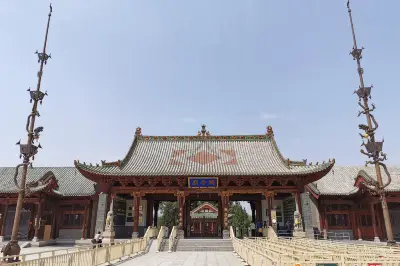
Chasing the wind, holding the waves, spring passes and autumn comes. On the third day, we arrive at Yongle Palace in Yongle Town, Ruicheng County. Yongle Palace was built to commemorate Lü Dongbin, one of the Eight Immortals. It is the best-preserved Daoist temple complex and houses the largest surviving treasury of ancient mural art.
Collision fosters fusion, and fusion nurtures miraculous hues. The wonder and solemnity of Yongle Palace’s murals are rarely seen in the world—national treasures among national treasures. When you step into Yongle Palace, admire the exquisite murals and the glazed bricks and tiles that carry the warmth of history.
This palace, a gathering place of all devotion and imagination, watches over the unceasing continuity of our civilization, stretching far back into time.
Accommodation and food recommendations:
Ruicheng Grand Hotel offers convenient parking and is a triangular landmark; an ideal choice for family vacations, business, and leisure.
Local specialties: Ruicheng asparagus, Ruicheng ma pian (crispy sesame slices), Ruicheng braised pork, stone bread, seedless sugar dates, Ruicheng apples, and more.
Guandi Temple is located in Xiguan, Xiezhou Town. A visit here is inevitably a journey into Guan Gong culture. As the birthplace of Guan Gong culture worldwide, it is honored as the “Ancestor of Martial Temples.”
It was first built during the Chen Sui period, commissioned by imperial order in the Northern Song, repaired in the Jin and Yuan, and reached its peak in the Ming and Qing… Inside the temple hang plaques with Kangxi Emperor’s own calligraphy, Qianlong Emperor’s endorsement, Xianfeng Emperor’s inscription, and Empress Dowager Cixi’s personal brushwork “Mighty Presence Resonating Far,” all proclaiming the pivotal status of Guan Gong and Guan Gong culture in ancient Chinese history.
The ancient temple, spanning a thousand years, has withstood centuries of wind and rain, making the essence of our faith ever purer and still holding its unique value and meaning.
No matter how many mountains and rivers live in our hearts, nothing compares to seeing them with our own eyes. The Salt Lake is located south of the city in Yanhu District, Yuncheng (3 km from the Chishen Temple). Hidden in southern Shanxi, this colorful wonderland resembles Earth’s “palette,” quietly gazing at the sky and nourishing nature.
Yuncheng Salt Lake is an ancient and typical inland saltwater lake. Due to its high salinity that lets people float without sinking, it’s praised as “China’s Dead Sea.” The salt lake is crisscrossed with paths and dotted with thousands of silver islands—spectacular views of year-round saltpeter mounds. Dozens of square kilometers of wetlands around the lake attract dozens of migratory bird species all year.
The black mud of the lake is mainly sulfate-based, which can stimulate skin metabolism; besides the mud, there are abundant hot springs, body salts, and other wellness and physiotherapy projects.
What we go to experience is not only this breathtaking magical world composed of vibrant color blocks, but also a precious gift from nature, and we can also encounter colorful dreams and abundant beauty.
Accommodation and food recommendations:
Mr. Jing’s Homestay has several branches in Yanhu District, catering to different location needs, close to various scenic spots and commercial centers, with affordable prices—highly recommended.
Local specialties: Salt Lake crisp pear, sugar-filled pastry (tangjiao dou), mutton paomo, Xiang jujube, soft peach (hong buruan), Yanchi salt, and more.
Across thousands of years of history and famous scenic sites
We stand here, able to travel through time
Reaching the other shore from this one
We walk alongside all living things
Sun, moon, and stars guide our way
Clouds and light spread out like the land’s appearance
Reading this far, have you felt a stir in your heart
Wanting to set off and check in at these places right away?
Then accept this “Travel Guide”
Though we may hesitate because of the pandemic
We won’t halt our travel steps
May the mountains and rivers be safe, and the human world peaceful
Awaken the gorgeous, multicolored autumn days
Let’s set off and travel together
Let our story be fulfilled on the journey