Longxing Temple, Yuncheng, Shanxi
The temple was first built during the Tang Dynasty. Because it housed a statue of the Celestial Venerable of the Jade Firmament (Biluo Tianzun), it was also called Biluo Abbey. In the first year of the Xianheng reign of Emperor Gaozong of Tang (670 AD), it was renamed Longxing Temple. In the fifth year of the Huichang reign of Emperor Wuzong of Tang (845 AD), during the great anti-Buddhist persecution, the temple buildings were almost completely destroyed, with only the pagoda surviving. During the Song Dynasty, Emperor Taizu Zhao Kuangyin once stayed here, and changed the temple into an imperial palace. Later, monks reclaimed it and restored the name Longxing Temple.
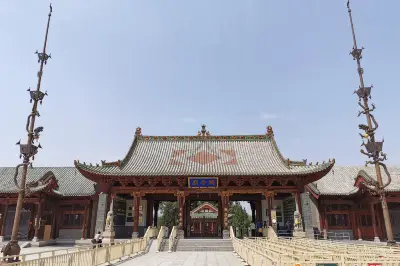
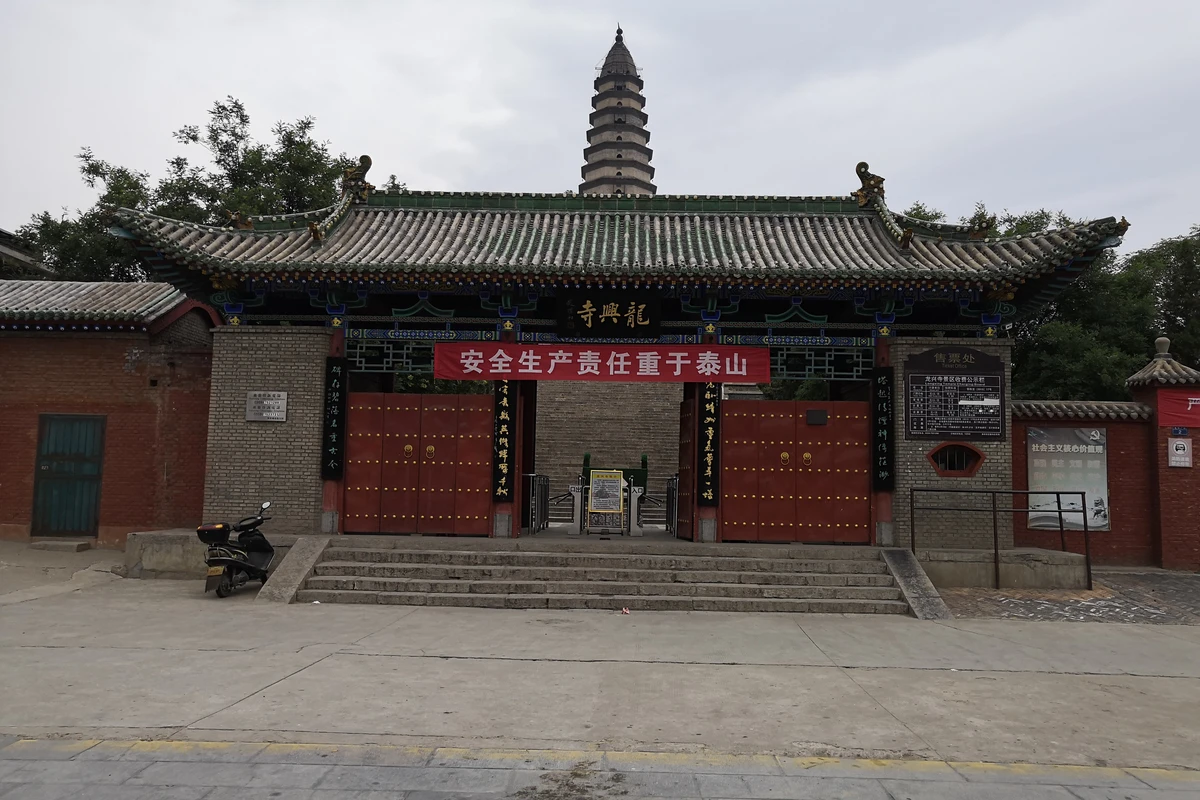
The temple follows a symmetrical layout along a central axis. From south to north, the structures include: the Mountain Gate, a flight of 108 steps, the Biluo Stele, the Mahavira Hall (Main Hall), the east and west side halls, the Longxing Pagoda, and the Song and Jin Dynasty ancient tombs.
The Mahavira Hall is five bays wide and two bays deep, with a overhanging-gable roof covered in cylindrical tiles. The roof frame is a surviving Yuan Dynasty structure. Inside the hall, there are exquisite painted sculptures from the Song and Jin dynasties, depicting the Three Bodies of the Buddha. The central figure is Vairocana Buddha, the west is Sakyamuni Buddha, and the east is Locana Buddha. The Buddha statues have full, round faces and serene expressions.
In front of and behind the hall, there are also many stone steles on display. The most famous is the Biluo Stele. Its calligraphy is archaic and wonderfully executed, celebrated nationwide at the time for its large seal script. According to the 'Shanyou Jinshi Cunlue' (A Brief Compilation of Metal and Stone Inscriptions in the Shanyou Region), it is said: "A Daoist priest prayed for the stele to be carved; he shut the door, closed his eyes and sat in meditation for three days. When he opened the door and looked, a pair of immortal cranes were dancing, and the inscription was perfectly carved." The stele measures 2.26 meters high, 1.03 meters wide, and 21 centimeters thick. The inscription was carved in the third year of the Zongzhang reign of the Tang Dynasty (670 AD). It was composed by Li Yuanjia, the Prince of Han, the eleventh son of Emperor Gaozu Li Yuan, and Li Jiasheng. The text has twenty-one lines, each with thirty-two characters, totaling an actual 630 characters. The content records that Li Yuanjia's sons, Li Xun, Li Yi and others, commissioned statues to seek blessings for their mother during their mourning period. In the eleventh year of the Xiantong reign of the Tang Dynasty (870 AD), Zheng Chenggui was ordered to carve an explanatory text on the lower part of the back of the stele.
The Longxing Pagoda is a landmark of Jiangzhou (present-day Xinjiang). It stands within the Longxing Temple. According to records, the pagoda was first built during the Zhenguan period of the Tang Dynasty. Originally it had eight stories, but in the 42nd year of the Qianlong reign of the Qing Dynasty (1777 AD), because the outer layer had deteriorated, it was renovated with a new exterior cladding and increased to thirteen stories. The pagoda is octagonal in shape, with a total height of 43.7 meters. The pagoda's fame largely stems from a mysterious phenomenon known as 'Pagoda Emitting Smoke', which remains unexplained to this day. According to the Xinjiang county annals, the Longxing Pagoda has emitted smoke on six occasions: in the first year of the Guangxu reign (1875), 1937, 1971, 1976, and 1993. The 1941 'Stele Record of the Reconstruction of Longxing Temple in Xinjiang' states that in the first year of Guangxu (1875 AD), 'smoke rose from the pagoda top, straight up into the blue sky, a portent of academic success.'
At the foot of the steps southeast of the pagoda are two brick-chamber tombs from the Song and Jin dynasties, which were relocated here in 1995.