2019 US Trip: New York
I visited the US in the summer of 2019. In just two years, the relationship between China and the US has undergone dramatic changes that are hard to describe. Orchid once asked me: What impressed you most about New York? I said it was the people – the diverse races, skin colors, and styles of dress weaving through the city streets, so different yet so harmonious. Orchid replied, “But Trump is destroying that harmony.” It reminded me of Beyond’s song "Glorious Years": The beauty of colorful brilliance shines because it never separates each color – this world should be united in diversity.)
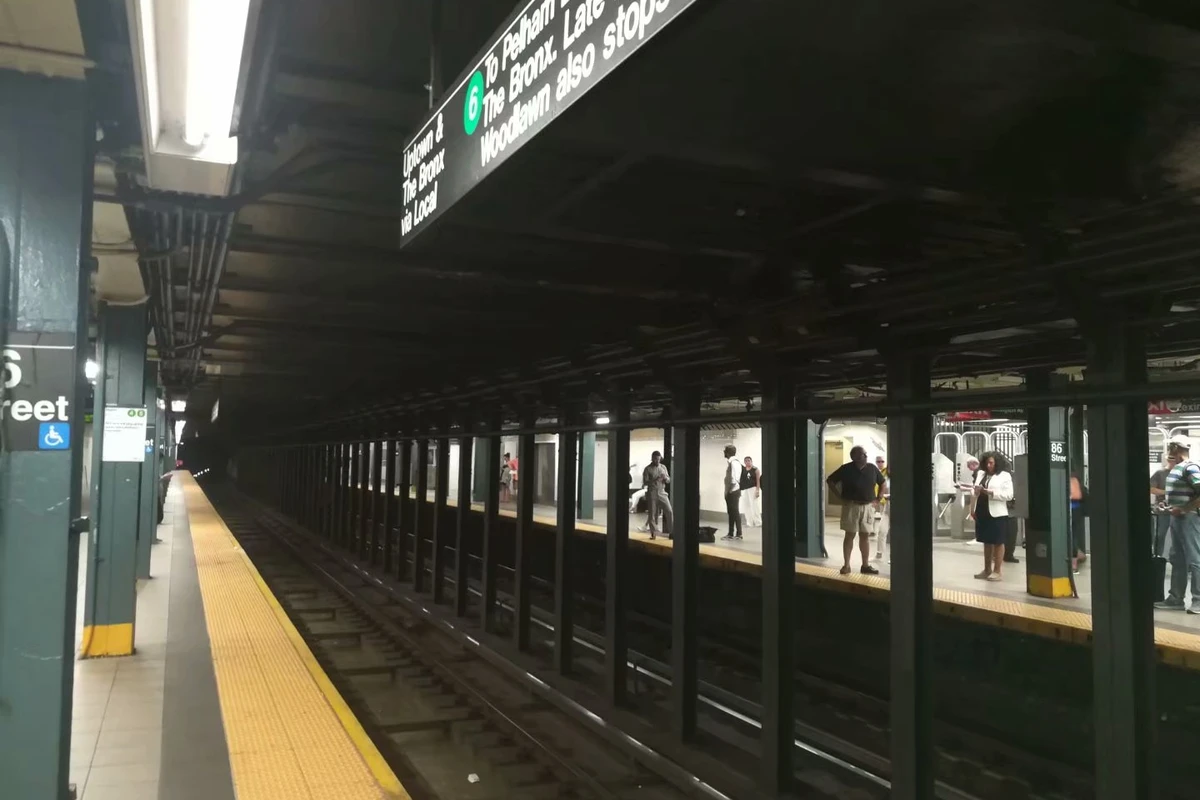
Before departure, Orchid booked an Airbnb in Newark, New Jersey. Given New York’s notorious traffic congestion, driving was inconvenient, so we first checked into the New Jersey lodging, then drove to the nearest subway station and took the subway into Manhattan. In New York, we mostly walked or took the subway. As one of the busiest underground railway systems in the world, the New York subway has a history of over a century, so many stations and trains look quite old. What bothered me most was that transfers often required climbing stairs on foot – no escalators. Orchid wasn’t very familiar with New York, and the subway system was as complex as an underground maze – too many stations, too many branches, making it easy to take a wrong turn. We often had to stop to study signs or ask staff. My feet were sore, but luckily Orchid spotted a trendy burger chain, Shake Shack, inside the station, so we stopped for lunch. This so-called best burger in New York was indeed delicious: soft buns, flavorful meat, and even the fries were exceptionally good.
The New York subway has 472 stations. The largest and most stunning for me was Grand Central Terminal in Midtown Manhattan. This is its exterior, but its interior is magnificent and breathtakingly elaborate. The golden, resplendent hall feels like being in an opera house or concert hall – yet it’s a waiting hall. My impression was correct: the main staircase of Grand Central was designed after the style of the Paris Opera House, and its beautiful green celestial dome was designed by a French artist. The starry sky depicted is reversed, said to be a view from God’s perspective, so it’s opposite to the human view. Embedded in the star map are 2,500 star-shaped lights, which must look even more beautiful when lit.
With its high, spacious ceilings, tall arched windows, sturdy Roman columns, classical reliefs, and gorgeous starry ceiling, this century-old station built in 1913 is truly a palace of art.
Grand Central is located on 42nd Street. When we came out, we found ourselves on Fifth Avenue. New York’s most famous streets are probably these: Fifth Avenue, Broadway, and Wall Street. I asked Orchid about the difference between "Avenue" and "Street." She explained that Manhattan’s street layout is a grid: north-south roads are called Avenues, east-west roads are called Streets. When arranging a meeting, it’s best to specify the intersection of X Avenue and Y Street – that makes it crystal clear. So an Avenue isn’t necessarily wide, and a Street isn’t necessarily narrow. For example, the famous Fifth Avenue isn’t wide, and Broadway, despite having “Broad” in its name, actually isn’t wide either – it’s just extremely long.
The New York Public Library is located at the corner of Fifth Avenue and 42nd Street. This is also a century-old palace-style building, basically maintaining its original layout. The elegant interior decoration reveals a strong sense of history, reminding me of Borges’ line: “I have always imagined that Paradise will be a kind of library.” Forgive my poor phone camera – I couldn’t capture the two famous library lions at the entrance together.
After security (just opening the bag for inspection – same as at the Metropolitan Museum of Art later), we entered the spacious hall. The marble walls and pillars are engraved with the names of major library donors. The reading rooms and public spaces are named after donors.
The main reading room on the third floor is the Rose Main Reading Room, one of the largest column-free rooms in the world. The space was too large – I could only capture half of it, not fully conveying the grandeur I saw on site. I wanted to capture both the exquisite carvings and paintings above and the tall windows, bookshelves, old wooden tables, and brass lamps below, while avoiding the crowd. I often regretted that a phone can’t capture what the actual eyes see. Taking a moment to worry: with so many tourists coming and going, how can anyone concentrate on reading?
Neither my daughter nor I had much interest in the luxury stores on Fifth Avenue; she was more eager to find a Japanese bookstore nearby (going to a Japanese bookstore in New York – well). On the way, we passed a small park with playground equipment, a mini-golf course, and some card tables. Surprisingly, even at 3 p.m. on a workday, quite a few people were eating, drinking, and having fun there. Two Chinese tourists watched four Westerners playing mahjong with great interest. The Japanese bookstore was also busy and seemed to be doing well – apparently, Americans have developed a significant interest in Japanese culture in recent years.
Leaving the bookstore, we returned to 42nd Street, walked a bit, and the crowds grew larger, converging at the "Crossroads of the World" – Times Square. Unlike other spacious squares like Tiananmen Square or Red Square, Times Square is more of an intersection where several streets meet, centered around the triangle where Broadway, Seventh Avenue, and 42nd Street cross, and then extending toward Broadway. This narrow area attracts global attention.
On New Year’s Eve, the crystal ball descends from the top of this building amid the countdown cheers.
The semi-cylindrical NASDAQ giant advertising screen constantly changes colors and faces. We arrived at Times Square around 4–5 p.m. and happened to encounter a group of executives whose company had just gone public on NASDAQ that afternoon. The men wore black suits, the women elegant dresses. They quickly took photos in front of the screen, and soon their images appeared on it.
This triangular area also serves as a rest zone, where red umbrellas with seats are always filled with people relaxing, eating, drinking, and looking around. Near the Broadway sign, a performance area hosts occasional street shows. In this triangle, I saw a Chinese uncle who would periodically stand up holding a sign with words like "freedom and equality," show it for a moment, sit back down, then stand up again – a cycle. I couldn’t quite understand what he was doing.
Apart from people, Times Square is most famous for its colorful billboards. On the street, I spotted two "Statue of Liberty" impersonators; up close, they were a bit startling.
New York is crowded everywhere, not just Times Square. What left the deepest impression on me was the constant flow of people of different races, skin colors, and clothes. In New York, seeing anyone in any attire seems perfectly natural. T-shirts and shorts are most common; shirts, trousers, suits, and ties are also normal. Latinos seem to favor large floral dresses, parading with voluptuous figures in bright colors. Even those dressed scantily in a few straps walk naturally without attracting stares. New York moves fast; everyone walks with purpose. Oh, and I noticed New Yorkers also jaywalk sometimes.
Besides people, another creature often caught my eye: pigeons foraging on the streets without fear. New Yorkers are always rushing, but pigeons are much more relaxed. They stroll calmly through the hurried crowds, then spread their wings to circle above, landing wherever they please – they are freer than humans. The people walking the streets might be in New York today, but who knows where tomorrow? New Yorkers often say these pigeons are the real New Yorkers. Throughout my US trip, I frequently saw scenes of humans and animals living in harmony, with not only pigeons and sparrows foraging unafraid. Once, while eating outdoors at a restaurant in Washington, two or three squirrels jumped onto an empty table nearby, played for a while, and even scurried around our feet, tails swishing, looking for food. When Orchid took me for a walk in a park near her home, a flock of wild ducks flapped low over us to land at a small lake, startling me.
In the Northeast, it gets dark late; basically after 9 p.m. Since we weren’t staying overnight in New York, we had to skip the Manhattan night view, took the subway back to New Jersey, retrieved our car from the station parking lot, and drove back to the Airbnb. We stayed in a large room on the second floor of a three-story yellow house, sharing a kitchen, living room, and bathroom. The kitchen was well-equipped; we could boil water, make coffee or tea. The living room had some magazines, including one in Chinese. After walking all day, I was exhausted and went to bed early.
The next morning, we again drove to a subway station, parked, and took the subway into New York. This time we arrived at the new World Trade Center station, finally seeing escalators in the subway.
The original World Trade Center subway station was destroyed in the 9/11 attacks. Americans spent $4 billion to rebuild a station shaped like a white dove in flight. As a modern architectural masterpiece, it rivals Grand Central Terminal, representing different eras among New York’s subway stations.
Inside, the white steel structure is sleek, modern, and full of natural light.
We had breakfast at a newly opened restaurant in the station. Orchid recommended a must-eat in New York: Bagel, a ring-shaped hard bread that New Yorkers love as a healthy breakfast item. She was right – I instantly fell in love with New York bagels. Later, I tried everything bagels (with sesame and flax seeds) elsewhere in the US, but they didn’t have the same chewiness and wheat flavor of New York bagels. As we ate, we watched the fast-moving crowd heading to work. Perhaps due to the new station’s bright lighting or the fact that most commuters were white-collar workers around the World Trade Center, the people here seemed particularly well-dressed. Often a man in a suit or a woman in a dress would stride past in sneakers and a backpack – probably carrying another pair of shoes. Some of them might be high-earning professionals; Wall Street is nearby, and financial elites love suits.
Leaving the station, we deliberately stopped by the 9/11 Memorial & Museum plaza.
The pits left by the fallen Twin Towers are now two square reflecting pools symbolizing "absence and reflection." Standing before one large pool, we saw an even deeper pool inside, with water flowing endlessly into it: thoughts like water? Loss like water? The names of 9/11 victims are inscribed around the pool; a white rose was placed among the names, perhaps a tribute from family or friends. I remember watching the plane crash into the Twin Towers on TV, almost thinking it was a Hollywood disaster movie trailer – how could it be real news? When the anchor confirmed it, I felt a chill: it was real. Any terrorist attack against civilians is evil, no matter how grand the excuse.
Leaving the plaza, we headed to Battery Park at the southern tip of Manhattan. Halfway there, a building on the right caught my eye with its English name.
It was the American Stock Exchange. A bit further, who would have thought we’d see the Charging Bull?
This foreign guy pressing the bull’s head – will he have a great year? They say to get rich, you should touch the bull’s rear, so its butt is polished smooth. I hadn’t planned to visit Wall Street, thinking it was just a narrow street not worth seeing. But unexpectedly, I saw the famous Wall Street bull. Upon closer look, the street was actually Broadway, not Wall Street – so the bull is on Broadway. But Broadway is indeed long, stretching all the way here. The narrow street intersecting Broadway at an angle next to the bull is Wall Street. We just glanced at it and continued along Broadway toward Battery Park.
As a city park, The Battery is special because it sits at the mouth of the Hudson River. To take a ferry to see the Statue of Liberty, you board at the riverbank. When we arrived, a young black man approached, asked where we were from, and explained several tour options. We didn’t take the ferry to Liberty Island; instead, we strolled and rested in the riverside park. Under the bright sun, we saw the Statue of Liberty in the distance, with tourists constantly taking photos.
The WWII memorial in the park – an eagle holding an olive branch.
Leaving the park, we took the subway to the Metropolitan Museum of Art at Fifth Avenue and 82nd Street.
We arrived early, so the steps weren’t crowded yet. By noon, except for the central aisle, the steps were packed with people.
The Met was founded in 1870, has four floors, and over three million works. As usual, we had to open our bags for security; only water allowed inside. With its vast size and rich collections, Orchid (who had visited before) wanted to see galleries she had missed and couldn’t accompany us the whole time. She rented two handheld audio guides in Chinese for us, and we agreed on a meeting time and place before splitting up. My daughter and I started with the Greek and Roman galleries, as we entered through a quieter side door. The exhibits were mainly sculptures.
The handheld audio guide had earphones. If a display had an audio icon, we could enter the number and hear a Chinese explanation. In this gallery, we got Chinese narration, but later we found some numbers gave English explanations, which we struggled to understand – the audio guide needs an upgrade.
Some statues were missing limbs, but many date from around the 1st century BC or later; surviving that long is commendable.
Consulting the map, we aimed for the Egyptian wing. But halfway there, we saw stairs leading to the European painting galleries and decided to view paintings first.
At the top of the stairs, we were greeted by a large battle painting, “The Triumph of Marius,” by an Italian artist. The painting galleries were extensive, and we wandered from room to room, from painting to painting. I’m an absolute amateur just looking; there were so many that I only lingered longer on those I found visually pleasing. Eventually, I felt aesthetic fatigue, and honestly, I’m not very interested in early realistic works. For a long time, the brush’s main role was to record and reproduce. After the camera appeared, brushes gradually shifted from depicting what the eye sees to what the heart sees, with artists infusing more personal emotion. I wanted to see emotional paintings, and finally we reached the 19th-century gallery.
Van Gogh’s "Sunflowers" – this one seemed softer in color. Strangely, I didn’t find the self-portrait in the gallery; where had it gone?
Van Gogh’s works are mostly heavily pigmented and emotionally charged. This particular painting gave a strong visual impact, with thick layers of paint, almost three-dimensional. The photo I took doesn’t do justice to what I saw. My daughter, who has studied painting for two or three years, felt that photos of many paintings can’t convey their essence: “It can’t be captured.”
Monet’s “Bridge Over a Pond of Water Lilies,” one of his Water Lilies series. Standing before it, my eyes felt dazzled by a mass of paint; the image was blurry up close. I had to step back several feet to see it clearly. Probably when focusing on local details of color and brushstrokes, I lost the overall picture. Strangely, the photo came out clear.
Monet excels in light and shadow. As a layperson, I just felt comfortable and peaceful. But looking at Van Gogh, I was easily affected by the intense emotion.
We spent quite a while in the painting galleries. Checking the time, it was lunchtime. We returned to the main hall, met Orchid, and left the museum to find food.
Outside along the street, there were food trucks. Simple trucks but prices comparable to restaurants – typical tourist prices. Nearby, aside from a school and private residences, we saw no restaurants, so we had to pay a hefty price for mediocre lunch.
In the afternoon sun, we sat on chairs outside the museum, eating lunch and resting, watching pigeons and sparrows stroll and peck. From the museum steps, familiar music began to play – it was the Chinese national anthem, then "Jasmine Flower." Looking toward the main entrance, a black artist was playing those tunes. On the steps, which were already crowded, many faces looked East Asian, likely Chinese. After our break, we re-entered the museum and encountered at least five Chinese tour groups, especially in the Egyptian wing, where every gallery had Chinese voices. I followed along to eavesdrop on the guides.
The Egyptian wing is the Met’s largest, showcasing Egyptian artifacts second only to the Egyptian Museum in Cairo.
The ancient Egyptian wall paintings I had seen in history textbooks were displayed here.
One of the Met’s treasures is the Temple of Dendur, the only ancient Egyptian temple outside Egypt. When Egypt built the Aswan High Dam, rising water submerged this temple. The Egyptian government appealed to the world to rescue artifacts. The US provided funding and technical support to salvage it. Unable to protect and reconstruct it, Egypt gave the temple to the US, and it has been at the Met ever since. In Egypt, such a temple might be small, but inside the museum, it required a large hall to assemble.
At the entrance to the Arms and Armor gallery, three armored warriors exuded a chilling battlefield aura.
Noble armor was extremely ornate and elaborate. Putting on such a suit would take ages, and moving in it on the battlefield would be strenuous.
In the Asian wing, the Chinese garden "Ming Hall" was modeled after the "Hall of Spring" in the Master of Nets Garden in Suzhou.
Typical Chinese garden window scenery.
The Asian wing had many religious items – Buddhist and Hindu paintings and statues. The Japanese gallery was closed, so we didn’t see the famous woodblock print "The Great Wave off Kanagawa" – another star exhibit.
The American Wing featured the Diana statue, the hunting goddess.
The Met covers 130,000 square meters, with 248 galleries, including dedicated spaces for daily-use items, musical instruments, and costumes. It was so vast that our feet and eyes ached. Seeing it all in one day is impossible. Honestly, I grew numb toward the end.
At the agreed time, we returned to the ground floor and exited the museum. After viewing art all day, we needed a break and a change of scenery. We walked to Central Park next to the Met. I had once seen an aerial photo of Central Park and was stunned – it totally changed my understanding of urban parks. I never imagined it was so large and truly in the center of a bustling city: on the priceless, densely packed Manhattan island, skyscrapers surround a park covering 3.4 million square meters, unchanged for over two hundred years despite rapid urbanization. The park contains forests, lakes, meadows, and even a museum. New Yorkers can easily step away from the noisy streets to stroll or exercise. We only walked a small part, hoping to find the large meadow often seen in movies, but the map showed it was far away, so we gave up and just walked nearby. Along the way, we passed several small bridges labeled simply “Bridge 25,” “Bridge 26.” My daughter laughed, “These bridges are too small and too many; they don’t deserve names,” haha.
We relaxed by swinging on a swing. Having such a park in the middle of a city is delightful.
On the third day, we visited Coney Island at the southern tip of Brooklyn.
This beach facing the Atlantic often appears in US TV shows. It is the closest summer resort for New Yorkers. Sunshine, sand, waves – Westerners love to get a bronze tan, perhaps thinking they are too pale.
Coney Island has one of America’s earliest large amusement parks, with roller coasters, Ferris wheels, and star-themed attractions still drawing kids unafraid of the sun. We often saw groups of students visiting.
Three seagulls perched on the iconic Nathan’s Famous hot dog stand sign, calmly watching the hot dog man proudly display his century-old history. The annual hot dog eating contest at this stand has also continued for a century. Although we weren’t hungry, we tried the hot dog out of curiosity – it was good, but the sausage was quite salty. The contestants in the eating contest eat so many hot dogs – do they dare drink water during? Water fills the stomach, but not drinking is uncomfortable, right?
Orchid found Coney Island too crowded, so she led us to another nearby beach. Thus, on our third day in New York, we just sat on the sand like locals, sunbathing and watching the sea, daydreaming. Only when the sand felt too hot did we get up and leave.
Over three days in New York, Orchid drove us everywhere. I sat in the front passenger seat. Over time, I noticed a detail: at every intersection, Orchid would stop to let oncoming traffic go, even if the gap between two cars was short. She waited patiently until no cars were visible in her sight before turning. I later noticed that American drivers generally follow this habit: stop, observe, yield to straight-through traffic. Actually, when I learned to drive, the rules said exactly that: turning vehicles yield to straight-through traffic. Knowing and following rules can be easy sometimes, but also hard. For Orchid, it was just normal – that’s how it should be. America is a country on wheels, with developed roads, and you drive almost everywhere. Without rules, nothing can be done. Adhering to rules may seem clumsy but is actually efficient.


