In Mauritius, the Indian Ocean breeze gracefully caresses my ears
In Africa, I feel like I can finally meet my primitive self. Magical Africa, until we meet again — a vague yet firm belief that arises as my fingertips tap on the keyboard. Magnificent and free-spirited, crystal clear and pure, lonely and mysterious, willful and changeable, remote and harsh, grand and majestic, bizarre and dreamlike. I don't know how to describe it in words; I can only let those touching scenes, even after 30 days in memory, still rush and flow recklessly.
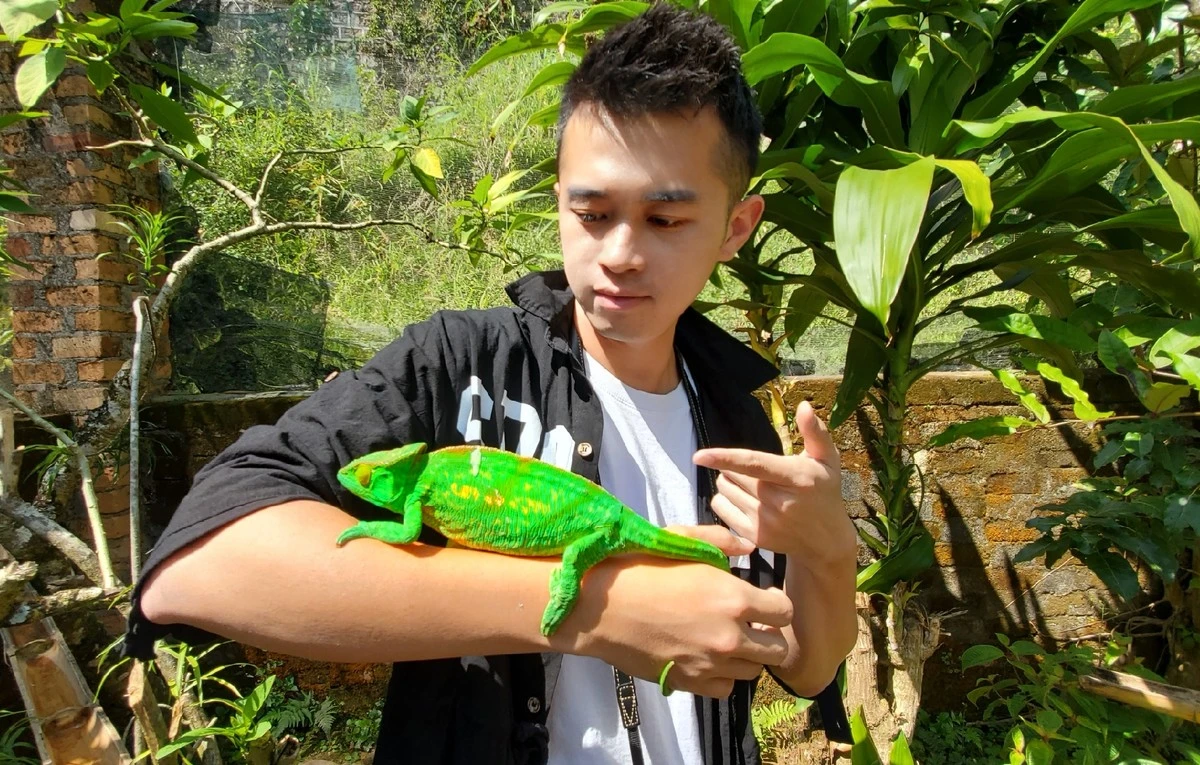
In Madagascar, I encountered magical chameleons.
In Tanzania, watching the Great Migration, experiencing the animal world.
In Luxor, Egypt, encountering ancient cities from thousands of years ago, touching the memories of history.
My African adventure is about to begin, with a direct flight from Hong Kong to Mauritius. From modern civilization into Africa — that place not yet invaded by civilization.
In Mauritius, this ocean that belongs to Africa. The Indian Ocean breeze gracefully caresses my ears, the soft mattress like warm waves cradling me in my wetsuit; turning over, the little flowers on the air-conditioned quilt become playful like tropical fish. Many say Mauritius is paradise — and yes, I feel the same.
Tall coconut palms. I used to think African land was so barren, with so little water. But in Mauritius, I feel the beauty here is like Switzerland. Green hills and clear waters, waterfalls and rivers, birdsong and fragrant flowers — it completely overturns my image of Africa.
Mauritius' waterfall feels as magical as being in Jurassic Park, where all animals gather, like a hidden paradise.
The color of the sea in Mauritius is ever-changing, from deep blue to light blue up close, displaying many shades, as if God spilled a palette in a riot of colors.
Many wealthy Europeans gather here, taking yachts out to sea, vacationing on this piece of Africa that doesn't feel like Africa.
In Mauritius, you can also find many churches, some right by the sea, perfect for photos. Red roofs against the blue ocean — very photogenic.
Mauritius is also great for renting a car; at incredibly low prices you can rent a Japanese sedan, and crossing mountains, I reached the highest point of Mauritius, overlooking the entire country.
Since January 2012, Mauritius has offered visa-free entry to Chinese nationals. Upon arrival, present a passport with at least six months validity, a return ticket and hotel booking to get stamped in, no fees required. The length of stay is based on the return ticket and hotel booking, up to 30 days.
The magical five-colored earth, due to mineral influences, the land here displays various colors, gorgeous and colorful.
What kind of country is this? ⭐️First, history: Mauritius was originally an uninhabited island. During the Age of Discovery, it was first found by the Portuguese. In 1598, the Dutch arrived using Portuguese charts, colonized it, and named it after Prince Maurice of Nassau. Later, the island was successively occupied and ruled by the French and British, until Mauritius declared independence in 1968 and became a member of the Commonwealth. ⭐️Next, the people: Since it was uninhabited, Mauritius has no indigenous people; today's residents are all immigrants, mainly of Indian and African descent, as well as Arab and Chinese. ⭐️Finally, local specialties: Mauritius is a volcanic island, with 90% of its arable land used for sugarcane cultivation. Besides sugar, sugarcane is also used to make their national drink, rum, which is the island's number one specialty.


