Africa Travel: Mauritius, the Pearl of the Indian Ocean (Photos, Part 1)
Africa has always been a very mysterious place in my eyes. Although I have visited Egypt, which straddles Asia and Africa, and Morocco in North Africa, I always felt my understanding of Africa was too shallow and that I should take a proper in-depth trip when an opportunity arose. They say if you think about something hard enough, it will come—never did I expect my wish to be fulfilled right at the start of 2025.
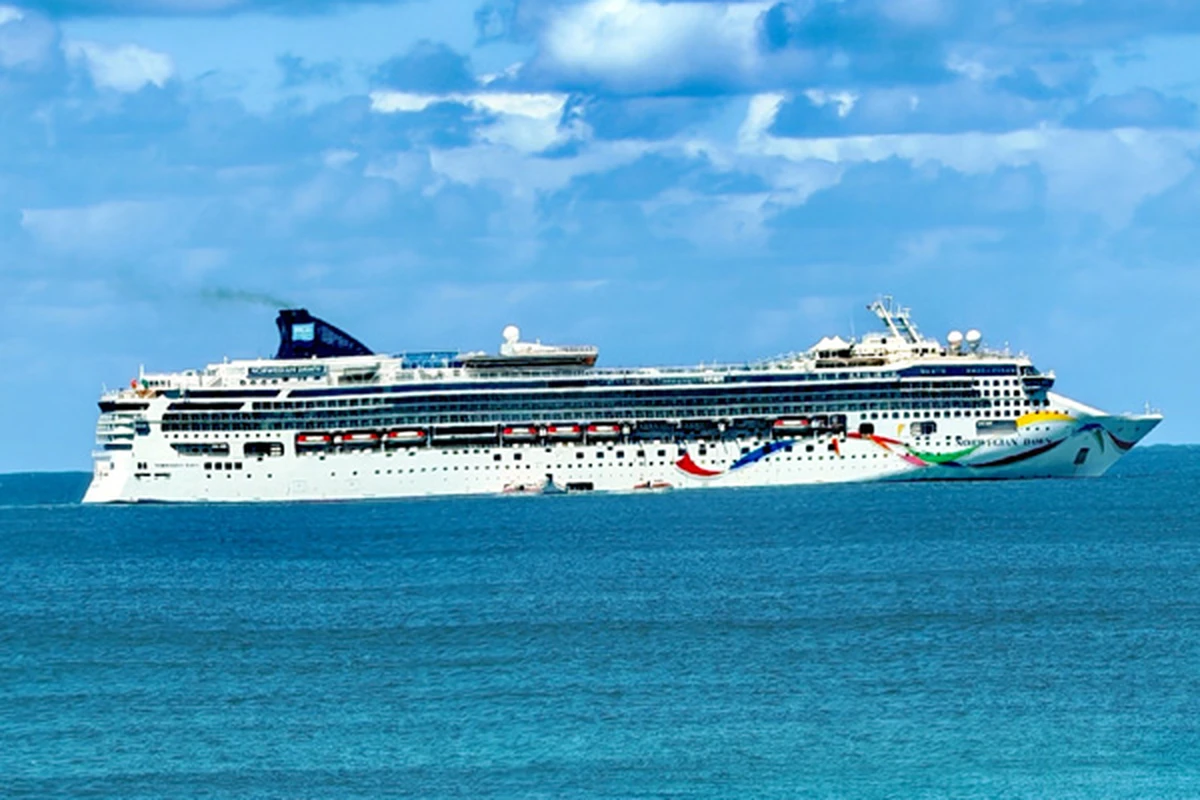
The Norwegian Dawn cruise ship (Photo: Feng Ganyong)
On January 3, 2025, a journey of discovery organized by Seven Seas Holidays and China Youth Travel Service finally kicked off. Our epic itinerary combined the Norwegian Dawn cruise through the Indian Ocean to Mauritius, Madagascar, and Réunion—the three vanilla islands—with an overland safari through six countries in southern Africa: South Africa, Zimbabwe, Zambia, Botswana, and Namibia.
Beijing Capital Airport departure lounge (Photo: Feng Ganyong)
At 20:15 that evening, twelve travel companions from Beijing, Jilin, and Sichuan—including Wang Jue, Bai Jingbo, Tan Zhaoli, and Cao Yang—gathered at Terminal 3 of Beijing Capital Airport. Our experienced tour leader, Jiao Jian, a very good-looking young man, was waiting for everyone and warmly checked in the group.
Photo stop at Dubai Airport (Photo: Jiao Jian)
The first leg of our Africa journey would depart from Beijing Capital Airport at 23:40 on Emirates flight EK307 to Dubai; from there, on January 4 at 10:00 UAE time, we would transfer to a flight heading to Port Louis Plaisance Airport in Mauritius.
A corner of Dubai Airport (Photo: Feng Ganyong)
In the early hours of January 4, 2025, under the guidance of tour leader Jiao Jian, the Africa-bound group flew Emirates EK307 for eight hours and landed smoothly at Dubai International Airport at 04:30 local time. During the transit, I noticed that the airport I had last visited in December 2017 had, on my return eight years later, grown much larger.
Touching down at Mauritius Airport (Photo: Feng Ganyong)
At 17:00 Mauritius time that day, after a six-hour flight on Emirates EK703, the group arrived at Sir Seewoosagur Ramgoolam International Airport in Port Louis. A local guide from Mauritius Sunshine Travel, a lady called Ye Zi, greeted us warmly at the airport.
On the way to the hotel (Photo: Feng Ganyong)
Ye Zi was straightforward and quick-witted. She introduced herself as a Ningbo native who had come to Mauritius in 1992 and had been here for over three decades. Hearing her vivid descriptions of Mauritius filled everyone with anticipation. From the airport it was about an hour’s drive from the southernmost tip of Mauritius to the northern capital, Port Louis, where we checked into Oceans Creek Hotel, perched right beside the Indian Ocean.
Views around the hotel (Photo: Feng Ganyong)
At 06:50 Mauritius time on January 5, 2025, I stepped out of the Ocean Hotel and strolled to the ocean’s edge. The scene before me—an endless expanse of blue sea meeting blue sky—was utterly refreshing. I took a deep breath of the clean air and felt wonderfully invigorated. Suddenly, I spotted a traveler walk to the beach and plunge into the ocean for a swim. If not for our morning schedule, I would have jumped in and shared the joy of the Indian Ocean with him.
Photo memory at Ocean Hotel (Photo: Jiao Jian)
Looking around, the Indian Ocean water also flowed calmly into another side of the hotel, forming a beautiful, wide lagoon. Against the backdrop of lush green vegetation, it added a lovely scenic touch to the Ocean Hotel. So I stood before the lawn sign and took a commemorative photo.
Seascape of Mauritius (Photo: Wang Jue)
At 8:00 that morning, our Africa group, led by tour leader Jiao Jian and local guide Ye Zi, set off to explore Mauritius.
Along the way, the exceptionally warm and bubbly Ye Zi poured out everything about Mauritius, speaking at a rapid pace yet with vivid charm, like beans tumbling from an overturned container.
Island scenery (Photo: Feng Ganyong)
Mauritius is an island nation in southeastern Africa, lying in the southwestern Indian Ocean. It is about 800 kilometers east of Madagascar and more than 2,000 kilometers from the African mainland—truly a land alone in the ocean. On this exotic, charismatic island, everything looks like a work of art delicately carved by nature; every landscape radiates a unique allure.
The seaside in Port Louis (Photo: Feng Ganyong)
Port Louis, the capital where we were, is a city brimming with historical charm and modern energy. Here, friendly locals greet every visitor from around the world with radiant smiles and a distinctive Creole bonjour, letting you feel the warmth and openness of this country.
A corner of Port Louis’s architectural landscape (Photo: Wang Jue)
Strolling the streets of Port Louis, you see ancient buildings and modern shopping centers blending seamlessly, as if you have traveled through time. The Central Market, in particular, is bustling: an endless array of fresh fruits, spices, and handicrafts dazzles the eye. Visitors can not only taste local specialties but also buy exquisite souvenirs to take home to family and friends. In short, a trip to Mauritius will definitely make your journey worthwhile and leave you with unforgettable, beautiful memories.
Photo at the Red Roof Church (Photo: Jiao Jian)
Before long, we arrived at the day’s first stop: Mauritius’s famous Red Roof Church. Stepping out of the vehicle, we were greeted by a strikingly red-roofed church perched by the ocean.
Front view of the Red Roof Church (Photo: Feng Ganyong)
Ye Zi explained that the Red Roof Church stands in the village of Cap Malheureux, at the northernmost tip of Mauritius. Built by the French in the early 19th century and rebuilt in 1864, it is a petite Catholic church with a wooden structure, named for its bright red roof.
Vistas around the Red Roof Church (Photo: Feng Ganyong)
The church’s architecture is unique, blending European Gothic with traditional Indian and Middle Eastern elements. The woodwork is exquisite, and the holy-water font is crafted to resemble a giant clamshell.
Inside the church (Photo: Feng Ganyong)
The Red Roof Church is an iconic landmark and a celebrated cultural sight in Mauritius, as well as a popular wedding chapel and photo-shoot backdrop. Jordan Chan and Cherrie Ying held their wedding here. The church is surrounded by a broad lawn, with a small fishing harbor in front and a mainly Indian-descendant community living nearby.
Seascape around the church (Photo: Feng Ganyong)
Wandering the church grounds, we found ourselves beside a white-sand beach and crystal-clear sea; the gentle waves lapping the shore created a soothing sound. As I reached the beach, several foreign tourists greeted us in Chinese, “Ni hao!” Hearing Mandarin spoken by foreigners in a faraway land felt especially heartwarming.
Photo with foreign visitors (Photo: Jiao Jian)
It turned out they had once studied at Peking University in China. No wonder their Chinese was so good. They were also tourists in Mauritius, and upon meeting us, they warmly invited us to snap a group photo together on the beach by the Red Roof Church.
Photographers by the sea (Photo: Feng Ganyong)
Standing on the church’s shoreline, you feel as if you have stepped into a fairy tale, enchanted by the beauty before you. The azure sea under the blue sky and white clouds stretches infinitely. Watching a newlywed couple posing for wedding photos, their faces brimming with happiness, makes the scene even more romantic and heartwarming.
Sea and sky splendor (Photo: Wang Jue)
Mauritius’s natural scenery is breathtaking, and the area around the Red Roof Church already hints at it. The beaches, especially, are exceptional: fine white sand as soft as flour, and crystal-clear water that glimmers with kaleidoscopic colors under the sunshine. Multicolored yachts and sailboats cutting through the waves add lively highlights to this magnificent seascape.
Hindu temple (Photo: Feng Ganyong)
After leaving the Red Roof Church, the Africa group visited a second site: a Hindu temple in Port Louis. Mauritian Hindu temples feature typical Hindu architecture—vividly colorful, ornate, and sculptural.
A corner inside the temple (Photo: Feng Ganyong)
I remembered seeing some Hindu temples while traveling in Singapore; I hadn’t expected to find them in Mauritius as well. Stepping into this tranquil temple, you can admire the stone structure adorned with intricate carvings, depicting various deities, mythological scenes, and traditional motifs from Hinduism—truly distinctive.
Selected temple statues (Photo: Feng Ganyong)
Ye Zi explained that many Hindu temples in Mauritius are clustered around Ganga Talao (Grand Bassin), a volcanic crater lake with clear water regarded as a sacred site. Temples nestle by the lake, encircled by mountains and lush greenery—the natural beauty bestows a serene and mystical atmosphere.
More selected temple statues (Photo: Feng Ganyong)
When local devotees come to worship, they must remove their shoes before entering the temple as a sign of respect. They gather at specific times for prayer, chant scriptures, and priests perform fire rituals and other ceremonies, seeking blessings from the deities.
A courtyard corner of the temple (Photo: Feng Ganyong)
Maha Shivaratri is one of the most important Hindu festivals here, with grand celebrations. Thousands of devotees flock to temples and the area around Ganga Talao to bathe in the sacred waters, pray, and make offerings, expressing reverence and gratitude to Lord Shiva. After finishing our temple visit, the group headed to the next stop: the Mauritius National Botanical Garden to continue sightseeing. (Text and photos: Feng Ganyong)


