Liuzhou's 'Ancient Culture'
Liuzhou is an industrial city rich in cultural and historical heritage, one of China's five major automotive cities (transportation)(transportation)(transportation), and the only city with four major automobile groups. The construction of new energy vehicles has already taken the lead nationwide.
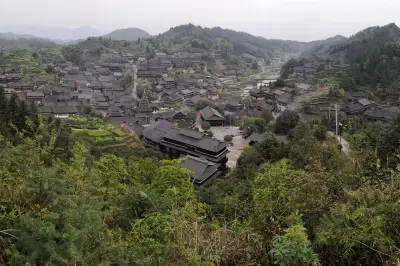
Liuzhou's geographical location is also very favorable, surrounded by mountains and rivers. In every corner of Liuzhou, I could actually see the unique natural landscapes of mountains and waters—truly incredible! The typical karst landform has created Liuzhou's natural scenery of "green mountains, clear waters,奇特 caves, and beautiful stones," with green hills encircling and rivers embracing the city. It well deserves the title of "the world's first natural bonsai," which is why I call Liuzhou a cornucopia.
Liuzhou boasts profound historical and cultural heritage. To understand this city, you must visit Liuzhou's three major museums: Liuzhou Museum, Liuzhou Industrial Museum, and Liuzhou Bailian Cave Ancient Human Relics Museum. After touring these three modern museums, you will surely see the city in a new light.
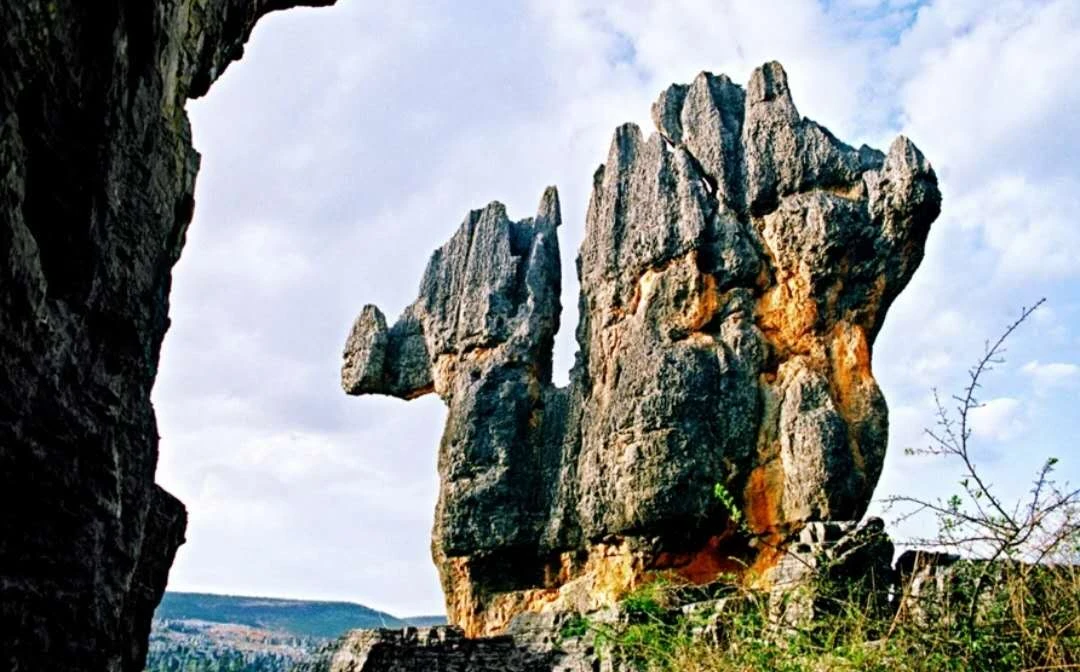
The stone forest here, combined with the rolling mountains, has a somewhat magical quality—this is exactly the kind of feeling I love. Along the way, every scenic spot we discovered felt amazing, and none had been developed, showing that the entire area around Liuzhou is full of treasures.
Liuzhou Bailian Cave Ancient Human Relics Museum—just the name sparks strong curiosity!! My first impression was that it must be a very mysterious museum related to exploration and archaeological science.
Upon arriving at the museum, I saw a completely modern design with clean, concise lines, like a spaceship from outer space. Follow me as we unveil the mist of history and experience the splendor of ten thousand years!
I really like the overall design of this museum. Compared to other museums in China, it has a stronger sense of modernity and futurity.
The design of a museum basically represents its standard. Upon entering, the large circular window above is clearly visible, probably signifying the insignificance of humans in the vast universe—everyone should approach the world with a humble heart to learn and explore.
The small spotlights look like countless stars in the sky.
This museum is not only a scientific treasure but also a popular photo spot for influencers. It's right up our alley, so let's start snapping photos!
The museum has two exhibition floors, divided into two main themes: "Earth's Past: Evolution of Life" and "Cave Homes: Liuzhou's Prehistoric Culture." It displays over 2,000 artifacts, mainly prehistoric relics and ancient biological fossils, showcasing the origin of life and the process of human evolution, especially the inheritance of Liuzhou's prehistoric culture.
There are dinosaur fossils here, so it's definitely suitable for children!
This exhibition hall is like a very vivid textbook of human history, covering topics that children are usually interested in: from the origin of life, the emergence of ancient organisms, the age of dinosaurs, to the appearance of humans.
Like children, we also started from the beginning to fill in the gaps in our knowledge.
A big mammoth! Kids will surely love it.
The dinosaur fossil exhibition hall is so majestic! I never expected Liuzhou to have so many dinosaur fossils—what a precious treasure!
After viewing the history of human evolution, the sentence that left the deepest impression on me in the hall was: "Liuzhou is the heart of the world's lava." Liuzhou rose sharply from the ocean about 200 million years ago and underwent geological changes over a long period.
This area displays a large number of fossils unearthed from the Bailian Cave site. Evidence shows that the Bailian Cave people lived 20,000 years ago and already knew how to collect, process, and eat snails—the earliest known snail-eating population in South China!
Here, you can see giant ape fossils, which provide important clues to human origins, and step into the Paleolithic Age of South China. These numerous ancient relics fully demonstrate historical continuity; Liuzhou may have been a habitat and birthplace for southern populations since ancient times! Seeing this, I felt great respect for Liuzhou, highlighting its important position in the long history of humanity.
The exhibition also uses AR, VR, and other technological means to bridge the distance between artifacts and the audience. Many children developed a strong interest in this new knowledge, enhancing their curiosity and spirit of exploration into unknown fields. A good museum in a city is definitely the best textbook for children.
This exhibition hall broke our preconceptions, and after leaving, we still felt it wasn't enough.
Of course, there is also the authentic Liuzhou river snail rice noodles (luosifen).