Mysterious Dong Village at the Junction of Three Chinese Provinces: Home to the World's Largest Wind-and-Rain Bridge, with a Tradition of 'Stealing the Bride' During New Year
There is always a kind of encounter worth crossing mountains and ridges.
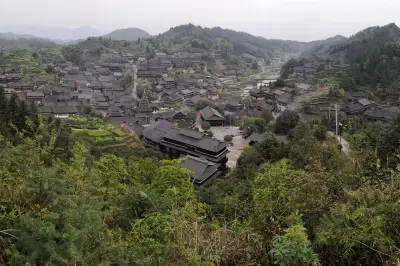
In the clear autumn of August, I traveled thousands of miles from the north, searching amidst the lush greenery for the Chengyang Eight Villages, rich in Dong ethnic customs. This mysterious Dong village at the junction of three provinces still maintains its simple Dong traditions, like a paradise lost in the mountains, exuding fragrance amidst the tea aroma. When an ancient-style wind-and-rain bridge appeared before me, I knew I had finally arrived.
On this vast land of Guangxi, many ethnic minority villages are scattered, and the Chengyang Eight Villages are one of the most distinctive ethnic settlements, known as the 'Land of a Hundred Festivals'. Eight Dong villages are spread in an orderly manner deep in the mountains, located within Sanjiang County, which borders Hunan and Guizhou. I happened to arrive during the local long-table banquet, enjoyed an authentic Dong song and dance performance, and started a culinary journey of the long-table banquet in a joyful atmosphere.
Speaking of the Chengyang Eight Villages, there is a bridge that one must see: the Chengyang Yongji Bridge, reputed as the world's largest wind-and-rain bridge.
Chengyang Yongji Bridge spans the Linxi River. It is one of the four famous historical bridges in the world and the largest wind-and-rain bridge. The entire bridge was built without a single nail or rivet; the wood was chiseled to fit together with mortise and tenon joints. After centuries of weathering, it remains well-preserved. This pure wood-structured wind-and-rain bridge showcases the greatness of ancient wisdom.
Walking on Yongji Bridge, strolling through ancient times, the graceful silhouettes of Dong girls in traditional costumes become a beautiful sight on the bridge. Chengyang Yongji Bridge is a masterpiece of architecture, combining corridors, pavilions, and pagodas in one structure. It holds a unique charm in the history of Chinese and foreign architecture and is a representative work of Dong wind-and-rain bridges. It still plays an important role in the Chengyang Eight Villages today.
By the wind-and-rain bridge, I met a student from Nanjing University of the Arts sketching. Watching him patiently outline the Yongji Bridge, the ancient bridge came to life under his brush. Chengyang Yongji Bridge is as famous as China's Zhaozhou Stone Arch Bridge, Luding Chain Bridge, and the fictional 'Wo Bridge on the Steel Beam Nova of Rome'. It is one of the four famous historical bridges in the world. Crossing this wind-and-rain bridge, you step into the simple Dong customs.
Looking into the distance from the wind-and-rain bridge, a verdant landscape painting unfolds. Hardworking Dong people are busy in the rice fields, and in the distance are rows of Dong village buildings. Such a peaceful life is the poetry and distance that many people yearn for.
The Chengyang Eight Villages consist of eight interconnected Dong villages, located 20 kilometers north of Guyi Town, Sanjiang County. They are a thousand-household Dong settlement, including Ma'an, Pingzhai, Yanzhai, Pingtan, Dongzhai, Chengyang Dazhai, Pingpu, and Jichang. Crossing the wind-and-rain bridge, we entered the first village.
I love simple and natural ancient villages. Walking into the Chengyang Eight Villages, I saw local elderly people handcrafting ethnic-style ornaments. With the development of tourism, the Dong customs here have attracted many visitors who like ethnic culture. These handcrafted ornaments, imbued with time and emotion, are one of the reasons many people like them.
August is the harvest season for autumn tea. On the village square, the drying autumn tea gave off a light fragrance. Seeing a young Dong man skillfully handling the tea leaves, I couldn't help but chat with him. Next to the square was his small tea room, with wood, green bamboo, tea-drying sieves, and countless teapots and tea sets, looking untidy yet full of life—a simple pastoral style that I love.
The iron kettle hanging over the stove, the lush green plants, and the interesting tea strainers brought joy to my heart. According to the tea room owner, he is a native Dong villager, born and raised here. Opposite the tea room is his own tea field. He said if outsiders are willing, he could give us a tea basket and let us pick tea in his field. We could keep half of the harvest and leave the other half for him. This custom is not set up for tourists but has been a tradition in the Dong village since ancient times. I think it's a great custom: the tea pickers experience the joy and hard work of picking tea themselves, get tea leaves, and the host also gets tea leaves—everyone is happy.
For me, tea picking always seems like an elegant activity. Though there is hard work in the fields, the moment of harvest always brings joy. The tea room in the Dong village has no deliberate decoration; the natural tea sets and tea leaves look very artistic.
The unique geographical environment makes the Chengyang Eight Villages produce good tea. Strolling through the village, you can see tea shops everywhere.
While chatting with the tea room owner in the first village, we learned that there was a long-table banquet in the neighboring village today, so we followed the sound. Dong girls lined up at the village gate, ready to sing antiphonal songs. Only after winning the song duel could one enter the village. Although such antiphonal singing is just a formality, the atmosphere was full of joy. Dong songs and modern songs echoed in the mountains, and everything was harmonious.
While enjoying the traditional Dong dance, let's take a look at some unique customs of the Dong village.
According to locals, young Dong men and women in the Chengyang Eight Villages may meet through introductions or on their own. However, the most magical and ancient custom that has been passed down is this: young men 'sing and sit through the night' for two or three evenings before the Spring Festival. After both parents agree, the groom secretly takes the bride home on the evening of New Year's Eve. Only when firecrackers are set off at midnight do people know that a groom has brought his bride home. So locals call this custom 'stealing the bride' during the New Year. It sounds quite novel.
After the bride is brought home, the first thing she does the next day is to fetch water from the village well. Usually, the groom's sister or female cousin does this, occasionally a brother disguised as a woman. This symbolizes that the bride will henceforth share the family burden, work together with the family, and live in harmony. It seems that traditional customs passed down over the long years make sense.
After singing and dancing, it was time for the most lively part—the long-table banquet. Hardworking Dong girls each carried a pole with homemade dishes from their families. Everyone placed delicious food on the tables and invited tourists to sit down and taste.
Looking at the different dishes on each table, don't you feel appetized? With the development of tourism, many visitors to the Chengyang Eight Villages want to experience the local customs, especially food. So the hundred-family banquet has become a tourist experience that needs to be booked in advance. Guests can eat from the first table to the last, moving back and forth, clinking glasses, and enjoying the lively atmosphere. Today, the Dong hundred-family banquet is a national intangible cultural heritage.
Walking through the Dong village, you can still see locals working. They dye cloth themselves and beat the dyed cloth with wooden mallets in the most primitive way, probably to make the color more even and lasting.
Chengyang Eight Villages, each connected, still maintain their most simple original appearance on the vast land of Guangxi. Through the years of wind and dust, they remain unhurried, poetic, and represent the peaceful life that modern city dwellers yearn for.