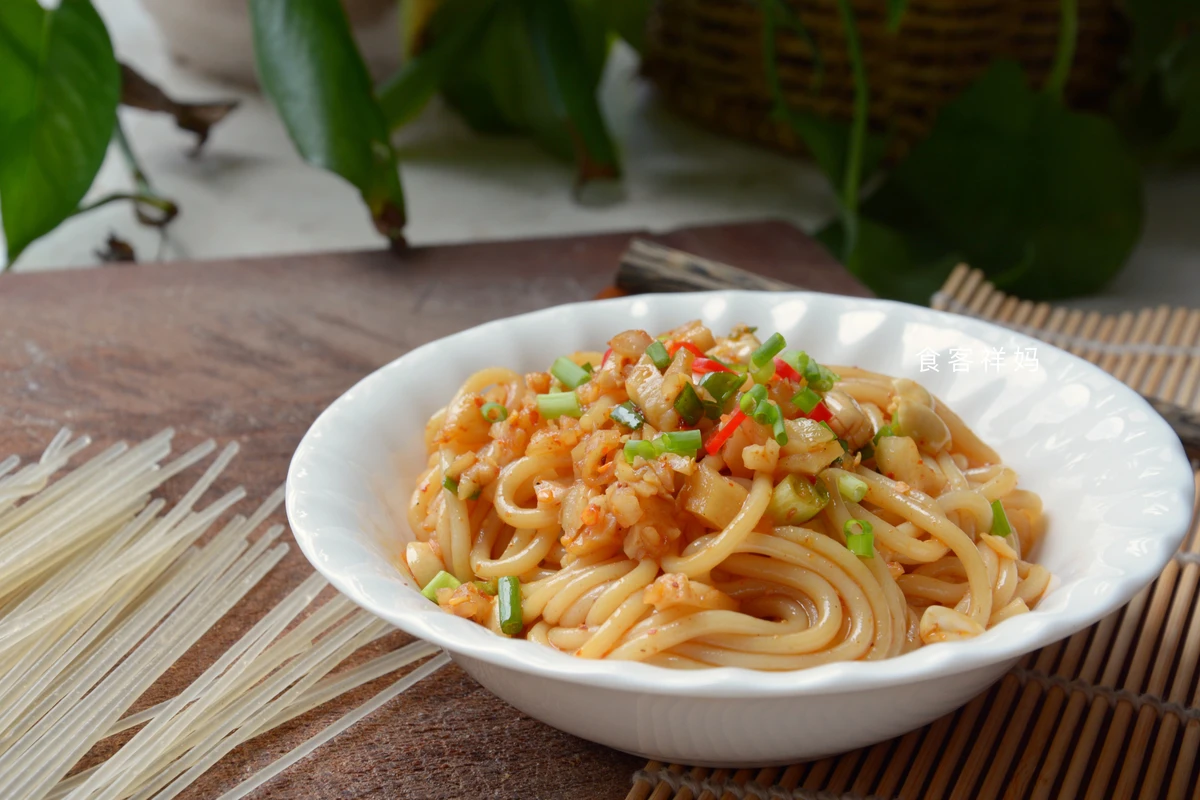
Where in China has the best rice noodles? These 4 places are the most popular – is your hometown on the list?
Northerners love noodles, southerners love rice noodles. Slurping a bowl of rice noodles in a southern city that loves them is one of the best ways to enjoy the local cuisine and soak up the local atmosphere, offering a deep dive into the city's character.
There are many stories about the origin of rice noodles. The most widespread one says that the First Emperor of Qin, in order to unify China, sent troops on a southern expedition. Since the Qin soldiers were all from Shaanxi and only ate wheat-based noodles, they couldn't get used to the plain rice in the south. The emperor ordered the cooks to find a solution. Imitating the process of making noodles, they turned rice into rice noodles, steamed them, and ate them – this is considered the earliest form of rice noodles in Chinese history.
Across different southern regions, rice noodles go by different names: in Guangdong, Guangxi, and Hunan they are called mifen; in Jiangsu and Zhejiang, mimiàn; in Yunnan, Guizhou, and Sichuan, mǐxiàn. But the basic ingredient – rice – and the production process are similar. So, on the map of southern China, where can you find the best rice noodles to slurp? Let's go on a tasting tour today.
**Guangxi Liuzhou Snail Noodles**
When it comes to the most trending rice noodle variety nowadays, it has to be the snail noodles (luosifen), famous for their pungent smell that has won millions of fans. Even the once-popular Guilin rice noodles have been overshadowed. How popular are snail noodles? They single-handedly put the city of Liuzhou on the map, with many people flying in just for a bowl of authentic snail noodles.
There are very limited records about the invention of snail noodles. They are known to have originated in the night markets of Liuzhou in the 1980s, with a flavor that blends freshness, fragrance, sourness, pungency, and spiciness. Later, they became available anytime, day or night. Now, noodle shops line the streets and alleys of Liuzhou. Though most are small and have old furniture, that doesn't stop diners from happily slurping their bowls.
A bowl of authentic Liuzhou snail noodles starts with a broth made by stir-frying snail meat with pork bones and more than a dozen spices. The snails must be the local stone snails unique to the area. The resulting broth is red and flavorful, with a rich texture, while the snail meat is tender, having fully integrated with the broth.
Then add the classic quartet: pickled bamboo shoots, fried tofu skin, greens, and duck feet. The basic version of snail noodles is ready. Just looking at it makes your mouth water.
**Hunan Changde Round Rice Noodles**
Since the rise of Changsha tourism, the hidden gem of Changde in Hunan has gradually become known to the public. As a city that accounts for half of Hunan's rice noodle scene, Changde rice noodles can be found throughout the province. Obviously, its rice noodles are far more famous than the city itself, leading many people to mistakenly think that Changde rice noodles are a specialty of Changsha.
If you've ever slurped rice noodles in Hunan, you'll remember the owner asking, "Round or flat?" Actually, authentic Changde rice noodles come only in round shape. Flat noodles are called mimiàn by locals and are not considered authentic. The round noodles are known for their great chewiness and freshness, made from high-quality indica rice aged for one year. After cooking, they won't break when picked up with chopsticks and have a satisfying chewy texture.
Changde rice noodles themselves are light and bland. Their soul lies in the toppings. The beef comes from water buffalo raised along the lake area, with firm meat that matches the chewiness of the noodles – a perfect match. Braised beef, spicy beef, clear stewed beef, and more are available, along with variations like beef offal, beef brisket, and spicy beef shreds – a tempting array.
Traditional Changde rice noodles are prepared in a strict order: first salt and soy sauce, then tea oil, then the topping, and finally a big spoonful of beef broth. Only then does the flavor become especially rich when slurped.
**Guizhou Zunyi Lamb Rice Noodles**
Some say that for beef rice noodles, look to Hunan; for lamb rice noodles, look to Guizhou; and within Guizhou, Zunyi is the place. That's true. The history of Zunyi lamb rice noodles dates back over 1,100 years. By the mid-Qing Dynasty, they were already famous in the southwestern region. Today, the city of Zunyi holds an annual Lamb Rice Noodle Festival around the winter solstice, showing the deep love the locals have for this dish.
While northerners are skilled at cooking lamb, the people of Zunyi have their own expertise. Unlike the sheep in the north, most of Guizhou's lamb comes from goats, with firm meat and a stronger gamey smell. Zunyi people debone and skin the lamb, add seasonings, and slowly simmer it over low heat, usually overnight. The next day, the cooked lamb is sliced and placed on the rice noodles, finally drizzled with broth. A fragrant bowl of rice noodles is served.
The essence of the lamb lies in the broth. For extra richness, some add old chicken bones. The soup has the flavor of lamb along with the richness of chicken broth, offering a multi-layered taste that lingers.
And the pickle jar is the finishing touch. To tell if a place serves authentic lamb rice noodles, just check if there's a jar of pickles available for free. Pickles with lamb are the perfect combo, cutting the greasiness and stimulating the appetite. A hot bowl of lamb rice noodles goes down easily.
**Jiangxi Nanchang Mixed Rice Noodles**
As the most overlooked provincial capital, Nanchang's mixed rice noodles (banfen) are nevertheless an obsession. It is said that the flavor of rice noodles relies on a good broth, but mixed rice noodles go against the grain. They achieve fame without any soup, relying on the most straightforward flavors and simple ingredients to carve out a place in the rice noodle world.
Nanchang rice noodles are mainly made from late-maturing rice, undergoing processes such as soaking, grinding, and filtering. The noodles require high toughness. Uncooked noodles are firm and white; after cooking, they separate clearly and won't get mushy even after soaking. Confidence in the rice allows Nanchang people to keep the preparation minimal: drizzle with sesame oil, soy sauce, and chopped scallions, add diced pickled radish and peanuts, sometimes a little minced meat – the pure rice aroma conquers the taste buds.
But to enjoy mixed noodles fully, you must pair them with a clay pot soup (wǎguàn tāng). Meat cake soup, old duck soup, pork stomach soup, seaweed and pork rib soup... The small clay pot contains various flavors. Though unremarkable-looking, it's a favorite for meat lovers. Slurping rice noodles while sipping a warm clay pot soup – nothing is more satisfying.
Some images are sourced from the internet.