The Most Beautiful Wind and Rain Bridge in Guangxi, Endorsed by Guo Moruo, Has Been Nominated for World Cultural Heritage
For travel enthusiasts, the wind and rain bridges in ethnic minority areas are not unfamiliar, as they are a very common type of bridge architecture. These covered bridges not only allow people to cross rivers and streams but also provide shelter from wind and rain for passersby, and serve as rest stops for travelers journeying long distances over mountains and through deep forests.
There are many famous covered bridges in China, especially in minority autonomous counties in Guizhou, where almost every village has a wind and rain bridge, and many are well-known. However, when it comes to wind and rain bridges in Guangxi, one must mention the Chengyang Yongji Bridge in Sanjiang, Liuzhou.
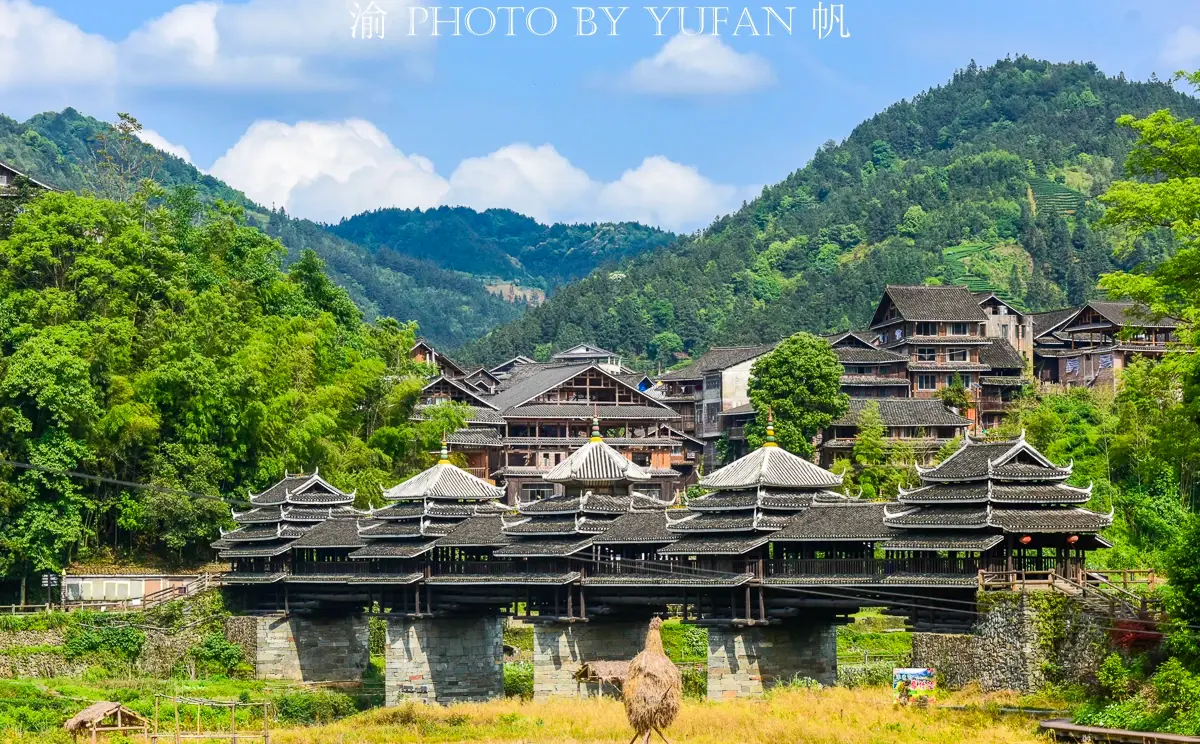
Yongji Bridge is a wind and rain bridge built by the Dong ethnic group, located by the Linxi River in Chengyang Eight Villages (Maan Village), Linxi Township, Sanjiang Dong Autonomous County, Guangxi. The bridge is 96 meters long, 4 meters wide, and 7 meters high. It is one of the best-preserved stone arch bridges in Guangxi, now a key national cultural relic protection unit, and was included in the tentative list for China's nomination to the UNESCO World Cultural Heritage in 1997.
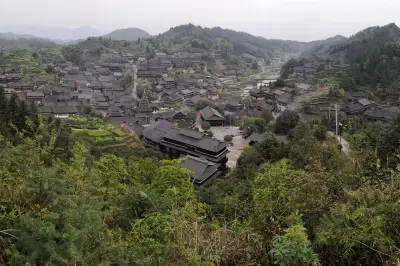
Yongji Bridge is a representative covered bridge built by the Dong people over thousands of years, embodying superb architectural skills and wisdom. Some may not be familiar with the Dong ethnic group, which is a relatively small minority living in southwestern China, with a total population of over 2.5 million. The Dong people are skilled in wooden architecture, and their villages are filled with uniquely shaped and structurally rigorous drum towers, village gates, stilt houses, and wind and rain bridges.
According to staff, Yongji Bridge, also known as Chengyang Bridge or Chengyang Wind and Rain Bridge, is located at the entrance of Chengyang Eight Villages. Construction began in 1912, giving it a history of 109 years. Structurally, the lower part consists of two abutments and three piers built of blue stone. The piers are hexagonal columns, pointed upstream and downstream, with a water-facing angle of 68 degrees, making the design highly scientific. Even in the event of large floods, the scouring force is quickly dissipated.
As a key national cultural relic protection unit and a potential World Heritage site, Chengyang Yongji Bridge is not only a landmark of Chengyang Eight Villages but also one of the landmarks of Sanjiang County. The villagers have deep affection for it and often hold grand welcome ceremonies on the bridge. For example, the above picture shows a scene the author encountered while visiting: beautiful Dong girls used red ropes to block the bridgehead, and visitors entering the village either had to drink wine or sing folk songs to pass, a very interesting welcome ritual.
Yongji Bridge has five pavilions, each adorned with decorative objects on the tops and upturned eaves. These include strings of "gourds" made of iron cans linked together, or auspicious birds shaped from materials such as tung oil, lime, and glutinous rice paste, lifelike and vivid.
According to village elders, these gourds and auspicious birds carry good meanings. For example, strings of gourds symbolize favorable weather, abundant fruits, and annual harvests. The auspicious birds, appearing ready to take flight, serve as beautiful embellishments that make the wind and rain bridge picturesque.
The Yongji Bridge is 77.6 meters long, 3.75 meters wide, and 20 meters high, achieving a high unity of structural technology and artistic form. The master craftsmen and carpenters of that era, without drawings, molds, or a single nail or rivet, used only a wooden ruler called a "fragrant pole" to measure, draw, chisel, and saw, building this structurally complex and magnificent wind and rain bridge.
At the bridgehead of Yongji Bridge, there is a red inscription said to be handwritten by Mr. Guo Moruo. In 1965, after seeing a model of Chengyang Bridge in Beijing, Guo Moruo was pleasantly surprised and gladly wrote the three characters "Chengyang Bridge" and composed a poem in praise:
"They praise the Linxi Wind and Rain Bridge, twenty-four zhang high and forty xun long.
The overlapping roofs and connected pavilions delight the spirit with their skill, the stone pillars stretch into the distance across the flowing water.
The bridge, made entirely of bamboo and wood, is stronger than iron; the tea forests for thousands of years grow new shoots.
When can I walk the road of Sanjiang, and learn to plow and till the land?"
At the bridgehead of Yongji Bridge, we saw rows of upright blue stone tablets inscribed with the names of those who donated money and labor from various villages during its construction. According to the "Sanjiang County Annals": "All eagerly stepped forward... contributing materials regardless of wealth, working without counting days, men, women, old and young, doing their utmost, never shirking or stopping." The Dong people's love for public welfare and spirit of unity and kindness are evident from this.
This is the treasure of Chengyang Eight Villages—Yongji Bridge. As a stone-and-wood cross-river wind and rain bridge, it has a long history, beautiful shape, exquisite craftsmanship, and is well-preserved. It may only be a matter of time before it becomes a World Heritage site. If you have the chance to visit Liuzhou, you should come and see it.