In a Dong Village on the Guangxi-Guizhou Border Lies China's Only Dong Painting Museum, Free to Visit
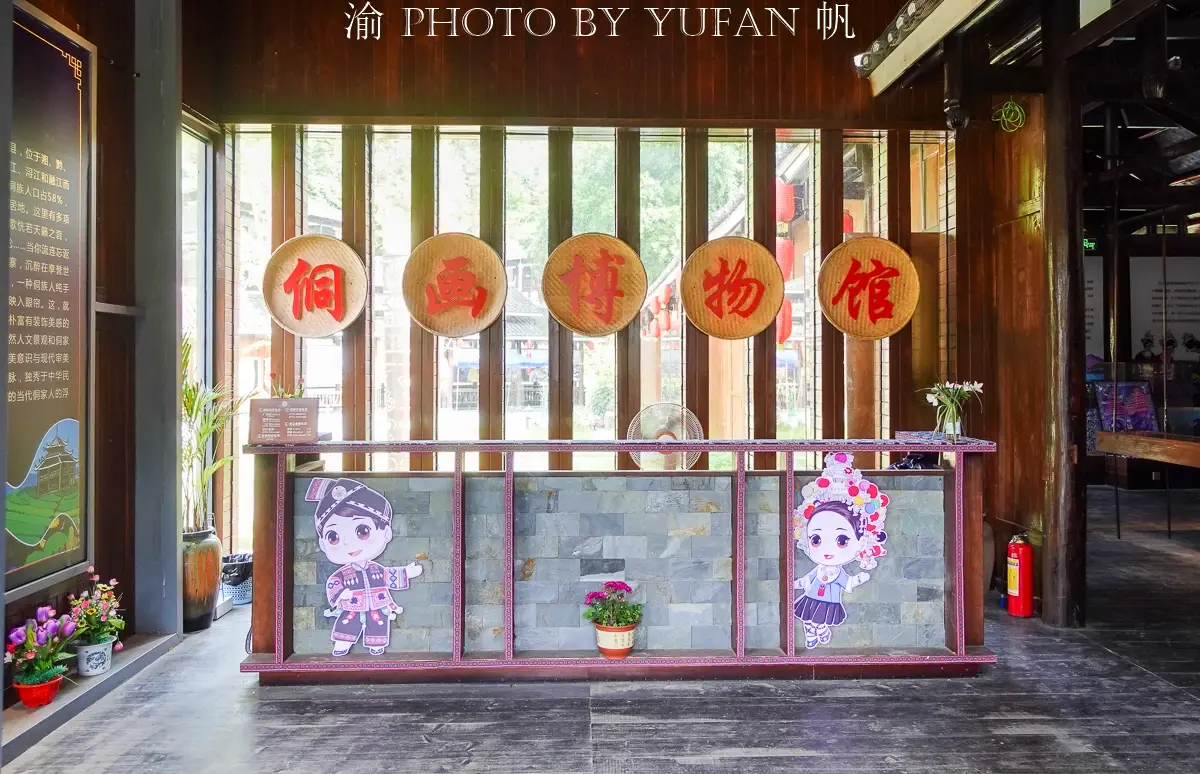
During our self-drive trip in Guangxi, we continued checking in at Sanjiang. After leaving the scorching Chengyang Eight Villages, we encountered a Dong Painting Museum on the way back. Although it was small, it caught our attention because previously we only knew that Sanjiang had a Dong Ethnic Museum, but we didn't know there was also a dedicated Dong Painting Museum.
In our impression, the Dong people are a singing and dancing ethnic group—they can sing when they speak and dance as soon as they walk. However, we didn't know they were also skilled in painting. Upon entering the Dong Painting Museum, we immediately gained a new understanding of the Dong people's versatile talents.
It is understood that this Dong Painting Museum is a supporting project for the Chengyang Eight Villages scenic area in its creation of a national 5A-level tourist attraction. Inside, Dong paintings are systematically organized.
Tracing the history of Dong painting, records of Dong paintings can be found in the "Liuzhou Prefecture Annals" and "Zhenyuan Prefecture Annals." The Zhenyuan Prefecture Annals states: "Women weave and dye themselves, embellishing sleeves with painted embroidery." From the patterns of Dong color paintings from the Qing Dynasty, they can be traced back to the geometric impressed pottery relics from the late Neolithic Age to the Spring and Autumn and Warring States periods of the Baiyue people. Historians and archaeologists have confirmed that geometric impressed pottery is a type of ethnic culture created by the Baiyue people. The Dong people are a branch of Baiyue. From the decorative patterns of these geometric impressed pottery unearthed in the Jiangnan region, one can see the historical origins of Dong peasant paintings.
It is understood that Dong painting had a certain foundation by the Tang Dynasty. By the Qing Dynasty, Dong brocade became famous nationwide, with pattern designs forming their own unique style. During this period, Dong folk painting, based on its forms and methods, was also called color mural painting or ancient color painting by the Dong people. These paintings often feature very strong color contrasts and extremely rich use of colors, thus the color layers are particularly distinct, and the color effects are quite special.
In modern times, starting from 1988, the Dong people living in Sanjiang, Guangxi, began using soot and indigo as pigments, twigs as brushes, and a graffiti-like approach to depict the colorful Dong folk customs.
In the museum, we saw that Dong paintings are characterized by simplicity, roughness, purity, naturalness, and primitiveness. The patterns are highly decorative, with bright colors and strong contrasts. They often use concise, vivid, and colorful pictures to vividly outline the beautiful rural scenery of Sanjiang Dong villages, lively scenes of labor and production, traditional folk customs, and joyful festival celebrations.
Dong painting works are rich in ethnic characteristics and distinct local features of Sanjiang. The techniques are flexible and diverse, carrying strong contemporary, local, and artistic appeal, as well as certain aesthetic value.
After years of development, Dong peasant paintings have matured and gained favor from people both at home and abroad. Every year, over ten thousand visitors from more than ten countries and regions, including Germany, Canada, the United States, and Australia, come to observe, study, and collect them.
Sanjiang Dong painting works were exhibited in Beijing and other places as early as the 1990s. From 1995 to 1997, over 2,000 works were presented by the Ministry of Culture as national gifts to embassies of various countries as treasured collections, greatly boosting the reputation of Sanjiang Dong paintings.
To develop the Sanjiang Dong painting industry, in addition to building this distinctive Dong Painting Museum, promotional CDs of Sanjiang Dong paintings have been carefully designed, planned, and produced for extensive promotion. At the same time, artists from national, regional, and Liuzhou city-level painting academies have been invited to provide professional guidance and training for Sanjiang Dong paintings.
Furthermore, local Dong painting artists have also attempted to combine Sanjiang Dong paintings with other arts such as ceramic culture to create tableware, tea sets, vases, etc., forming unique cultural tourism derivatives.
The Dong Painting Museum is not large and requires no ticket. Personally, I think it is a great platform to learn about Dong culture. Even an art novice can gain considerable insight into Dong folk culture after viewing these paintings. If you visit Sanjiang, you might want to stop by.