Visiting a Dong Village in Guangxi: Experience the Highest Hospitality of the Dong and the Intangible Cultural Heritage of Sanjiang Oil Tea
"Fuel, rice, oil, salt, sauce, vinegar, and tea" — tea is one of the seven daily necessities of ordinary people. It stands alongside fuel, rice, oil, and salt as an indispensable element in people's lives, with a history of thousands of years in China. According to historical records, the tea plant originated in China, and as early as more than 5,000 years ago, our ancestors discovered that tea has detoxifying effects. China is the homeland of tea. After a long historical journey, tea has now taken root in more than 50 countries around the world and has become one of the three most popular non-alcoholic beverages globally.
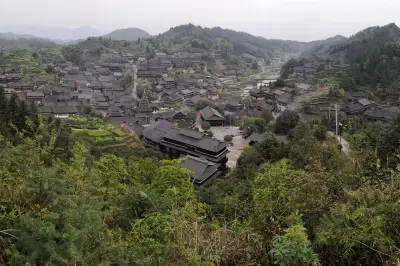
There are many types of tea, such as green tea, black tea, white tea, yellow tea, oolong tea, and dark tea. Tea can also be combined with other ingredients to make milk tea, medicinal tea, eight-treasure tea, oil tea, etc. Each place has its own tea-drinking habits and its own tea culture. Some time ago, when we were traveling in Sanjiang, the northernmost part of Guangxi, a local friend invited us to taste an authentic Sanjiang oil tea.
"If you don't drink tea for a day, you'll have a heat stroke for three days." In the Dong villages, oil tea has become an indispensable specialty in daily life and a delicious soup for entertaining guests. In some villages, people drink oil tea at least three meals a day: they get up in the morning and drink oil tea before going to work; after returning from work at noon, they drink oil tea before lunch; and in the evening, they also drink oil tea before cooking dinner.
According to our local friend, Tangxi Meimei, who invited us to try oil tea, the Dong people have been drinking oil tea for over a thousand years. The traditional way in Sanjiang is to soak cold cooked rice or glutinous rice in oil tea. As for the reason, she explained: because the Dong people have lived for generations in the cold high mountain areas, their oil tea can ward off cold and prevent diseases, as well as quench thirst, refresh the mind, and relieve fatigue.
Oil tea is found in many parts of the country, but Sanjiang's oil tea has its own characteristics and various preparation methods, ranging from simple to refined. Generally, it is divided into four courses: first empty, second square, third round, fourth sweet. "First empty" means the first bowl of oil tea contains puffed rice, fried dough twists, peanuts, and ingredients like pork liver, lean meat, and chitterlings. "Second round" refers to the second bowl of oil tea, which adds shui yuan (round dumplings) on the basis of the first course. "Third square" means adding dong ba (square-shaped Dong rice cakes) on the basis of the first course. "Fourth sweet" allows guests to drink sweetened water to moisten the throat and cleanse the palate.
There are also etiquettes when drinking oil tea in Dong villages. It is said that during the Spring Festival, the third day of the third lunar month, and various joyous occasions, every household will cook oil tea to worship ancestors and invite relatives and friends to gather and drink tea, strengthening connections.
While drinking tea, the host will accompany with Dong songs, and guests and hosts exchange verses slowly over the tea, as if the joy, enthusiasm, and happiness of the Dong people are all blended into this steaming, fragrant bowl of Dong oil tea. Through the changes of ingredients in the bowl, one can also perceive the passage of time and the rotation of seasons.
The process of making oil tea is not complicated. The basic ingredients are shown above. Like Ningxia's eight-treasure tea, these materials can be added or reduced according to one's needs, but the main ingredients cannot be omitted, such as tea and yin mi (sun-dried glutinous rice). The tea is local high-mountain cloud tea, and yin mi is made by first steaming glutinous rice into cooked rice, then drying it in the shade for later use.
To prepare oil tea, first put the yin mi into boiling vegetable oil and fry until it becomes crispy and fragrant puffed rice. Then fry a handful of sticky rice in the pot until it turns brown, add tea leaves and stir-fry together briefly, add water and bring to a boil, then filter to obtain the tea liquid. Add puffed rice, chopped green onions, shredded ginger, peanuts, soybeans, sesame seeds, and other condiments to make a delicious oil tea that is pleasing in color, aroma, and taste.
Not only is the preparation method exquisite, but also the consumption is particular. First, eat a small half bowl of oil tea with only some puffed rice and peanuts; the oil tea is slightly bitter. The second bowl includes more condiments, along with five or six small dishes of pickled vegetables, pickled fish, pickled pork, and beef jerky for guests to accompany the tea. The third and fourth bowls mainly consist of tangyuan (glutinous rice balls) or ci ba (glutinous rice cake slices). If there is no time to make tangyuan or ci ba, glutinous rice is used instead, followed by a sweet dessert.
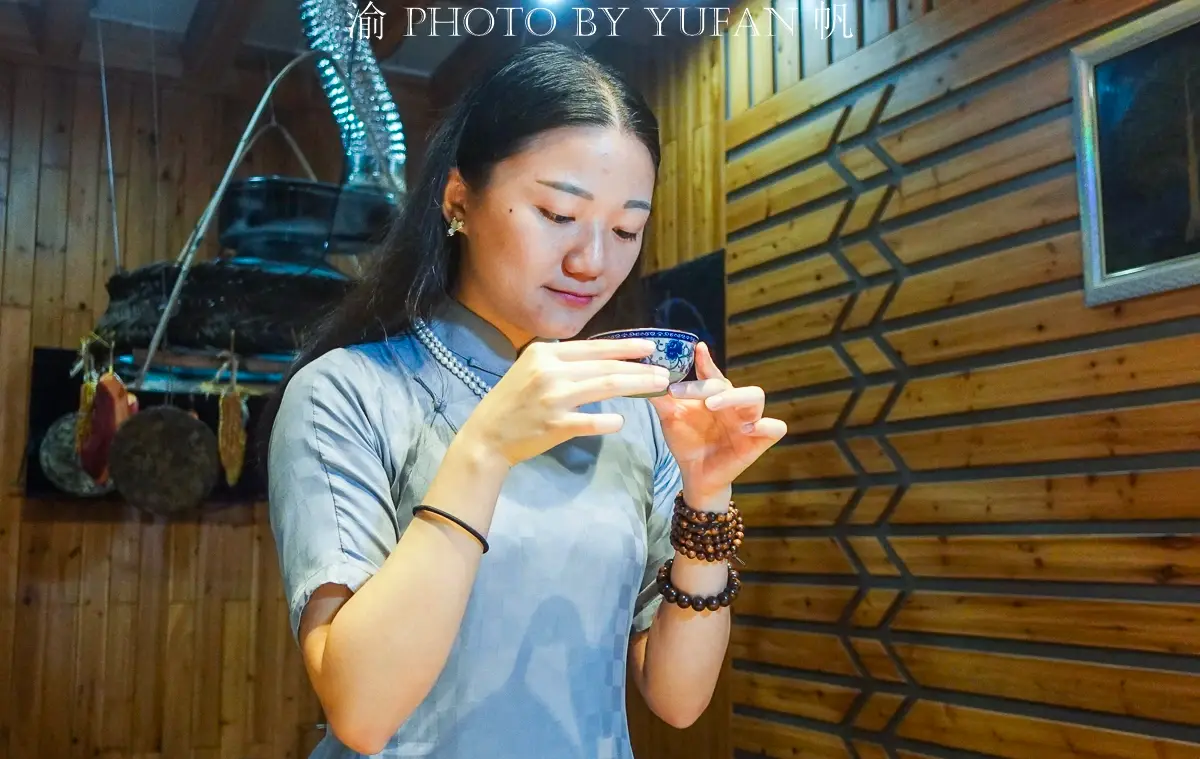
The history of Chinese tea ceremony has gone through the evolution of four tea preparation techniques: boiling, decocting, whisking, and steeping. "When a guest comes on a cold night, tea is offered instead of wine." Just as in many Han areas we use tea to receive guests, the Dong tea-drinking culture also has a long history, only they entertain guests by making oil tea — a practice similar in elegance to gaiwan tea, gongfu tea, and other tea rituals.
In Sanjiang County, there are many time-honored oil tea shops. If you come to Sanjiang, you can go and taste it. Drinking Dong oil tea is tasting ethnic culture and experiencing the joy of travel.