3-Day In-Depth Tour of Liuzhou: Half Bustling Hustle, Half Poetic Serenity
In the central-northern part of Guangxi lies a city called Liuzhou. When mentioning Liuzhou, the first thing many think of is luosifen (river snail rice noodles). But beyond its cuisine, the city also boasts countless beautiful sights. As a historic and cultural city with deep roots, 49 ethnic groups live here, each with its own vibrant folk culture blossoming like flowers on this land. Skyscrapers and bustling streets blend with everyday local life, creating a place that's half lively and prosperous, half poetic and tranquil. Those who live here can truly enjoy a sense of ease hidden within the city.
Liuzhou not only offers natural scenery reminiscent of a green fairytale but also simple, warm human landscapes. While traveling in Liuzhou, you can choose to appreciate its beauty where lush hills encircle the city and the river flows through it, mountains, water, and city merging seamlessly. Alternatively, you can venture into primeval forests to explore secret realms and feel the charm of nature. If time permits, you can also delve into ancient minority villages and experience an original, back-to-basics pastoral life.
If you're planning a trip to Liuzhou, bookmark this in-depth travel guide – three days and two nights are enough to capture the essence of Liuzhou's scenery.
Day 1: Liuzhou City – Diwang Building Yunding Sightseeing Deck – Ma'anshan – Night View on Liujiang River – Overnight in Liuzhou city hotel
Day 2: Liuzhou Industrial Museum – Rongshui Mengwu Miao Village – Shuanglonggou Primitive Forest – Overnight in a guesthouse at Chengyang Eight Villages
Day 3: Chengyang Eight Villages – Return to city center for departure
Ticket Info:
Yunding Sightseeing Deck: 42 yuan. Additional on-site tickets available for experiential activities.
Ma'anshan: Free entry. Round-trip sightseeing elevator: 20 yuan, tickets sold on site.
Liujiang Night View: You can take a cruise (tickets 70 yuan) or enjoy it from Yaobu Ancient Town (free entry).
Liuzhou Industrial Museum: Free entry.
Shuanglonggou Primitive Forest + Mengwu Miao Village: 125 yuan. Leisure and entertainment projects inside require separate on-site tickets.
Chengyang Eight Villages: 60 yuan.
When in Liuzhou, the must-try dish is luosifen. Once you taste it, you'll be conquered by its rich sourness and intense spicy flavor. There are many varieties here, affordable with generous toppings. Plenty of old-school shops are worth exploring, and you can hardly go wrong with a random pick. The distinctive hallmark of authentic local luosifen is its freshness, sourness, refreshing kick, and spiciness. The broth, simmered with river snails, exudes a unique aroma that lingers in your memory. If you love slurping noodles as much as I do, you definitely won't be disappointed.
Liuzhou wears many labels: historic and cultural city, China's Stone Capital, Guizhong Commercial Port… This city not only has ancient cultural sites but also elegant Liujiang scenery and exceptionally diverse ethnic cultures. If one day you step into Liuzhou, a city where classic and modern atmospheres coexist, from which perspective would you choose to understand this multifaceted place? My answer: a bird's-eye view, because you can take in the whole panorama. Here are two prime scenic viewpoints within the city: one is the summit of Ma'anshan, the other is the Yunding Sightseeing Deck.
Ma'anshan stands beside the Liujiang River, the highest peak in downtown Liuzhou. Its superb location makes it an excellent spot to admire the cityscape. Lush trees and shrubs adorn the mountain beautifully. A stone path winds from the foot to the summit, and climbing it is a delightful hiking journey. Along the way, you'll see towering trees, flying birds, and small pavilions hidden among the woods.
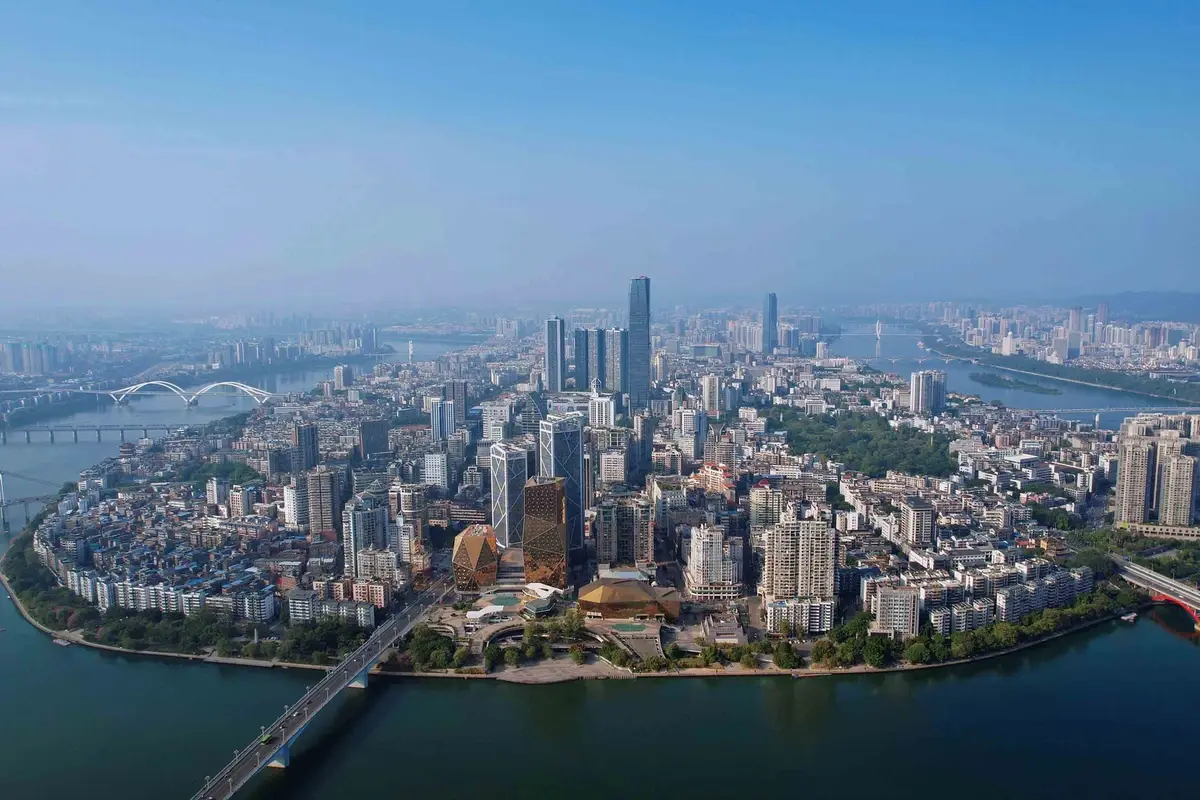
Reaching the summit, the view gradually opens up. Stepping onto the glass observation platform, you're greeted by a vast panorama. Beneath a high sky, intersecting roads divide the city into different districts. Skyscrapers stand in neat rows. Antique-style buildings, with their old-world charm, dot the high-rises, adding a classical flavor. The Liujiang River meanders through the city like a silk ribbon. Under sunlight, the flowing water glimmers; several bridges span across it. Cars shuttle over the bridges from one bank to the other.
If you visit Ma'anshan at night, the scene transforms. After dusk, lights illuminate every corner of the city, and the mountain is no exception. Gazing from the summit, you'll see the bustling metropolis bathed in colorful lights.
The Yunding Sightseeing Deck faces Ma'anshan across the river, another high-altitude scenic spot in the city. Unlike Ma'anshan, this deck is located in a modern office building – the Diwang Fortune Center, in Liuzhou's most bustling downtown area. Take an elevator to the 76th floor and you're at the Yunding Sightseeing Deck. Looking out, you'll see densely packed high-rises in the distance, the gently flowing Liujiang River, and beautiful clouds drifting in the sky. Here, you can also try the 303-meter-high glass skywalk – standing on it is truly thrilling. If you brave the skywalk, you'll get a commemorative photo.
Watching the sunset from the Yunding Sightseeing Deck is extremely romantic. The sun slowly moves toward the horizon, the surrounding clouds turning reddish in the dying light. The gorgeous sunset makes the sky incredibly dreamy – perfect for sightseeing and photography. Press the shutter at that moment, and you'll capture amazing shots. As evening lights come on, thousands of households in Liuzhou twinkle brilliantly. Streets under neon lights bustle with traffic, showcasing the city's prosperity.
Along the Liujiang River bank lies a place once known in ancient times as "Guizhong Commercial Port." Here, not only are historic port docks preserved, but the atmosphere of an old town has been recreated. Located in Liuzhou's Hedong New District, Yaobu Ancient Town, though not a centuries-old settlement that survived through time, recreates the quaint charm of Guizhong Commercial Port from many years ago. Most buildings here are replicas of ancient architecture, full of character. Perhaps it's these elegantly antique structures that give Yaobu its unique historical allure. At the entrance stands a tall stone archway, like a gate separating the town from the outside world: on one side, a modern city; on the other, a classic old town.
Wenchang Pavilion is a representative ancient-style building in Yaobu Ancient Town. Ascending the white marble steps, you can admire the majestic structure up close. It's not only great for sightseeing but also perfect for photos. If you want Chinese costume-style shots, don't miss Wenchang Pavilion. The town's folk museum displays handicrafts representing the cultures of Zhuang, Miao, Yao, and other ethnic groups. Through these exhibits, you can deeply feel the colorful folk customs. To experience Dong culture, head to the Dong Village area inside the ancient town. Whether it's the towering drum tower, distinctive Dong dwellings, or traditional Dong customs, everything exudes a strong Dong ethnic flavor.
Yaobu Ancient Town is diverse in style, condensing Zhuang and Miao cultures while blending antique architecture with modern elements. Streets and alleys are lined with all kinds of shops: accessory stores, snack vendors, teahouses, cafés, bubble tea shops – you name it. Strolling along, pause now in front of an ancient building, then linger in a shop, thoroughly enjoying your travel time. If you look closely, you'll also find cute and trendy decorations tucked in corners, adding life and vitality to the town.
Yaobu Wharf nestles quietly on the banks of the Liujiang. Once, it bustled with boats and busy merchants – the heyday of the wharf. Today, although the merchants are gone, the graceful Liujiang remains. Clear water reflects lush trees; in the sunlight, the river sparkles with boundless charm.
At night, Yaobu Ancient Town becomes even more captivating. As evening sets and lights turn on, the entire town is bathed in colorful illumination, dreamlike and enchanting. The streets fill with crowds and lively buzz. In contrast, the Liujiang River is serene: warm lights along the bank shine on the water, creating a gentle, peaceful night scene that will make you want to stay.
There are many hotels in Liuzhou city. I recommend booking one along the Liujiang River; you'll enjoy beautiful city views both day and night. Moreover, Liuzhou has plenty of budget hotels – average room rates are low, yet value is excellent. Even travelers with higher standards can enjoy quality accommodation without breaking the bank.
Long-standing Liuzhou history chronicles the city's transformations over thousands of years. Today's Liuzhou is both a historically rich cultural city and a rapidly developing modern urban center. As a key industrial town in western China, Liuzhou's century-long industrial journey has left profound marks. On Liudong Road stands a unique museum – the Liuzhou Industrial Museum – telling the story of Liuzhou's industrial history in a distinctive way.
Unlike typically grand museums, the Liuzhou Industrial Museum was built on the site of an old textile factory, largely retaining the original factory structure. Don't be fooled by its unassuming appearance – the red-brick walls and factory elements give it a strong industrial vibe and historical feel. Inside, a visual feast begins. The long corridor displays illustrated panels that show visitors the step-by-step progress of Liuzhou's industry.
Exhibition areas showcase abundant items. From small household goods like electric fans, rice cookers, and radios to large machinery such as excavators, automobiles, and heavy-duty equipment – the variety of industrial products is dazzling. Pausing in front of these exhibits, items closely related to our daily lives, you'll feel a surge of emotion. Each zone is impeccably designed, with background and layout perfectly presenting the exhibits.
In the "Guangxi's First Car" Liujiang-brand automobile zone, there is a real vehicle alongside sculptures of workers in action, with an oil painting backdrop of a factory shop full of finished cars. Wandering here, you might feel as if you've stepped into the actual car production workshop of yesteryear. The museum displays milestone items: the first charcoal-powered vehicle built in 1933, a 1937 fighter plane, the "Liugang 58 No.1" steam locomotive, the first batch of color televisions, and more.
Outside, large exhibits like loaders and lathes are displayed on the grounds. Most eye-catching are two trains. One is a black steam locomotive with red stripes; the other is a common green passenger train, now a 24-hour book bar. Inside, shelves are filled with books for visitors to read. These trains are popular photo spots, evoking a nostalgic mood.
Entering the Liuzhou Industrial Museum feels like walking into a historical river. The exhibits vividly and directly recreate the glory of industrial development. If you ever come to Liuzhou, make sure to visit this free museum – you'll not only see impressive collections but also capture great photos.
Miao villages have a long history of over 5,000 years, tracing their ancestry back to the Chiyou tribe active in the Central Plains during primitive times. Over the millennia, Miao villages spread across seven provinces in southwestern mountains and the Yunnan-Guizhou Plateau, each with its own distinctive character. Liuzhou, known as the sacred place where Zhuang song goddess Liu Sanjie transmitted her songs, boasts four pinnacles of ethnic customs: Zhuang songs, Dong towers, Miao festivals, and Yao dances. Located in Rongshui Miao Autonomous County, "Mengwu Miao Village" is a representative Miao settlement in Guangxi.
"Mengwu" means "hello" in the Miao language. It's a relocated Miao village and the largest man-made Miao village in Guangxi. The mountainous areas around Rongshui County were once home to Miao communities, but due to traffic and location issues, life there was impoverished. In 2016, the government decided to create a "new Miao village" – a Miao cultural experience park centered on Miao heritage.
In Mengwu Miao Village, centuries-old stilt houses from the mountains were dismantled, numbered, and then reassembled at the new site, preserving intact pure wood-structured ancient Miao architecture. The relocated villagers gained diverse livelihoods – farming, business, or performing arts – fundamentally changing their impoverished lives.
Mengwu Miao Village's architectural style maximally restores the look of mountain Miao settlements. Wooden stilted buildings by a clear, slow-flowing river create a serene daily atmosphere. At night, the village glows like stars in the dark sky, shedding beams of light that fall on the river, on leaves, and in visitors' eyes.
The village offers a wealth of activities: lusheng (reed-pipe) performance venues, Miao pig slaughter, Miao grilled fish, drum tower singing platforms, fish-chasing, horse fights, cockfights, bird fights – a whole array of Miao folk customs you must experience at least once! In the evening, watch the large-scale outdoor live performance "Miao Mei" (Miao Charm), a double feast for the eyes and ears, blending world music into ancient ethnic songs – the night tour's highlight!
Shuanglonggou is in Guxuan Village, Rongshui Town, about 3 kilometers from the county seat. It's a national AAAA-level tourist area covering 8,000 mu (approx. 533 hectares), with over 5,000 mu of pristine forest. The main feature is primeval forest adventure; adventure lovers shouldn't miss this. Shuanglonggou is a natural forest scenic area with immense green vegetation, including numerous century-old trees and rare flowers. From a distance, it gleams like a giant green gem under the sun. At the entrance, many dragonflies flit about, forming a natural welcoming canopy. The area is vast, so there are three recommended routes: Monkey Road – Glass Bridge, Boa Road – Glass Bridge, Tiger Road – Glass Bridge. On the way to the glass bridge, a gentle breeze stirs the leaves, adding a touch of woodland romance.
Liuzhou's late autumn hides deep within the mountains of Rongshui in every stretch of primitive forest in Shuanglonggou. Hillsides covered in red leaves dress the tranquil countryside in a paradise-like appearance. The higher the mountain, the clearer the water, the thicker the mist, and the more beautiful the Miao scenery becomes. Watch the setting sun and falling leaves, feel the tender breeze – nature's charm is within reach. Every fleeting moment of beauty is worth recording.
Trees cluster like a natural screen. Lush ancient trees reflect in the water, turning the river green. Ancient-style boats drift leisurely by, leaving gentle ripples. Walking along wooden boardwalks by the shore, you can admire the view before heading up the mountain. Breathing in the fresh forest air, although your body may tire, your heart feels light and full.
The path ends at Guangxi's first suspension glass bridge, and the only "dancing glass bridge" in the country – Shuanglonggou Glass Bridge, also known as the Confession Bridge. As you walk, the bridge body can swing side to side like an "air ballet." On the bridge, you'll encounter people in Miao costumes, and you can take photos with them.
As you walk along the ancient bridge's shore, mist swirls around, and thatched boats appear and disappear in the haze, like a Jiangnan town in a painting. In olden times, before the morning mist lifted, fishermen would prepare to head out to sea – this scene makes you feel you are inside a painting.
Perhaps because adventure defines the scenic area's tone, most recreational activities in Shuanglonggou are thrilling. The Jungle Flying Squirrel is like a mountain roller coaster; the aerial rope zips through the air at high speed, giving you a weightless thrill.
In this picturesque forest park, it feels like stepping into a utopia: listen to birdsong and insect chirps, smell the fragrance of trees, hear the stream gurgling – as if cleansing a restless heart, instantly bringing peace and comfort.
To conveniently explore Chengyang Eight Villages on Day 3, drive there on the evening of Day 2 and stay at the atmospheric Nanyi Guesthouse. The guesthouse is filled with distinctive Dong ethnic charm; many decorations are repurposed old items, incorporating local Dong culture into every detail – from bedrooms to public spaces, even bathrooms. It's well worth the stay. On the way to the guesthouse, you can also enjoy the stunning nighttime view of the Dong village. Of course, there are many other characteristic guesthouses within Chengyang Eight Villages. To truly savor the simplicity of Chengyang, I highly recommend spending a night here.
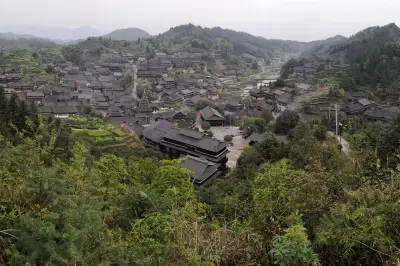
Chengyang Eight Villages lies in Sanjiang County on the border of Guangxi, Hunan, and Guizhou. Surrounded by green hills and embraced by trees, the scenery is beautiful and serene, hailed as one of China's most beautiful villages. Why "Eight Villages"? As the name suggests, it consists of eight Dong villages: Ma'an, Pingtan, Ping, Yan, Dong, Da, Pingfu, and Jichang. The area still perfectly preserves traditional Dong wooden buildings, costumes, song and dance, and lifestyle customs – an ideal place to experience Dong culture firsthand.
When visiting a Dong village, there are two must-see features: the Dong drum tower and the wind-and-rain bridge. These two distinctive structures are symbols of the Dong people, outstanding architectural masterpieces representing their spiritual and cultural heritage.
Among the many drum towers, the most impressive are the new drum towers in Yan Village and Ping Village. Yan Village's new drum tower, built in 2005, is supported by four main pillars and twelve auxiliary pillars, reaching nearly thirty meters high. From a distance, the fifteen-tiered flying eaves taper upward, yet each tier's eave corners are equally exquisite, like a huge pagoda firmly planted on this land, guarding the Dong villagers.
Ping Village's new drum tower, completed in 2014, is a single-pillar drum tower commonly called "Xianxing Lou." This tower has two more tiers than Yan's, making it the one with the most tiers in the Eight Villages. Its unique seventeen-tier, four-corner pyramidal roof structure gives a mysterious aura. The top two tiers are taller, with slightly more upswept eaves. On the door pillars hangs a wooden couplet: "Ping villagers are spirited and long-lived, the unique-shaped single-pillar tower stands majestically for thousands of autumns" with a horizontal inscription: "Eternal Lasting."
Of course, wind-and-rain bridges are also a major attraction. The most famous is Chengyang Yongji Bridge, one of the "World's Four Great Ancient Bridges" alongside Zhaozhou Bridge, Luding Bridge, and the Roman Nova Steel Beam Bridge. Built in 1912, this 64.4-meter-long Dong wind-and-rain bridge spans the Linxi River, mainly of wood-and-stone construction. Five stone-and-timber piers support the bridge body. Decked with fir planks over beams, it forms a covered walkway topped with a beautiful gourd-shaped ornament – at first glance, you can hardly believe it's a bridge. From an observation platform, you can overlook Yongji Bridge: under blue skies and white clouds, this exquisite, unique bridge stretches across the river amid green hills and clear waters, instantly evoking a poetic, pastoral idyll.
The Dong have a traditional welcoming custom of blocking the gate with wine. During holidays, the scenic area organizes Dong girls to stand at the bridgehead to sing and offer gate-blocking wine. This is a very grand local ritual; when honored guests arrive, the whole village might come out to greet them, singing mountain songs and bringing wine to the distinguished visitors, expressing respect and showing the Dong people's warm hospitality.
Walking through the villages on stone-paved paths lifts your spirits – after all, we usually tread on asphalt or tiles. The paths connecting villages were laid piece by piece by local residents: "You pave a section, I pave a section," accumulatively creating these walkways. The villages are unusually quiet, without a bustling array of shops – just ordinary hamlets inhabited by simple, unpretentious people.
The long-table banquet is another highlight. It's the grandest Dong hospitality custom. Long tables, made by joining tables from different households, are laden with specialty Dong dishes, both meat and vegetarian, a lavish spread. They adhere to the principle: "As long as the guest hasn't put down chopsticks, the host keeps adding more food" – you'll definitely be served until you're happily full.
Everything in Chengyang Eight Villages is wonderful. Each village has its unique traits; every view is a dash of color. There isn't much obvious modernity here – only ancient traditions remain.
Travel Diary Contents
1. Foreword – Preview
2. Itinerary Arrangement
3. Ticket Information
4. Food Recommendations
5. Day 1: Must-Visit High-Rise Insta-Spots in Liuzhou
6. Day 1: Night Cruise on Liujiang from Yaobu Ancient Town
7. Day 1: Recommended Hotels
8. Day 2: Liuzhou Industrial Museum
9. Day 2: Rongshui Mengwu Miao Village
10. Day 2: Shuanglonggou Primitive Forest
11. Day 2: Recommended Guesthouse
12. Day 3: Chengyang Eight Villages
Travel Information
Hotel Index
Strategy Index
Ticket Index
Website Navigation
Travel Index
Cruise Index
Corporate Travel Index
Cooperation
Distribution Alliance
Friendly Links
Corporate Gift Card Purchases
Insurance Agency
Agent Cooperation
Hotel Partnership
Destination and Scenic Spot Cooperation
More Cooperation
About Ctrip
About Ctrip
Ctrip Highlights
Contact Us
Job Opportunities
User Agreement
Privacy Policy
Business License
Security Center
Ctrip Content Center
Intellectual Property
Trip.com Group Algorithm Disclosure