Liuzhou | Strolling Through a Tranquil River City and Encountering Spring’s Pink Romance
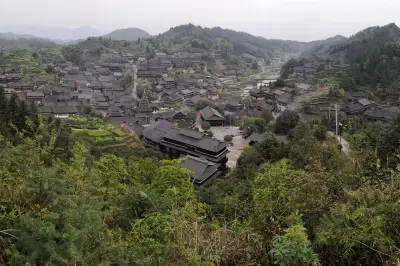
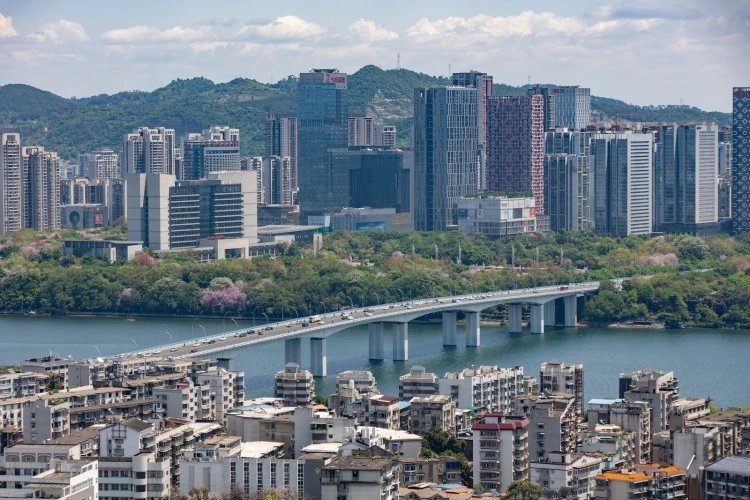
Eat in Guangzhou, dress in Suzhou, play in Hangzhou, die in Liuzhou. This leisurely and peaceful riverside town can be mentioned in the same breath as Suzhou, Hangzhou, and Guangzhou, with its own unique charm. Liuzhou gets its name from the Liu River, with a long history stretching back to the ancient 'Liujiang Man,' home to numerous prehistoric cultural sites.
Nowadays, when mentioning Liuzhou, the most famous thing is the spicy, sour, and savory Liuzhou river snail rice noodles. But in spring, the entire city is submerged in a sea of bauhinia flowers. The moon over the river is bright and clear, countless bauhinia petals drift unseen—Liuzhou’s April days are pink. Everywhere, rows and clusters of bauhinia flowers bloom. It is said that bauhinia trees were introduced to Liuzhou in the 1930s, first planted in the Shatang area, then later large-scale planting began throughout the city. Today, nearly 300,000 bauhinia trees are spread across the whole city. This romantic sea of pinkish-purple has become another signature of Liuzhou’s spring.
With the arrival of spring and no pressing matters, busy only with the flowers. Take advantage of the gentle spring breeze on weekends to stroll through Liuzhou’s streets and alleys, and run straight into a purple romance.
Putao Mountain Road → Dalongtan Park → Panlong Mountain Park (Shuinan Road) → Liuhou Park (Wenhui Road, Wantang Road, Binjiang East/West Road) → People's Square (Sanzhong Road) → Civic Square (Yanjiang Road) → Baisha Bridge → Fenghuangling Bridge → Huanjiang Waterfront Avenue → Malu Mountain Park (Xueyuan Road)
On Putao Mountain Road, near the Luosifen Industrial Park, rows of bauhinia trees on both sides are in full bloom.
In the morning, gentle sunlight filters through the treetops, casting beautiful Tyndall beams onto the tree-lined paths—even a commute can feel like a romantic misty morning.
If you want to see bauhinia flowers blending with natural landscape, you must visit Dalongtan Park. With one lake, two pools, four valleys, and twenty-four peaks named like 'Crouching Tiger' and 'Peacock,' it combines karst landforms, ethnic minority customs, and subtropical karst plant landscapes. It is a must-visit spot for flower viewing and spring outings in Liuzhou.
Green hills and grass are refreshing to the spirit. The Dragon Pool mirrors the brilliant bauhinia blooms, and the fresh air carries faint floral and earthy scents, as if in a romantic paradise. Rent an outfit with ethnic flair, ride a horse or take a sightseeing car, and travel through a pink-purple fairy-tale world.
The governor Liu Zongyuan once prayed for rain here, so the park now has memorial structures such as the 'Prayer for Rain Stele Pavilion,' 'Sacrificial Altar,' and 'Leitang Temple.' At the foot of the hill, clear springs emerge, and from the woods come a hundred sounds. If only one could lie upon the chilly clouds, there’d be no need to seek Penglai. There is also 'Zhang’s Fishing Platform,' the site where Zhang Chong, one of the Eight Sages of Liuzhou, once fished.
Travel Tips: 🎫 Admission: Free ⏰ Opening Hours: 6:30-22:30 🚌 Getting There: City bus routes 19, Express 6, 70, 69, 48
Panlong Mountain (Coiled Dragon Mountain) stands on the east bank of the Liu River, with three peaks stretching across and rising steeply by the water, resembling a coiling dragon—hence the name. The traveler Xu Xiake once visited and praised its fantastic scenery highly.
Bauhinia flowers make the most beautiful backdrop for photos. Seen from afar through clusters of blooming trees, atop the lush Panlong Mountain, the Wenguang Pagoda and Panlong Pagoda echo each other.
On Shuinan Road outside the park, flowers are also in full splendor, enticing visitors to pause and capture these peaceful spring moments with their cameras.
Liuhou Park is embraced by a U-shaped bend of the Liu River that resembles a teapot handle. It was built during the Xuantong period of the Qing Dynasty to commemorate Liu Zongyuan, the governor of Liuzhou. Like an oasis in the bustling city, the park contains the Liuhou Shrine, the Cenotaph of Liu Zongyuan, Luo Pond, Ganxiang Pavilion, and other historic sites related to him.
Hillside trees layer and block a thousand-mile view; the river twists like nine turns of the intestines. —Liu Zongyuan, one of the Eight Great Masters of the Tang and Song dynasties, was demoted to governor of Liuzhou and wrote this regulated verse, 'Climbing Liuzhou City Tower and Sending to the Governors of Zhang, Ting, Feng, and Lian,' during that time.
When it comes to the oldest bauhinia trees, those planted in Liuhou Park back in 1964 take the prize. Their pink-purple blossoms and buds are steeped in rich historical and cultural charm.
Take a stroll along Wenhui Road and Wantang Road outside the park. You’ll be wrapped in pink poetry all the way, brimming with the vibrant atmosphere of everyday life.
Listening to the wind by the river, the bauhinia flowers along Binjiang East Road and Binjiang West Road adorn the green ribbon of the Liu River with the most beautiful patterns.
Liuhou Park Travel Tips:
🎫 Admission: Free ⏰ Opening Hours: 6:30-22:00 🚌 Bus: Take circular routes 31, 4, 14, 30, 79, as well as 105, 69, 31, 39, 26
The city center is south of People's Square. Longcheng Road is flanked by bustling commercial streets, and nearby are the historic Xilai Ancient Temple and Liuhou Shrine.
On Sanzhong Road, dotted with bauhinia, the colorful walls on both sides exude a Portuguese charm.
Across the river from People’s Square lies Civic Square.
Civic Square is surrounded by green water and dotted with myriad flowers.
A sea of bauhinia forms the perfect backdrop for the musical fountain, with a faint osmanthus fragrance wafting through the mist.
On the health trail along Yanjiang Road, one side is a riot of flowers, the other lush green water.
Baisha Bridge spanning the Liu River looks like a ring—the smooth “Happiness Bridge” in the hearts of Liuzhou people. It also resembles a portal through time and space, earning it the nickname the 'Gate of Liuzhou.'
Along the waterfront health trail, the bauhinia are in full bloom. Against the colorful sunset glow and dazzling lights, the night bauhinias and Baisha Bridge complement each other perfectly. Spring flowers understand our heart; clear waters soothe the weary traveler.
Liuzhou is known as the Stone Capital of China. Adjacent to Malu Mountain Strange Stone Expo Garden, Malu Mountain Park is another must-visit for spring outings and flower appreciation. In April, the park turns soft pink, adding a touch of tenderness to the extraordinary rocks.
Driving into Xueyuan Road, bauhinia trees on both sides welcome you with freshness and romance rushing to meet you—even the air carries a hint of sweetness.
The Liu River is like a green willow branch dancing in the wind, resilient and full of vitality, bringing tidings of spring to the land of Liuzhou.
Huanjiang Waterfront Avenue
The 30-kilometer Huanjiang Waterfront Avenue starts at the east end of Hedong Bridge, running along the west bank of the Liu River to Jinglan Bridge. Along the way, green hills and clear waters, bauhinia blooms vying for attention, the ancient Longbi Huilan (Dragon Wall Swirling Waves), a red bicycle path, bridges in the style of wind-and-rain bridges, and various sculptures.
Huanjiang Waterfront Avenue
Fenghuangling Bridge’s architecture is inspired by the wind-and-rain bridges unique to the Dong ethnic group. It has five pavilions: a four-sided five-story hip-and-gable pavilion at each end, progressively a six-sided seven-story hexagonal pavilion, and at the center the tallest, an eight-sided seven-story octagonal pavilion.
The golden bridge pavilions and galleries, set against the pink bauhinia flowers, gain an extra touch of springtime gentleness. At night, the scenic lighting here is also a beautiful sight along the Liu River.
🚍 Bus: The city has six long-distance bus stations: Liuzhou Main Bus Station, Liuzhou South Bus Station, Lianhua Bus Station, Baisha Bus Station, Hedong Transport Hub, and Liujiang Bus Station. 🚄 Train: Railway stations include Liuzhou Station and Liujiang Station. ✈️ Plane: Liuzhou Bailian Airport is 12 km from the city center. Airport shuttle buses (Liuzhou South Bus Station – Liuzhou Hotel – Bailian Airport), intercity buses, and Liuzhou bus airport express are available.