Liuzhou Travel | From Sanjiang to Rongshui: Beautiful Mountains, Water, and Scenery
This holiday, everyone is either traveling or on their way. I, who dislike crowds, went to Liuzhou, Guangxi. Besides checking off my beloved luosifen (river snail rice noodles), I unexpectedly discovered a wealth of food and scenery. The idyllic Chengyang Eight Villages 🌟, the ultimate summer water playground Longnv Gully, the dreamy primeval forest Shuanglong Gully, the immersive Mengwu Miao Village, and Shimen Fairy Lake, reminiscent of scenes from "The Lost Tomb"... Every place surprised me. Liuzhou’s beautiful mountains, waters, and landscapes are worth countless visits.
When people think of Liuzhou, luosifen is usually the first thing that comes to mind, but the city’s natural scenery is rich and perfect for sightseeing. I chose Sanjiang as my starting point, and along the way from Sanjiang to Liuzhou, I encountered too many stunning views. DAY1 Chengyang Eight Villages Scenic Area – Sanjiang Wind and Rain Bridge – Grand Dong Village – Zuomei Performance Stay: Sanjiang Jingxiang Hotel DAY2 Xiancaotang Lingzhi Transparent Factory – Laojun Cave Scenic Area – Shuanglonggou Scenic Area – Mengwu Miao Village Stay: Rongshui Miao Autonomous County Tent Hotel DAY3 Yuanbaoshan Longnv Gully Scenic Area – Shimen Fairy Lake Scenic Area – Liuzhou Stay: Liuzhou Yunding Hotel Our itinerary was relatively tight. If you have more time, definitely add two or three extra days – these sights are all worth taking slowly.
Chengyang Eight Villages Scenic Area
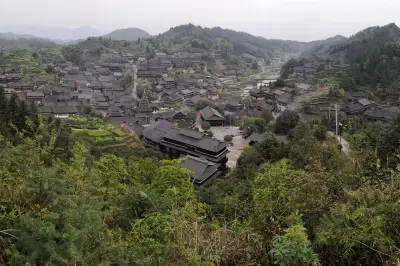
Chengyang Eight Villages is located in Sanjiang Dong Autonomous County, Liuzhou, Guangxi, just a twenty-minute drive from the county seat. The area consists of eight natural villages: Ma’an, Pingzhai, Yanzhai, Pingtan, Dongzhai, Dazhai, Pingpu, and Jichang. It is said to be home to 10,000 Dong people. With its rustic, natural charm and the Dong’s many festivals, it’s an excellent place to experience Dong folk customs. 💗 Name: Chengyang Eight Villages Scenic Area 📍 Location: Pingyan Village, 20 km north of Guyi Town, Sanjiang Dong Autonomous County, Liuzhou 🎫 Ticket: 95 yuan (includes admission, performance, and sightseeing car). If you book a guesthouse inside, you can often save the ticket fee.
The first stop by sightseeing car is the core attraction, Chengyang Bridge. As one of the most iconic Dong structures, this wind and rain bridge was built in 1912 and is the largest of its kind in the world.
Every day at set times, a traditional welcoming ceremony is held on the bridge. Local people in ethnic costumes, holding homemade rice wine and singing welcoming songs, greet guests from afar.
Normally, such welcoming wine in minority cultures is only served at weddings or festivals. Young women sing welcoming songs, and guests respond with songs or drink. This is one of the most characteristic experiences in Chengyang Eight Villages – a memorable taste of warm ethnic hospitality.
Dong craftsmen are incredibly skilled. Wind and rain bridges are built entirely of wood without any iron nails yet withstand centuries of wind and rain. The Dong have always lived by water, so for ease of access, wind and rain bridges are built in villages, usually downstream. Combining bridge, corridor, and pavilion, they feature elegant forms and are highly distinctive Dong architecture.
Ancient stilted houses, crystal-clear rivers, and layered rice terraces form a beautiful pastoral painting. Many university students come to Chengyang Eight Villages to sketch, drawn by the truly lovely scenery.
Wind and rain bridges not only facilitate crossing but also shelter from wind and rain, provide resting spots, and serve as reception areas.
On the bridge, I met a Dong girl doing Dong embroidery. I loved the handcrafted silver earrings – brightly colored and uniquely styled.
After crossing Chengyang Yongji Bridge, you enter the first village. The residents of Chengyang Eight Villages are all locals. Traditionally farming, with tourism development, villagers now run guesthouses, restaurants, and local product shops, but compared to other scenic areas, it remains relatively uncommercialized.
In the village, I saw a group of girls in ethnic costumes looking beautiful. I thought they were locals, but they said they were tourists. That tempted me to rent a set of clothes and try being a minority for a while.
There is another wind and rain bridge in the second village. Although the bridge design is similar, the scenery here is even better for photos.
Chengyang Eight Villages is famous for its glutinous rice. Interestingly, villagers raise rice-flower fish in the paddies; when the rice is harvested, the fish are also ready to eat.
In early August, the lotus flowers in the Dong village were in full bloom. Against the lotus pond, the village looked vibrant – any casual shot was beautiful.
Unlike other tourist spots, here you can see the daily life of locals everywhere: children playing on bridges, grandmothers working in the fields, old men picking tea – the whole place brims with the scent of everyday life.
The Dong drum tower in the center is another distinctive structure. Constructed entirely of decay-resistant wood without a single nail or mortise, it remains sturdy and can stand for centuries without rotting or leaning.
In ancient times, Dong drum towers served as meeting places and alarm posts when enemies invaded. Now they are used for leisure and traditional Dong weaving demonstrations.
The Dong once lived secluded lives, self-sufficient in food, clothing, and daily needs. Nearly every woman in the village could weave and tie-dye.
I rented a set of ethnic clothing in the village for just 20 yuan – a very reasonable price. Near the drum tower, there were several restaurants, and we had lunch there. The Dong love sour and spicy food; they pickle sour fish and meat, which are delicacies for guests, though the taste was a bit strong for me. I personally recommend the white-cut chicken and oil tea.
The village is full of wonderful scenery; old houses make for atmospheric photos.
If you just skim the surface, you can take the sightseeing car out after visiting the third village. The guide said it would take at least two to three days to see all of Chengyang Eight Villages. I really loved the feeling here – ancient, natural, tangible. Next time, I will definitely stay a night or two to slowly soak in its charm.
Sanjiang Grand Dong Village Scenic Area
The Sanjiang Grand Dong Village Scenic Area is in the county town, featuring the wooden Dong Village Bird’s Nest, Sanjiang Drum Tower, Sanjiang Wind and Rain Bridge, as well as the Dong historical and cultural stele corridor, Moon Street, Sanjiang Strange Stone City, Duoye Square, and more.
The drum tower is the symbol and soul of a Dong village. Sanjiang Drum Tower is the foremost in the Dong region and is hailed as the “World’s No.1 Drum Tower.”
Standing 42.6 meters tall with 27 tiers, it resembles a wooden pyramid rising layer upon layer, a marvel of exquisite craftsmanship.
The drum tower is the tallest building in a Dong village, hosting important gatherings like rituals, councils, assemblies, welcoming ceremonies, celebrations, singing and dancing, and entertainment – a vital place for passing on Dong traditional culture. The ground floor displays the tower’s construction history and past events, offering visitors deeper insight.
The four main pillars inside are all century-old fir trees, truly spectacular. Wooden stairs on both sides allow visitors to climb the tower.
From the observation deck, the panoramic view of Sanjiang unfolds – the county is stunningly beautiful.
There is also a wind and rain bridge in Sanjiang town, spanning the Xunjiang River in Sanjiang Dong Autonomous County. Originally built in 1916, it was later reinforced with concrete, and is now one of the attractions in the Sanjiang Grand Dong Village.
The bridge has seven pavilions and is exquisitely shaped; it is the longest and largest wind and rain bridge in the world.
At night, the Sanjiang Wind and Rain Bridge is spectacular. Many elderly locals cool off on the bridge. As a link between the two riverbanks, this bridge is a perfect ten in appearance.
The Xunjiang River is very clear. On fine days, you can see the reflection of blue sky and white clouds. In winter, morning mist floats on the river, like a fairyland.
For dinner, we found a local restaurant near the Bird’s Nest to taste Liuzhou’s specialties.
Guangxi oil tea: the server brings various toppings, and you can choose sweet or savory. I found it quite good – slightly bitter at first, but the more you eat, the better it tastes.
The Dong also love sour and spicy food, and the sour-spicy broth here rivals Guizhou’s. The sour-spicy beef tendon with cherry tomatoes was tangy and bursting with juice. River snails and litsea cubeba gave a zesty punch to the palate – deliciously sour and spicy.
White-cut chicken and soy sauce chicken were super tender, even better with dipping sauce.
In Chengyang Eight Villages, I had seen rice-flower fish in the paddies. Usually small, they are tender and flavorful, especially pan-fried – irresistibly good.
Vinegar-blood duck is a local specialty from Quanzhou, Guilin. Made with local farm ducks, the blood is mixed with vinegar from the family jar, the duck fried until fragrant, then braised over low heat, and vinegar blood added before serving. Worth a try.
Dong Village Bird’s Nest – Zuomei Performance
The Dong Village Bird’s Nest is another highlight of the Grand Dong Village. A Guinness World Record holder as the largest single wooden structure, it is truly impressive. The nightly “Zuomei” performance at 8:00 PM is a must-see. A romantic love story and splendid ethnic dances showcase Dong customs – very much worth watching. 🎫 Ticket: 100 yuan/person ⏰ Show time: 20:00–21:15, about 75 minutes.
The Dong people believe in free love and have a courtship custom called “zuomei.” It means young men go to a girl’s house to sing. If a young man takes a liking to a girl, he will sit on her lap to express his admiration.
The stage setting is unique, incorporating traditional Dong stilted houses and drum towers.
The entire show is presented through traditional song and dance with richly designed scenes.
The performance is divided into four acts: First Watch “Visiting the Girl,” Second Watch “Teasing the Girl,” Third Watch “Zuomei,” Fourth Watch “Joy at Dawn.” Performers sing and dance, vividly presenting the original Dong courtship and wedding customs.
Dong traditional weddings involve marrying at night. The bride is taken away late at night, before dawn.
Three days later, the couple returns happily with a fat pig and rice wine. The show is a feast for the eyes and ears and offers insight into Dong wedding traditions. As a tourist, I think the Zuomei performance is well worth seeing.
There are many accommodation options in Sanjiang town. We stayed at the Jingxiang Hotel, opened not long ago, with good facilities.
The room was much larger than I expected, featuring murals of Sanjiang Dong village and ethnic-style bedside lamps.
Room amenities were top-notch: King Koil mattress, Le Labo toiletries – nice attention to detail.
The room had a leisure balcony overlooking the Dong Tiangong Cultural Square across the way, which you can visit if you have time.
Yangtian Palace Cultural Scenic Area
The Yangtian Palace Cultural Scenic Area is an experiential new landmark encapsulating the spiritual and material culture of Dong people in China. It’s right opposite the hotel, so we visited in the morning. It was a pity we missed the performances.
The name “Dong Tiangong” derives from the precious “Ancient Song of the Dong Ancestors” – Gamang Mangdao Shijia – found only in Sanjiang. It is one of Sanjiang’s most treasured cultural heritages as a Dong autonomous county, representing the antiquity of Dong culture and embodying Dong cosmology, worldview, and philosophy, showcasing the height and breadth of Dong culture, comparable to other world cultures.
The scenic area is designed as a living, panoramic, international Dong cultural eco-museum, integrating tourism, experience, study, and viewing, allowing the world to understand Sanjiang Dong culture.
The architecture is distinctive: pavilions, towers, and terraces with character. I heard the performances here are superb – I’d love to see them someday.
Xiancaotang Lingzhi Transparent Factory
Driving from Sanjiang to Rongshui in the morning, you pass through Rong’an County, home to the famous Xiancaotang Lingzhi Transparent Factory. If you have elderly family, I recommend stopping by.
It’s a 4A-level scenic spot.
The park is beautifully landscaped, like a natural botanical garden with flowers in bloom all year.
Using advanced global technology and equipment, the factory simulates the temperature, humidity, air, and light of the Jiuwan Mountains’ natural growing conditions, creating an intelligent transparent eco-factory. The 1:2 replica sister lingzhi from the Jiuwan Mountains is awe-inspiring.
The entire park replicates the natural environment of the Jiuwan Mountains. Walking through feels like traversing a primeval forest.
Plants and animals are artificial, but the lingzhi you see are real.
Before, I only knew lingzhi was good, without fully understanding its effects and uses.
Here, you can observe the production process from all angles, learn about lingzhi’s benefits and processing methods – a truly educational day.
I must recommend the Lingzhi Restaurant here – the food was surprisingly delightful. The dishes are carefully developed by the chefs, and prices are reasonable.
Mushroom meatballs, suitable for all ages, with a strong mushroom fragrance.
Lingzhi chicken soup is a must-try. The server said the chickens are fed lingzhi. Free-range chicken plus lingzhi makes an incredibly savory soup.
Braised duck with dried bamboo shoots, quite spicy, very tasty.
Sour-spicy rice-flower fish was our favorite – tangy, spicy, and simply delicious.
Rongshui has many great natural scenic spots, and Laojun Mountain is one. Inside Laojun Cave Scenic Area are two natural karst caves, one containing a naturally formed stalactite statue of Laozi, with white hair and silver beard, lifelike – hence the name. 🎫 Ticket: 80 yuan/person 📍 Location: 204 Provincial Road, Rongshui Town, Rongshui Miao Autonomous County, Liuzhou ⏰ Opening hours: 09:00–17:00
The landscape garden around Laojun Cave was first built in the Tang Dynasty and flourished in the Song. Many literati left behind poems, travelogues, and inscriptions, making it a precious historical and cultural heritage.
Emperor Taizong of Song bestowed a “Royal Stele” 120 scrolls stored in the cave. The Ming traveler Xu Xiake stayed in this cave for 13 days – the longest he ever stayed in one cave during his 30 years of travel – and wrote a 5,000-word account.
The cave halfway up the mountain is a signature sight. In the heat of summer, stepping into the cave instantly cools you down. The guide told a story: a farmer herding sheep found one missing and heard its bleating from inside the cave, thus discovering this huge natural cavern.
The cave is vast, with variously shaped stalactites – a spectacular sight.
Some resemble clouds, others lingzhi. Legend says this is where Laozi helped Lü Dongbin attain immortality.
Under the lighting, the stalactites look truly magical, layered and inspiring endless imagination.
Inside the scenic area, there is a Zhengguo Bridge linking two valleys. Walking on it with the breeze is very cool. Though not a glass walkway, it’s still quite thrilling.
There are also adventure activities like a cliff swing, which looks very exciting and is not expensive.
Climb to the mountaintop to overlook the whole Zhengguo Bridge; the span seems quite long from above.
At the summit, a glass platform affords views of the valley below. This valley once housed a munitions factory with over 10,000 people. Time passes; now the buildings below are mostly abandoned.
The magical karst landscape, rolling peaks – it felt like I had captured Guilin-style scenery.
The largest cave in the area is Laojun Cave, known as the top of the “Eight Ancient Sceneries of Rongzhou,” rightly called “Water-Moon Cavern Heaven.” The clear, winding Lingxi Stream flows through the cave from back to back, about 300 meters. Visitors can take a boat to explore, admiring cliff inscriptions and myriad stalactites.
After Laojun Cave, we headed to Rongshui’s Shuanglonggou Scenic Area. Summer just calls for the mountains. Adjacent to Mengwu Miao Village, Shuanglonggou is a popular destination near Liuzhou. Two meandering streams flow like two dragons through the forest, giving the area its name. With high forest coverage and fresh air, it’s a natural giant oxygen bar. 💗 Name: Shuanglonggou Scenic Area 🚗 Transport: 2-hour drive from Liuzhou 🎫 Ticket: 128 yuan (includes Mengwu Miao Village ticket)
Despite the summer heat, walking in Shuanglonggou feels very cool. In addition to beautiful natural scenery, there are characteristic wind and rain bridges.
Dreamy forest scenery, colorful trees 🌲, cute little houses 🏠, and stone mushrooms 🍄 make you feel like you’ve stepped into a fairy-tale forest.
Before Covid, there was a fantastical forest theater performing a unique version of Snow White and the Seven Dwarfs daily. These cute scenes are perfect for photo ops.
The biggest highlight of Shuanglonggou is its array of fun adventure activities: 👉 1️⃣ Glass walkway 2️⃣ High-altitude zip-line 3️⃣ Forest luge 4️⃣ Canopy walkway. These are very experiential, offering views of the primeval forest from above. Thrill-seekers, don’t miss out!
Walking the glass walkway is super thrilling. Through the transparent glass, you can take in the waterfall, springs, mountains, and vegetation. On the bridge, girls in ethnic costumes pose for photos with you.
The way down is also special. Visitors can take a high-altitude zip-line, whizzing to the bottom in under a minute, experiencing pure speed and excitement.
I chose the forest luge, which you can control your own speed – safe and fun.
At the scenic area entrance, there is a popular tent hotel (wanghong) with a swimming pool. Many locals come on weekends. Nestled by mountains and water, surrounded by primeval forest and next to a large reservoir, the air quality is superb.
The hotel has 56 rooms. It happened to be a weekend, and we almost didn’t get a room. Facilities include a pool, gym, steam room, basketball and volleyball courts, and barbecue area.
Rooms are well-equipped, with a balcony overlooking the lake. Waking up to that view is so comfortable.
Rongshui Miao Autonomous County is one of China’s three major Miao gathering areas. Mengwu Miao Village is a newly built Miao cultural experience park, featuring Miao architecture and various interesting folk activities.
Many Miao people live in Rongshui. Due to poor transportation, many were impoverished. The government relocated entire villages, moving century-old stilted houses and hundreds of Miao residents to this new village, creating a Miao cultural experience park centered on Miao culture. By day they farm, by night they perform. Thus, Mengming Miao Village Ethnic Cultural Experience Park was born.
Our ticket to Shuanglonggou included Mengwu Miao Village. Actually, the village is free after 5 pm. Mengming Miao Village is nestled by hills and water, with beautiful scenery, perfect for photos.
I love the architecture here: the staggered stilted houses are very distinctive, and the scenic area hasn’t been spoiled by tourism development.
I had long wanted to take a series of Miao-style photos, and unexpectedly, in Mengwu Miao Village in Rongshui, Guangxi, I got satisfying Miao portraits. Most visitors are from around Guangxi, and many girls rent ethnic costumes for photos. Prices usually range from 30 to 50 yuan for two hours, and the costume styles are lovely.
Every day at 2 pm and 4 pm, Mengwu Miao Village puts on folk performances featuring the Miao lusheng dance, knife-walking, etc. At 8 pm, the live show “Miao Charm” requires a separate ticket (100 yuan/person). At 7:45 pm, there’s a group bonfire party with strong local flavor.
I love Mengwu Miao Village at night – when the lights come on, it’s dreamlike, like a video game scene.
Every night at 9:30 pm, on the ethnic customs street, there’s an interactive Miao bamboo pole dance. Local brothers and sisters lead tourists in song and dance, very lively.
When I first heard the name Mengwu Miao Village, I thought it sounded lovely. Now I see it’s a niche spot worth visiting.
Almost all visitors here are locals. Many girls dress up in ethnic costumes for photos in the village, which really do look great against the setting.
Interestingly, the restaurant owners here are very laid-back. After taking photos, we looked for a place to eat. Though it was just past 9 pm, several restaurants we asked had already closed. We found a barbecue stall and met locals coming to toast us. Dressed in ethnic costumes, holding beers and singing, their hospitality truly warmed us. It turned out to be the unique Shouting Wine Festival of the Miao village. In Mengwu Miao Village, we deeply experienced Miao culture. For ethnic customs, this is indeed a wonderful place.
Yuanbaoshan Longnv Gully Scenic Area
Liuzhou is truly a travel treasure trove, and Rongshui’s Longnv Gully is definitely the ultimate summer water playground in Liuzhou. The area features various shallows and pools with crystal-clear, jelly-colored streams that make you want to jump in and swim. It’s not overdeveloped. You can take a local boat in and go hiking or wading. If time allows, stay in a mountain farm guesthouse to slowly enjoy the natural beauty. 💗 Name: Rongshui Longnv Gully 📍 Location: Liangting, Guixiu Village, Rongdi Village, Rongshui Miao Autonomous County 🎫 Ticket: 25 yuan 🚢 Boat ticket: 20 yuan
If you drive, navigate to Liangting. The road is a bit narrow; try to avoid weekends. You can park in the village (10 yuan per car) and walk downhill from the junction. From the mountain, you can see the village and terraced fields – the view is stunning. The entrance ticket is only 25 yuan. The scenic area feels semi-developed, but once inside, it’s simply beyond worth it.
On the road, a friend and I complained about the difficult access, but once we entered, we were pleasantly surprised. Layered terraces in the valley, characteristic Miao stilted houses, beautiful scenery – it felt like entering a Peach Blossom Spring.
I learned that Longnv Gully twice welcomed Deng Xiaoping leading the Seventh Army of the Chinese Workers’ and Peasants’ Red Army as they opened revolutionary bases and headed north to join the Central Red Army.
Longnv Gully’s unique Miao landscape and ethnic customs attract many tourists.
Descending into the valley, you see jagged rocks and babbling springs flowing into emerald pools, shimmering like the Jasper Pool of a fairyland.
The water here is so clear you can see the bottom, forming countless natural swimming pools. Many local visitors swim in the pools. The water quality is fantastic – I was itching to jump in.
Compared to indoor water parks, this is the true pinnacle of summer water fun.
Walking in the woods, shaded by ancient trees, listening to the spring water, my mood became very joyful.
The whole scenic area can be visited in 2-3 hours. If you have more time, you could easily spend a whole day. Dining options are limited; I recommend bringing your own snacks.
Actually, the best way to reach Longnv Gully is by boat from the tourist center – just about ten minutes. But because the boats are privately run, departure times are irregular, suitable for those not in a hurry.
Shimen Fairy Lake Scenic Area
Shimen Fairy Lake Scenic Area in Rong’an is definitely a hidden gem. Located at the center of the golden tourism route connecting Liuzhou, Liucheng, Rongshui, Sanjiang, and other northern Guangxi folk culture destinations, it’s a must-visit. The magical karst landscape, alpine caves, cliffside paths, and mysterious underground river resemble scenes from "The Lost Tomb." Just 1.5 hours from Liuzhou, it’s very convenient. 💗 Name: Shimen Fairy Lake Scenic Area 📍 Address: Shimen Village, Daliang Town, Rong’an County, Liuzhou, Guangxi 🎫 Ticket: Originally 128 yuan, promotional price 49.9 yuan ⏰ Tour time: 2 hours
Here lies Guangxi’s first glass walkway, 218 meters long, built between sheer cliffs – thrilling and exciting.
Unlike previous scenic spots, here you can truly appreciate Guangxi’s characteristic karst mountain clusters. The glass walkway passes between two mountains, hugging the cliff face and entering the cave directly – this part is called Stone Gate Opening.
Numerous bats roost on the cliff walls of Shimen Mountain. At dusk, flocks of bats hunt along the cliffs, hence it’s also called “Cliff of Ten Thousand Blessings.”
The geology of Shimen Mountain is truly special – caves within caves, each angle offering different views.
On the cliffs, there are also climbing routes, perfect for adventure lovers.
Below in the valley, there is a Platform of the Ascending Dragon, said to be the most spiritually potent place on Shimen Mountain. Locals and tourists come to burn incense and pray.
Due to geological collapse, Shimen Mountain has formed three tiankengs (sinkholes), and one mountain accesses three caves. I think the bottom of the cave is the core area of the whole scenic spot.
The whole tiankeng cave is like a giant refrigerator; the temperature drops several degrees inside – so cool in summer. Inside the cave, there are ruins of a refuge village settlement. Houses built inside the cave offer a glimpse of past life.
At the bottom of the valley flows an underground river called “Wolong River” (Crouching Dragon River). Legend has it a small flood dragon lived in Shimen Fairy Lake’s bottomless pool but turned into a dog-dragon by the South Sea Dragon King’s punishment; it still lurks in Wolong River.
Visitors can rent a boat to slowly explore the cave. Walking inside, it really gives off "Lost Tomb" vibes.
The cave interior is vast, with fantastical stalactite formations. You can always trust nature’s artistry. Countless bats hang from the ceiling, adding to the mysterious tomb-raiding feel.
Emerging from the cave, the scene changes again. Shimen Fairy Lake seems permeated with otherworldly charm. Dragon Head Cliff Waterfall cascades into the green river; sunlight just right on the lake’s surface, like a fairyland.
Shimen Fairy Lake boasts eighteen scenic spots: mountains, water, and spirituality. Every step reveals a different landscape – truly a marvelous journey began here.
Shimen Fairy Lake is close to Liuzhou county town. In the evening, we returned to Liuzhou city to enjoy my favorite luosifen and beef offal.
At night we stayed at Liuzhou Yunding Hotel, perfectly located in the city center. From the room, you can overlook the whole city; the night view is stunning. The hotel’s rooftop also has a glass sightseeing walkway for a thrilling high-altitude view of Liuzhou.
This 4-day, 3-night trip to Liuzhou was too packed. Liuzhou’s culture and scenery greatly surprised me. I want to tell everyone that Liuzhou is more than luosifen – it has beautiful mountains, waters, and landscapes. The magical karst formations, rich multi-ethnic customs, and profound history and culture are all worth deep exploration. This summer, I encountered the most beautiful scenery in Liuzhou. Until next time!