Liuzhou: Liu Zongyuan’s Luosifen and Guangxi’s Industrial Powerhouse
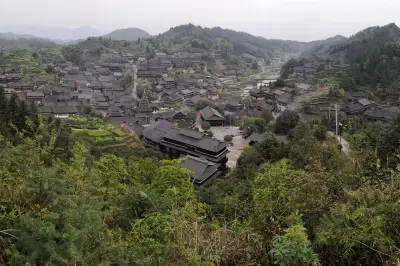
Liuzhou is situated in the north-central part of Guangxi Zhuang Autonomous Region. The terrain features three rivers converging and encircling the city like a wine vessel, hence its poetic name 'Hu Cheng' (Wine Vessel City). It is also called Dragon City, a name that dates back to the Southern Liang Dynasty. The city itself takes its name from the Liujiang River. In the sixth year of the Yuanding era of the Western Han Dynasty (111 BC), Tanzhong County was established here along the Liujiang, giving rise to the name Liuzhou. The Liujiang River originates in Dushan County, Guizhou Province, flows through Guangxi, and finally empties into the Xijiang River at Sanjiangkou in Shilong Town, Xiangzhou County. As a major tributary of the Xijiang River system in the Pearl River Basin, the Liujiang drains a vast area spanning Guangxi, Guizhou, and Hunan.
The Liujiang is not only a vital waterway but has also nurtured a rich cultural and historical heritage. The Liujiang civilization forms an important part of Chinese civilization. Along its banks, ethnic groups such as the Zhuang, Dong, Miao, and Yao have lived and flourished for generations, creating a distinctive local culture.
Liuzhou is the largest industrial city in Guangxi, renowned as a major industrial stronghold in western China. It is a regional center and transportation hub with industry at its core and diverse growth. As the leading city of the Xijiang Economic Belt, Liuzhou also stands out as a historic and cultural city uniquely blessed with scenic mountain-and-water landscapes.
Liuzhou is a multi-ethnic region where more than 30 ethnic groups live together. Its residents belong to 48 nationalities, including Zhuang, Han, Miao, Dong, Yao, Hui, and Mulao, with ethnic minorities accounting for over 52% of the total population.
Historically, Liu Zongyuan, one of the Eight Great Prose Masters of the Tang and Song Dynasties, once served as the governor of Liuzhou, leaving behind a profound cultural legacy.
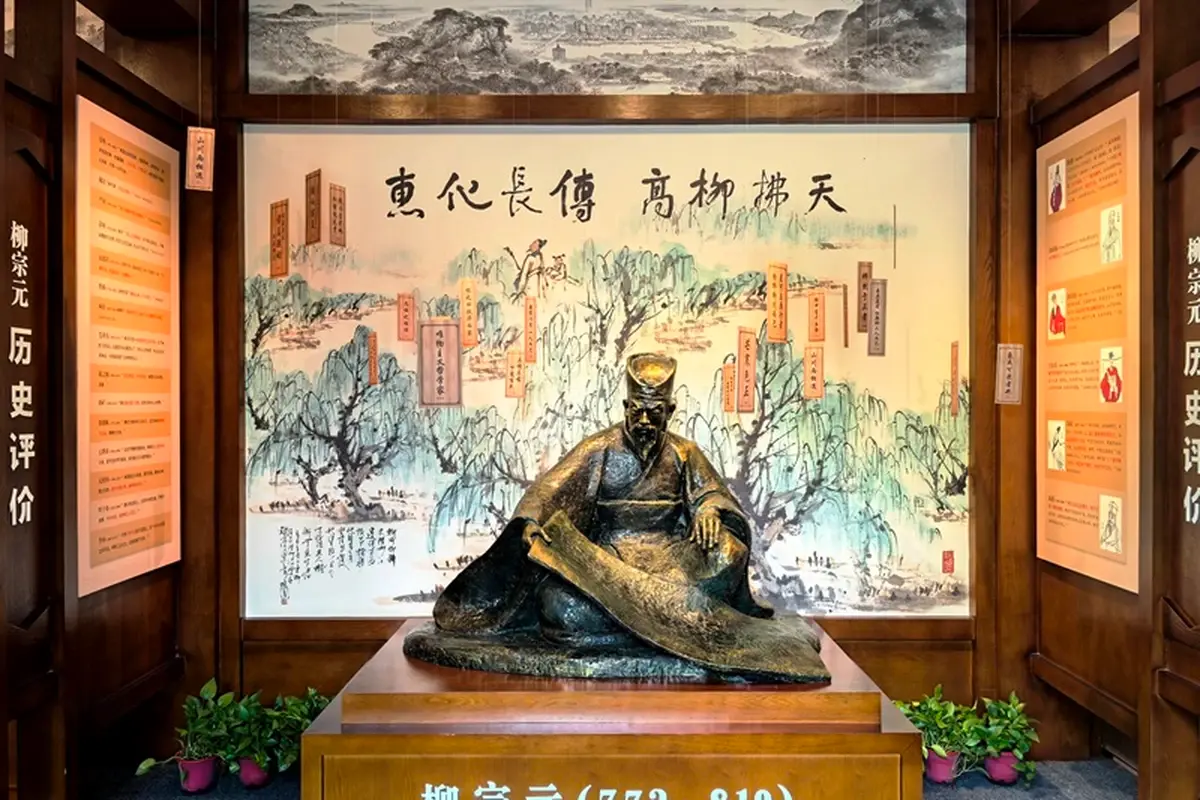
At the intersection of Jinglan Road and Xijiang Road in Liuzhou stands a monumental statue of Liu Zongyuan. He has truly become the city’s finest ambassador.
Another statue of Liu Zongyuan can be found in Liuhou Park.
The Liuzhou Liberation Monument.
Located in Liuhou Park, the Liuzhou Liberation Monument was originally the 'Memorial Tower for the Fallen Soldiers of the Seventh Army of the National Revolutionary Army,' built in August 1932. Its base originally bore prefaces by Li Zongren and Bai Chongxi, and its body an inscription by Huang Xuchu: 'Sacrificing oneself for the country, spirit as grand as mountains and rivers; eternal and majestic for all ages.' It commemorated the Seventh Army soldiers who died in the Northern Expedition. On November 25, 1949, nearly two months after the founding of the People's Republic of China, Liuzhou was liberated. The newly established municipal government called on citizens to 'develop production and prosper the economy,' igniting a wave of construction and development. On November 25, 1950 – the first anniversary of liberation – the CPC Liuzhou Municipal Committee and the Liuzhou Municipal People's Government transformed the memorial tower into the present 'Liuzhou Liberation Monument.'
As Liuzhou’s ambassador, Liu Zongyuan (773–819), courtesy name Zihou, was a native of Hedong Commandery (present-day Yongji, Yuncheng). He was known as 'Liu Hedong' or 'Master Hedong.' Because his official career ended as governor of Liuzhou, he is also called 'Liu Liuzhou' or 'Liu Yuxi.' An outstanding literary figure, philosopher, essayist, statesman, and thinker of the Tang Dynasty, he joined Han Yu in championing the Classical Prose Movement, and together they are referred to as 'Han-Liu.' He was also paired with Liu Yuxi as 'Liu-Liu,' and with Wang Wei, Meng Haoran, and Wei Yingwu as 'Wang-Meng-Wei-Liu.' Liu Zongyuan left behind over 600 poems and prose works, his prose achievements surpassing his poetry. He wrote nearly one hundred pieces of parallel prose, and his essays are known for their strong argumentation, sharp insights, and biting satire, making him one of the 'Four Masters of Eternal Prose.'
In the 21st year of the Zhenyuan era under Emperor Shunzong of Tang (805), Liu Zongyuan joined the Wang Shuwen faction that advocated political reform and served as a Vice Director in the Ministry of Rites. After Wang Shuwen and his allies took power, they actively pushed for reforms, implementing a series of measures known historically as the 'Yongzhen Reform.'
When the Yongzhen Reform failed, Wang Shuwen was forced to commit suicide, and in September, Liu Zongyuan was demoted to governor of Shaozhou. In November, while on his way to his post, he was further demoted to Sima (vice prefect) of Yongzhou. Other members of Wang's faction were also banished to distant prefectures as Sima, an episode remembered as the 'Two Wangs and Eight Simas.' Today in Yongzhou, the Liuzi Temple still honors Liu Zongyuan.
In the 10th year of the Yuanhe era under Emperor Xianzong of Tang (815), Liu Zongyuan received an imperial edict ordering him to return immediately to the capital. After more than a month’s arduous journey, he arrived in Chang’an. But he was not given an important position; owing to hostility from figures like Wu Yuanheng, who blocked his reappointment, he was once again demoted, this time to governor of Liuzhou. Because of this post, he is also called 'Liu Liuzhou.'
Unlike his sinecure as Sima of Yongzhou, the governorship of Liuzhou was a substantive post. There, Liu Zongyuan truly served the local people, accomplishing many practical and beneficial deeds. Four years later, he died of illness while still in office in Liuzhou, at the age of 47. In the second year of the Changqing era (822), the people of Liuzhou built Luochi Temple (Liuhou Shrine) to honor him. Emperor Huizong of Song later bestowed upon him the posthumous title 'Marquis Wenhui.'
Liuhou Park, established in the 32nd year of the Guangxu reign of the Qing Dynasty, owes its name to Liuhou Shrine located within its grounds.
Liuhou Shrine was first built in the Song Dynasty and rebuilt in the Qing. The plaque above the main gate, inscribed 'Liuhou Shrine,' is in the handwriting of Guo Moruo. The couplet flanking the gate was written by Yang Han of the Qing, quoting a poetic line by Han Yu of the Tang: 'Mountains and waters return, yellow plantains and red lychees; spring and autumn offerings bless us, the long-lived people.'
To the right of the entrance to the Liu Zongyuan Memorial Hall stands a black stone tablet engraved with Chairman Mao’s calligraphy of Liu Zongyuan’s poem 'Parting from My Younger Brother Zongyi':
A shattered remnant soul, doubly sorrowful,
Twin tears of parting fall by the Yue River.
Alone, banished six thousand li from home,
Facing death a thousand times, twelve years in the wilderness.
Over the hanging peaks, miasmic clouds black as ink;
Lake Dongting, when spring ends, waters vast as sky.
If you would know what dreams of longing will come thereafter,
They linger forever in Jingmen, among the Ying trees and mist.
This poem was written in the 11th year of the Yuanhe era (816). When Liu Zongyuan was again banished to Liuzhou, his brothers Zongzhi and Zongyi accompanied him. Zongzhi fell ill and died shortly after arriving. The next year, Zongyi left Liuzhou to take up a post in Jiangling. At his departure, Liu Zongyuan wrote this farewell poem.
In the early years of the PRC, Chairman Mao was deeply moved when reading 'The Biography of Liu Zongyuan' in the Old Book of Tang and penned this poem in his own hand.
The exhibition in the memorial hall presents Liu Zongyuan’s life, political achievements, literary accomplishments, and historical evaluations – well worth a slow and thoughtful visit.
Sculptures of the Eight Simas and a mural depicting episodes from Liu Zongyuan’s life.
The treasure of Liuhou Shrine and a National First-Class Cultural Relic – the 'Lizhi Stele,' also known as the 'Three Perfections Stele.'
In front of Liuhou Shrine stands a stone tablet inscribed with Liu Zongyuan’s famous poem 'River Snow': 'A thousand mountains, no sign of birds in flight; ten thousand paths, no trace of human tracks. In a lone boat, an old man in straw cape and hat, fishing alone in the cold river snow.'
A stone tablet bearing Liu Zongyuan’s 'Prayer for Rain at Leitan.'
The Lizhi Stele was engraved in the 13th year of the Jiading era of the Southern Song Dynasty (1220). Its text is Han Yu’s 'Ode to the Luochi Temple in Liuzhou: Poems for Welcoming and Sending Off the Deity,' and it takes its name from the opening line: 'Lychees red, plantains yellow.' The stele combines Han Yu’s prose, Su Shi’s calligraphy, and the theme of Liu Zongyuan, hence the title 'Three Perfections Stele.' It is a masterpiece in the world of ancient Chinese stele forests.
Han Yu, a Tang Dynasty man of letters, was Liu Zongyuan’s close political ally and comrade in championing classical prose and literary reform. He was a leading figure of the Mid-Tang Classical Prose Movement. 'Ode to the Luochi Temple in Liuzhou' is a prose piece Han Yu wrote in memory of his friend. It is not an inscription for the god of Luochi but a lament for Liu Zongyuan. First it recounts Liu’s real achievements as governor, then records the words of Liuzhou’s people, showing that Liu could benefit them in life and become a divinity after death. In the spirit of Confucius, Han Yu generally eschewed talk of spirits and superstition, so his praise of a deity here is really a way of grieving that a great talent was not utilized by the world, giving vent to the injustice suffered by the dead. Emotion gives rise to the writing, and the writing in turn stirs emotion. The whole piece is somberly resonant, its emotional appeal inexhaustible – a marvel of literary artistry, slightly different from Han Yu’s usual grand and powerful style. The welcoming and sending-off poems within it, however, echo the style of Qu Yuan, showing the author’s ability to absorb rich influences without being constrained by a single form.
The text of the Lizhi Stele comes from the poem at the end of Han Yu’s 'Ode to the Luochi Temple,' the 'Poems for Welcoming and Sending Off the Deity.' In the third year of the Changqing era under Emperor Muzong of Tang (823), four years after Liu Zongyuan’s death, Han Yu, then fifty-six years old and serving as Vice Minister of the Ministry of Personnel, was invited by Liuzhou officials to compose this tribute for his dear friend.
More than two hundred years after Han Yu wrote the text, Su Dongpo transcribed it in his own calligraphy. Then, over a century later, in the 10th year of the Jiading era of the Southern Song Dynasty (1217), Su Shi’s calligraphic version of Han Yu’s memorial to Liu Zongyuan was carved onto the stone. Across several hundred years, the 'Lizhi Stele' brings together Liu Zongyuan’s story, Han Yu’s prose, and Su Shi’s calligraphy, fusing the spirits of three literary giants of the Tang and Song onto a single tablet – truly earning its name as the 'Three Perfections Stele.'
The main hall of Liuhou Shrine recreates Liu Zongyuan’s official setting as governor of Liuzhou.
A fragment of the 'Dragon City Stone Inscription,' named after its opening characters 'Dragon City Willow.' The calligraphy on the stele is in Liu Zongyuan’s own hand.
Liu Zongyuan’s Cenotaph. After his death, Liu’s remains were sent back to Chang’an and buried in his ancestral home in Hedong. The people of Liuzhou, at the place where his coffin had rested, buried his clothing in a tomb to cherish his memory.
The Luochi Pond, a site of scenic beauty.
The Xianliang (Worthy and Good) Shrine within Liuhou Shrine commemorates Liu Fen, a virtuous scholar of the Tang Dynasty.
Liu Fen, courtesy name Quhua, was a native of Changping, Youzhou (present-day Changping, Beijing). He earned his jinshi degree in the second year of the Baoli era (826). In the second year of the Dahe era (828), he sat for a special policy exam on venerating the worthy and spoke out forthrightly against the evils of eunuch power, deeply impressing the examiners. But because they feared the eunuchs, they dared not pass him. Subsequently, military governors Linghu Chu and Niu Sengru invited Liu Fen and appointed him Secretary. Later, framed by eunuchs, he was demoted to a minor military post in Liuzhou. During an inspection tour of the fields, he fell from his horse and died. After his death, local people revered him as a virtuous man, built a tomb in Liuzhou, and set up a shrine for sacrifices. In the third year of the Tianfu era under Emperor Zhaozong of Tang (903), Liu Fen was posthumously awarded the title of Grand Master of Remonstrance, given the posthumous name Wenjie, and enfeoffed as Marquis of Changping.
In 1958, when Chairman Mao read Liu Fen’s biography in the Old Book of Tang, he greatly admired him, annotating with the words 'remarkable and unique' and composing a seven-character quatrain titled 'Liu Fen': For a thousand ages the vast sky brings forth great clouds; in Mid-Tang, a brilliant and outstanding man was Liu Fen. A lone swan, wings clipped, cries mournfully at the whistling arrow; amid ten thousand horses all mute, he gave a single shout.
'Shanzhang' (mountain master) was a respectful title for scholars who lectured in mountain retreats during the Tang and Five Dynasties periods. In the Song and Yuan, government academies appointed shanzhang to teach and manage affairs. The 'Shanzhang's Residence' in Liuhou Park originally belonged to the Liujiang Academy built in the Qing Dynasty during the Qianlong reign. Successive shanzhang of the academy took Liu Zongyuan as their model, carefully guiding young students and nurturing many talents. Today the residence houses a display of Liu Zongyuan’s life. A couplet by the door reads: 'Joyfully following the ancient sage kings and Confucius; diligently planting peach and plum trees to continue the fragrance of the orange.'
Near the spot where Liu Zongyuan once planted sweet oranges stands the Ganxiang (Fragrant Orange) Pavilion.
Inside Liuhou Shrine are twenty Tang Sancai (three-color) glazed pottery sculptures of Tang Dynasty poets, designed and made by the Shaanxi Ceramics Research Institute in 1993. After thirty years of outdoor display, the surfaces have flaked and deteriorated, losing their former luster. Current experimental restoration attempts have proved unsatisfactory, with colors difficult to restore. Visitors are welcome to offer suggestions, techniques, and guidance for restoration.
The Liuzhou Museum is not far from Liuhou Shrine. Whenever I visit a city, the museum is a must-see.
A museum not only showcases local culture and art but also serves as a bridge linking the past, present, and future.
A Western Han Dynasty talc mask.
The museum is currently preparing a strange stone exhibition that has yet to open.
Strange stones on display in the lobby, and a large boulder at the museum entrance.
Liuzhou is a region where many ethnic groups live together, and exhibits present their customs, cuisine, dwellings, beliefs, and artworks.
Liuzhou is an industry-dominated city and a major industrial center in western China, the largest industrial city in Guangxi. LiuGong (Liuzhou Engineering Machinery) is a well-known large state-owned enterprise familiar to many. Consequently, Liuzhou has a very distinctive museum – the Liuzhou Industrial Museum.
Currently Liuzhou is home to 11 large state-owned enterprises, with five – Liuzhou Iron & Steel (Group) Company, SAIC-GM-Wuling Automobile Co., Ltd., LiuGong Group, Dongfeng Liuzhou Motor Co., Ltd., and Liuzhou Wuling Automobile Co., Ltd. – ranking among the country’s top 500 industrial enterprises. A modern industrial system has taken shape, with pillar industries including automobiles, machinery, and metallurgy, alongside traditional sectors such as pharmaceuticals, chemicals, papermaking, sugar refining, building materials, and textiles. Liuzhou boasts a host of competitive enterprises and renowned brand products with strong market positions at home and abroad.
The Liuzhou Industrial Museum was built on the site of the former No. 3 Cotton Textile Factory, using the original two-story weaving workshop to create the exhibition halls. It is China’s first comprehensive industrial museum, tracing the city’s industrial development since 1902.
Liuzhou has a long industrial history. Traditional handicrafts were already quite developed in the late Qing and early Republican periods, and as industrialization advanced, industrial relics can still be seen everywhere. Transforming an industrial site into a museum is truly a brilliant concept.
In 1937, Zhu Rongzhang, an engineer at the Liuzhou Machinery Plant, used a 750-horsepower aircraft engine found in the warehouse to assemble and build a fighter plane. Pilot Lu Guangqiu successfully flew the aircraft, and all its performance indicators met combat requirements. The plane was named 'Zhu Rongzhang.'
After the outbreak of the War of Resistance, planes mass-produced based on the 'Zhu Rongzhang' fighter achieved repeated feats in battles against the Japanese. All this testifies to the advanced level of Liuzhou’s industry at the time.
The Liuzhou Machinery Plant was founded in 1928 and renamed Guangxi Machinery Plant in 1931, where it began manufacturing and assembling military equipment including aircraft, rifles, bombs, and grenades. The following year it was renamed the Aviation Machinery Plant and successively produced copies of British single-seat trainers and multiple 'Avian' and 'Gypsy' trainers.
After Liberation, Liuzhou’s industry developed further. In January 1958, the Central Committee held an enlarged Politburo meeting in Nanning. Wei Guoqing, governor of Guangxi, asked the central government to arrange some projects for Guangxi in the Second Five-Year Plan. After the meeting, the central authorities prioritized the construction of three industrial zones in Guangxi: the Jiangnan Industrial Zone in Nanning, the Wayao Industrial Zone in Guilin, and the Liubei Industrial Zone in Liuzhou, with 45 large and medium-sized projects planned, including ten major industrial projects for Liuzhou such as a steel plant, a thermal power station, a chemical plant, an integrated machinery plant, and a power machinery plant. These ten projects laid a solid foundation for Liuzhou’s subsequent industrial growth.
The following image recreates the scene of that Nanning Conference. Seated on Chairman Mao’s right is Li Fuchun, and on his left is Wei Guoqing.
A loading vehicle produced by LiuGong.
Machining equipment on display: a French-made press.
A press manufactured by the Liuzhou Automobile Plant.
A steam locomotive used to transport molten iron, parked in the museum grounds.
Today, automobiles have become Liuzhou’s pillar industry. Major automobile groups including Dongfeng Liuzhou Motor and SAIC-GM-Wuling have factories here. Compact new-energy vehicles have become Liuzhou’s signature products, sold widely domestically and exported abroad. It was only upon arriving in Liuzhou that I learned, in addition to LiuGong’s construction machinery, well-known brands such as Wuling, Baojun, Dongfeng Fengxing, and Chenglong heavy trucks are all made in Liuzhou.
The red car in the photo below is a right-hand-drive new-energy vehicle specially produced for the Indonesian G20 summit.
Streets in Liuzhou are filled with these adorable small new-energy cars – even the police drive them.
At first glance, these little cars look like the senior mobility scooters seen in other cities. But they are real automobiles, and their safety, comfort, handling, and range are beyond comparison. These locally produced compact new-energy cars are inexpensive, easy to park, and extremely cheap to run – an economical and convenient option for urban commuting.
The museum also hosts an exhibition titled 'The Myth of Shadow Play: Tangshan Shadow Puppetry and Chinese Nuo Opera Art.'
Shadow puppetry, also called 'shadow play' or 'lantern shadow play,' is a performance art that uses cutout figures made of animal hide or cardboard, illuminated against a translucent screen. It combines fine art, music, dance, and storytelling into a form of puppet theater, widely popular across China.
During performances, artists behind the white screen manipulate the figures while singing local tunes to narrate stories, accompanied by percussion and string instruments, creating a strong folk atmosphere.
Shadow puppetry originated in the Western Han Dynasty, flourished in the Tang, spread widely in the Northern Song, and was gradually introduced abroad during the Yuan Dynasty.
The formation and development of shadow puppetry are closely linked to ancient Chinese religious beliefs and cultural traditions. The ancients believed that a person’s shadow was a projection of the soul and could communicate with spirits or the dead, so they began using puppets to simulate and express dialogues between humans and gods.
'Nuo' is an ancient primitive culture and an important component of Chinese traditional culture, emerging in prehistoric times and thriving during the Shang and Zhou dynasties. In traditional Huaxia civilization, Nuo is a deeply historical and widely practiced social-cultural phenomenon among the Han people, strongly colored by religious and artistic elements. It originated from the natural worship, totem worship, and shamanic consciousness of early Han ancestors.
Nuo opera, also called 'ghost opera,' is the oldest Han form of ritual drama performed to worship gods, exorcise ghosts, expel pestilence, and celebrate peace. Nuo opera and Nuo masks serve as channels for human self-transformation and transcendence, and today they are increasingly entering the realm of art.
In ancient times, Nuo rituals and operas were widespread in the southwestern regions, the Yangtze River basin, the Yellow River basin, and the Nen River basin. As society evolved and culture progressed, they gradually declined in the Nen River and Yellow River basins and the middle and lower Yangtze. However, in remote southwestern areas, especially ethnic minority regions, long-term geographic isolation, underdeveloped science and technology, and low productivity created closed social environments. Combined with the distinctive cultural personalities of minority groups and the influence of Central Plains, Jing-Chu, and Ba-Shu cultures, these areas provided fertile soil for the survival and development of Nuo rituals and operas. In those isolated settings, social evolution was slow, and the border regions’ shamanic culture was both conservative and thriving, allowing Nuo to be steeped in a strong atmosphere of magic and retain considerable religious elements. The broad region centered on Guizhou – including all of Guizhou, eastern Yunnan, southern Sichuan, southern Chongqing, southwestern Hubei, western and southwestern Hunan, and northern Guangxi – remains a living area for Nuo rituals and operas to this day, preserving the richest variety, the fullest forms, and the most distinctive characteristics.