A Taste of Liuzhou
A bowl of螺蛳粉 during our Nanning trip at the end of last year gave us the urge to visit Liuzhou.
When spring bloomed, we boarded a high-speed train to Liuzhou on March 15th. We arrived at Liuzhou Station at noon; it was a bit colder than Guangzhou.
First stop: Guangle螺蛳粉.
There weren't many people when we arrived, and we ordered after just a few minutes in line. A luxurious combo: two liang of noodles, tiger skin pig trotter, meat sausage, pork skin, and fried egg — 34 yuan total. Overall, it was okay, not amazing. The noodles were a bit firm. The tiger skin pig trotter was delicious, soaked full of soup. The pork skin was slightly less impressive. The soup was a bit sweet but quite spicy; my wife didn't dare drink it.
After finishing the螺蛳粉, we walked to the nearby Jiahe Xiaoyuan Scenic Area.
Jiahe Academy was first built in the Southern Song Dynasty, one of the earliest academies in Guangxi and the first private cultural educational institution in Liuzhou's history. The ancients always found such serene places to study.
Following the mountain path, we conquered our first mountain in Liuzhou — Jiahe Mountain. "Jiahe Mountain stands southeast of the city, rising like a solitary crane overlooking the great river." Jiahe Mountain and the Liujiang River together form the scenic spot "Jiahe Clear Haze," one of the eight ancient sights of Liuzhou.
From the observation deck, we could see the Liujiang River and Wenhui Bridge. The view was broad and open, not inferior to that from Ma'an Mountain, and closer to the Liujiang River.
Descending the other side, we arrived at Liuzhou Confucian Temple. Built during the Tang Dynasty's Zhenguan era, it was restored by Liu Zongyuan in the 10th year of Yuanhe (815 AD), who composed the "Stele of the Newly Repaired Confucian Temple in Liuzhou." After the Tang, the temple experienced several cycles of ruin and restoration. In 1928, it was destroyed by a citywide fire, with the main buildings burned to the ground. In 2009, the Liuzhou municipal government rebuilt the Confucian Temple on the west slope of Dengtai Mountain, south of the Liujiang River.
The main hall is Dacheng Hall, enshrining statues of Confucius and his disciples.
Leaving the temple, we followed steps down to the Liujiang riverbank. Since 2020, the Liujiang River has been ranked first in national water quality for five consecutive years. The water is so clear that we could see stones at the bottom from the bank — especially remarkable for Liuzhou, a heavy industrial city.
From the riverbank, we took a taxi to our hotel — Ji Hotel (Liuzhou Wuxing Walking Street Liuhou Park). The hotel is close to Wuxing Walking Street and Qingyun Market, very convenient for getting around. Since we planned to visit Qingyun Market early the next morning, we didn't book breakfast.
After resting, we went out to explore Wuxing Walking Street.
We passed by Tao Ma's Delicacies, a large cooked food and pickled fruit shop with an overwhelming selection. Since we were heading to Ma'an Mountain later, we didn't buy anything yet.
We stumbled upon Lu Jie Stir-fried Ice, ordering a large cup of mango mixed with avocado — 25 yuan. The shop wasn't crowded, maybe because the weather was cold. This was an unexpected delight — extremely delicious. I thought it would be icy and crunchy, but it was surprisingly smooth and creamy, with no ice crystals at all, and a very rich fruit flavor.
Walking across the Liujiang Bridge, we encountered a police car version of "chopped chili fish head" (a nickname for the Wuling Hongguang mini car).
As the hometown of Wuling Hongguang, Liuzhou's streets and alleys are filled with this affordable car. "Chopped chili fish head" is a playful nickname locals use. Everywhere in Liuzhou, you can see Wuling Hongguangs — they've become an indispensable part of the cityscape.
We walked to Ma'an Mountain Park.
You can take an elevator or hike up. We bought two elevator tickets: 20 yuan up, 10 yuan down.
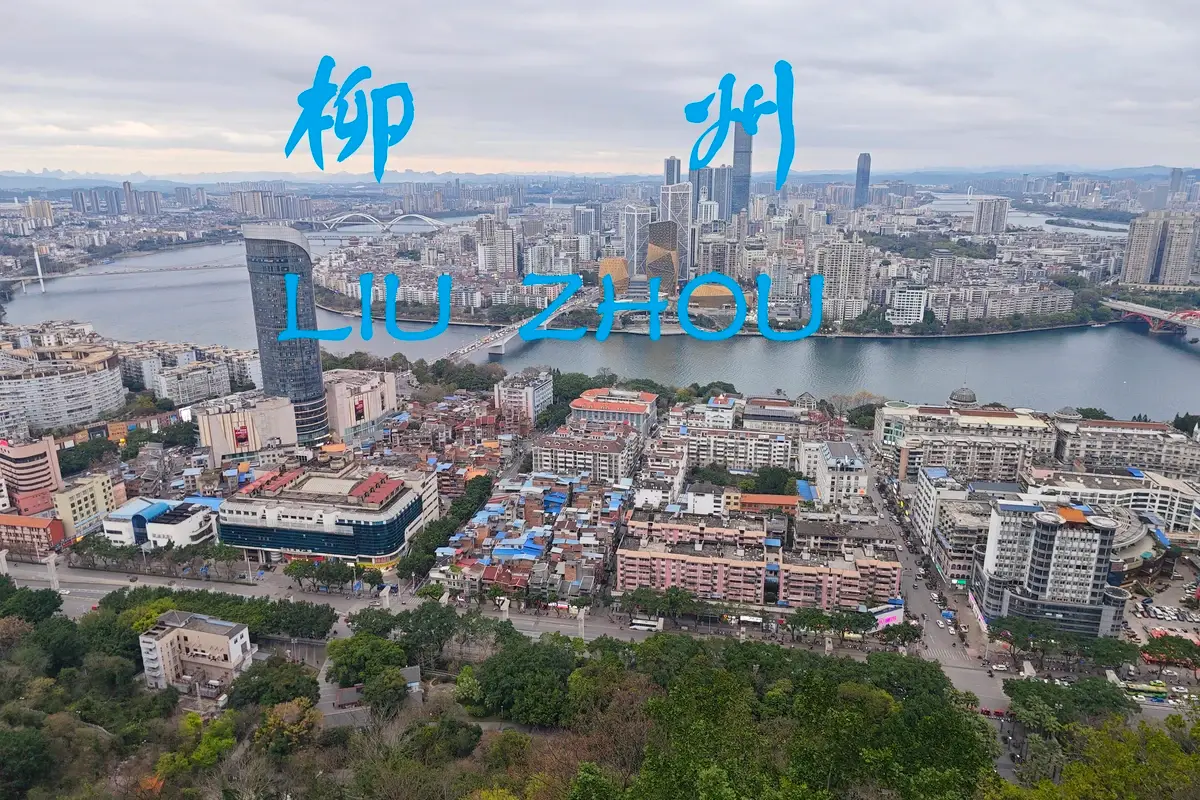
At the mountaintop observation deck, the view opened up dramatically. The Liujiang River, like a jadeite knife in the hand of the Creator, carved a breathtaking U-shaped curve into the land of Liuzhou. As recorded in the "Liuzhou Prefecture Gazetteer": "Embraced by three rivers, the city is shaped like a pot."
We had planned to wait until the lights came on to photograph Liuzhou at night. But unfortunately, the wind was too strong and bitterly cold, and we couldn't hold on, so we descended early.
I found a night view picture online.
After coming down, we took a taxi to Shengli BBQ City for dinner. As Liuzhou's largest night market and a new foodie destination, it was packed with shops and people.
We originally wanted to eat at A Kang Old Shop, but it was closed, so we went to the nearby Sister Old Shop.
First, we bought some stinky tofu from a neighboring stall and soy milk from Siji Soy Milk. The tofu, fried in small cubes then soaked in螺蛳粉 broth, was full of flavor, with tangy pickled beans and diced radish — delicious.
We ordered a bowl of hot soy milk for 4 yuan, but no youtiao. The soy milk was just average — not as good as the one we had in Jieyang during Chinese New Year.
The highlight of the night was stir-fried螺蛳粉. Both my wife and I agreed it was better than the souped version. It had a strong wok aroma, each strand of noodle coated with savory sauce. Rich in flavor, though the last few bites, after it cooled, were a bit greasy.
Duck foot casserole came with five duck feet, so tender they practically fell off the bone — flavorful and delicious. The river snails in the broth were also tasty when sucked with the soup. Actually, there was no need to order an extra plate of stir-fried snails. The tofu puffs soaked up the soup well, too. However, the taro was too hard — not cooked long enough, so it wasn't good. Three dishes cost 106 yuan total, a great deal — we were stuffed.
Another highlight of the night: Liuzhou's specialty — tea bran hair washing. After leaving Shengli BBQ City, we saw many hair-washing shops at the entrance, with reasonable prices but mediocre environments. After a few glances, we decided to take a taxi back to the hotel and find a better place in the city center.
We called Shiyue Hair Care to book an appointment for 9:30 PM, two people. It was about a 10-minute walk from our hotel, taking the elevator to the 6th floor at Baidile KTV.
Saturday was busy; even with a reservation, we waited 15 minutes. The therapists hadn't had dinner yet, and the interior was obviously much nicer. We chose the family combo head therapy (tea bran + ginger + meridian scraping + steam therapy + head and shoulder massage + water spa), lasting 60 minutes.
Tea bran is the residue left after pressing tea seeds for oil, compressed into round cakes. First, the tea bran Chinese herbal water was used for a circulating rinse. Then, a buffalo horn comb was used to scrape the head meridians — the technique was great and comfortable. The star was the ginger: ginger juice mixed with water was rubbed into the scalp. It felt like an explosion on the scalp — the spiciness and heat were almost numbing, and combined with the steam therapy, it was a double punch.
After rinsing, it felt incredibly light and refreshing. I highly recommend this — if you come to Liuzhou, you must bravely try it. I can say that though螺蛳粉 alone wouldn't make me want to return to Liuzhou, I would definitely come back just to experience tea bran hair washing again.
And after washing my hair, I slept so comfortably and soundly.
We woke up at a little past 8 AM and walked from the hotel to Qingyun Market for breakfast.
The market is full of Liuzhou specialty snacks, as well as places where locals buy meat, vegetables, and fruit — full of vibrant everyday life.
First, we grabbed breakfast. At Gui Jie Snacks, we bought a double combination sticky rice roll and a crystal dumpling — 21 yuan total. The sticky rice roll contained Chinese sausage, steamed pork with rice flour, mung bean paste, fried dough, and pickled beans — with a bit of chili. It was absolutely delicious: glutinous, savory, and rich with meat flavor. The shrimp dumplings were also good; the dipping sauce was probably huangpi sauce.
Second stop: Zhang Ji Huike Corn Juice across the street. We ordered a cup of hot sugar-free corn juice for 4 yuan. Affordable, sweet, and thick.
Third: Yang Sao Tofu Pudding. We got a bowl of ice-slush tofu pudding. The brown sugar water with ice was tasty, the tofu pudding was fine and smooth, and we added corn for an extra 1 yuan.
Fourth: Zhuo He Ji, which sells dried pork slices. We bought two original flavor and one black pepper — 54 yuan. They tasted good while hot, but average after cooling. Not worth the long queue.
Fifth: Fu Laosan Dewater Rice Dumplings. This shop was a bit hidden. The dumplings were large, filled with a savory mixture of mushrooms, bamboo shoots, wood ear fungus, and minced meat — soft and tasty. Adding a bit of vinegar and chili improved the flavor. But we were already full, so we couldn't try the Heizi Rice Noodles we had planned.
We walked back to the hotel, intending to take a taxi to the Industrial Museum, but after returning, we didn't feel like going anywhere. We waited until 12 PM to check out and took a taxi directly to Yaobu Ancient Town.
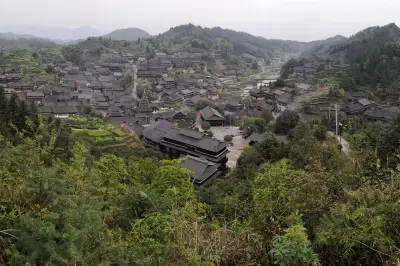
Though called an ancient town, the buildings are all newly constructed.
Our last meal in Liuzhou: Xinshihui Beef and Beef Offal Hotpot.
We arrived without waiting in line. They offered either hotpot or cold-mixed beef offal. You could choose your own ingredients. We ordered a 1.5-jin cold-mixed beef offal set meal.
We selected beef荔枝, moon meat, beef tongue, beef shank,隔山肉, beef palate, and chitterlings.
It was a novel way of eating: the chosen offal and pork innards were mixed with peanuts, perilla, cucumber, and cilantro in a cold dressing — sweet and sour, refreshing. Many pieces were crunchy and very delicious.
After eating, we took a taxi to Liuzhou Station and boarded the D3757 train at 1:47 PM back to Guangzhou.
This foodie trip was well-researched beforehand. Except for the slight disappointment with the first meal at Guangle螺蛳粉—I'm sure there are better small shops we missed—the rest of the arrangements were great. Liuzhou, with all its flavors, is worth a return visit.