Feel the Quintessential Dongcheng in the Hutongs, See the Best of Beijing in Dongcheng
The pleasing Beijing dialect, the hard-to-swallow douzhir, the dense network of hutongs, and the serene siheyuan courtyards hidden behind hutong walls... These form my rough impressions of Beijing.
Actually, my earliest fondness for this place was shaped, more or less, by the writer Lao She. His works like Rickshaw Boy, Teahouse, and Four Generations Under One Roof painted a picture of old Beijing's secular life and human warmth. Though today's Beijing is worlds apart, it doesn't stop me from coming here—to search for traces of tradition and modernity colliding and merging.
A spontaneous trip: a flight ticket to Beijing, nearly three hours, delivered me onto the soil of the capital.
Before coming, I'd cobbled together a travel plan based on online tips. The theme was "East of the Forbidden City"; most places I wanted to visit lay in Beijing's Dongcheng District, just east of the Forbidden City. For convenience, my accommodation was also arranged there. Once settled, I embarked on a 4-day, 3-night journey.
Day 1: Arrival – Check-in at Novotel Peace Hotel – Forbidden City – Donghuamen – Wangfujing
Day 2: Shijia Hutong – Guardian Art Center – 77 Cultural and Creative Park
Day 3: Bell and Drum Towers – Fangjia Hutong – Corner Tower Library
Day 4: Check-in at Legendale Hotel – Hotel afternoon tea – Departure
"Wherever one sits, ruyi scepters often grace the side"—this line was penned by the Qianlong Emperor about the Forbidden City. I'm a big fan of the documentary Masters in the Forbidden City, from which I learned a great deal. Choosing the Forbidden City as my first stop in Beijing, I'm sure many are like me, itching to glimpse this centuries-old palace that has witnessed the rise and fall of Chinese history.
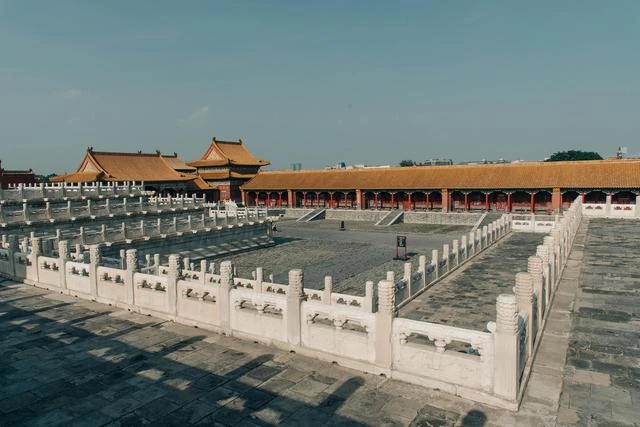
I'm not a stranger to the Forbidden City—this is my second visit. Located in the heart of Beijing, it's also called the "Purple Forbidden City." It once housed 24 emperors and served as the imperial palace of the Ming and Qing dynasties. Everywhere I looked, the entire complex glittered with gold, solemn and magnificent, breathtakingly grand.
A central axis runs through the whole Forbidden City, along which the Three Great Halls, the Three Rear Palaces, and the Imperial Garden are aligned. This axis is also part of Beijing's central axis, stretching from Yongding Gate in the south to the Drum and Bell Towers in the north, splitting the city symmetrically. The Forbidden City's construction embodies the wisdom and toil of working people centuries ago—an absolutely unparalleled masterpiece.
Because it's so vast, a whole afternoon wasn't nearly enough to see everything. I could only follow the flow of tourists and take a cursory tour, but it still left me deeply awed. Through the camera lens, every shot carried the weight of centuries; it's incredibly photogenic.
This year, the Forbidden City saw far fewer visitors than usual, an uncommon quiet. This allowed me to better soak in every corner and wander through the whole palace at a leisurely pace.
Exiting through Donghuamen gate, I hopped on a shared bike to Wangfujing. As everyone knows, every city has its iconic commercial street—Chengdu has Chunxi Road, Chongqing has Jiefangbei, and for Beijing, it's Wangfujing.
Wangfujing balances history and novelty, tradition and modernity. The old grow weathered with time, while the trendy, racing with the era, show off ever more flair. Century-old shops like "Ruifuxiang" coexist with clusters of luxury brands.
Central Plaza has now become a new landmark of Wangfujing Street, occupying a large area on the west side. Many world-renowned brands have flocked to WF Central, truly a gathering of the big names.
Many fashionable young people bustle through; I spotted brands I'd never seen before, a testament to the capital's inclusiveness and vibrant energy.
When tired from roaming Wangfujing, the adjacent snack street is a great place to fill up. Local snacks from across the country converge here, and I was stuffed after just a few—how I wished my stomach were bigger.
I prefer travel that isn't too cookie-cutter, always seeking out classic spots, and the same goes for hotels. In Beijing, I chose the Novotel Peace Hotel, a classic in the eyes of Beijingers. It was one of the eight major hotels built after the founding of the People's Republic and among the first batch, witnessing many historical moments. The original west wing from the 1950s has been renovated over time, while the newer main building next to it retains classic charm while embracing more outside styles.
The lobby is in the new main building, with European-inspired architecture—a very classic design. The lobby's style is perfect for photos. The Le Square all-day dining restaurant is just behind it, offering Chinese and Western cuisine and buffets around the clock.
The second floor houses meeting rooms, a gym, and a pool—I made sure to squeeze in some exercise during the trip. The executive lounge on the top floor provides clear views of the Forbidden City, Wangfujing, and beyond.
The hotel rooms also follow modern trends with many innovations. I stayed in a family suite, consisting of a living room and a bedroom. A family room is incomplete without warm cartoon elements, which kids surely adore. In the living room, there's a children's tent and a slide, while the bed in the room is adorned with cartoon plush toys—what a delight if a child were to stay here! Opening the window reveals Jingshan Park and the Forbidden City, and closer by, hutongs brimming with everyday life.
The Najia Garden Restaurant courtyard preserves the rockery and pavilion from the former garden of Nala Natong's prince mansion. Stepping inside, everything suddenly becomes tranquil. The dishes are authentic, featuring a variety of Beijing flavors and snacks. Not just hotel guests, even Beijing locals love to entertain friends here.
Right next to the hotel are authentic old hutongs, and a short walk leads to the famous Shijia Hutong—don't forget to check out the hutongs when in Beijing. I suggest waking up early, renting a bike from the hotel, and cycling towards the Forbidden City, passing through Beijing's parks to experience a local's morning.
Hutong culture is arguably unique to Beijing, distinct from Shanghai's longtang lanes or Suzhou's alleys. Some say the essence of Beijing's hutong culture is "endurance"—content with one's lot, resigned to fate. I don't fully agree. To me, it's more about a deep attachment to one's home, neighborly harmony, and an unbreakable bond with memories of the past.
Shijia Hutong is one of Beijing's well-preserved old hutong cultural blocks. It once belonged to the Bordered White Banner. The site now housing Shijia Hutong Primary School was originally the ancestral temple of Shi Kefa, and Zhang Shizhao also lived here. The Beijing People's Art Theatre's dormitory is here, too. Shijia Hutong features the "Good Garden" with an inscription by Deng Yingchao, the Shijia Hutong Museum, the National Women's Federation's senior center, the China Women's Publishing House, and more—this deep cultural heritage gives Shijia Hutong its intriguing charm. I took photos in the early morning light to remember the hutong.
The Guardian Art Center sits at No. 1 Wangfujing Street. At first sight, its appearance stunned me—an immense, irregular silver-gray structure. What kind of genius designer could create such a beautiful building?
The architectural style is bold, striking a delicate balance between old and new. It nestles into the fabric of Beijing's ancient city while harmonizing with its surroundings. The lower part resembles a rockery of stacked stone, echoing the scale and feel of adjacent traditional hutong courtyards, while the suspended glass ring above reflects Beijing's modernity as a global metropolis.
It's a versatile cultural space combined with restaurants, hotels, and public transport infrastructure. The ground floor boasts a 1,700-square-meter pillar-free exhibition hall with strong design sensibilities—a rich postmodern style that looks strikingly elegant in photos.
With the rise of creative consciousness, more and more old factory buildings are being transformed into cultural parks. From Songshan and Huashan Creative Parks in Taiwan, to Chengdu's Eastern Suburb Memory, and Beijing's 77 Cultural and Creative Park, these adapted spaces are injected with fresh vitality and energy.
Just one street away from the National Art Museum of China, the 77 Cultural and Creative Park stretches from Meishuguan Houjie in the east to Xiaoqudeng Hutong in the west. Before 2012, it was the site of the Beijing Offset Printing Factory. Renovations from 2014 onward have attracted a host of renowned cultural enterprises, gradually forming a thematic cultural cluster focused on film, television, and theatre—a magnificent transformation, like a butterfly emerging from its cocoon.
Here, you can enjoy traditional drama performances and, of course, snap beautiful industrial-style photos. That alone is enough to captivate.
Thanks to Liu Xinwu's novel The Bell and Drum Towers, I came to know about Beijing's Drum and Bell Tower complex. The drum tower beat to signal the night watches, while the bell tower tolled the hours—hence the phrase "morning bell, evening drum." This ancient timekeeping and urban management method provided the common people with temporal reference for work and life.
The Bell Tower and Drum Tower stand one behind the other, just a hundred meters apart. They are the best-preserved, largest, and tallest surviving group of ancient bell and drum towers in China.
Climbing the steps to the top of the Drum Tower, I gazed down at the clusters of Beijing hutongs and siheyuan courtyards below. It felt as if the resonant drumbeats were spreading across every corner of Beijing.
Due to pandemic controls, the Bell Tower wasn't open to visitors, so I missed seeing the "King of Ancient Bells"—the Yongle Bell. A real pity.
Leaving the Bell and Drum Towers, my next destination was Fangjia Hutong. If Shijia Hutong is a gathering place for the artsy, then Fangjia Hutong was a vital "machine tool hutong" in Beijing's industrial history; No. 46 in the hutong is the original site of the China Machine Tool Factory.
Here are relics like Nanxue, the Baoquan Bureau North Workshop, Baiyi Nunnery, Xun Prince's Mansion, the Qing Dynasty Firearms Battalion Cavalry Grounds, and the First Library of the Capital—all revealing profound cultural roots. Here, too, you'll find elderly folks cooling off in the shade and cats dozing on eaves, exuding an enchanting everyday atmosphere.
Some worry that hutong culture will one day vanish, but in an era that highly values traditional culture, people are even more dedicated to protecting these tangible traces of history and memory.
Somehow, visiting libraries has become a habit whenever I'm in a new city. Here, you not only see young people striving for their dreams but also elderly souls who, even in their twilight years, remain unchanged in their dedication, quietly engrossed in books. The most beautiful facets of life can all be found in a library. The Zuo'anmen Corner Tower, a landmark of old Beijing, has witnessed the capital's transformations since the Ming and Qing dynasties, surviving destruction and rebirth. Amid old city renovations, surrounded by modern buildings, the Zuo'anmen Corner Tower wasn't swallowed up—instead, it was reborn. The ancient structure became a natural advantage, shaping the unique identity of the Corner Tower Library.
Who would guess that a building of rough, ancient gray bricks houses a library that encompasses five millennia of Chinese civilization and Beijing's distinctive culture? Repurposing the old for new use, it has become a cherished spot for relaxation and self-cultivation, a synonym for a lifestyle and attitude that slows down the breakneck pace of urban life. But I probably didn't pick the right time—it was closed during the pandemic—so I could only admire it from outside, unable to glimpse its true splendor.
Nowadays, when choosing a hotel, beyond location and service, I pay more attention to its visual appeal. Before coming to Beijing, I'd been recommended the Legendale Hotel. Its European-style exterior and interior draw many young women to check in and snap photos.
The moment I stepped inside, I was captivated by the lobby's rich European flair. Looking up, the hexagonal floors rose tier upon tier, truly magnificent. I later learned that this hotel served as an official reception venue for the 2008 Beijing Olympics, hosting countless distinguished guests from home and abroad. I've never been an advocate of budget travel. Traveling is inherently joyful; if penny-pinching compromises safety and comfort significantly, the trade-off isn't worth it. So, treating yourself within your means—that's the proper attitude for travel.
The décor is splendid right from the lobby, with the layered floors creating a stunning view. Sculptures and art pieces dot the hotel from the lobby onward, enhancing its artistic character. The staircases on either side of the lobby are among the most popular photo spots—even prettier in person than in online pictures. On the second floor, the café is another must-shoot area, where you can capture both the floors and the lobby below.
This time, I experienced the Legendale Suite. Right at the entrance, an artwork greeted me. In the oversized living room, the sofa, dining table, and desk were thoughtfully arranged—just this area alone could evoke the feel of a European palace. The room, from the fixtures to each decorative piece, was filled with an exquisite sense.
A welcome fruit plate and a thoughtful little card upon arrival immediately dispelled that initial sense of unfamiliarity. The large bed and the big bathtub were what attracted me most here. The desk lamp, TV cabinet, every corner—all were great spots for pictures. It almost felt like a waste for a bachelor like me to stay in such a suite.
I slept soundly through the night and woke up straight at noon. After tidying up, I headed to the 16th-floor executive lounge for afternoon tea. The Legendale Hotel's afternoon tea is probably its hottest feature. From the executive floor, you can gaze at the Forbidden City, the Wangfujing shopping district, and more, while enjoying the hotel's special afternoon tea. Each pastry is meticulously crafted; paired with tea, such an afternoon is pure bliss.
Since I was on the executive floor, I could enjoy breakfast, lunch, and dinner service in the lounge. Dining in the hotel isn't as pricey as you'd imagine, and the dishes are exquisitely prepared—both Chinese and Western cuisines are available. This way, even without leaving the hotel, you could happily spend a long while here.
Time to head back. The hotel's airport transfer service was so thoughtful—straight from the hotel to the airport. I hate how fast time flies: I hadn't roamed the old Beijing hutongs enough, hadn't eaten my fill of old Beijing snacks, hadn't even picked up a few authentic Beijing phrases...
The poet Haizi once said, "If I could, I'd be a wanderer of mountains and rivers, caring nothing for the past, worrying nothing for the future, only fearing that I might not travel the whole world in this lifetime—that would be my true sorrow."
These words resonate deeply with me. Life spans but a few decades; I'll do my best to make it bloom, to tread through thousands of mountains and rivers, to taste the myriad flavors of the world, to savor the cityscapes—and return still a youth at heart.


