National Day & Mid-Autumn Long Holiday: Highly Recommended Hidden, Off-the-Beaten-Path Villages Near Beijing
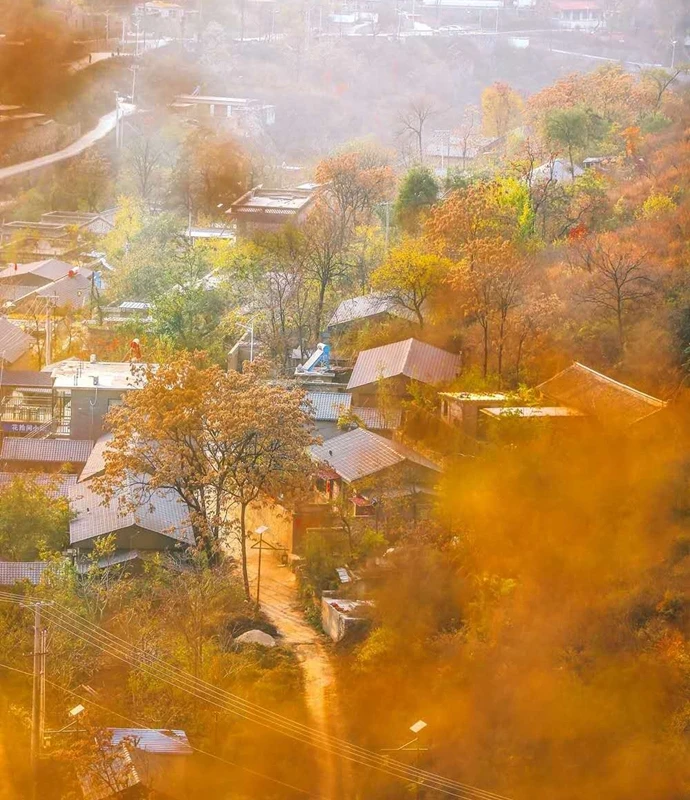
Mr. Lao She once said that around Mid-Autumn is the most beautiful time in Beijing. This year, the Mid-Autumn and National Day holidays total 8 days, perfect for going out to fully enjoy autumn. I've compiled a list of the most hidden, most charming villages in Beijing's outskirts that are beautiful, delicious, and fun. Feel free to bookmark them!
Yanqing • Dazhuangke Township
Beijing has a most beautiful rural road, Changchi Road, and the autumn scenery speaks for itself. Depart from Beijing, take the G6 Beijing–Tibet Expressway to Changchi Road, and the first ideal viewing spot you'll reach is Dazhuangke.
Here you'll find Lotus Mountain, Swallow Language Mountain, Great Wall ruins, Wanglongtan Grand Canyon, and Shatanggou Red Base. Whether hiking, trekking, picnicking, or reminiscing about the past, splashing in the water, or picking fruits, each has its own charm.
At Huanglongtan Dragon King Temple in Shangmo Village, Dazhuangke Township, you can see the best-preserved rural temple stone murals, bearing the imperial inscriptions of Emperors Qianlong and Guangxu. Cimuchuan Village, where Han Zhongli was born, and Hanjiachuan Village, where he cultivated to immortality, also hold many historical folktales — all passed down through folk wisdom. If you're interested, go have a look.
Such a fengshui treasure land naturally calls for a healing residence, with a touch of winding paths that are quiet and peaceful, not hard to find, and suddenly opening up before you. The Huaxi Lishe amidst pine and bamboo forests is just perfect.
Yanqing • Jiuxian Huangyukou Village
Jiuxian Town is a healthy sports and leisure town that Yanqing is building with full effort. Longqing Gorge, Longwan International Camping Park, Cloud Waterfall Gully, and cliff carvings all blend natural landscapes with well-developed cultural facilities, each distinctive and vast, so they won't be overcrowded or cause aesthetic fatigue. At the same time, there's plenty of rustic beauty to explore along your own secluded paths.
Huangyukou Village in Jiuxian Town nestles right at the mouth of the valley and produces apples with vivid color, thin skin, sweet, crisp, and delicious. Among them, a rare fruit called binzi is especially treasured — intensely fragrant and capable of filling a whole room with scent. It's already quite rare, so if you want to taste the original flavor of Chinese apples, be sure to give it a try.
Nearby is a B&B called "Lao Ma Hui Xiang" (Old Ma Returns Home), embraced by 1,600 mu of corn fields — truly wonderful. The terrace dinners with enchanting autumn views are a perfect way to relax after a day of exploring.
Yanqing • Xiàhǔjiào Village
Yongning Ancient Town, a well-known garrison town in Yanqing, has super delicious specialty fire cakes (huoshao) and tofu. After strolling through Yongning, take the Yanliu Road and wind up the mountain to reach a little village hidden deep in the mountains — Xiàhǔjiào Village, Liubinbu Township, Yanqing.
The village name comes from ancient times when tigers roamed these surrounding mountains, which shows how great the ecosystem is. It's connected to the outside world by only two buses a day, rarely disturbed by worldly affairs — quiet and serene countryside. Driving from here to Qianjiadian Town in the Hundred-Mile Landscape Gallery, or Sihai Town's Four Seasons Flower Sea, you'll truly feel the tranquil beauty of Yanqing, a feast for the eyes.
Xiàhǔjiào has rich natural produce: sweet potato, corn, millet, hawthorn, mushrooms, quinoa… All are native, purely natural, and delicious, grown only one season a year. You can enjoy this natural, healthy food at the nearby Hawthorn Courtyard B&B.
Huairou • Jiuduhe Town
Jiuduhe Town is connected to Yanqing by Huaichang Road and Ansi Road. The line of Huanghuacheng Village, Xishuiyu Village, Erdaoguan Village, and Xingshutai Village offers absolutely stunning autumn colors. Every mountain gully in the village has a spring, and the year-round flowing springs merge into streams, then flow into Donggou River, passing through the village, into Huai River, and finally into Huairou Reservoir. Along ancient paths, over wooden bridges, wading small streams, stepping over strange rocks, you can head up to Huanghuacheng Water Great Wall. The natural landscape of the "Three Wonders" there is captivating and breathtaking.
Jiuduhe Town is one of Huairou's main producing areas for quality chestnuts. Right now is the season when chestnuts are fragrant, and the glossy chestnuts are simply irresistible. Another must-try delicacy is, of course, rainbow trout — caught fresh on the spot and cooked in multiple ways. Oh, I can't help drooling.
Nestled in the surrounding mountains is a fairy-tale glass house, making one feel as if the dandelion fairy flew into the valley and planted this Crayon Forest. Here, all your imagination about nature and art can be satisfied.
Huairou • Labagoumen Township
Labagoumen Manchu Township is the northern gate of the capital and the largest ethnic minority township in Beijing, preserving and carrying forward most Manchu folk customs. The Labagoumen Primitive Forest is Beijing's largest primitive secondary forest area, with vegetation coverage exceeding 90%. In this vast natural oxygen bar, you can admire characteristic Manchu architecture, feel an exotic atmosphere, and take in the most beautiful scenery of layer upon layer of dyed forests.
The Labagoumen Manchu Folk Museum details the origin, development, and traditional stories of the Manchu people, with treasures from different periods, folk-collected cultural relics, and reconstructed living scenes. It's an encyclopedia for understanding the Manchu, incredibly interesting and well worth a visit.
This is also a paradise for nature lovers, with countless varieties of mushrooms alone. Of course, be careful when eating them — ask the local villagers for advice. Staying at the Muma Ren B&B in a village near Tanghekou, you can dig sweet potatoes and peanuts, ride horses freely, and experience wild fun. What joy!
Miyun • Chedaoyu Village
Chedaoyu Village is in the northeast of Taishitun Town, surrounded by mountains on all sides with streams winding through. The famous "People's Flower Sea" covers 1,800 mu and is truly spectacular. Looking down from above, it's like a giant, soft floral carpet swaying in the wind — the perfect spot for photos.
Besides flowers, there's a huge sand-playing area, something no other flower sea in Beijing can match. Bring all the gear and let the kids run wild — enjoy the flowers and play at the same time. The fish feast in Miyun is also renowned far and wide. On the south side of the village is a fishing garden with 120 mu of fish ponds, all fed by running water, offering authentic farm-style delicacies. After feasting, stay at the nearby B&B "Yatou de Keting" (A Girl's Living Room), with direct views of the Wangjing Tower and Fairy Tower on Simatai Great Wall. At night, you'll see super beautiful lights.
Miyun • Jinpoluo Village
Jinpoluo Village is in Xiwongzhuang Town, at the foot of Miyun Reservoir, brimming with pastoral charm. At the village entrance, Funong Town presents a Monet Garden style, complete with a cute petting zoo featuring alpacas, little donkeys, bleating goats… The village is also building an integrated rural complex, with a nature theater, parent-child farm, Jinyinggu Children's Park… Perfect for photos and kid strolling!
The village also has a garden-style B&B called "Laoyouji" (Old Friends' Season), a heaven for gardening enthusiasts. The courtyards overflow with all kinds of flowers and greenery — a rare sight among northern B&Bs. It's perfect for spending a wonderful time with old friends, having coffee, listening to music.
Miyun • Bulaotun Town
In the upwind and upstream area on Miyun's north shore, there's a magical little village covered with maifan stone (medical stone) — Bulaotun. The name alone makes you yearn for it. The natural mineral water gushing from rock layers over 1,000 meters underground is crisp, sweet, and refreshing — truly the water of longevity.
Bulaotun Town's Huangtukan pears are renowned as "the king of pears," exceptionally crisp and sweet. With abundant maifan stone reserves, it's a famous home of medical stone — everyone is welcome to come and find treasures! Stay overnight at the designer B&B Manwan Xiaozhu, and deeply experience the secrets of eternal youth in Bulaotun.
Beijing • Mentougou
Mentougou • Cuandixia Village
Cuandixia Village is a well-known traditional Chinese ancient village, located in Zhaitang Town, Mentougou District, deep in the mountains and canyons of the Taihang Range, shining as a gem of Chinese classical architecture.
Zhaitang has a profound cultural heritage and numerous cultural relics and historical sites, all waiting for perceptive visitors to discover. Everyone who comes here will have different feelings and find something different. The whole town has 113 immovable cultural relics, as well as Shuanglongxia (Double Dragon Gorge), known as "Little Jiuzhaigou of West Beijing." Combining nature and culture, it's absolutely worth the trip.
Mentougou • Huangtugui Village
From the West 6th Ring Road, take National Highway G109, wind along the Yongding River, and enjoy the autumn colors on the valley country roads. In just 1.5 hours by car, you'll reach this simple, quiet little mountain village. More serene than scenic areas, richer than the wilderness, more natural than gardens, and more heartfelt than the marketplace.
Although the village is not large, it abounds in produce: radishes, pumpkins, dates, apples, persimmons. You can happily experience farming here. Visit Grandpa Li's bee paradise and take home two bottles of pure honey. The village's B&B, Huangtugui, has built a super beautiful wooden boardwalk and platform. After a night of good sleep, do a set of energizing morning exercises — this is the right way to start a crisp autumn morning in the countryside.
Mentougou • Jiuyuan Village
Jiuyuan Village, one of Beijing's most beautiful villages, is in Wangping Town, Mentougou. Inside the village are many ancient courtyards over a hundred years old, Niujiaoling Pass, and Ma Zhiyuan's former residence. Look at these horse hoof prints — aren't they incredibly evocative? Be sure to walk this excellent ancient Jingxi Trail hiking route.
The village has two 100-mu pear orchards, a 100-mu walnut orchard, and a 30-mu apricot orchard — flowers in three seasons, fruit in all four. Dried and fresh fruits are abundant, and there are over ten mountain springs with excellent water quality. Here, you can climb high to reflect on the past and also feast heartily, truly a triple happiness for the eyes, heart, and taste buds.
Fangshan • Puwa Township
Puwa Township, praised as "Beijing's Little Tibet," is the deepest township in Fangshan District, simple and pristine — very rare. High terrain, surrounded by mountains, the autumn scenery is also stunningly beautiful, and it abounds in various fruits and melons. You can truly come and experience the joy of autumn harvest.
Puwa Township is quite vast, and each village has its own beauty. Among them, Huatai Scenic Area in Dongcun (East Village) is the most developed. This spot is near the Da'anling Service Station on National Highway 108. Along the highway, you can see wild sour jujubes heavy with fruit and richly textured stones, as well as peculiar peaks, boulders, sea of clouds, and soughing pines. Stay in a half-mountain wooden cabin villa at Forest Dwelling (Senlin Xiangju), take in the views, and then savor a unique mushroom feast — it's truly a heavenly day of enjoyment.
Fangshan • Nànjiào Shuǐyù Village
There are many ancient villages in Beijing's outskirts, but few retain their complete original appearance. This Shuǐyù Village is even more rustic than Cuandixia Village. The deep old street, flagstone paths, ancient trees with broken branches, and mossy stone walls are even more atmospheric and perfect for photography. A main road divides the village into east and west, with various grand old mansions that are well worth exploring.
Shuǐyù Village also has 128 old stone rollers — a Guinness World Record holder — incredibly bearing inscriptions from the Guangxu and Daoguang reigns. From cultural heritage to preserved old houses, its original charm is even more captivating. With no excessive commercial development and no entrance fee, it's absolutely an excellent place for visiting ancient sites and seeking tranquility.
Fangshan • Majiagou Village
Majiagou Village is in the southeast of Qinglong Lake — the pearl of West Beijing. The Danshihong Winery here combines grape growing, winemaking, and wine culture dissemination. Come here to observe the traditional winemaking process and feel the joy of wine aromas dancing on your nose and taste buds.
Walking from the village to Qinglong Lake, the water park has multiple entertainment options like parasailing, jet skis, and dragon boats — enjoy them all at once. You can also go to the forest park for a hike. A day here is leisurely yet fulfilling. Stay overnight at the artistic B&B near Qinglong Lake — Left Bank Garden (Zuo'an Huayuan) — and under a starry sky, you can have a beautiful, restful sleep.
Fangshan • Lailishui Village
At the foot of Pofengling, the famous red leaf viewing spot in Beijing, lies a less famous but very charming village — Lailishui. In the village stands a red temple — Pharmacist Temple (Yaoshi Temple), built along the mountain. Originally constructed in the mid-Tang Dynasty, it was later destroyed by fire and rebuilt during the Ming Dynasty. Back then, there were many medicinal herbs, and the mountain spring flowing from above carried medicinal properties, giving rise to the legend that the Medicine Buddha manifested here.
A mountain needn't be high to be magical; a temple needn't be large to have kind monks and a tranquil forest for the soul. Opposite the village is Pofengling. If you want to avoid crowds, see red leaves, and cultivate inner peace, and there are also the super beautiful red leaf rooms — Cloud House (Yunshang Shiwu) — I highly recommend them!
Fangshan • Huangshandian Village
Huangshandian Village lies in Zhoukoudian Town, the site of "Peking Man." Because the narrow mountain pass resembles a peach leaf, it was originally called Peach Leaf Pass (Taoyekou). The village has many shale buildings, often frequented by geology enthusiasts. The towering Youlan Mountain and the nearby Kuaijian Forest Drunken Stone Forest make you lose yourself in the landscape.
Louzishui Village nearby is a renowned picking orchard — Beijing white pears and apples are just in season. There's also Yufengtang, offering pure honey and workshops to learn making natural beeswax soap and lip balm. Friends who enjoy this, give it a try!
Of course, Huangshandian Village is most famous for its several distinct B&B clusters. From the first award-winning late-Qing old mansion Grandma's House (Laojiajia), to the cozy Sumac Blossoms (Huanglu Kaihua), to the Chinese-style Peach Leaf Valley (Taoyegu), to the plant aromatherapy-themed Fragrant Herb House (Xiangbang Fangshe) — it has now become the favorite B&B town for Beijing's city dwellers.
Hebei • Chengde Xinglong Wuling Mountain
Wuling Mountain in Chengde is a national nature reserve and the nearest national nature reserve to the capital. Along the Andamu River, the pristine landscape has nurtured generations of hardworking mountain villagers in Da'anyu. The century-old chestnut orchard and hawthorn forest add beauty, food, and the joy of labor to an autumn visit.
Winding along the country roads, you'll see 15 adorable candy-colored bubble houses dotted among the woods, as well as a pure white Jiangnan-style courtyard at the foot of the mountain, meticulously designed by architects from Moganshan, drawing many visitors.
Exiting through the west gate of Wuling Mountain, you'll find the B&B's own Deer Calling Restaurant (Luming Canting), serving exquisite Chinese and Western cuisine. Whether for a day trip without an overnight stay or a mountain getaway, it's the best choice for discovering rural beauty and exploring life's multiple possibilities.
Hebei • Baoding Laishui Nanyu Village
A 2-hour highway drive from Beijing takes you straight to Yesanpo. By the famous Juma River, at Duanya Ferry, hides a little mountain village — Nanyu. This is Beijing's little Peach Blossom Spring, where the Taihang and Yanshan mountain ranges meet, with mountains, water, and terraced fields, quiet and beautiful all year round.
The mountains are full of persimmon trees over a decade old, their orange-yellow fruits adorable. In autumn, you can knock persimmons down and eagerly enjoy the sweet, delicious taste right away. There are also specialty Sichuan pepper trees — pick one and chew it. Mmm, this incredible flavor, you just have to try it yourself, haha~~ Scattered along the terraced hillsides are 15 old houses turned into B&Bs — Mamah Flower Slope (Mamahua de Shanpo). The housekeeper aunties' signature bean stew rice is something you can only taste here.
Hebei • Zhangjiakou Fangkou Village
Fangkou Village is in the mountainous southeastern part of Huailai County, nestled on the south side of the Ming Great Wall surrounded by mountains. Right behind the village is the Great Wall. Fangkou has a "Big Water Pit" — a well dug in the 1970s by the then "Iron Girls Platoon" in response to a call to solve water shortages. This pit holds many stories of changing times, an interesting piece of village history. Earthen houses built of loess and stones can be seen everywhere. All these unique sights attract curious minds to this land.
The Beijing Film Academy's film and television base and the elderly charity canteen are both located here. People love its weathered, rugged, tranquil character — an irreplaceable source of inspiration for sketching, photography, and creativity. Spend a night at Jingxigu (Quiet West Valley), sit together on a corner of the Great Wall, watch the afterglow, enjoy a movie beneath the stars. I believe such life experiences will stay deep in our memories for a long time.


