Hungary | Budapest: A City You Can Explore in Three Days, but Hard to Say Goodbye
If you haven't been to Budapest, you haven't truly been to Europe.
From the moment the plane landed in Budapest until I got on the bus to Bratislava, those 72 hours in Budapest made me realize one thing: Budapest is an incredibly romantic city.
It's not like Paris, famous for its romance, nor does it compare to the renowned Rome. Budapest's leisure, comfort, and romance are hidden in its street corners and cafes.
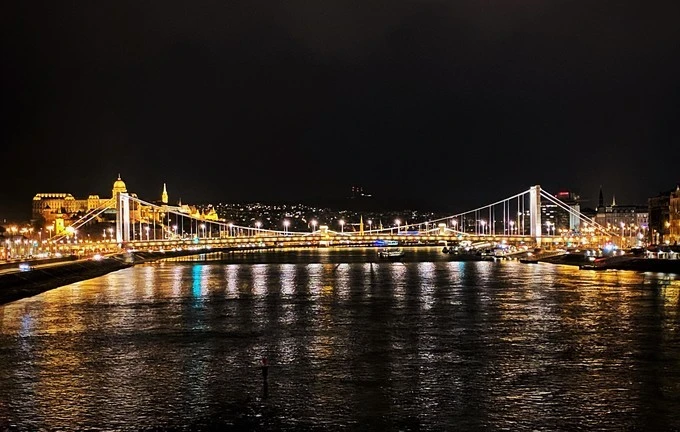
Quietly approaching you in the dawn, the Danube.
Okay, I admit, I hate planning itineraries and I don't like flying, but I happen to be someone who loves to be on the move. This trip to Budapest, from convincing my friend to booking the ticket, packing my luggage, and arriving at the airport, took only four hours. It was truly a last-minute trip.
Since I have a five-year Schengen visa, I grabbed the ticket as soon as I saw it.
China Eastern Airlines flies directly from Shanghai to Budapest. There were surprisingly few passengers. I had a whole row to myself and could lie flat and fly. Very lucky.
After landing, I went straight to the hotel, took a shower, and went to sleep.
I landed at 5 a.m. It was very cold when I got off the plane. I had no checked luggage, so it didn't take long. I went through customs directly and took a taxi to the hotel.
There is a designated taxi area outside the airport where you pay. After paying, the taxi comes. Very convenient. Just make sure to note the car number and get in. The driver takes you directly to your destination.
Checked in, showered, rested a bit, then went out for breakfast!
Széchenyi Chain Bridge
Construction of the Széchenyi Chain Bridge began in 1839 and was completed in 1849 after ten years. The bridge was named after its main financier, Count István Széchenyi, though the name was only finalized in 1899.
"In December 1820, the young Hungarian nobleman and light cavalry officer Count István Széchenyi suddenly received news that his father was critically ill in Vienna. He prepared to set off immediately to see his father, but floating ice on the Danube blocked his way. No matter how anxious he was, he could not cross. By the time the ice melted and the pontoon bridge was usable, the count finally crossed the Danube to rush to Vienna, but his father had already passed away. He never got to see his father one last time. Angry and regretful, the count resolved to build a permanent bridge over the Danube.
Széchenyi vowed: 'If anyone can build a permanent bridge between Buda and Pest, I will donate my entire year's salary!' He donated his whole year's salary as a bridge-building fund and helped establish the Hungarian Academy of Sciences. He built this bridge.
There are as many as nine bridges connecting Buda and Pest, but the oldest and most magnificent is this one. It is also the first bridge to span the Danube in Budapest.
The best place for photos is actually under the bridge, where you can capture the full bridge, the city, and the Danube.
The bridge itself is also great for photos, but there are a lot of people passing by, making it hard to get a clean background.
The scenery of the Danube is no less than that of the Seine.
The lions at the bridgehead are kind of cute.
Winter in Europe is very windy. If you plan to visit, remember to dress warmly, especially with windproof and waterproof clothing and shoes. I brought a Lululemon rain jacket that I can layer with a down jacket, windproof and waterproof, so I don't need an umbrella when I go out.
I found a local restaurant, surprisingly small but very busy. The mushroom scrambled eggs were delicious.
After eating, I went straight to another café.
There's a saying in Europe: 'If you're not at home, you're at a café; if you're not at a café, you're on your way to one.' Europeans' love for coffee is deeply ingrained.
And the 'most beautiful café in the world' is located in Budapest.
Budapest's New York Café is far more than just a 'century-old establishment.' It opened in 1894. Its exterior is adorned with 16 bronze statues of faun spirits from Roman mythology. Inside, red marble columns, walls, stairs, railings, and ceilings are exquisitely carved, with golden reliefs everywhere. Standing in the café feels like being in a castle. It blends Renaissance and Baroque styles, like stepping into a painting.
The center of the ceiling features beautiful paintings by the famous artists Manheimer and Eisenhut. Chandeliers hang down, each a magnificent Venetian-style lamp, adding to the palace-like grandeur. It truly lives up to its title of the most beautiful café.
The waitstaff are also very elegant. Even the napkins and sugar packets say 'The Most Beautiful Café in the World.'
The coffee is smooth and rich, the piano music is lively, and the place is bustling but not noisy.
Friendly tip: you might have to queue and wait to be seated at the door, but I tell you, it's absolutely worth it! Of course, you can also dine here, but it's a bit pricier compared to other places.
St. Stephen's Basilica
Located on Szent István Street in Budapest, construction of this basilica began in 1851 and was completed in 1905. It was designed by architects József Hild, Miklós Ybl, and József Kauser, built on the foundations of King Stephen's palace.
If you stand on Castle Hill, the building with the huge round dome opposite is this basilica.
The dome inside the church can truly be described as magnificent.
Hungarian Parliament Building
This is another landmark of Budapest, located on the banks of the Danube, southeast of the Budapest Grand Hotel and Heroes' Square.
This architectural complex is majestic. It used 400,000 bricks and 1 million precious stones, and lavishly used 40 kilograms of gold as building materials. At that time, it was already fully equipped with advanced facilities like electric lights, elevators, mechanical ventilation, heating and air conditioning, showing how luxurious it was.
The architectural style imitates the Russian Parliament Building, designed by architect Imre Steindl, adopting the then-popular Gothic style. It incorporates many vertical slender elements and spires into the entire building, successfully shaping the new look of many important public buildings of the time.
Across from it is Fisherman's Bastion.
After wandering around, I was starving. Since my hotel was near Castle Hill, I decided to eat near the hotel. I found a restaurant that we ended up eating at for three consecutive days.
The restaurant's name: Tabáni Gösser Étterem, serving traditional Central European cuisine.
First day: I had chicken. Central European food tends to be a bit salty, but it suits Chinese tastes well.
Local dessert, something like choux pastry topped with cream and ice cream.
When the lights change in the evening, it turns into a bar.
The next day, we came to this restaurant again. This meal was the most satisfying one during my European trip. This dish is Gypsy steak. The top part is pork fat, rich but not greasy, eaten with their pickles. Below is steak, marinated with special spices. It suited my taste perfectly. Later, when I went to other countries, I couldn't find Gypsy steak anymore.
The dessert was also a pleasant surprise. The chocolate brownie was baked, a bit dry, best paired with ice cream and cream.
This was what we ate on the third day: half a duck. Below is the local staple, something like pasta sheets.
It was also roasted very fragrant, but compared to the Gypsy steak, I still preferred the Gypsy steak.
This fish dish was also very tasty, with a good variety of vegetables.
In short, a restaurant we ate at for three consecutive days—you definitely won't go wrong eating there!
On the third day, we told the owner it was our last meal because we were leaving soon, but I had to write about it in my travel notes and recommend it to friends. It was really delicious.
The next morning, I got up and went straight to Castle Hill. I wanted to take photos at Fisherman's Bastion, but I was worried about crowds, so I got up at 5 a.m.
Getting up early wasn't hard because I was still jet-lagged and woke up at 3 a.m.
I arrived at Fisherman's Bastion before 7 a.m. There were almost no people, so I could take as many photos as I wanted.
Fisherman's Bastion (Halászbástya) is a viewing terrace in a Neo-Gothic and Neo-Romanesque style, next to Matthias Church. It was built between 1895 and 1902, designed by Frigyes Schulek. From the towers and viewing terrace, you can see the Danube, Margaret Island, Pest to the east, and the full view of Gellért Hill.
The seven towers represent the seven Magyar tribes that settled in the Carpathian Basin in 896. The bastion gets its name from the fishermen's guild, who were responsible for defending this section of the city wall during the Middle Ages.
The arched design is perfect for enjoying the view. Of course, it's also great for taking photos.
Almost every corner is suitable for photography, and you can capture different angles of Budapest. Fisherman's Bastion, this 'viewing platform,' is truly the best.
The surroundings of Fisherman's Bastion are also stunning.
Matthias Church
Right next to Fisherman's Bastion, at first glance this church seems typical Gothic, but it actually incorporates Hungarian folk, Art Nouveau, and Turkish design elements. The white spire and colorful roof add a lot of life to the church. The stained glass and murals inside are also exquisitely beautiful.
Originally the Buda Our Lady Church, it was renamed after King Matthias of Hungary held his wedding here. It is also where Hungarian kings were crowned.
This church has undergone many changes. Since the 13th century, it has been renovated multiple times, experiencing changes of dynasties. From a Catholic church, it was converted into a mosque during the Turkish occupation, then later added Baroque and Neo-Gothic styles. Even now, it occasionally hosts concerts or church events.
The plague column on the Trinity Square outside the church was erected by the old city residents in the 18th century to commemorate the end of the Black Death. It is also a gathering and resting place for tourists.
Across from the church, there is a small grassy area next to a café. Drinking coffee while enjoying the sun is the most pleasant thing.
Buda Castle
Located on Castle Hill, the central part of the palace now houses the Historical Museum, the National Gallery, and the Museum of the Workers Movement. The museum displays historical materials about Budapest and Hungary, arranged chronologically. The gallery mainly showcases works of representative Hungarian painters and sculptors.
To the south of the hill, there are remains of medieval city walls, from which you can overlook the Danube and the cityscape. From here, you can walk through the tunnel under the hill to the Chain Bridge on the Danube, and the other side of the bridge is the Pest area.
Besides the beautiful scenery, the palace is also a great place to watch the sunset.
This is also around Castle Hill.
Unfortunately, the best photo spots are always crowded.
However, if you come to Europe in winter, you must be prepared for the wind. Europe's maritime climate makes the wind very strong.
This was taken while climbing Castle Hill, stealing a glimpse of the cityscape.
Of course, don't leave just after touring. Wait a bit longer because you haven't seen the most beautiful sunset yet.
Look at this sunset—it's no less than those popular island resorts.
Széchenyi Baths and Pool
This thermal bath is the largest comprehensive thermal bath in Europe. It is famous not only for its large area but also for its unique architectural solutions.
Hungary has the richest thermal water resources in Europe, and Budapest has the most thermal baths among capitals.
These thermal springs produce about 70 million liters of water daily. In this city, there are nearly 50 bathhouses supplied by natural medicinal thermal springs or artificially drilled thermal wells.
Of course, it still retains original Turkish baths, open-air baths, elegant effervescent baths. Moreover, hospitals and medical hotels meeting all needs have been built on top of medicinal thermal springs.
From a distance, it feels like the Blue Lagoon in Iceland.
After soaking in the baths, I returned to the Danube area and walked along the river to see Budapest on my last day.
Fashion Street Budapest, where you can find both tradition and fashion.
I found a small eatery by the river. The prices were really cheap, and the food was delicious.
This is chicken liver pâté on bread, with arugula and olive oil.
This city is truly romantic to its core at every moment.
Later, I simply stopped looking for destinations and just wandered around randomly.
Later, I simply stopped looking for destinations and just wandered around randomly.
Travel Notes Directory
2. Shanghai - Budapest
4. Day 1 in Budapest
6. Day 2 Castle Hill
8. Day 3: Wandering Around
Travel Information
Hotel Index
Guide Index
Ticket Index
Website Navigation
Travel Index
Cruise Index
Corporate Travel Index
Affiliate Cooperation
Distribution Alliance
Friendship Links
Corporate Gift Card Purchase
Insurance Agent
Agent Cooperation
Hotel Franchise
Destination and Attractions Cooperation
More Affiliate Cooperation
About Ctrip
About Ctrip
Ctrip Highlights
Contact Us
Careers
User Agreement
Privacy Policy
Business License
Security Center
Ctrip Content Center
Intellectual Property
Trip.com Group
Algorithm Disclosure