Moon Worship Ceremony at Yandu Ancient City: A National Day Food & Fun Travelogue
As the clock hands slip past midnight, October turns a new page. The Mid-Autumn Festival and National Day arrive hand in hand, a double celebration for the nation. On such nationwide jubilation, everyone has their own way of enjoying the festivities—some visit friends and family, some gather for parties, and many have already set off on journeys to all corners of the country.
An eight-day holiday offers ample opportunity to see more sights. Clutching this rare long break after a whole year, my feet itch to wander. I had already planned to spend a few days on a cultural trip.
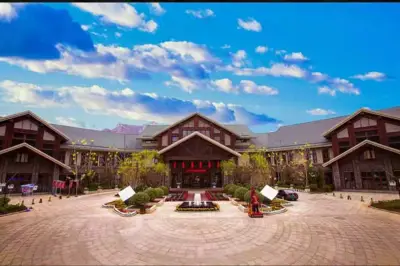
This time, my destination is Yandu Ancient City in Yi County, Baoding. The reasons are simple: first, it's off the beaten path; second, I have a deep connection with this place and wanted to see what this splendid ancient city looks like in different seasons.
The journey here was familiar, though the surroundings were much livelier due to the National Day. But who would have thought that upon arriving at Yandu Ancient City—wow, it was a sea of people, a dense crowd everywhere.
At the same time, the bustling atmosphere was matched by the rich festive spirit inside the city. A variety of well-designed activities for the double celebrations kept my eyes busy and filled me with amazement.
And the Moon Worship Ceremony was the opening act.
On ordinary Mid-Autumn nights, the festive mood around might be thick, but on closer inspection, most events are superficial, hard to grasp the festival's true essence.
But the Moon Worship Ceremony at Yandu Ancient City is something else. It blends history with fresh twists, allowing the audience to enjoy the spectacle while learning about the ancients' Mid-Autumn traditions.
The Moon Worship Ceremony, also known as the Moon Salutation in ancient times, flourished in remote antiquity, originating from primitive people's nature worship and deification of the moon. After the Zhou Dynasty, casual kneeling to the sun and moon evolved into a formalized ritual system with fixed times, places, and procedures.
This ceremony had long been gradually forgotten in the torrent of time, only to be revived today.
On the evening of October 1st, a huge full moon hung in the sky, and a resonant chant marked the start of the ceremony.
Lantern children entered, officiants and ritual guides took their places. To the artisans' delicate plucking and strumming of ancient music, dancers with graceful, gentle moves invited the Moon Goddess. Through song and dance, they expressed their heartfelt sentiments and blessings for the Mid-Autumn moon.
Then came the incense offering by the chief and assistant celebrants. Though the ceremony wasn't grand, watching quietly amid the crowd, I couldn't help but marvel: we are people of today, yet this ancient culture has been passed down through generations, bloodline to bloodline.
After the moon salutation, the ceremony drew to a close. The onlookers murmured softly, smiles playing at the corners of their mouths, as if they had truly received the full moon's blessings. And we, too, started our holiday in high spirits after the Moon Worship Ceremony, stepping out to seek more beauty.