Exploring Baoding | The Story Behind the Name of Mu Ling
The life of Emperor Daoguang was deeply tragic. He had no choice but to stand helplessly at the turning point of a dynasty in decline. By then, the Qing Dynasty was riddled with insurmountable problems, long past easy remedy. All sorts of contradictions erupted at once, so that any single move could affect the whole, making every step a struggle. In short, the fate of the Qing Empire was already sealed, beyond the power of any individual to reverse. And the challenges posed by Western powers only added frost to snow on Daoguang’s path of governance. As an emperor caught in such an era, what special attitudes did he hold toward his own mausoleum?
Normally, according to the Qing mausoleum system, the name of an emperor’s tomb was chosen by his successor after his death. Yet the Mu Ling mausoleum of Emperor Daoguang was named by Daoguang himself. How did that come about?
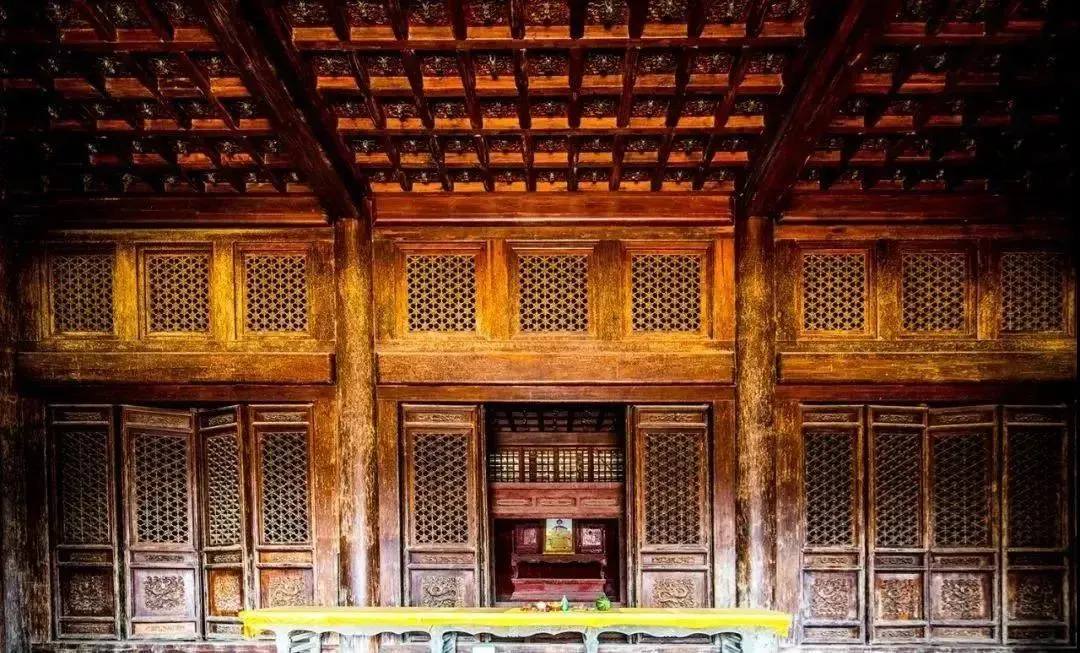
It is said that after Emperor Daoguang had the Baohuayu mausoleum at the Eastern Qing Tombs demolished and relocated to Longquanyu at the Western Qing Tombs, he wanted to avoid further water seepage in the underground palace. Not only did he pick a high, dry site, but he also frequently visited the construction site. In the fifteenth year of Daoguang’s reign, when the Longquanyu tomb was nearing completion, the emperor came again to the Western Tombs. After paying respects at Tai Ling and Chang Ling, he went to his own “eternal resting palace” at Longquanyu. Seeing that the construction was solid and orderly, the dragon countenance was pleased. Afterwards, he had the spirit coffins of Empresses Xiaomu and Xiaoshen moved into the main hall at Longquanyu, to await final interment in the underground palace once the entire tomb was finished.
The Realization of Emperor Xianfeng
At that time, Emperor Daoguang personally performed the ritual libation. Overcome with emotion, he shed tears like rain. Standing on the terrace of the main hall, brush in hand, he gazed toward the northeast and wrote a vermilion rescript in one stroke: “Here, there is admiration and being admired.” Tossing the brush onto the table, he summoned his 18-year-old fourth son, Yizhu, and the sixth prince, Yixin, and ordered them to read it aloud respectfully. After they finished, he had the vermilion decree stored in the east warm room of Long’en Hall. Less than two years later, Emperor Daoguang passed away. Ascending the throne according to the final edict, the Xianfeng Emperor Yizhu reread his father’s testament, and when he saw the line “Here, there is admiration and being admired,” he suddenly recalled the earlier scene and realized with a jolt that his imperial father had been hinting that the character mu (“admire”) should be used to name the mausoleum.
On the ninth day of the second month of the thirtieth year of his reign, Emperor Xianfeng issued a decree formally naming the Longquanyu tomb “Mu Ling.” Fortunately, Xianfeng had not forgotten that vermilion decree hidden in the mausoleum’s main hall two years earlier. And fortunately, Xianfeng was clever enough to perceive his father’s real intention in time. Had Xianfeng forgotten the decree, or had not deciphered its meaning, or even if he had understood but the tomb’s name had already been fixed and made public, then Daoguang’s subtle plan to secretly name his own mausoleum would have been dashed, and the emperor in the netherworld could only have shaken his head and sighed.
The Origin of the Name Mu Ling
Why did Emperor Daoguang choose the character mu (“admire”) for the tomb name? Some later scholars speculate that when he wrote that privy rescript, the Great Qing was in a precarious downward spiral: rebellions flared across the land, and Western powers eyed the Divine Land with covetous eyes, leaving the helpless Daoguang powerless to bring the empire back on track. Whether recalling his ancestor Nurhaci galloping across the world, founding the Qing Dynasty with illustrious achievements, or the golden ages of Kangxi, Yongzheng and Qianlong, when the state was rich and strong and the people at peace, none of this could Daoguang claim for himself. Even his father, the Jiaqing Emperor during his 25-year reign, had at least fulfilled the duties of a conservative ruler and slowed the decline of the Aisin-Gioro house. Yet Daoguang, after fifteen years on the Dragon Throne, had left the empire riddled with wounds and on the verge of collapse. Seeing all this, he could not help but admire the virtues and achievements of his forebears.
Earlier this year, Baoding launched a citizen-friendly policy: the Baoding Cultural Tourism Benefit Card. With this card, you can not only visit the beautiful scenic spots mentioned above, but also enjoy discounts on tickets at the Guan Hanqing Grand Theatre and the Zhili Grand Theatre. ♥ Don’t just be touched – act now!