This Is the Fog Capital, and Also the River Capital, Bridge Capital, Provisional Capital, Mountain City — One Article Takes You on a Tour of Chongqing
The photos in this article were taken by the author of 'Black and White Touch'. All rights reserved. No unauthorized reproduction.
Recommended reading: (Chengdu-Chongqing Conflict)
Impressions of Chengdu: shī, shí, shǐ, shì
"A soft ‘Zhonghua’, a hard ‘Yuxi’, the shorter the hair, the tougher the guy; fight for turf, barge into fights, no matter how big the occasion, never flinch."
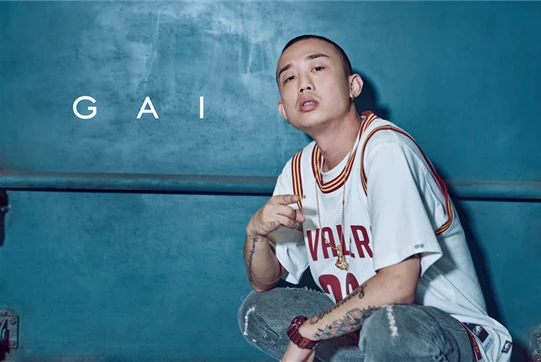
These are two lines from the lyrics of GAI, a rapper who has soared to fame in recent years, in his work 'The Soul of Chongqing'.
GAI was born in Sichuan, but his rap career thrived in Chongqing. Perhaps there is a quality in Chongqing that perfectly matches his personality, and the suitable soil has cultivated unique creations:
"I walk sideways in the streets, if you want to mess with me, please raise your hand. I know you’re angry and annoyed but dare not touch me, so you deserve to beg."
"I reach out and touch the sky, see the white clouds, green hills, and curling smoke. Though I find joy in the sea of suffering with no shore to return to, I walk freely and openly between heaven and earth."
"My fate is tough, I can’t learn to bow; one mountain is always higher than the next."
"How can dust hide fragrance? The vast China bathes in rosy clouds. Five thousand years of time flow like sand, not in vain for my soul to enter Huaxia."
......
(Image below from the internet)
This is a straightforward and candid character, with the rebellious defiance of a nobody and the heroic passion of the greater world, with swift vengeance as well as a carefree detachment that leaves outcomes to fate.
The 'gangster style' that nurtures this is the 'jianghu' (rivers and lakes) air of Chongqing.
Chongqing is a dock city on the upper reaches of the Yangtze River, at the confluence of the Yangtze and Jialing Rivers. It is the gateway to Sichuan, strategically located and historically a military stronghold. During the Song Dynasty, the Yangtze River shipping flourished, commerce along the river rose, and the military stronghold gradually became a prosperous commercial capital. Vast quantities of goods gathered and dispersed at the docks here, attracting merchants, tourists, boatmen, porters... people from all walks of life gathered, and for survival and profit, a dazzling array of tricks and skills emerged, while hawkers and laborers shouted and bustled with heat...
Where there are people, there is 'jianghu'. Even Chongqing's signature dishes are called 'jianghu dishes', reflecting the fiery and mixed nature of Chongqing's world.
(Nine-grid hotpot, originally created to accommodate different tastes for people sharing a meal)
However, just as GAI's 'gangster' is not limited to the grudges of 'one faction', Chongqing's jianghu is not merely the tricks of various social strata. Chongqing, when broken down into its characters, means 'a thousand miles' and 'reaching vastness'. Today's article will take you on a tour of Chongqing, to appreciate the 'travel a thousand miles and achieve greatness' of this famous southwestern city.
(Chongqing Grand Theatre)
Let's start our Chongqing journey from Ciqikou Ancient Town, a famous historical and cultural street and one of the Twelve Scenes of Bayu.
Ciqikou Ancient Town was built in the Northern Song Dynasty, originally called 'Baiya Town' because it backs onto Ma'an Mountain, which has white cliffs. During the Ming Dynasty, Emperor Jianwen, forced to abdicate by Prince Yan Zhu Di, fled here to live in seclusion, so it was also called 'Longyin Town' (Dragon Hidden Town). In the Qing Dynasty, the town began to produce and sell porcelain, attracting merchants and trade, and it flourished. At that time, people said 'during the day, a thousand people bow; at night, ten thousand lanterns shine', so it was named 'Ciqikou' (Porcelain Port).
The ancient town is located in the northeast of Chongqing's Shapingba District, facing the Jialing River and backed by Geleshan Mountain, embraced by the Qingshui and Fenghuang streams, and flanked by Jinbi, Ma'an, and Fenghuang mountains. The environment is beautiful and culturally rich. Ciqikou is the birthplace of ShaCi culture. During the Anti-Japanese War, the Nationalist government moved its capital to Chongqing, and Ciqikou's commercial trade and cultural activities were unprecedentedly prosperous. Many famous figures such as Zhou Enlai, Xu Beihong, Ma Yinchu, and Ding Zhaozhong once stayed here. Their activities promoted patriotism, emphasized education, and pursued national righteousness, making it a banner of culture in the rear area of the war.
Today, besides ShaCi culture, Ciqikou Ancient Town also features distinctive Bayu culture, Red Rock culture, and religious culture. You can enjoy Sichuan opera face-changing, learn about the arduous years of the Anti-Japanese War, feel the heroic spirit of 'Red Rock', or sip tea and relax at a riverside tea house, taking in the river scenery.
On the south side of Ciqikou Main Street, there is a Xinji Grocery Store, which now serves as a museum displaying the 'Red Rock Spirit' rather than selling groceries. Xinji Grocery Store was the main channel for revolutionary martyrs imprisoned in Zhazidong by the Kuomintang military secret service to exchange information with the outside world, and it was also one of the important secret liaison points of the underground Communist Party. Han Zidong, the prototype of Hua Ziliang in the novel 'Red Rock', once passed many precious intelligence through here.
From the grocery store, walk along the main street to Baoshan Temple, originally a Taoist temple. During the war, it served as the site of Jialing River Primary School, where physicist Ding Zhaozhong once studied. The garden is elegant, contrasting sharply with the hustle and bustle of the street. Today, Baoshan Temple is a tea art house and a venue for Sichuan opera performances.
The Zhuanyun Building in the middle of the main street is very conspicuous, with enthusiastic promoters wearing makeup and costumes.
Zhuanyun Building is a unique teahouse in Ciqikou Ancient Town where you can enjoy tea while watching performances such as Pijin Rolling Lamp, Sichuan opera face-changing, traditional tricks, and folk music. There is also a legendary deep well. According to legend, when Emperor Jianwen fled to Ciqikou, he was hungry and thirsty, and to avoid checkpoint inspections, he panicked and fell into a dry well. As he lamented his bad luck and prepared to close his eyes and wait for death, a clear spring suddenly gushed from the bottom of the well. Since then, many dry wells in Ciqikou have produced sweet and palatable spring water, so the locals also call it the 'Born Water Well'.
Opposite Zhuanyun Building is the Zhong Family Courtyard, built in 1890, owned by Mr. Zhong Yunting, who grew up in Ciqikou. He once served as a foreign purchasing agent for Empress Dowager Cixi. After retiring, he had a house design drawn up in Beijing and returned to Ciqikou to build the current Zhong Family Courtyard. The courtyard has the charm of a northern quadrangle, but the use of small grey tiles and 'chuan dou' wooden frames shows the delicacy and elegance of southern residential architecture. Today, the courtyard houses a porcelain exhibition hall called Citang (Porcelain Hall), mainly displaying the related figures, events, and works from the heyday of Ciqikou's porcelain production, restoring the once prosperous trade and historical changes of Ciqikou.
On the north side of the main street is Baolun Temple, built during the Xianping period of Emperor Zhenzong of the Song Dynasty. It has a long history and is one of the most famous Buddhist temples in Chongqing. According to legend, Emperor Jianwen lived in seclusion in this temple in Ciqikou, so it is also called 'Longyin Temple' (Dragon Hidden Temple). One remarkable feature of Baolun Temple is that its main hall uses horse mulberry wood pillars that one person cannot embrace, without a single iron nail. The double-dragon coiled pillar bases on both sides are at different heights—one protruding about a foot above the ground, the other sinking several inches—yet it has remained upright for a thousand years.
Besides these historically significant courtyards and temples, Ciqikou is filled with snack shops, clothing stores, and specialty shops, making it a quaint commercial street.
Strolling along the street, you occasionally encounter interesting sculptures that reflect the history and folklore here.
The 'Young Woman Urinating on a Child' sculpture is located on Ciqikou Side Street near Baolun Temple. There is also a legend associated with it: Emperor Jianwen, suffering from asthma, strain, rheumatism, and other ailments due to his hardships, dared not seek medical treatment for fear of being hunted by the Yongle Emperor. One night, a god appeared in his dream and said, 'The urine of a seven-year-old boy can cure you.' The next day, he went out of the temple and found a woman holding a boy who was urinating. Asked, the boy was exactly seven years old. He explained his intention and asked for the child's urine. After drinking a bowl of boy's urine, he was cured of all ailments. This is the story of 'Dragon Protecting Water'.
Inside the ancient town, there is also a monument to the soldiers who died in the Anti-Japanese War. In 1937, Japan launched the 'Marco Polo Bridge Incident' and began a full-scale invasion of China. In December of the following year, Wang Jingwei, then Vice Chairman of the Kuomintang, betrayed the country and defected to the enemy, arousing public indignation. In February 1940, the provisional capital Chongqing established the 'Chongqing People's Committee to Denounce Wang's Crimes' headed by Feng Yuxiang, raising donations from all sectors of society to build a monument to the soldiers who died in the war, and erected a kneeling statue of Wang in front of it.
During the Japanese invasion, the Kuomintang also intensified its persecution of revolutionaries. Three kilometers west of Ciqikou lies Zhazidong, a secret prison of the Kuomintang military secret service where revolutionary martyrs were held. The well-known 'Little Carrot Head' was once imprisoned here. Next, let's visit the Red Rock scenic area to experience the Red Rock spirit of the older generation of revolutionaries.
Geleshan was originally a beautiful place with clear waters and green mountains, but under the Kuomintang's White Terror rule, it became gloomy and brutal...
From 1939 to 1949, when the Kuomintang regime ruled mainland China, the military secret service held a large number of political prisoners fighting for freedom and democracy in the secret prison on Geleshan, and countless were killed. General Ye Ting, commander of the New Fourth Army who was detained during the 'Southern Anhui Incident', was imprisoned here twice. General Zhang Xueliang, the instigator of the 'Xi'an Incident', was also held here. Famous Communists like Luo Shiwen, Che Yaoxian, Jiang Zhuyun, and patriotic generals Yang Hucheng and Huang Xiansheng died here for their cause.
The Kuomintang massacred political prisoners held here many times, with the worst being the massacre from September 6 to November 29, 1949. In the last month alone, about 300 people were killed, and seven innocent children (including Little Carrot Head) were not spared, the youngest being less than one year old. From the afternoon of November 27 to the early morning of November 28, the massacre at Baigongguan and Zhazidong was extremely brutal; within a day, over 200 lives were taken, piling up corpses and blood, a sight too horrible to behold. This was the shocking '11·27' massacre.
On November 30, 1949, the People's Liberation Army entered the city, and Chongqing changed forever. People gathered the remains of the martyrs and buried them together, which today is the Geleshan Martyrs' Cemetery. Monuments and grand sculptures were erected to commemorate the martyrs' achievements.
Not far north of the martyr cemetery is Baigongguan, originally the villa of Sichuan warlord Bai Ju. Bai Ju styled himself as a descendant of Tang Dynasty poet Bai Juyi, so he named the villa after Bai Juyi's sobriquet: 'Xiangshan Villa'.
In October 1939, Baigongguan was renamed the Chongqing Temporary Detention Center by the military secret service. In the '11·27' massacre, secret agents carried out a mass shooting of the detainees, killing nearly 30 people. Luo Guangbin (author of 'Red Rock') and 18 others broke out of prison with the help of guard Yang Qindian.
These revolutionaries maintained an optimistic revolutionary spirit in the harsh prison environment, firmly believing that Chongqing would be liberated. When Mao Zedong raised the national flag on Tiananmen Rostrum on October 1, 1949, they made a flag of their own by imagination and hid it under the floorboards, planning to rush out of the prison with it on the day of liberation. However, three martyrs—Chen Ran, Liu Guozhi, and Ding Diping—were killed in the massacre; only Luo Guangbin escaped. After Chongqing's liberation, he returned to the prison and retrieved that red flag.
It was the Red Rock spirit of 'facing adversity with courage and perseverance' of the revolutionary martyrs that brought today's peace. Salute to the countless predecessors who sacrificed their lives for the greater good!
In 1946, to commemorate the victory of the Anti-Japanese War, under the leadership of then Mayor of Chongqing Zhang Dulun, the 'Victory Monument' was laid. After the founding of New China, it was renamed the 'People's Liberation Monument', and Liu Bocheng, then Chairman of the Southwest Military and Political Committee, inscribed the name. More than 40 years later, a commercial street centered on the Liberation Monument sprang up, making this symbolic landmark synonymous with Chongqing's prosperity.
The Liberation Monument is a city symbol of Chongqing, the core of the mother city, and represents 'the city' in the hearts of locals and the synonym of Chongqing in the eyes of outsiders. People often say that you haven't been to Chongqing if you haven't visited the Liberation Monument.
It encompasses various functions including shopping, tourism, commerce, dining, entertainment, leisure, and finance. It is the most prosperous, fashionable, and desirable area in Chongqing, known as 'the No. 1 Street in Western China'.
In addition to the usual shopping malls, brand stores, and restaurants on the commercial street, there are often trendy exhibitions and events. Fashionable young people gather here, showcasing the vitality and innovation of the city.
Besides conventional office buildings, there are some ingenious structures that catch the eye, such as the Guotai Art Center on Linjiang Branch Road, whose exterior features red pillars and curtain walls like dense bamboo and forests, looking like a blazing bonfire from afar.
Also, the Chongqing Art Museum itself and the decorations on the square are full of artistic atmosphere.
During the day, the Liberation Monument area is crowded with people, and at night it becomes even more bustling.
Teahouses, restaurants, KTVs, and cinemas light up with colorful signs, bright and eye-catching:
Bars gather crowds of revelers, pouring passion and youth into spirits and music:
Street artists sing emotionally, decorating the night with flowing songs:
Elegant sculptures catch the eye, frozen music radiating charm:
Buildings that seem dull by day become charming under the glow of lights:
The modest Liberation Monument, surrounded by lights, appears even more glorious and upright:
Ancient gates and modern buildings blend perfectly, and the unique undulations of the mountain city make the night even more magical:
The most magical spots are Hongya Cave to the northwest of the Liberation Monument and Chaotianmen to the northeast. Next, let's board a night cruise on the two rivers to see Chongqing's most beautiful nightscape.
Chongqing's night view has been famous since the Qianlong period, when Wang Erjian, then magistrate of Baxian County, listed the mountain city night scene as one of the Twelve Scenes of Bayu. So there is a saying: 'If you don't see the night view, you haven't been to Chongqing.'
Two ways to view the mountain city night scene are highly recommended: one is to take the river-crossing cable car over the Yangtze River, then climb to the Yikeshu Observation Deck on Nanshan Mountain, overlooking the colorful enchanting nightscape from above and across; the other is to take a cruise from the Chaotianmen Dock at the confluence of the Jialing and Yangtze Rivers, go up the Yangtze River, then turn back to the Jialing River, passing by the Dongshuimen Yangtze River Bridge, Huguang Guild Hall, Ciyun Temple, Chongqing Grand Theatre, Qiansimen Jialing River Bridge, Nanbin Road, Hongya Cave, and other scenic spots, finally returning to Chaotianmen Dock, to appreciate Chongqing's bustling nightscape in a full, multi-angle, and close-up manner.
Chaotianmen, where the departure dock is located, is itself a landmark with unique characteristics.
Chaotianmen was originally one of the seventeen ancient city gates of Chongqing. During the Southern Song Dynasty, the court took refuge in Lin'an (now Hangzhou), and imperial envoys would come with edicts via the Yangtze River through this gate, hence the name 'Chaotianmen' (Gate Facing Heaven). What makes Chaotianmen stand out among the many ancient gates, besides its superior location, are the curved buildings erected here, which look like giant ships sailing against the wind or giant bows ready to be drawn, forming the most stunning skyline of Chongqing.
(Viewing the Chaotianmen building from different angles)
On top of Chaotianmen is Raffles City Plaza, with eye-catching decorations at the entrance:
Let's take our eyes off Chaotianmen and board the 'Jiaoyun Mingzhu' cruise at the dock to start this intoxicating night tour of the two rivers.
I have seen many nightscapes: the towering skyscrapers of Shanghai's Pudong, the flowing rosy clouds on Tianjin's Haihe River, the misty waters of Nanjing's Qinhuai River, the sun and moon pagodas of Guilin's Four Lakes... I thought that with water, it would be hard to come up with new surprises, but Chongqing's night view once again refreshed me with unexpected delight. Perhaps it's the varied heights of the mountain city that enrich the layers of lights, or the splendid bridges that make the rivers and lakes glow with brilliance...
Sailing along the river, both banks are dotted with layered lights, with myriad household lamps and flickering neon lights decorating the night into a dreamy and dazzling scene. The river water shows different colors in different places: beneath the bright red bridge, the water is calm like a 'Red Sea'; near the dark blue cruise ship, blue waves undulate. Colorful lights ripple and pulse on the water, smearing into a rainbow ribbon against the deep, calm night sky.
The river flows gently, the wind blows coolly, the bright moon shines, clouds drift, and the lit banks and the sparkling stars and moonlight reflect on the water, as if swimming in a galaxy.
Today's glorious river night is a 'Qingming Riverside Scene' of the 21st century, a prosperity condensed from tall buildings, bridges, neon lights, luxury ships, and technology. But before all these existed, the mountain city night view had already become famous, indicating that Chongqing's landscape itself is a good foundation. Wang Erjian wrote a poem praising the mountain city night scene:
High and low houses of Yuzhou, leaning against stone walls.
Who lit ten thousand torches, shooting to light up the river?
Waves churn but cannot hide the light, clouds flow and shadows are clear.
Gazing at endless meaning, sky and water together crystal clear.
The ancients called the night view at the confluence of two rivers 'Zishui Xiaodeng' (Character Water Night Lantern). It is said that the water at Chaotianmen twists and turns, naturally forming an ancient seal script character resembling 'Ba', hence 'Zishui'; under the night sky, lights come on, shimmering on the waves, forming 'Xiaodeng' (night lantern). The 'Xiaodeng' reflects on 'Zishui', high and low mutually enhancing, shining brightly down on the river waves, competing with stars and moon, extremely beautiful.
On the far shore of the cruise, the emerald-like building is the Chongqing Grand Theatre, with its novel glass curtain wall constantly changing colors and characters, expressing progress and blessings.
As the night tour approaches its end, we arrive at Hongya Cave. From the river, we can see the full view of Hongya Cave, with its varied heights and bright lights, resembling the magical bathhouse in 'Spirited Away'.
In fact, the buildings of Hongya Cave did not draw inspiration from the animation but are rows of 'stilted houses' (diao jiao lou) of the dry-column style, a traditional Bayu architecture. Behind Hongya Cave are the towering skyscrapers of the Liberation Monument area. The ancient tradition and modern design complement each other, creating a magical atmosphere.
Let's explore what's inside the magical Hongya Cave.
Hongya Cave is located on Cangbai Road in the Liberation Monument area, the most distinctive attraction of the Liberation Monument commercial district, and the most eye-catching sight on the night tour of the two rivers.
Hongya Cave has a history of 2,300 years. As early as 316 BC, when the Qin Dynasty destroyed Ba, it was a military fortress. Over the long years, Hongya Cave has developed numerous historical relics, including riverside forts, ancient temples, academies, Ming dynasty city walls, and streets, leaving behind three of the twelve Bayu scenes: 'Hongya Emerald Drizzle', 'Jialing Sunset', and 'Two Rivers Confluence'. It retains the unique Bayu folk houses and stilted house culture, making it the only remaining cultural landscape of old mountain city Chongqing.
In the early Ming Dynasty, Chongqing had seventeen city gates, of which 'Hongyamen' was a military gate, and locals called it 'Hongya Cave', a name that continues to this day.
'Hongya Emerald Drizzle' is a scene at the entrance of the first floor of Hongya Cave on Jiabin Road, where a water curtain spreads over the ancient wall. Huang Tingjian, a poet of the Northern Song Dynasty, once wrote: 'Iron flies from high cliffs, emerald surges in the great river.' Wang Erjian of the Qing Dynasty also wrote: 'Truly a fairy cliff painting, a glimpse of light, a wisp of breeze.'
Now hidden among hotpot restaurants and stilted houses, it's hard to see the grandeur of 'emerald surging in the great river', but the once sheer danger can still be somewhat perceived: Jiabin Road is the entrance to Hongya Cave walking from Chaotianmen. On the map, it is not far from the Liberation Monument, but when you follow navigation to walk there, it always 'deviates from the route'. Only by asking people do you realize that the ground floor of Hongya Cave and the Liberation Monument are not on the same elevation. You need to take an elevator up to the 11th floor on Cangbai Road to use navigation correctly! Indeed, it's a mountain city that defeats navigation.
(From the wooden bridge of Hongya Emerald Drizzle, you can see the stilted houses of Hongya Cave from the side)
(The Jialing River Bridge pierces through the middle level of Hongya Cave; such scenes are not uncommon in Chongqing, including trains passing through buildings)
Outside Hongya Cave at night, Jiabin Road is bustling with traffic, and the roadside is crowded with tourists taking photos. Besides tourists, there are professional photography teams who always find the right angle in the narrow space and flowing traffic. The charm of Hongya Cave as a background is irresistible.
Inside Hongya Cave, it is packed with people. On both sides are rows of snack shops, specialty stores, etc., covering dining, entertainment, hotels, theaters, and everything else. Each floor has its own characteristics, making it a three-dimensional sky commercial street.
(Three-dimensional sky pedestrian street)
Among the 11 floors of pedestrian streets, there are Bayu folk customs, various workshops, antiques and creative goods, bars, KTVs, and anime subculture, all a feast for the eyes. The most worth stopping at are the 'Reunion 1980s Life Scene Block' on the 5th floor and the 'Dream Tour of Bayu Twelve Scenes' interactive light and shadow space on the 6th floor.
'Dream Tour of Bayu Twelve Scenes' uses light and shadow interaction, changing according to the solar terms, connecting the transformation of the twelve scenes from ancient to modern times through narratives, presenting them vividly and beautifully, making it hard to leave.
The twelve scenes are: Beginning of Spring: Jinbi Flowing Fragrance; Awakening of Insects: Yellow Ge Evening Ferry; Clear and Bright: Gele Spirit Sound; Grain Rain: Begonia Misty Rain; Beginning of Summer: Barrel Well Gorge Monkeys; Grain Buds: Cloud Seal Breeze Clear; Summer Solstice: Fotu Night Rain; Minor Heat: Hongya Emerald Drizzle; Major Heat: Character Water Night Lantern; Beginning of Autumn: Longmen Bright Moon; White Dew: Jinling Cloud and Sunset; Major Snow: Huaying Snow Clear. Each scene is a perfect fusion of natural scenery and artistic processing, intoxicatingly beautiful.
The 'Reunion 1980s Block' centers on the scene culture of old Chongqing alleys, faithfully restoring the daily life of the 1980s and 1990s. With film-level set designs that make you feel like you've time-traveled in a second, it attracts countless young people to check in and take photos. The post-80s and post-90s can feel a sense of nostalgia. In fact, it's not only Chongqing locals; out-of-towners also feel touched because many cities experienced similar things from that era.
Outdoor billiards and convenience store payphones are childhood memories for many:
The corner with the character '拆' (demolish) and posters of Hong Kong and Taiwan stars seems like just yesterday:
In the days when internet cafes and bars were not widespread, arcades and disco were entertainment venues for different ages:
What may deeply resonate with Chongqing locals are scenes like the No. 5 tram, the Mountain City Widescreen Cinema, and the Mountain City Photo Studio:
The retro block also features both real and virtual performances, with artists playing violin on a street stage, and audiences enjoying a naked-eye 3D holographic image of Teresa Teng singing classic songs.
Feeling nostalgia and retro in the 1980s block, you can also experience down-to-earth folk customs in the open-air sculptures of Hongya Cave.
Hotpot is the most popular food. The butt of a chubby baby rushing to eat has been polished shiny by tourists:
The following sculpture stands on the top floor of Hongya Cave, 13.8 meters high, integrating green mountains, stone steps, cliffs, old alleys, and over 20 stilted houses, titled 'Memory of Mountain City'. It vividly displays the alleyways and characteristic landscapes of an ancient mountain city in a unique style.
However, to deeply understand the history and landscapes of the mountain city, the Chongqing Museum is a must-visit.
The Chongqing Museum is also called 'Chongqing China Three Gorges Museum'. The starting point of the Three Gorges is at Baidi City in Chongqing's Fengjie County. The museum is located in Yuzhong District, opposite the old landmark of Chongqing—the Great Hall of the People. Before entering the museum, let's take a look at the Great Hall of the People.
The Great Hall of the People was built from 1951 to 1954, under the direction of Deng Xiaoping, Liu Bocheng, He Long, and other older generation revolutionaries. Its magnificent golden grandeur combines traditional Chinese palace architecture with Western large-span structure, and it's one of Chongqing's top ten cultural symbols.
The main part of the hall imitates the shape and art of Beijing's Tiananmen and Temple of Heaven, with colonnaded long buildings on both north and south wings, roofs covered with green glazed tiles, double eaves and flying corners, carved beams and painted rafters, symmetrical pavilions, and diverse animal carvings. The Great Hall is the center for major assemblies and performances in Chongqing, and many Chinese and foreign leaders have visited it.
In front of the hall is a square with a grand archway in traditional national architectural style, with a unique shape, harmonious layout, and fine carvings.
Crossing the archway, you enter the Chongqing Museum.
The Chongqing Museum integrates 'Bayu culture, Three Gorges culture, rear-area Anti-Japanese War culture, immigration culture, and united front culture', displaying ancient human fossils, Three Gorges artifacts, Bayu bronzes, Han dynasty artifacts, and rear-area Anti-Japanese War artifacts. You can gain a comprehensive understanding of Chongqing's past and present. Due to space constraints, let me introduce a few important items.
The two Han dynasty watchtowers (Hanque) at the bottom of the hall's staircase are one of the top ten treasures. They are double-zi-mother stone watchtowers with double eaves and a hip roof, carved with scenes of life, myths, and animals. They are the best-preserved Han watchtowers in China.
The image below shows a Three Gorges waterfall stone, cut from the legendary Kuimen ('Heaven opens a line, gorge opens a door'), formed by years of river water beating and washing, shaped like a waterfall, hence the name.
Three Gorges trackers were people who made a living towing boats on the Gorge River, now disappeared, only seen in performances or artworks.
The Jingyun Stele below is also a treasure of the museum, erected to commemorate County Magistrate Jingyun of Quren in the Eastern Han. The carvings are vivid, the calligraphy fresh and graceful, making it a masterpiece among Han steles.
The natural environment of the Three Gorges, with its high mountains and misty clouds, nurtured the shamanic culture of the Ba people. The widely spread Nuo opera performances of the Tujia people are a continuation and inheritance of this ancient culture.
The Liangyan Rock Carvings in Yunyang, Chongqing, depict scenes of a shaman performing rituals using intaglio technique. The style is rustic and natural, full of primitive mystery.
The left mandible fragment of a Wushan ape-man, dating back 2.14 million years to the early Pleistocene epoch:
The tiger-nipple Chunyu and bird-shaped statue are also treasures. They are Warring States period bronzes. The tiger of the tiger-nipple Chunyu is related to the legend of the Ba people. It is said that the Ba ancestor Linjun turned into a white tiger after death, so the white tiger is the totem of the ancient Ba tribe. The bird-shaped statue was unearthed from a Ba noble cemetery, a rare artistic masterpiece for studying Ba aesthetic tastes and craft levels.
On July 7, 1937, the Marco Polo Bridge Incident broke out, opening the prelude to China's full-scale war of resistance. In November, the Nationalist government moved to Chongqing. Then, from the northern mountains to the Yellow River banks, from the central plains to the Suzhou-Hangzhou coast, from the Jianghan Plain to the Lingnan Pearl River, tens of millions of compatriots, military and government institutions, industrial and mining enterprises, commercial and financial sectors, and higher education institutions moved to the rear area centered on Chongqing. Chongqing rose from a commercial hub to the wartime capital.
(The Japanese cherry blossom saber captured at the front by Sichuan army general Guo Xunqi)
In order to destroy the Chinese people's will to resist and create huge strategic panic, from February 1938 to December 1944, the Japanese invaders concentrated their air forces on mass bombing of Chongqing and its surrounding cities for over six years. The strategic bombing was indiscriminate, bombing industrial, commercial, cultural, and residential areas indiscriminately. The duration, frequency, cruelty, and severity of the bombing were rare in the history of human warfare.
On June 5, 1941, Japanese bombers raided Chongqing at night, repeatedly bombing the Jiaochangkou residential area, causing the shocking 'Jiaochangkou Air Raid Shelter Suffocation Tragedy', with numerous casualties, causing national grief.
After the victory of the Anti-Japanese War, the Nationalist government returned its capital to Nanjing, and Chongqing completed its sacred mission as the wartime capital. As a city of victory, Chongqing thus earned a permanent historical distinction.
The museum also has exhibitions on Ba history, Chongqing Negotiations, and southwestern minority costumes. I won't introduce them all here. Next, let's visit Luohan Temple (Arhat Temple), the filming location of 'Crazy Stone'.
Luohan Temple is located on Chongqing Road, not far from the Liberation Monument, hidden in a crevice among towering high-rises, slightly absurd, which might be why the absurd 'Crazy Stone' was filmed here.
Luohan Temple was built during the Zhiping period of the Northern Song Dynasty (1064-1067). Originally named Zhiping Temple, it was built in the Arhat Cave. The temple houses over 400 ancient Buddhist cliff sculptures from the Northern Song dynasty on the Ancient Buddha Cliff, and over 500 painted clay arhat statues. It is the seat of the Chongqing Buddhist Association.
After entering the temple gate, you see a square paved with green stones, with a stone sculpture of Maitreya Buddha in the center.
Behind Maitreya is the 20-meter-long Ancient Buddha Cliff, where over 400 Song dynasty cliff-carved Buddha statues are located, including reclining Buddha, Guanyin, and donor figures. The style is close to that of Dazushan Stone Carvings. Worshippers coming to burn incense and worship are constant.
Passing through the Ancient Buddha Cliff, you reach the Grand Hall, which houses many Buddhist art treasures, such as the statues of the Sixteen Arhats, the 16 favorite disciples of Shakyamuni, and the Ming dynasty bronze statue of the 'Three Saints of the West', the jade Buddha of Shakyamuni's enlightenment from Myanmar, and a copy of the Indian mural 'Shakyamuni Leaving the Palace to Become a Monk'.
The most famous part of Luohan Temple is the Five Hundred Arhat Hall. Counting the arhats is a traditional folk custom, and it is said that by counting arhats, one can know their fortune for the year.
The temple has four Buddhist halls, arranged in a rectangular structure, all built of wood and stone, neat in structure, beautifully shaped, magnificent. The doors, windows, eaves, and pillars are finely painted with birds, animals, flowers, and fish, lifelike.
The entire temple has overlapping pavilions, deep halls, high rooftops, and flying eaves, set off by ancient cypresses and tall bamboo trees, making it majestic and solemn.
So far, we have explored the humanities and bustle of the city. Next, we will go to Houping Township in Wulong to experience the natural wonders of tiankeng (sky pits) and difeng (ground cracks).
Take a bus from Chongqing southeast about 170 kilometers to Wulong, a district under Chongqing. But the city is not the main attraction here; the whole area is covered with karst landscapes: valleys, caves, underground rivers, meadows. There is the magnificent Furong Cave, with karst-formed giant waterfalls and coral jade ponds; the beautiful Furong River, with crystal-clear water and strange peaks on both sides; the picturesque Fairy Mountain, with forest, peaks, grassland, and snow plains, known as 'Eden on Earth'. The most worthwhile is the grand Three Natural Bridges (tiankeng) and the beautiful Longshuixia Ground Crack.
(Pyramid-like Wulong Visitor Center)
Three Natural Bridges and Longshuixia Ground Crack are one north and one south, not far apart. Let's visit the Three Natural Bridges first.
Three Natural Bridges is located at the junction of Baiguo Township and Hetao Township, 20 km southeast of Wulong city. Nature has created three giant bridges: Tianlong Bridge, Qinglong Bridge, and Heilong Bridge, with an average height of over 300 meters. It is the world's largest and highest string of natural bridges. Between the three stone arch bridges are two large tiankeng: Qinglong Tiankeng and Shenying Tiankeng. Three bridges with two pits, grand in scale, magnificent in momentum, and beautiful in scenery!
If you have seen 'Transformers 4', you might remember the scene where the Transformers ride robotic dinosaurs fighting in a valley. That scene was filmed in the Wulong Tiankeng. Perhaps such natural giant pits are too huge for humans, and the dense city buildings are too cramped for Cybertronians; the tiankeng is just right for giants to fight.
Besides 'Transformers', 'Three Lives Three Worlds Ten Miles of Peach Blossoms' and 'Curse of the Golden Flower' were also filmed here, showing that the Three Natural Bridges are not only grand but also uniquely beautiful, fitting people's imagination of fairylands and dangerous places.
In 'Curse of the Golden Flower', assassins descended from the sky to chase guests in Tianfu Post, which was filmed in this small courtyard hidden at the bottom of the mountain.
The roof of the post is overshadowed by the deep abyss of Tianlong Bridge, surrounded by jagged rocks and lush shrubs, creating a gloomy and chilling atmosphere.
Tianfu Post truly existed historically, built in the second year of Tang Wude (619 AD). It was located on the thoroughfare between 'Zuantianpu' and 'Baiguopu', an important courier station for official communication between Fulai and Qianzhou in ancient times, later destroyed by war. The replica courtyard seen today is at the lower end of Qinglong Bridge. At the bottom of the pit, there is a main road about 5 meters wide, imitating the ancient post road, allowing carts and horses to pass.
Viewed from different angles, the tiankeng presents different shapes. Looking up from Tianfu Post, the bridge and peaks form a circle, truly as if heaven has opened a hole.
Looking into the distance, some curves are soft like a torch, some square like a skylight. Perhaps the work of nature is not random but carefully carved.
The most talked-about is the arch under Qinglong Bridge, shaped like a large sword, with a stream in front that extends the shape in its reflection, like Guan Yu's Green Dragon Crescent Blade. The scenic area has only a hilt, a popular spot for photos.
Qinglong Bridge and the surrounding stone cliffs form a tiankeng that looks like an eagle spreading its wings, hence named 'Shenying Tiankeng' (Divine Eagle Tiankeng).
There are also many springs and waterfalls in the tiankeng, some gushing from the top of the bridge, splashing jade-like droplets, crystal clear; some like light mist, disappearing into the ground; others flowing out from the bridge walls, with twists and turns, well-proportioned.
The elevator descending from the entrance to the tiankeng is also a major sight, vertically clinging to the cliff, towering and magnificent.
In addition, some natural and man-made sculptures are impressive.
The image below is called 'Holy Elephant Welcoming Guests': a protruding part of the stone wall under the north arch of Tianlong Bridge resembles an elephant, formed by groundwater erosion and cutting, standing here for millions of years, diligently welcoming visitors from afar.
The image below is 'Gorilla': a sight above the stone wall of Heilong Bridge, with deep eye sockets and clear facial contours, considered the guardian deity of Heilong Bridge.
Under Tianlong Bridge, there is a sculpture of hermits playing chess, leisurely and enviable:
After visiting the tiankeng, let's go to the ground crack for a journey to the center of the earth.
Passing through the long 'time-space tunnel' (image above), we arrive at the bottom of the valley, where a babbling brook flows, deep green pools are serene, the valley walls are sheer, vines entwine, and springs and waterfalls splash, making one feel dizzy and unaware of where they are.
Looking up, the cliffs soar thousands of feet, the sky is dim, mist drifts over the stream, and the deep, narrow crack brings peace to the mind.
Mountain paths wind among green trees, waterfalls trickle down through the gaps, the green sound pleasing to the ear, refreshing the heart.
Traveling up and down in the picturesque rugged valleys, we reach the lowest point of the ground crack.
This scene is called 'A Line of Sky Light': from the bottom to the top of the valley, the height difference is 260 meters, the narrowest part of the valley is 2-3 meters. Looking up from the bottom, you see only a line of sky; looking down from the top, the valley is hazy and deep, unfathomable, hence the name 'ground crack'.
Further ahead, a loud roar deafens, and not far away, a white ribbon comes into view.
This spectacular waterfall is called 'Galaxy Flying Waterfall'. It emerges from a cave on the right wall of the valley, flows along the slope, eroding into several deep pools of varying sizes, forming a four-tier stepped waterfall from top to bottom, with the highest drop reaching 80 meters. The massive flow of water is continuous all year round, crashing against the hard rock of the left wall, eroding a huge pit, splashing many water droplets, a process that generates a large amount of negative oxygen ions. Taking a deep breath, one feels refreshed, so this place is also called 'Natural Oxygen Bar'.
After the waterfall, the journey requires climbing up. At the top of the stone steps is Dragon Cold Grotto.
Dragon Cold Grotto is a huge dissolution cave, nearly a hundred meters high, formed hundreds of millions of years ago when early underground river water dissolved rock crevices.
It is also an underground river cave, where you only hear the sound of water but see no water, extremely quiet, eerily cold. Legend has it that a dragon practiced here.
The stalactites in the cave are grotesque and terrifying, masterpieces of water carving over millions of years.
When locals introduce their hometown, they like to say 'This is the Fog Capital', because for more than 200 days a year, Chongqing is shrouded in mist.
Is that why many suspense dramas favor Chongqing as a filming location?
('The Long Night' was filmed in Chongqing; the opening shows such a bridge, and under the bridge by the river is the body dumping site)
I think it's not entirely that.
Besides being the Fog Capital, Chongqing is also the Bridge Capital, River Capital, Mountain City, Provisional Capital... and in the impression of netizens, it is an 8D magic city.
(Bridge Capital: many bridges of various shapes)
(Mountain City: buildings staggered in height; picture shows Dongshuimen)
(River City: Jialing and Yangtze rivers flow through the city; cable cars run day and night)
(8D Magic City: coexistence of tradition and modernity, surface and underground transportation; a city that defeats navigation)
If this isn't magic enough, then what about the seemingly endless Crown Grand Escalator and the Liziba Light Rail that passes through a building? Are these common in your reality?
One of the characteristics of suspense is uncertainty. You don't know when the fog will clear; you don't know whether to take stairs or go through alleys to reach your destination...
Uncertainty means rich possibilities: it turns out that a luxurious city can be built on a mountain, and outside the city there are natural tiankeng and ground cracks; it turns out that cramped spaces are not necessarily messy, and a temple in the crevice can still thrive; it turns out that jianghu is not all about noise and conflict, but also has warm night scenes and aspirations to reach vast distances...
This is not just a fog capital.


