When Poetry Meets Wine, a Thousand Mountains and Rivers Are Intoxicated; Sing Along with Poems, Savor the Poetry City at the Peak of the Three Gorges!
Chinese poetry culture emphasizes poetic inspiration, which seeks joy within poetry.
Chinese wine culture emphasizes the joy of drinking, which attains pleasure in the cup.
Whether it is the joy of wine or the inspiration of poetry, both aim to obtain
a kind of emotional release and temporary satisfaction and solace in social life.
Wine and poetry are inextricably linked.
Countless literati raised their cups and wielded their brushes, producing many timeless lines.
“Harmonize poetry with song, enjoy poetry and wine while young.”
Poetry of soaring ambition, wine of high spirits;
Poetry of tangled sorrows, wine that dispels worries;
Poetry of light and bright, wine that enhances mood;
Poetry of soul-stirring melancholy, wine of infatuated longing;
Poetry of seeing off a friend a thousand miles, wine of cherishing parting and missing a companion.
Image | Source: Internet
Du Fu wrote in his poem 'Song of the Eight Immortal Drinkers':
“Li Bai produces a hundred poems after a bucket of wine.”
So it can be seen that without wine,
Li Bai's writings would lose their magnificent vitality.
Yu Guangzhong wrote in 'Searching for Li Bai':
Seventy percent is brewed into moonlight,
The remaining thirty percent turned into sword aura,
With a fair mouth exhaling half of the prosperous Tang Dynasty.
Image | Li Bai Drunk, painted by Fan Zeng
In his twenties, Li Bai was arrogant and romantic,
He wrote: “The torrent cascades three thousand feet straight down, As if the Milky Way fell from the ninth heaven.”
In his thirties, Li Bai followed his own way,
He wrote: “A golden goblet of clear wine costs ten thousand coins, A jade plate of delicacies is worth ten thousand.”
In his forties, Li Bai remained true to his heart,
He wrote: “I send my sorrowful heart to the bright moon, To follow you all the way west to Yelang.”
In his fifties, Li Bai's heart stayed the same,
He wrote: “You have rosy cheeks, I am young; On Zhangtai Street we ride with golden whips.”
Poetry creation relies on inspiration,
while winemaking requires adhering to craftsmanship.
Supervised by the studio led by Master Zhang Liang, the first master brewer and representative inheritor of the national intangible cultural heritage,
using 80-year-old pit mud, solid-state fermentation for 180 days,
double-round bottom, half-year cellar process, brewing with top-layer grains,
base liquor aged for over 10 years at 68% ABV in earthenware jars,
blended with 30-year cellar-aged old liquor.
Rich pit aroma, elegant aged fragrance, smooth and mellow taste with lingering sweetness.
Chinese Poetry and Wine
Peak of the Three Gorges • Ten Thousand Peaks Grandly Launched
Poetry and wine, like a chemical formula,
once they meet, they produce brilliant chapters.
A cup of wine holds boundless deep affection;
a poem writes the splendor of a lifetime.
A poet cannot compose without wine.
The spirit of poetry is also the realm of intoxication.
One Poetry City: Fengjie
Everywhere is poetry; through millennia-old masterpieces, one can take in the beauty of a city. A poet, Li Bai, celebrated the Three Gorges with the poem: “Leaving at dawn the White Emperor crowned with cloud, I've sailed a thousand miles through canyons in a day. With monkeys' sad adieus the riverbanks are loud; My skiff has left ten thousand mountains far away.”
A Poet: Li Bai
Leaving at dawn the White Emperor crowned with cloud, I've sailed a thousand miles through canyons in a day.
With monkeys' sad adieus the riverbanks are loud; My skiff has left ten thousand mountains far away.
Li Bai praised the Three Gorges. He visited the Three Gorges three times in his life, each journey directly related to a turning point in his fate. Among his poems, 'The Moon over Mount Brow', 'Seeing Mount Heaven's Gate', and 'Leaving White Emperor Town at Dawn' were all written for the Three Gorges. The bond between the Poet Immortal and the Three Gorges thus began.
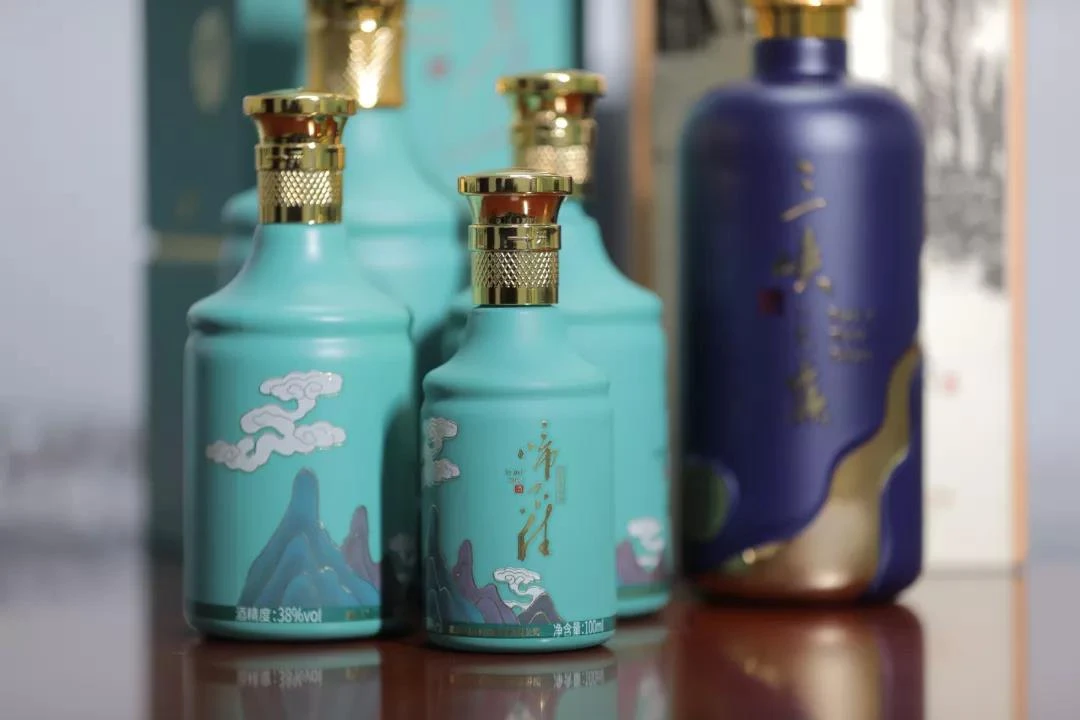
A Bottle of Poetry Wine: Peak of the Three Gorges
Cellaring the unique aroma of the Chinese Poetry City.
The pinnacle of poetry and wine converges at the Three Gorges. When the Chinese Poetry City meets Chinese poetry and wine, one should experience the beauty of Fengjie in Li Bai's poems, and even more so, savor the beauty of Fengjie in the Peak of the Three Gorges wine. Peak of the Three Gorges: cellaring the unique aroma of the Chinese Poetry City.
Poetry and wine merge into one; the spirit of poetry imbues the brand with deeper cultural significance.
Shape – Bottle
Design concept: river water.
The Yangtze River winds through the Three Gorges,
creating an ink-wash painting of the Three Gorges with deliberate blank spaces.
Shape – Box
Adopts a handmade scroll box,
outlining a painting of brewing wine amid the Three Gorges landscape.
Fine brushstrokes meticulously display how good mountains and waters brew fine wine.
The beauty of the Three Gorges is fully captured within.
Chinese Poetry and Wine
Li Bai is the Immortal of Poetry, also the Immortal of Wine,
the best representative of the spirit of poetry and wine.
Celebrate youth with poetry and wine, while time still allows,
with heart full of zest, appreciate this life.
Go do what you want to do, meet whom you want to see,
enjoy the joys and sorrows of life,
so that in the long river of time,
you can turn the present drudgery into poetry and distant horizons.


