How to Understand the Meaning of Travel?
The meaning of travel, in my view, has the following four aspects:
I. Fulfilling Aesthetic Needs
1. The Definition of Aesthetics and Maslow's Aesthetic Needs
2. Elements of Aesthetics
3. How Natural Scenery Inspires Aesthetic Appreciation
II. Gaining Experiences, Enriching Life
1. Joining Local Activities
2. Taking Photos with Handsome Men and Beautiful Women
3. Documenting Local Life at Travel Destinations
4. Visiting Classmates and Friends
III. Broadening Horizons, Elevating Perspective
IV. Healing the Mind and Spirit
I. Fulfilling Aesthetic Needs
1. The Definition of Aesthetics and Maslow's Aesthetic Needs
The first impulse to travel often goes like this: "Wow, this place is so beautiful, I must go!"
This is the aesthetic need, a spiritual trait of the highest life form on Earth.
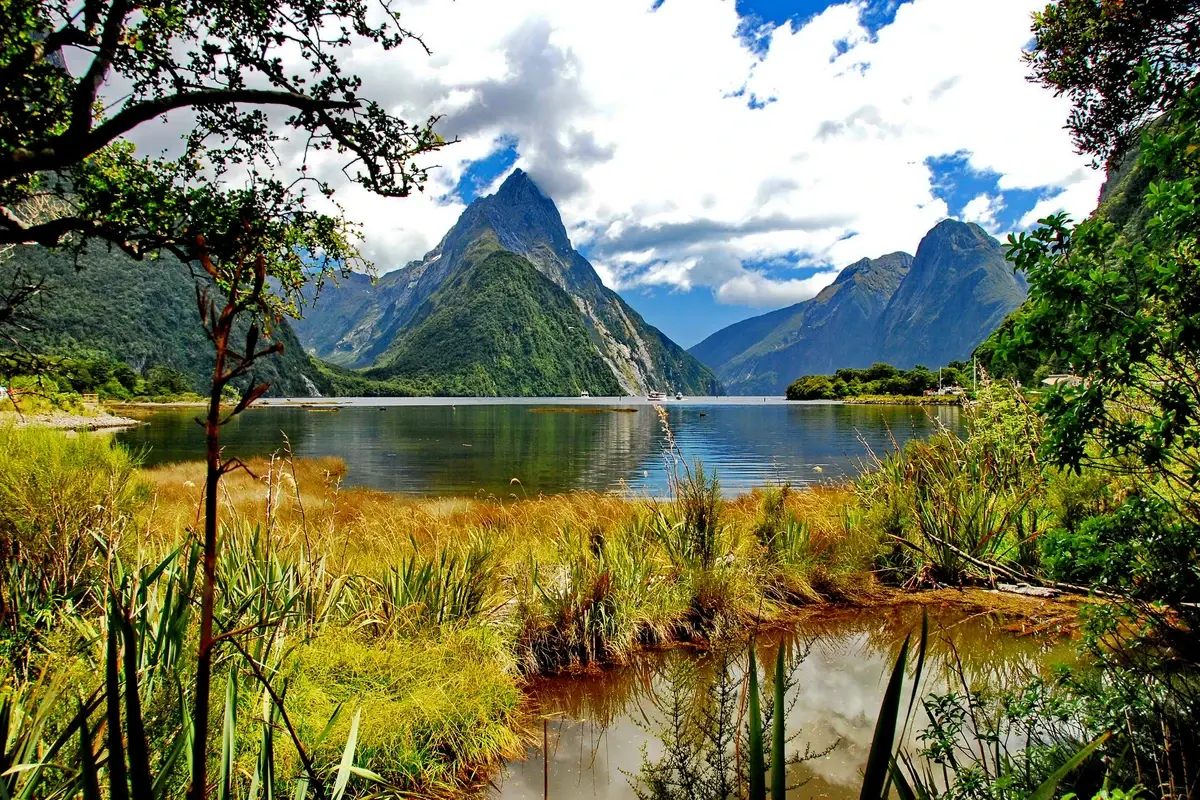
Milford Sound, Spring Festival 2012, photographed in New Zealand's South Island.
Aesthetics is an inner feeling, a perception of things in the process of mental activity, a spiritual activity. Aesthetics is the self-affirmation of the autonomous consciousness and spiritual will that 'being human' can possess. The root of aesthetics lies in the human instinct for self-affirmation. The underlying joy of aesthetics comes from self-appreciation of one's own understanding and sensibility. The core goal of aesthetics is to please oneself.
Aesthetic need is one level in Maslow's hierarchy, situated between esteem needs and self-actualization needs.
Maslow's hierarchy of needs, from low to high, is divided into physiological needs, safety needs, social needs, esteem needs, and self-actualization needs.
From this, it can be seen that aesthetic need is a high-level human need. If you love traveling, congratulations, you have entered the realm of high-level human needs.
Maslow listed four types of aesthetic needs: symmetry, appearance, balance, and orderliness.
Moscow State University Main Building:
September 2008, photographed at Moscow State University.
Arch of Caracalla (Callacalla):
June 2014, photographed at the ancient Roman ruins of Djemila, Algeria.
Chatsworth House:
National Day 2018, photographed in the UK.
November 2013, photographed in Dubai.
November 2013, photographed at the Sheikh Zayed Grand Mosque, Abu Dhabi.
"Tilted building" at MIT campus, anti-balance concept:
National Day 2017, photographed at MIT, Boston.
Pattern formed by a crowd, orderly:
June 2013, photographed at Corpus Christi festival in São Paulo, Brazil.
June 2013, photographed at Corpus Christi festival in São Paulo, Brazil.
Corpus Christi is a Catholic feast honoring the "Body of Jesus Christ." Catholics believe that after consecration, the bread and wine, while remaining unchanged in visible material properties, have mysteriously become the actual body and blood of Jesus in substance and form. Worshipers hold candles or colored flags and flowers, sing hymns or recite scriptures, and parade around the church.
The feast originated in some dioceses of Belgium in the 13th century, and later spread to Catholic churches worldwide.
2. Elements of Aesthetics
The elements of aesthetics include the natural attributes of things (such as points, lines, surfaces, shapes, colors, light and shadow, texture, volume, sound, etc.) and their combination patterns (such as arrangement, combination, configuration, rhythm, cadence, trend, layering, etc.).
[Natural Attributes]:
Spring Festival 2010, photographed in Palawan, Philippines.
Scenery composed of dot-like elements (internet image).
December 2011, photographed in Portofino, Italy.
Lines play a strong role in guiding, dividing, creating variety, beautifying, etc., in aesthetic appreciation.
A winding scenic path extending into the distance gives you a sense of space and imagination:
National Day 2016, photographed at Yangmaiyong Sacred Mountain in Yading, Sichuan.
Winding river, August 2019, photographed in Key West, Miami.
Winding road, National Day 2016, photographed in Litang, Sichuan.
Winding road, National Day 2019, photographed in Iceland.
Lines in the world of ice and snow are always so simple and elegant:
Spring Festival 2017, photographed in Austria.
Spring Festival 2017, photographed in Austria.
Surfaces formed by mountains, lawns, and rocks:
National Day 2019, photographed in Iceland.
National Day 2019, photographed in Iceland.
City sculpture – Spider:
National Day 2017, photographed in Ottawa, Canada.
November 2013, photographed in Dubai.
Stonehenge in the UK at dusk:
National Day 2018, photographed at Stonehenge, UK.
Autumn colors in Canada:
National Day 2017, photographed at Algonquin Provincial Park, Canada.
Red Land in Dongchuan:
Spring Festival 2013, photographed at Dongchuan Red Land, Yunnan.
Spring Festival 2013, photographed at Luoping Flower Sea, Yunnan.
Spring Festival 2013, photographed at Yuanyang Rice Terraces, Yunnan.
September 2014, photographed at Wagah Border, India-Pakistan.
Spring Festival 2013, photographed at Yuanyang Rice Terraces, Yunnan.
Light band formed by a road. Spring Festival 2013, photographed at Dongchuan Red Land, Yunnan.
Spring Festival 2017, photographed in Ramsau, Germany.
Texture (detail beauty):
Interior decoration of Sheikh Zayed Grand Mosque, exquisite design and craftsmanship:
November 2013, photographed in Abu Dhabi.
[Combination Patterns]:
Arrangement, combination, configuration:
Sugarloaf Mountain: The main body of Sugarloaf, the background mountains, the sea, the curved coastline, yachts, and buildings – all these elements are organically combined, arranged, and configured to showcase the vibrancy of Rio de Janeiro:
June 2014, photographed in Rio de Janeiro, Brazil.
Twelve Apostles on the Great Ocean Road in Australia, twelve cliff stacks standing by the sea in a scattered yet orderly manner, making it a must-visit attraction in Australia:
National Day 2014, photographed at the Twelve Apostles, Australia.
Grand mountains, cottages, forests, and roads configured together exude a sense of tranquility and beauty:
Spring Festival 2017, photographed in Austria.
Rhythm, cadence, trend:
Rhythm formed by mountain contours:
December 2011, photographed in Bolzano, Italy.
Trend line of mountains. December 2014, photographed at Cingjing Farm, Taiwan.
The trend of mountains echoes the lines of the road:
National Day 2019, photographed in Iceland.
Layering formed by colors:
January 2016, photographed at OCT East, Shenzhen.
Layering formed by mountains:
January 2016, photographed at OCT East, Shenzhen.
3. How Natural Scenery Inspires Aesthetic Appreciation
Natural scenery is the mainstay of travel.
Natural scenery consists of elements of the natural environment, such as landforms, water bodies, climate, flora and fauna, and human activities. It is often called the primary environment for travel.
National Day 2019, photographed at Fjaðrárgljúfur Canyon, Iceland.
National Day 2019, photographed in Iceland.
National Day 2019, photographed in Iceland.
Spring Festival 2012, photographed at Pancake Rocks, New Zealand.
National Day 2012, photographed in the Galápagos Islands.
National Day 2012, photographed in the Galápagos Islands.
National Day 2012, photographed in the Galápagos Islands.
National Day 2019, photographed in Iceland.
Unique rock formations:
National Day 2019, photographed in Iceland.
June 2014, photographed in Bejaia, Algeria.
National Day 2019, photographed in Iceland.
National Day 2019, photographed in Iceland.
National Day 2019, photographed in Iceland.
National Day 2019, photographed in Iceland.
Perfect mirror reflection, Spring Festival 2010, photographed at Calauit Island, Palawan, Philippines.
Spring Festival 2010, photographed in Palawan, Philippines.
Spring Festival 2010, photographed in Palawan, Philippines.
Spring Festival 2010, photographed in Palawan, Philippines.
Great Barrier Reef, Australia:
Spring Festival 2014, photographed at the Great Barrier Reef, Australia.
Spring Festival 2014, photographed at Whitehaven Beach, Great Barrier Reef, Australia.
Animals can bring life, vitality, movement, and liveliness to a static image, making them an important element in travel aesthetics.
For example, in the picture below, without the horse, the scene would be much less impressive:
Spring Festival 2009, photographed at Napa Hai, Diqing, Yunnan.
The birds in this picture add a sense of liveliness:
Spring Festival 2017, photographed in Geneva.
Observing wildlife, appreciating their freedom and grace in a natural state:
Encounter with wild Asian pygmy elephants. Spring Festival 2011, photographed at Kinabatangan River, Malaysia.
About 5 meters from an elephant. Spring Festival 2011, photographed at Kinabatangan River, Malaysia.
A hornbill perched on a tree just outside the hotel room. Spring Festival 2011, photographed in Sandakan, Malaysia.
Proboscis monkey. Spring Festival 2011, photographed in Sandakan, Malaysia.
Spring Festival 2010, photographed in Palawan, Philippines.
Spring Festival 2010, photographed in Palawan, Philippines.
National Day 2012, photographed in Guayaquil, Ecuador.
National Day 2012, photographed in Guayaquil, Ecuador.
National Day 2012, photographed in Guayaquil, Ecuador.
Virgin forest. Spring Festival 2012, photographed in New Zealand.
Rainforest. National Day 2009, photographed at Taman Negara National Park, Malaysia.
Rainforest. National Day 2009, photographed at Taman Negara National Park, Malaysia.
Canopy walkway. National Day 2009, photographed at Taman Negara National Park, Malaysia.
Humans love themselves the most, so you'll find that in the wilderness, a distant hut, a church, a patch of farmland, a herd of livestock, a waterwheel, a faint road, smoke from cooking fires, etc., all add beauty to the picture.
Traces of ancient human activity inspire travelers' nostalgia and reflection:
April 2018, photographed at Machu Picchu Inca ruins, Peru.
Distant houses become the focal point of the picture:
National Day 2019, photographed in Norway.
A pointed church breaks the monotony of the scene:
December 2011, photographed in Bolzano, Italy.
A distant church on the moor reveals human presence:
National Day 2019, photographed in Iceland.
Distant cottages evoke imagination:
Spring Festival 2017, photographed in Slovenia.
It is these elements – landforms, water bodies, climate, flora and fauna, and human activities – that inspire people's aesthetic appreciation of natural scenery. Interestingly, why can these elements inspire aesthetic consciousness?
Personally, I think this is mainly related to human survival and evolution. Throughout the long process of survival and evolution, humans gradually recognized, identified, organized, and refined elements suitable for survival, and then stored and memorized them into the depths of our genes, forming various composite images that become fixed as visual thinking or memory banks.
When external images resemble our internal visual thinking, they trigger resonance and empathy, generating joy and elevating it to a sense of beauty.
However, some might argue that certain scenes, such as volcanic landscapes or deserts, lack vitality and are not suitable for human survival, yet they can still evoke awe and even beauty.
My personal understanding is that in such cases, people are more likely marveling at the power of nature rather than experiencing resonance with their internal memory banks.
Travel satisfies your aesthetic needs through this complex process.
Travel brings you aesthetic satisfaction, making you young, healthy, energetic, and joyful.
Start traveling and please yourself!
The world never lacks beauty; it just quietly awaits your discerning eyes.
II. Gaining Experiences, Enriching Life
Beyond aesthetics, another indispensable meaning of travel is "gaining experiences, enriching life."
This level of travel meaning goes beyond the natural attributes of things to focus on and experience beauty in human intelligence, culture, morality, truth, and life. This is perception and activity at the ideological level.
Someone once said: "Life is extended through experience."
When you travel, you'll find that time passes slowly. Just one day away feels like a long time, whereas a holiday at home seems to end in a flash.
This is because our brain deletes repetitive memories. Therefore, time at home passes quickly, as most memories are old ones. When you're out, everything is a fresh memory that needs to be recorded one by one in the brain, naturally making time seem slow. This slowness enriches your life!
Travel increases your experiences and naturally extends your life.
Want a long life? Start traveling!
1. Joining Local Activities
During travel, joining local activities provides rare and valuable experiences.
Spring Festival 2017, a 7-country road trip in Europe. On the way to Lucerne, passing through this small town, we encountered a parade celebrating with drums and cheerful music. We joined in and had a great time:
Spring Festival 2017, 7-country European road trip.
The team gave me one of their badges.
May 2013, singing together in São Paulo, Brazil.
Joining street dance. May 2013, photographed in São Paulo, Brazil.
Attending a local wedding in Pakistan:
September 2014, photographed in Lahore, Pakistan.
September 2014, photographed in Lahore, Pakistan.
At the wedding, we wore local costumes and even went on stage to perform a song:
September 2014, Lahore, Pakistan.
In Quito, Ecuador, participating in a Catholic procession commemorating Jesus' departure to the desert:
March 2018, photographed in Quito, Ecuador.
Visiting the Mitad del Mundo (Equator) monument:
The yellow line in the picture is the Equator. Standing here, you can straddle both the Northern and Southern Hemispheres. Pretty cool, right?
March 2018, Quito, Ecuador.
Quito is the capital of the small South American country Ecuador. Since the Equator passes through the city, it is also known as the "Path of the Sun" – the place where the sun passes as it moves between the hemispheres.
When visiting Ecuador, don't miss the Equator Monument and the fascinating "Solar Museum" next to it.
Experiencing indigenous tribes:
National Day 2012, joining a gathering with a Panamanian indigenous tribe.
National Day 2009, visiting the Ashlee Village indigenous tribe in Malaysia.
National Day 2009, visiting the Ashlee Village indigenous tribe in Malaysia.
Experiencing the hunting methods of an indigenous tribe:
National Day 2009, visiting the Ashlee Village indigenous tribe in Malaysia.
Watching the flag-lowering ceremony at the India-Pakistan border:
September 2014, photographed at Wagah Border, India-Pakistan.
September 2014, photographed at Wagah Border, India-Pakistan.
At Wagah, since the partition of India and Pakistan, the border forces at the Wagah checkpoint have engaged in a daily competitive flag-lowering ceremony at dawn and dusk. Soldiers from both sides try to make their footsteps louder than the other's by lifting their feet as high as possible and stomping hard. The loud clicking of boots showcases their nation's military pride. The headgear of the Indian and Pakistani soldiers, decorated like a cockscomb, makes them look like two roosters confronting each other. Finally, in a tense atmosphere, the soldiers shake hands, quickly close the border gates, and lower their flags. This unique spectacle draws tourists from all over the world.
Observing a ship passing through the Panama Canal. National Day 2012, photographed in Panama.
Enjoying a symphony concert at the Musikverein in Vienna. Spring Festival 2017, Vienna.
Experiencing Muslim religious activities. August 2011, photographed in Yinchuan.
National Day 2012, flying from Mexico City to Guadalajara, I went to the wrong airport. This kind lady, seeing I didn't understand Spanish, personally guided me to the correct airport. Extremely grateful!
National Day 2012, photo taken at Mexico City airport.
2. Taking Photos with Handsome Men and Beautiful Women
While traveling, don't forget to take photos with handsome men and beautiful women:
National Day 2019, photo in front of Hamlet's Castle (Kronborg Castle), Denmark.
National Day 2012, photo on the streets of Mexico City.
May 2018, photo with handsome men in Isfahan, Iran.
May 2018, photo in Isfahan, Iran.
May 2018, photo in Isfahan, Iran.
June 2014, during the World Cup, with fans at Algiers Airport.
April 2013, photo with celebrating crowds on the streets of São Paulo, Brazil.
March 2007, photo with soldiers at the foot of the Eiffel Tower in Paris.
March 2007, photo with handsome men on the Champs-Élysées in Paris.
3. Documenting Local Life at Travel Destinations
April 2013, photographed in São Paulo, Brazil.
December 2011, photographed in Genoa, Italy.
December 2011, photographed in Genoa, Italy.
Local market. September 2014, photographed in Lahore, Pakistan.
Local market. National Day 2012, photographed in Mexico City.
Local market. Spring Festival 2016, photographed in Chiang Mai, Thailand.
Local market. Spring Festival 2016, photographed in Chiang Mai, Thailand.
Shoe shining service. National Day 2012, photographed in Guadalajara, Mexico.
Street Indian dance. National Day 2012, photographed in Mexico.
Street band. National Day 2012, photographed in Bogotá, Colombia.
Rich Inca atmosphere:
September 2012, photographed in Cuenca, Ecuador.
September 2012, photographed in Cuenca, Ecuador.
September 2012, photographed in Cuenca, Ecuador.
September 2012, photographed in Cuenca, Ecuador.
September 2012, photographed in Cuenca, Ecuador.
April 2018, photographed in Cusco, Peru.
4. Visiting Classmates and Friends
During travel, visiting classmates and friends is a very enjoyable activity. Besides reconnecting, you can also learn detailed information about local life, such as prices, housing prices, wages, education, entertainment, customs, etc.
Due to privacy concerns, I won't upload photos of people.
Paper pot Japanese fugu (pufferfish). National Day 2017, photographed in Tokyo.
Mexican grilled meat ingredients, shown to guests first. National Day 2012, photographed in Mexico City.
After grilling, it's a generous portion. National Day 2012, photographed in Mexico City.
Mexicans like to add a little salt to the rim of their glasses when drinking tequila and beer to improve the taste:
National Day 2012, photographed in Mexico City.
Vietnamese meal. July 2019, photographed in Hanoi, Vietnam.
Peruvian specialty: Guinea pig (Cuy), as shown below. In China, it's a pet!
Cooked guinea pig: tender meat, crispy skin, well-seasoned.
March 2018, photographed in Cusco, Peru.
During the trip, cooking fried rice at a roadside stall:
June 2014, photographed in Bordj Bou Arreridj, Algeria.
Shopping at outlet malls is an important activity for many Chinese abroad. From luxury brands to clearance items, they carry away big and small bags, sometimes emptying entire shelves. The reason is simple: it's cheap.
Popular shopping items: bags, clothing, accessories, cosmetics, health supplements, etc.
In addition, local specialties or souvenirs are also worth your attention.
Cusco, Peru's specialty: alpaca clothing. The styles and textures are excellent, and the prices are reasonable. There are many alpaca clothing stores:
March 2018, photographed in Cusco, Peru.
March 2018, photographed in Cusco, Peru.
Alpaca scarf. March 2018, photographed in Cusco, Peru.
Pakistani salt lamp. September 2014, photographed in Pakistan.
Algerian rose stone. June 2014, photographed in Algeria.
Cuenca handmade craft painting. March 2018, photographed in Ecuador.
Dubai personalized sand bottle. November 2013, photographed in Dubai.
Painting: Egyptian Story.
Painting: Arabian Style.
III. Broadening Horizons, Elevating Perspective
This level of travel's meaning is actually a natural outcome of the first two meanings.
When a person's aesthetic needs on a spiritual level are satisfied, and they have gained sufficient understanding of local and international customs, social concepts, social forms, and social conventions, they will increase their understanding, respect, and friendliness toward nature, the world, countries, and races, facing the world with a more peaceful and inclusive attitude.
Only by going out do you realize how big the world is and how wonderful it is. Only by going out do you truly discover what you want and who you really are.
Travel makes you grow.
Reach a higher level. Spring Festival 2012, photographed at Mount Cook, New Zealand.
Perspective: "When you stand on top of a mountain, you see all the smaller mountains below." Spring Festival 2015, photographed in Zhangjiajie.
IV. Healing the Mind and Spirit
In modern society, people are busy and rushing, under constant pressure and pain, living monotonous lives.
According to American psychologist Nandi Nelson, on average, a person spends three-tenths of their life in negative emotional states. If these emotions are not properly channeled, they accumulate.
When any aspect of body, mind, or spirit is unbalanced, it affects the other two. For example, sudden physical illnesses, extreme emotional fluctuations, or personality abnormalities may occur.
If not released or healed through appropriate methods in time, it can lead to immediate danger or long-term hidden problems.
Behavioral science believes that emotions are not purely psychological activities; they eventually translate into actions. For example, when upset, you might throw things, slam doors, curse, or sigh.
To change emotions, you don't rely on rational reasoning or logic told to yourself, but on action. Behavioral science holds that the best way to replace old behaviors is to introduce new actions, such as exercising, shopping, meeting friends, or, of course, traveling. If a long trip is not possible, a one-night vacation is also a good choice.
Travel and vacations present completely different, comfortable, and beautiful environments that stimulate your cerebral cortex, generate excitement, and thus dilute or forget negative emotions or memories, achieving the purpose of healing the mind and spirit.
Would a small villa with a private swimming pool heal your emotions?


