Lingnan Nostalgia: Savoring Delicacies and Sea Views, Deeply Experiencing the Old Days Most Familiar to Cantonese People
The opening ceremony narration of the Guangzhou Asian Games had this line: 'Lingnan culture is a blend of inland and maritime cultures. Next, we will face the ocean.' 'People on land initially have some fear when facing the ocean, but ultimately they must set sail.' This is the best footnote to Lingnan culture. 'Every corner of Lingnan has a story.' To truly understand Lingnan, start from the starting point of the 'Maritime Silk Road' and the influence of 'foreign' elements on Lingnan culture. Only then can you deeply feel the historical heritage of Lingnan's humanistic traditions, thus strengthening the pride and sense of responsibility of being a Lingnan native.
▲ Part 1: What to Do ▲
This trip is designed as a Guangzhou suburban getaway, lasting 2 days. It's a new trendy route perfect for family trips and couples. Ideal for a weekend break, with a drive of under 1.5 hours—short self-drive trips are very suitable. Details are in the travelogue below.
Seeking the Most Familiar Old Days of Lingnan People
'Rediscover Lingnan in a new way, explore Guangdong, and feel the city's bygone days.' Due to the pandemic, we recently heeded the call to stay at home, living a secluded life. Our family hadn't traveled together for a long time. Last weekend, I took my wife and son to Nansha and spent the most delightful two days at the Shi'ao Inn, full of Lingnan and Nanyang characteristics.
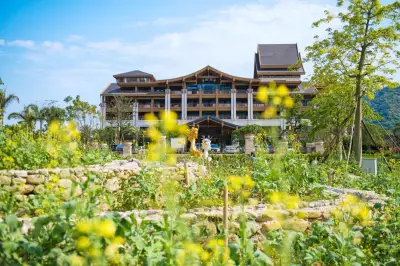
Seeking the most familiar old days of Lingnan people, let's talk about our experience at the Shi'ao Inn. Although it's called an 'inn,' the interior decoration is more exquisite than many five-star hotels. The moment you step into the lobby, you feel it's an authentic microcosm of Lingnan. The inn's design concept comes from nostalgia and retro charm of Lingnan's 'home culture,' fused with the passionate essence of Nanyang furniture. It's a relaxed teahouse hotel on the modern Maritime Silk Road, allowing guests to savor Lingnan and Nanyang flavors, and rediscover a sense of belonging to Lingnan culture within classic furnishings and decor.
The front desk design is very special: it looks like an old-fashioned herbal tea shop. In 1960s and 70s Hong Kong, herbal tea shops were not just places to drink tea, but also leisure spots where people could listen to music, watch TV together, go on dates, and socialize. At that time, records were unaffordable for ordinary people, and record players weren't common, but herbal tea shops had jukeboxes where you could play popular Elvis and Beatles songs. Young people would often put coins in to dedicate songs to friends. Many households still didn't have TVs, so herbal tea shops became communal TV-watching spots for neighbors. They'd buy a bowl of herbal tea and linger until nearly midnight when the TV station went off the air. The inn replicates this old Hong Kong herbal tea shop design, from leather sofa booths to a bar counter that combines reception and leisure functions, as if saying to guests: Please sit down, have a cup of tea, and chat. At check-in, my son asked the staff for a free '24-Flavors' herbal tea, then sat on a dark green high stool and slowly enjoyed his own nostalgic moment.
The inn displays many aged objects, most carefully chosen by the owner. Vases in the corridors, books in the rooms, and other ornaments all come from the owner's years of collecting. The tea sets, murals... every detail of the inn reveals the owner's refined taste and heartfelt warmth.
The Shi'ao Inn has a limited number of rooms, but each is distinctive. The room names are taken from places familiar to Guangzhou locals, like 'Nansha Bay,' 'Lychee Bay,' 'Shawan,' and 'Shiwan.' We stayed in the 'Shawan' themed sea-view suite, which is very spacious—over 100 square meters with two bathrooms. As the poem goes: 'Is Lingnan really not a good place? Yet I say, wherever the heart settles is home.' — Su Shi, Song Dynasty. Back in the room, you experience 'home culture': the dining table is especially large, the biggest I've seen in any hotel, seating ten easily.
To inherit Lingnan culture and experience a happy Guangdong, the first step is to resolve cultural identity, and then cultural inheritance follows. Only by understanding Lingnan culture can one identify with it, love it, and pass it on. As Lingnan natives, we should be aware of the glories around us—like the often-praised Xiguan mansions, arcade buildings, Cantonese opera, Shiwan ceramics... These shining pearls of Lingnan culture are inlaid in the long scroll of Chinese civilization. The unique handicrafts displayed in the suite allow us to appreciate the essence of different Lingnan historical cultures, such as Cantonese opera, martial arts, and ceramic arts.
Foshan ceramics hold a pivotal position in China's ceramic industry. As early as the Tang and Song dynasties, the Shiwan ceramic sculpture art at the Nanfeng Ancient Kiln had already taken shape, with a thousand-year history, and is a remarkable gem in Chinese art history. The sets of Foshan ceramic sculptures in the room are vividly shaped, with rich and unpretentious glazes.
The lotus-leaf-shaped Shiwan ceramic tea set in the living room is exquisite. Can you almost smell the fragrance of tea through the screen?
Through three rounds of evaluation in 2006, 2008, and 2011, Guangdong has 66 national intangible cultural heritage items, including Guangdong Lion Dance. The Southern Lion, also called the Guangdong Awakening Lion, is widespread in the Lingnan region. With Chinese migration, it has become one of the most widely practiced traditional Chinese sports worldwide. The Guangdong lion head pottery sculpture in the living room is carved lifelike and vividly.
Seeing this ceramic art, does it remind you of Su Shi's verse: 'Eating three hundred lychees a day, I'd gladly stay a Lingnan native'?
The celadon pottery lamp base was very popular during the Republic of China era. Many balcony railings of old villas in Dongshan were decorated with such celadon. The inn owner creatively transformed it into a lamp.
Handmade mahogany furniture carrying the scent of wood shavings, with exquisitely carved Lingnan-style patterns.
As the inn's design was inspired by Mr. Huo Zhenting's love for Lingnan and Nanyang cultures, the room features not only various Lingnan nostalgic touches but also plenty of Nanyang influences. The luggage rack is made of rattan, popular in Nanyang at the time.
Rattan cabinet and banknote box.
These distinctive designs aim to help the younger generation rediscover the still-radiant Lingnan sentiment, passing on outstanding culture while cherishing old times.
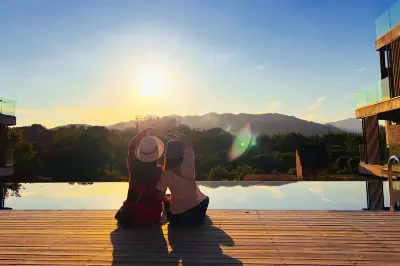
The bedroom view is superb. Open the window, and you see waves, with the Humen Bridge and Nansha Bay scenery outside. In the morning, hold a cup of tea, stand by the window, feel the sea breeze, and daydream while sipping. At night, gaze at the stars and pray to Mazu—absolutely wonderful!
Pretend to Be in Europe: Photo Spot Guide
The 'Pretend to Be in Europe' photo spot that recently blew up Guangzhou's social circles—do you know where it is? It's the European-style arcade buildings next to Nansha Bay, perfect for street scene shots. Compared to other trendy spots in Guangzhou, it's not too large, but with yachts docked at the marina and the European-style arcades onshore, it gives you the illusion of being in Europe, making it super easy to get great photos.
Photo Tips: Most popular: Walking along Shi'ao Commercial Street, the winding cruise terminal feels like strolling through European streets. Also, an evening stroll here is a good choice—the Nansha Bay night scene, under colorful bridge lights, becomes even more enchanting and romantic. Niche: At sunset, play with silhouette shots using Humen Bridge or the marina clubhouse as background. Must-do: Enjoy afternoon tea under the arcades, order some delicate pastries, blend into the European backdrop, and savor the food while feeling the sea breeze—superb. Afternoon tea is the most popular trendy activity at Shi'ao Tea Room, offering a unique dining experience not only to inn guests but also open to the public. Most atmospheric: Inside the marina is the Yangfan Lang Western Restaurant; its glasshouse and green lawn are excellent photo spots. Dining outdoors and snapping pictures is especially romantic. Trendiest: The stairs in front of Nansha Marina's Dabin Chuan Chinese Restaurant are also a hot photography location. Using the pale yellow castle-like architecture and rough stone bricks creates great shots. Most artistic: The marina and the inn's indoor halls feature various Lingnan-style gardens, and with the gorgeous 'Manchuria windows' and screens as backdrops, you can create the most artistic works.
The fountain incorporates marine elements like soldiers and sailboats braving the waves, representing the Lingnan people's adventurous and pioneering spirit.
Greenery and stone walls can also be a creative spot.
The pale yellow stone steps in front of the Dabin Chuan Chinese Restaurant also produce great photos.
When creating photos, you can use props like a hat or a small flower—great little tools for creativity.
The French-style glass doors at the marina are also nice check-in spots.
My top recommendation is the afternoon tea. On weekends, sit under the arcade, enjoy food with the sea breeze, and watch boats come and go—the most atmospheric experience.
Worth special mention is a hidden garden inside the Shi'ao Tea Room. It's a unique courtyard skylight typical of Lingnan architecture, connecting indoor and outdoor spaces with a blend of Chinese and Western design. Rarely seen in Guangzhou, it's quite interesting—go and explore it.
? Vintage Sailboat Sea Adventure Guide
The highlight of this Lingnan cultural trip is undoubtedly the vintage sailboat sea adventure. Most importantly, you get to see Nansha Bay's finest coastal scenery from the sea. The route passes by Humen Bridge, overlooking Hengdang Island, the cruise home port, Nansha Passenger Port, Nansha Grand Hotel, Nansha Tianhou Temple, Longxue Island Huangpu Shipyard, and more. Unlike ordinary sightseeing boats or speedboats that only chase speed, the twin-masted vintage sailboat is perfect for family or couple experiences.
The design of this vintage sailboat was inspired by a 'big-eyed chicken' sightseeing boat in Hong Kong's Victoria Harbour. I saw it once during a layover in Hong Kong on a trip to the USA; my son begged to ride it, but the timing didn't work. Now we finally got to experience it in Nansha, fulfilling his wish. The boat is named Coot 36, and its hull is painted with gunports, incorporating historical elements like the Humen Fort and the Qing Dynasty pirate Zhang Baozai. It features traditional Chinese red sails, rich in Chinese character. The design blends Chinese and Western styles, balancing modern and classic. It has an iron hull, modern navigation and electrical equipment, and can sail for days. Daily experience times vary, so check the schedule and weather beforehand. Nansha Marina is also a venue for international sailing races and a training base for the Nansha youth sailing team—the starting point for many sailboats. If time allows, you can book a sailing activity and feel the thrill of sea wind and waves splashing your face.
1. Vintage Sailboat Address and Transportation: The boarding pier is right next to Shi'ao Inn. When you reach the pier, you'll see a security booth. After ticket check, register your ID and phone info, then board. Transportation: Metro Line 4, Nansha Passenger Port Station Exit C, then take a taxi. Tips: ★ Price: 168 RMB/person (promotion: buy one get one free for experiences from April 4 to July 10, 2020) ★ Cruise duration: 45 minutes ★ Time slots: A: 10:00–10:45; B: 11:15–12:00; C: 14:00–14:45; D: 15:15–16:00; E: 16:30–17:15. ★ Passenger capacity: minimum 6 to sail, maximum 10 passengers. ★ Onboard services: 1. Scenic commentary; ★ Complimentary self-service drinks (soft drinks, coffee, tea) and snacks. 2. Boat Trip Precautions: Ladies, apply SPF 50+ sunscreen. Sunglasses, hat, and sun-protective clothing come in handy. 3. Anti-pitfall Guide: Self-driving? Nansha Marina offers free parking. Shi'ao Inn consumption also includes limited free parking (e.g., for accommodation or dining, you can park at Shi'ao Inn's parking lot).
Scenery of Humen Bridge and the marina basin.
Large offshore crane ships moored at the Pearl River estuary.
Fishing boats braving the wind and waves.
Sailboats at Nansha Marina.
Nansha Tianhou Temple in the distance.
Longxue Island Huangpu Shipyard.
Back at the pier, my son was very satisfied with the sea adventure.
? Marina | Filming Location of 'The Mermaid'
Nansha Marina was a filming location for Stephen Chow's movie 'The Mermaid.' In the film, the luxurious clubhouse where the real estate tycoons gather is Nansha Marina.
In the movie, the protagonist Deng Chao acquires the Qingluo Bay lot and invites the tycoons to celebrate with drinks.
In this scene, the tall doors, luxurious interiors, and the glimpse of yachts outside were all shot in the first-floor lobby of Nansha Marina.
Nansha Marina skillfully blends vintage castle styles of East and West, with exotic decor. The exhibition hall displays murals and photos from around the world, as well as various ancient sailboat models.
The ship models, scaled-down replicas, are each a unique art treasure.
Guangzhou, with its prime port location, has been a commercial hub since ancient times. Despite absorbing countless foreign cultures, the people of Guangzhou have stayed true to tradition. The hall's collection of 'sailing'-themed murals lets children learn and soak in Lingnan culture, truly experiencing the cultural texture of this land and deepening their understanding of Lingnan's historical heritage, thus strengthening their pride and sense of responsibility as Lingnan natives.
Nansha Bay Nightlife - Wanfu Hao
Adding a splash of color to Nansha's intoxicating nightlife is the Wanfu Hao Bar. It's converted from a timeworn twin-masted boat. Without lavish decorations, when the evening lights come on and blue neon wraps around the entire vessel, it's full of 'imprints of time.' Sitting on the deck, even without drinking, you'll feel a great ambiance.
Play Guide: The bow is planted with flowers, great for photos. The bar at the stern has an LCD TV—watch sports or sing karaoke. Many original old items are preserved onboard, evoking a strong sense of age. Look closely, and you'll discover many interesting things.
Wanfu Hao Bar WANF BAR Opening hours: 17:30–00:30 Address: No. 5 Gangqian Avenue South, Nansha District (entrance of Nansha Marina).
▲ Part 2: Food ▲
Shi'ao Tea Room is on the first floor of Shi'ao Inn, decorated in a retro Lingnan theme. Dining here feels like returning to an old-style teahouse. Everywhere, you see exquisite 'Manchuria windows' blending Chinese and Western styles; light filters through colorful glass, creating a gorgeous and elegant ambience. The use of rosewood and marble-inlaid tabletops, along with handmade Shiwan ceramic candle holders, restores the traditional Lingnan furniture to the greatest extent.
As the saying goes, 'Eat in Guangzhou.' When you think of Guangzhou cuisine, what comes to mind first? I'd say yum cha (tea drinking). For native Cantonese, tea drinking is not just a culinary delight but also a part of Lingnan culture. In the Canton region, it goes from morning tea, lunch tea, to afternoon tea and evening tea. Cantonese people are avid tea drinkers; locals often say 'Let's yum cha,' and Teochew people greet each other with 'Have you had tea yet?' 'Yum cha when free'—this phrase, frequently on Cantonese lips, is steeped in the warmth and understanding of daily life.
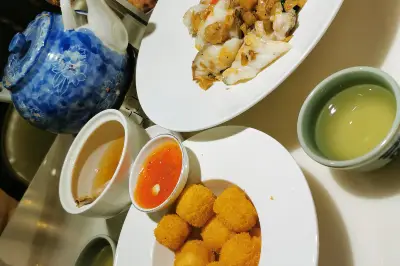
Portuguese egg tarts and swan-shaped durian pastries.
Chicken biscuits and durian pastries.
Our itinerary also included afternoon tea—sitting under the European-style arcade, savoring delicate pastries, enjoying the endless sea view in total relaxation, letting our thoughts drift in the gentle sea breeze.
Shi'ao Tea Room not only offers Chinese-style afternoon tea but also Cantonese specialties.
For dinner, we tried the stir-fried rice noodles with beef—fragrant, smooth, and delightfully chewy, the taste was first-rate.
Shi'ao Tea Room is open daily from 7:00 to 21:30.
The Dabin Chuan Restaurant is on the second floor of Nansha Marina, named after the famous Ming Dynasty warships. The story of Dabin Chuan begins with Zheng He's voyages to the Western Seas. Guangzhou was the starting point of the Maritime Silk Road and one of the ports from which Zheng He's fleet set sail. According to experts, before Zheng He's major expeditions to the Western Seas (the Indian Ocean coastal countries), he had already sailed to Siam (ancient Thailand) for a preliminary reconnaissance. There, he surveyed islands, hydrology, and local customs, preparing for future voyages. After returning, he launched a massive shipbuilding project for the grand voyages. The warship model displayed in the restaurant represents one of the 3,000 ships of the Ming navy under Zheng He's command.
The model next to Xuanxuan is one of those Ming Dynasty warships from Zheng He's fleet.
Sailboat paintings on the wall.
Interestingly, the restaurant's private rooms are named after ancient weapons.
As for the 'Dabin Chuan' that now returns with exotic flair—it has shed its former majesty and simply serves as a 'cook.' The head chef at Dabin Chuan Restaurant is Mr. Phim-in Thaew from Bangkok, Thailand. Most ingredients are sourced from Thailand, and he has adapted Thai cuisine to suit local tastes. For most Cantonese diners who aren't used to spicy food, the Thai dishes here are even more popular.
Tom Yum noodles: 'Tom Yum' means sour and spicy, and 'Kung' means shrimp, so it's a sour and spicy shrimp noodle soup. It's quite authentic, just like what you'd taste in Thailand. However, I (Lewan Jun) recommend the Tom Yum soup here even more.
The environment is pleasant; by the window, you can see the Pearl River outside.
The restaurant also has dancers from Thailand who perform for guests during meal times.
? Yangfan Lang Western Restaurant
If the Dabin Chuan Thai restaurant offers exotic flavors, then Yangfan Lang Western Restaurant is where we share romance and fine food.
The restaurant has a gorgeous setting, and with the sound of waves outside... it's absolutely a great place for family time on weekends.
The hamburger set is 68 RMB, with a large patty and complimentary pre-meal bread—a great deal.
Hainanese chicken rice set. The teapot contains 'kung fu soup'.
Address: Yangfan Lang Cafe is on the first floor of Nansha Marina.
▲ Part 3: Nearby Attractions ▲
? Dajiaoshan Seaside Park
How long has it been since you went out to enjoy nature? While you're masked and shuttling through busy streets, repeatedly commuting between home and work, there's a group of people strolling in Nansha, enjoying the waves, green grass, and sunsets...
This is hailed as Guangzhou's most beautiful coastal 'super embankment,' a 6-kilometer scenic coastal road. The first open section is on Nansha Bay Haibin Road, leading to Dajiaoshan Seaside Park and linking to Tianhou Temple Scenic Area. Walking along this richly landscaped super embankment, bathed in intoxicating floral scents and warm sunshine amid spring scenery, you unlock the freedom to wander at will. Sit on the shady lawn by the shore, gaze at distant Longxue Island, and trace the footprints of spring breeze in the gentle ripples.
As you walk along this embankment, you can hear the roar of the waves, watch fishermen cast nets and boats sail by, and feel the strong maritime atmosphere.
The weather was excellent, and many people were pitching tents and camping here.
Xuanxuan was watching others fly kites.
Dajiaoshan Seaside Park is at the foot of Dajiao Mountain in beautiful Nansha District, facing the sea and backed by hills, with lush greenery.
Why is it called Dajiao Mountain? Just look at this aerial photo from Lewan and you'll understand. On the left side of the land is the Pearl River estuary; on the land is Dajiao Mountain, and to its right is Nansha Tianhou Temple.
Dajiaoshan Seaside Park integrates wetland ecosystems. Once the coastal 'super embankment' is completed, it will surely be one of the most enjoyable free parks in Guangzhou.
Aerial photo of Dajiaoshan Seaside Park.
Address: Dajiaoshan Seaside Park and Tianhou Temple are adjacent and can be visited together. No entrance fee, with free parking inside.
▲ Part 4: About Accommodation ▲
Would you consider a hotel as a travel destination? I used to think not, but after an experience, I've realized that when you stumble upon a satisfying accommodation, you can just stop there and go nowhere else—the accommodation becomes the destination. As a travel enthusiast, Lewan stays in many good hotels each year, and the Shi'ao Inn's greatest surprise was the nostalgic moments within. Here, savor the thousand-year heritage of Lingnan culture, and experience the timeless Nanyang retro charm...
An old-fashioned flush toilet.
A large bathtub with brass fixtures and blue-and-white tiled floor.
A dressing table that gives off a scent of wood shavings.
An antique telephone that has long disappeared from the market.
We always yearn for life elsewhere, hence we travel constantly. Hotels are that 'elsewhere life.' Their beauty lies not only in scenery and design but in each unique lifestyle. Warmth like bygone days—the definition of happiness, memories filled with many images: a single person's looped melody.