Nansha, Guangzhou: Step into the 'Bird Paradise,' the Kidney of the Earth — Delicious Food, Fun, and Relaxation!
If you ask me which of all the provincial capitals I’ve visited in China is my favorite, without hesitation, it’s Guangzhou! For a foodie, Guangzhou is synonymous with a 'city of gastronomy.' After dozens of trips to Guangzhou, I’ve explored its streets and alleys, from street stalls to high-end hotels. This time, I’m back but exploring a new area — Nansha, Guangzhou. Many may not know this place; it sits at the mouth of the Pearl River, at the geographic center of the Guangdong-Hong Kong-Macao Greater Bay Area, and is Guangzhou’s only passage to the sea. It’s far from the city center; even from Guangzhou South Railway Station, it takes nearly two hours by subway. But because it’s removed from the hustle and bustle, it preserves a better environment and is known as the 'bird paradise' and the 'kidney of the earth.' It turns out there are plenty of worthwhile tourist spots hidden here.
[Travel Tips]
1. Transportation: Nansha is directly accessible by subway. Line 4 reaches Nansha Passenger Port Station, and there are also tourist shuttle buses. Of course, driving is the most convenient. From Guangzhou South Station, take Line 7 and transfer to Line 4; it’s about an hour and a half. From the airport via expressway, it’s also about an hour and a half. Actually, that’s not too long for Guangzhou, so you can come for a weekend getaway.
2. Attractions: Nansha is far from the city center, and its scenic spots cover large areas. I suggest setting aside at least half a day for each. Notable attractions include Nansha Tianhou Palace, Huangshanlu Forest Park, Nansha Wetland Park, Nansha Waterbird World Ecological Park, Million Sunflowers Garden, and Shijiuchong Fisherman's Wharf.
3. Accommodation: With tourism development in recent years, Nansha offers many hotels, serviced apartments, and B&Bs to choose from. During my stay, I tried three recommended hotels: Guge Yage Hotel (Guangzhou Nansha Bay), Nansha Garden Hotel, and Nansha Grand Hotel; details below.
4. Weather & Clothing: Guangzhou in summer is scorching hot, especially in Nansha near the sea. Sun protection is a top priority. For photos, wear bright colors; Nansha’s scenic areas are mostly natural, highlighting the beauty of nature.
[Itinerary]
Day 1 (7/23): Arrive on G1609 Xiamenbei–Guangzhounan at 14:18, take subway Line 7 then Line 4 to Nansha Passenger Port Station, check in at Guge Yage Hotel (Guangzhou Nansha Bay), dinner at the hotel’s 2nd-floor Chinese restaurant.
Day 2 (7/24): Nansha Tianhou Palace → Huangshanlu National Forest Park → lunch at Liugebao Farmhouse → check in at Nansha Garden Hotel → dinner at Mingliyuan Farmhouse
Day 3 (7/25): Nansha Wetland Park → Nansha Waterbird World Ecological Park → lunch at Danjiamei → attend Nansha Bay Area Cruise Music Festival → check in at Nansha Grand Hotel
Day 4 (7/26): Million Sunflowers Garden → Shijiuchong Fisherman's Wharf → lunch at Caiyunfei Flower Restaurant in the Hua Zhi Lian Hotel → return trip
This time I mainly came for the Nansha Bay Area Cruise Music Festival, but I didn’t expect to discover so many delicious and fun places in Nansha. Let me break it down for you.
[Cruise Meets Music: Igniting a Sleepless Night in Nansha Bay Area]
As the domestic situation improves, travel restrictions are gradually lifted, and inter-provincial travel is advancing in an orderly manner. During the scorching summer holiday, a beach getaway is unavoidable, and it’s even better with music. On July 25, 2020, as part of the 'Guangzhou Welcomes You' series of activities to revive cultural tourism and boost businesses, the 'Nansha Bay Area Cruise Music Festival' was held at the Guangzhou Nansha International Cruise Home Port. This was the first music festival in China themed around a cruise home port, and also Guangzhou’s first offline music festival since the resumption of work and production amid the pandemic.
The sea breeze, the leaping notes, the ecstatic scene—it lasted from 4 p.m. to 9 p.m. Besides music, there were trendy 'luxury car trunk markets,' where cars opened their trunks to form mini bazaars selling various trinkets and handmade goods, drawing many onlookers.
Beer, of course, was a must-have at the festival. Singing and drinking to the sea breeze, we swept away months of pent-up frustration. The music genres—rap, electronic, pop, punk, hip-hop—catered to young tastes. Heavy metal echoed in our ears, making us want to jump up.
As night fell, the festival hit its climax. The organizers invited Xu Zhenzhen, a powerhouse contestant from 'The Rap of China.' Xu Zhenzhen is a renowned local rapper from Guangzhou and one of the earliest hip-hop artists in Guangdong. When Xu Zhenzhen took the stage, the festival reached its peak. Glow sticks swayed to the rhythm, and fans, though masked, sang along loudly.
There were also over ten bands like Chiye Band, Cold Air Band, and domestic rising punk bands, enjoying the revelry with the audience.
'Guangzhou Welcomes You' — this music festival was not just a party but a symbol of cultural tourism revival. The combination of 'cruise home port + music' is a creative new idea from Nansha. The festival also showcased Nansha’s tourism resources, such as Tianhou Palace, Million Sunflowers Garden, Wetland Park, Waterbird World, and more—all worth visiting. Through this festival, the tourism offerings were presented to the public, further invigorating Nansha’s tourism market.
China’s first music festival themed on a cruise home port was held in Guangzhou Nansha, creating a new tourism concept that thrilled everyone!
[Fun in Nansha: Get Close to Nature]
I visited all the main attractions highlighted at the music festival: the culturally rich Tianhou Palace, the family-friendly Nansha Wetland Park and Waterbird World, the Instagram-worthy Million Sunflowers Garden, and the seafood haven Shijiuchong Fisherman's Wharf. It’s perfect for a spontaneous two- or three-day short trip.
※ Nansha Tianhou Palace: The Largest in Southeast Asia
Those living by the mountain thrive on the mountain, and those by the sea thrive on the sea. Since ancient times, coastal residents have mostly fished for a living. The ever-changing sea weather makes safe departure and return their greatest hope. This gave rise to many folk beliefs, and Mazu culture is one of them. Mazu is the sea goddess worshipped along China’s southeastern coast, also known as Tianfei, Tianhou, Heavenly Empress Mother, etc. She is revered by shipbuilders, seafarers, travelers, merchants, and fishermen throughout history.
There are countless temples dedicated to Mazu across China. On this trip to Nansha, I saw a grand Mazu temple called 'Nansha Tianhou Palace.' It stands by the Pearl River’s Lingdingyang estuary, on the southeastern foot of Dajiao Mountain, blending the style of Beijing’s Forbidden City with the grandeur of Nanjing’s Sun Yat-sen Mausoleum. Its scale is the largest of its kind in the world today, known as the 'Foremost Tianhou Palace under Heaven,' and is the biggest Mazu temple in Southeast Asia.
In front of the temple, you can see the vast blue sea and the Humen Bridge nearby. The Dajiao Mountain Fort, used to resist foreign enemies during the Opium Wars, is also here and can be visited together.
The Nansha Tianhou Palace was first built in the Ming Dynasty as a Tianfei Temple. It was restored during the Qing Dynasty’s Qianlong reign and renamed Yuanjun Ancient Temple for worshipping the Heavenly Empress. In 1994, Mr. Huo Yingdong proposed and donated to rebuild it. The grand completion ceremony was held on May 10, 1996 (the 23rd day of the third lunar month, Mazu’s birthday). The complex consists of the Tianhou Palace Plaza and the palace architectural group.
Entering the main gate, the most eye-catching landmark on the central axis is the 14.5-meter-tall statue of Mazu, facing the vast sea, made of 365 carefully carved granite stones, symbolizing that the Heavenly Empress protects the country and its people all 365 days of the year.
On the right side of the plaza, two stone tablets are engraved with 'An Overview of Nansha Tianhou Palace' and 'Miracles of the Heavenly Empress,' offering visitors a general understanding and clearer insight into the short life of the Heavenly Empress. Unlike other deities, she was a real historical figure. At the age of 15, she could heal people and often crossed the sea to Meizhou to rescue ships in distress. She died on the ninth day of the ninth lunar month in the fourth year of Yongxi of the Song Dynasty (987 AD) while helping at sea.
Behind the Mazu statue is the palace complex, divided into the offering hall, main hall, and resting hall, each enshrining different, transcendent statues of the Heavenly Empress. The golden glazed tile roofs, red brick walls, and Qing Dynasty palace-style architecture are solemn and majestic, exuding royal grace.
At the highest point of the Tianhou Palace stands the Nanling Pagoda, an eight-story, 45-meter-high structure. From the top, you can overlook the entire eastern development zone, a panoramic view of the Tianhou Palace, the Pearl River estuary, and Lingdingyang.
The Nansha Tianhou Palace also offers cultural creative souvenirs, such as this cute little parasol, bearing the auspicious message 'Mazu Blesses You.'
Currently, Nansha Tianhou Palace is temporarily closed, but you can visit the outer area and then stroll along the seaside, which also offers lovely views. Each year, the temple attracts not only worshippers but also many tourists for sightseeing. The ticket is only 20 yuan, making it a very worthwhile attraction.
※ Nansha Wetland Park: The Perfect Time for Lotus Viewing
For family trips in Guangzhou, many choose Chimelong Safari Park, but when it comes to a botanical paradise, you must mention Nansha Wetland Park in Nansha. It’s the largest wetland park in Guangzhou and one of the key stopovers for migratory birds, and a great place to see lotus flowers and leaves in summer.
The wetland park is divided into a boat tour area and a wilderness walking area. Though far from downtown, it still attracts many visitors, especially families with kids enjoying nature. June and July are the best months for lotus viewing.
Upon entering, we first took a boat ride, which lasted about 40 minutes. There are bicycles for rent to quickly reach the viewing areas. You can also walk. Since bicycles only circle the perimeter, taking a boat is the best way to explore the three main zones. Buying a combo ticket is cost-effective.
In the heat, the boat ride brought a cool breeze. Gliding through the mangroves, every step revealed a new view — truly delightful. Various birds could be seen perching or flying among the trees. My camera couldn’t capture the beauty, so I gave up taking photos and simply savored the serene peace.
The boat also passed through lotus ponds, weaving among lotus leaves and blooming flowers. I thought of that famous poem: 'The boundless lotus leaves stretch to the horizon, reflecting the sun’s rays, the lotus blooms look exceptionally red.'
After landing, we walked along the Banyan Avenue toward the Seaview Garden. The avenue is shaded by dense banyan branches, keeping it cool and relaxing even in summer. (Of course, you can take an electric cart or rent a bike for this stretch.)
At the end of Banyan Avenue is Lingdingyang, Guangzhou’s only sea outlet. Here, an observation building allows you to climb up and see the endless sea in the distance and a bird’s-eye view of the entire wetland park below.
From the top, looking far, the wetland park is divided into green islets by waterways, with waterbirds occasionally gliding overhead. In the distance lies Guangzhou’s sea gate; the boundless sea makes your heart feel wide open.
At this time, many visitors come for the lotus pond. Nansha Wetland has thousands of acres of lotus flowers, swaying in the wind among endless green leaves, dancing gracefully, forming an enchanting summer scene. The lingering fragrance brings joy and makes you reluctant to leave.
I never expected such beautiful scenery so far from the city center. After visiting the wetland park, the Waterbird World Ecological Park is right next door. You can buy a combo ticket online to explore both, ideally in one day.
※ Waterbird World: Enter the Bird Paradise and Admire Bamboo Art
Nansha Waterbird World Ecological Park is a great place for family interaction. The ribbon cranes at the entrance are the first photo spot for visitors. Designed by Hong Kong designer Mr. Mak, their lively shapes and eight vibrant colors resemble celestial cranes descending, full of childlike charm.
According to information, Nansha Waterbird World houses 48 species of nationally protected animals (Level I and II), integrating waterbird breeding, science education, birdwatching, and tours. Besides the birds, I was pleasantly surprised by the beauty of bamboo art. In 2018, the Guangzhou Nansha Southeast Asian Bamboo Culture Festival and the Guangdong-Hong Kong-Macao Greater Bay Area & ASEAN International University Construction Competition took place here. Teams from Thai, Indonesian, and Chinese architecture universities competed, using bamboo to build friendships. The colorful bamboo structures from the competition have been well preserved, adding a scenic touch.
After crossing Swan Lake and stepping onto Smooth Sailing Bridge, a waddling big fellow approached — a pelican! For city-raised kids like us, it was a novelty. As one of the world’s largest birds, with a graceful figure and a huge beak, pelicans are eye-catchers everywhere. This one, called Kangkang, was clearly a 'well-traveled' bird. Not only unafraid of people, it was overly enthusiastic, waddling over and opening its beak as if to swallow us, prompting excited shrieks and a flurry of photos.
This silly big bird seems to want to try anything, constantly opening its mouth, even lifting a skirt (apparently a male pelican, so understandable) or tasting your arm. But it’s really just a playful habit — it’s become the park’s internet sensation.
Past Smooth Sailing Bridge, on a grassy patch, two West African crowned cranes were strolling gracefully, almost in perfect sync — perhaps a couple? West African crowned cranes are Nigeria’s national bird and a Level II protected species in China. The tuft of golden filaments on their nape radiates out like a beautiful pom-pom, their most stunning feature. Their elegant, captivating postures and light dance steps make visitors linger.
In the water areas, you’ll mostly see swans: mute swans and black swans from the Netherlands, and black-necked swans from South America. They always move in pairs, models of love in the animal kingdom.
In a corner, I saw a peahen resting under a tree with several chicks; the chicks were fluffy like cute little chickens, adorably ugly.
The entire park is shaded by lush trees, with bamboo structures blended harmoniously, showcasing ecological beauty and making people ponder environmental issues.
The park is divided into six islands: Rainforest Island, Flower Tree Island, Palm Island, Maze Island, Treasure Island, and Thousand Crane Island. Many nationally protected animals are raised in free-range conditions. Here, you can enjoy nature’s fun, interact closely with birds, and appreciate bamboo art — a wonderful family-friendly spot.
Who knew that at Guangzhou’s southernmost tip lies a waterbird world where you can interact with ostriches, pelicans, and swans, and the lush greenery lifts your spirits.
※ Million Sunflowers Garden: An Instagram-Worthy Spot
There’s a flower that, no matter how hot the sun, always keeps its face toward it — hence the name 'sunflower.' The common yellow heads, full of vitality, brighten anyone’s mood. A vast field of sunflowers stirs the urge to dive in for photos. In Nansha, Guangzhou, there’s a massive Instagram hotspot with a million sunflowers — doesn’t that sound spectacular?
The Million Sunflowers Garden is China’s first park to treat sunflowers as ornamental plants and design a super-large themed garden. Located in Xinken Town, Nansha District, Guangzhou, it opened in April 2002 with a million sunflowers, making it the first ornamental sunflower park in China using only imported seeds (mostly from Japan).
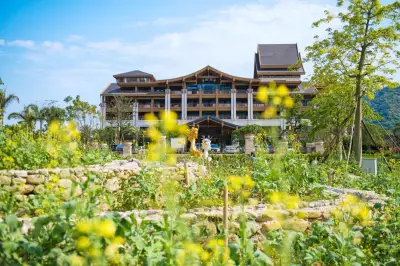
Visiting the Million Sunflowers Garden means entering a sea of flowers, with European-style castle hotels, Ferris wheels, and other Instagrammable spots — a photographer’s paradise. In the Million Sunflowers Garden, no matter when you come, you’ll see blooming sunflowers. The garden has introduced 18 ornamental sunflower varieties from Europe and Japan and selectively bred strains suitable for subtropical climates. Through genetic modification, they’ve developed red, purple, and other special colors with rich fragrances. With careful planting, the garden boasts 200,000 sunflowers blooming daily.
The backdrop of the East Sunflower area is the Hua Zhi Lian Hotel, whose colorful façade resembles a dreamy fairy-tale castle, attracting many photo-takers. There’s a dedicated path into the sunflower sea (but please don’t pick them). On a sunny day, any shot looks beautiful.
Besides the sunflower sea, there’s a large field of purple lavender, with rows of arched Roman-column trellises, finely carved from white jade, encircling the lavender — like being in Provence.
Apart from photo ops, it’s also a kids’ paradise. The park has a large water world, slides, balance beams, and other entertainment, giving children a fun place to cool off in summer.
Cartoon figures are everywhere, delighting both kids and adults, triggering lots of photos, full of childlike fun. You can step into the dreamy castle of Snow White and the Seven Dwarfs, or pose with romantic white swans.
For thrill-seekers, there’s the 'Step-by-Step Fright' transparent glass bridge, a top choice.
The Ferris wheel is a must for couples. Riding high above with your loved one, overlooking acres of flower fields, the romance factor soars. Plus, each cabin has air conditioning, so no worries about the summer heat — it’s also a great spot to relax and cool down.
After visiting the Million Sunflowers Garden, you can dine at the restaurant inside the Hua Zhi Lian Hotel and try the unique sunflower chicken. These chickens are free-range in the sunflower fields and fed on sunflower seeds, so the meat is rich in vitamin E. The chicken is served with a specific three-step ritual, explained on a wooden plaque at the table. More on the food later.
Since its opening, the garden has drawn many visitors. But be warned: there are mosquitoes, so bring repellent. The best photo spots are the East Sunflower Garden with the Hua Zhi Lian Hotel as the background and the lavender field with the Ferris wheel.
※ Shijiuchong Fisherman's Wharf: Guangzhou’s Southernmost Seafront
Where there’s a sea, there are fishing boats and piers. The most famous fishing port in Nansha is Shijiuchong, which now not only serves as a port but also as a scenic spot. On weekends, many city residents drive or take the subway here to enjoy the sea view and fresh seafood. Being at Guangzhou’s southern tip, it’s nicknamed Guangzhou’s 'South Pole.'
When we got off the car and saw this grand archway, it felt somewhat familiar. The full name of the scenic area is 'Nansha Shijiuchong Fisherman's Wharf.' Cars can drive directly into the area, with orderly parking spaces on both sides of the road. On the right after entering is the harbor, with many large and small fishing boats moored. Unlike typical beach areas, there’s no sandy beach here, only a stone embankment. The area from Yichong to Shijiuchong was created by land reclamation and embankment construction.
The seafood from Shijiuchong is mainly sold to Hong Kong and Macau, ensuring freshness. Besides eating fresh seafood, you can also take a boat out to sea.
After recent upgrades and development, the area now features a specialty seafood market, dried seafood shops, restaurants, a fruit market, and a local produce vegetable market, forming a comprehensive tourist spot combining shopping, dining, accommodation, and leisure. Walking in, you first see the dried seafood market with a dazzling array of products. The shop owners enthusiastically offer samples; if you can’t take fresh seafood home, you can buy preserved versions and take the flavors home.
Further inside is the fruit market. Nansha is known for its papaya, carambola, bananas, and sugarcane — you’ll find cheap and delicious seasonal fruits here.
The core attraction is the seafood market, the liveliest part. The crowds prove its popularity. Plump young crabs and huge, juicy oysters make your mouth water at just a glance.
Surprisingly, we even saw live silkworm pupae, a rather shocking 'exotic delicacy.' Apparently, demand is quite high, as they are believed to be highly nutritious. Dietary habits really do vary.
Purchased seafood can be cooked on the spot at nearby seafood stalls, similar to the Sanya seafood market model, convenient for visitors wanting to taste the freshness. Locals, however, mostly take it home to cook.
In the height of summer (June–July), it’s the perfect time to eat lotus root. Xinken lotus root is a Nansha specialty, nurtured by the unique geography. Most farmland in Nansha is typical 'wetland,' with deep alluvial silt soil rich in organic matter, especially potassium. Combined with the warm, humid climate, the lotus roots grown here are exceptional. Through long-term natural and human selection, a variety suited to the local ecosystem emerged.
Fish drying on the embankment, glistening in the sun, perfectly captures the fishing port’s charm.
Big and small fishing boats line the shore, and a slight sea breeze carries a faint fishy smell — perhaps that’s the scent of the 'sea'!
※ Huangshanlu Forest Park: Guangzhou’s Largest Free Forest Park
If you have time, you can also check out this largest free forest park in Guangzhou. We arrived close to noon, so we only had a brief visit, but the lush greenery and fresh air were striking.
Huangshanlu is named after its two main peaks, Mount Huang and Mount Lu. The highest peak is 295 meters above sea level, the tallest in southern Guangzhou, offering a panoramic view of Nansha. A companion brought a drone, and from the aerial perspective, we could see the full extent of Nansha. To the east, you can see the Humen Bridge and the Nansha Golf Course; to the northwest, the construction projects of the Jiaomen River city center start-up area.
The recommended route is to enter from the West Gate and exit from the East Gate. After exiting, you can visit Miaowang Village to experience local village life.
[Eat in Nansha: Savor the Charm of the City of Gastronomy]
Nansha sits at Guangzhou’s southernmost tip, with vast sandy lands, bright flowers, and rich waters. There’s Xinken lotus root, authentic farmhouse cuisine — Nansha’s food is simply sumptuous, offering different flavors from land to sea. On this Nansha trip, I tried four local specialty restaurants. Let’s see what we ate!
※ Liugebao Farmhouse: One Chicken, Three Ways and Creative Kale
Arriving in Nansha for the first time, after visiting Tianhou Palace, we came to this restaurant called Liugebao Farmhouse. The name is unique, and several dishes left a deep impression! Address: beside Yingdong Avenue, Dongjing Village Archway, Nansha District.
The style is simple, with a seafood tank at the entrance — Nansha is also a seafood-producing area. There are large private rooms, one accommodating 15 people.
'Yikou Ganxiang Huazhou Chicken' — the house specialty. Huazhou chicken is representative of Guangzhou’s 'fragrant oil chicken.' The so-called fragrant oil is a type of poached chicken, but its unique 'fragrant oil sauce' makes the meat exceptionally tender. This dish actually features one chicken prepared in multiple ways: the center part is chicken that has been coated in batter and fried, while the ring around it is the fragrant oil chicken steamed with ginger slices and fragrant oil. The chicken frame is stewed with bitter gourd to make a cooling soup (Lianggua Huangdou Chicken Bone Soup), perfect for summer.
Assorted braised platter — a must-try in Guangzhou. It includes goose gizzard, goose web, and pork belly. I loved the pork belly the most, with its layers of fat and lean meat, richly infused with braising sauce.
Secret recipe plateau rabbit — Cantonese eat everything, and rabbit is a delicacy. I particularly love the rabbit skin, chewy and elastic, packed with collagen.
Pan-fried 'One Night Stand' — actually yellow croaker. After a night of marination, it’s simply pan-fried, resulting in a crispy fish with a lightly salted flavor.
Golden fragrant trio — shrimp cake, cuttlefish cake, and fried milk. You can taste the natural flavors of the ingredients.
Dianbai Laofen — a staple from Maoming, Guangdong. The rice noodles are very QQ (chewy). The sauce is specially made with chive juice, but without a strong onion smell. A large plate was quickly finished, showing how popular it was.
Special stir-fried kale — stir-fried kale is ordinary, but here they do it uniquely: the stems are drizzled with hot oil, while the leaves are finely chopped and deep-fried, topped with dried shrimp, giving a seaweed-like texture.
Bone broth with lotus root — Cantonese love soup. The seasonal lotus root is stewed with pork ribs, creating a thick broth with a starchy, tender lotus root texture.
At this unassuming farmhouse eatery in Nansha, we experienced one chicken served three ways and kale turned into a creative dish — a truly unique culinary adventure.
※ Mingliyuan Farmhouse: A Time-Honored Nansha Pick for Fish
Coming to Guangzhou Nansha, I realized how vast Guangzhou is. Mingliyuan Farmhouse is a long-standing establishment with its own fish pond, so ordering fish here is definitely a safe bet.
Address: go straight at the entrance of Shengke Kindergarten under the Jinling South Road overpass, Dacun Village. We arrived late and didn’t explore much, but behind the restaurant is reportedly the fish pond. They promise a full refund if the fish has any muddy taste, showing complete confidence in their product. The dishes are farm-style, generous portions, and great value for money.
'Stirring Up Wind and Water Chicken' — the most impressive dish on the table. Served in a large bamboo winnowing tray, the chicken is shredded into thin strips and arranged to look whole, surrounded by seven side condiments. Before eating, the server mixes everything together. The chicken is tender, and eaten with the sides, it’s a refreshing summer dish.
Steamed mountain stream grass carp — the signature dish. The fish comes from the restaurant’s own pond; if there’s any muddy flavor, you get a full refund. You can choose the size and pay by weight. Steaming preserves the fish’s natural freshness, but grass carp has many small bones, so eat carefully.
'Wang Meitou' fish — also sold by weight. Coated in breadcrumbs and deep-fried until golden, it’s called 'golden fish.' This fish, more common in Chaoshan, basically has only one central bone, making it easy to eat. Beneath the crispy exterior, the white fish meat is tender — a must-order!
Chilled lychee bitter melon — a great summer appetizer. Bitter melon (liang gua) is cut into small pieces at the base, topped with bean sprouts and peanuts. The icy taste is especially cooling.
Lychee wood roasted goose — the roast goose is excellent, with plump meat. You can see its thickness from the side. The cooking is just right, with juices sealed inside; it’s perfect in color, aroma, and taste.
Soy sauce sea-flying duck — 'sea-flying duck' refers to free-range ducks raised naturally on flat land with lush grass, growing robust and agile. The meat is more nutritious and tastier. Here, it’s simply seared with oil and flavored with soy sauce, preserving the original taste.
'Laoqi Damo Fish' — at first, I thought it was king oyster mushroom, but a taste revealed it’s cuttlefish. It’s likely boiled briefly, sliced into strips, and mixed with onions, bell peppers, and a special sauce — overall refreshing and pleasant.
Lychee meat cuttlefish ink fried rice — another signature staple. The rice is black from cuttlefish ink, carrying a subtle cuttlefish aroma. The portion is quite generous.
The restaurant also has homemade lychee wine, which doesn’t taste very strong and has a fruity note. Paired with a table of delicious dishes, it washes away the day’s fatigue.
※ Danjiamei: Danjia Cuisine that Chen Xiaoqing Never Forgets
The Danjia people live by fishing, and no one knows seafood better than they do. This restaurant, 'Danjiamei,' cooks in the traditional Danjia way, respecting seasonal ingredients. Even Chen Xiaoqing, the director of 'A Bite of China,' can’t forget it, making it a must-visit for travelers to Huangsha.
There’s a huge parking lot out front — driving is best in Nansha. On the left inside, there’s a seafood area with prices clearly marked. The dining hall is huge, seating hundreds, and there are private rooms. Inside and out, it’s decorated in Danjia style: the ceiling resembles a fishing boat, and even the lamps reflect Danjia tradition.
Eating with the seasons: Danjiamei focuses on different dishes for different times. June–July is prime time for young crabs and sandworms.
Whole steamed young crabs (yan zai xie) — young crabs are unmated female crabs, with rich, creamy roe and sweet, plump meat. Simply steaming them is best.
Ma Jie fish roe and dried eel claypot rice — a signature staple. The roe and dried eel are steamed together, then mixed at the table, releasing an incredible aroma. Each spoonful of rice is infused with seafood essence; even the crispy crust is not to be missed.
Banana bud porridge — banana buds are the flower buds of bananas, a medicinal ingredient common in Nansha. Rich in protein and vitamins, it helps detoxify dampness and soothe the stomach. Cooking it into porridge yields a fragrant, slightly sweet dish. This bowl also contains salted pork bones, taro, and water chestnuts, topped with peanuts — very nutritious. My companions had several bowls.
Black bean sauce steamed panlong eel — thick eels are coiled on a lotus leaf and steamed with black bean sauce. At the table, the server uses scissors to cut the central bone. The eel meat is QQ and elastic, and the sauce is deeply flavorful.
Guo’s sandworm omelette — by the time it arrives, the sandworms are barely visible, mixed with eggs and fried into triangles. It’s tender and fragrant; sandworms are highly nutritious.
Bowl-steamed shrimp and crab paste — this is another sandworm preparation. The sandworms are turned into a savory paste, golden in color, with worm strips and paste intermingled. It likely also contains shrimp paste elements, resulting in a rich, smooth, and utterly delicious dish, packed with protein — a great tonic.
Danjia cuisine emphasizes natural freshness and original flavors, and at Danjiamei, you can taste these seasonal delicacies!
※ Caiyunfei Flower Restaurant: A Ritualistic Chicken Dining Experience
When visiting Million Sunflowers Garden, we had lunch at the Caiyunfei Restaurant on the second floor of the hotel, specializing in the unique sunflower chicken. Each private room at Caiyunfei has a different theme; for example, the cherry blossom room creates a dreamy pink and green ambiance.
Sunflower chicken, as the name suggests, is raised on sunflower seeds. The Million Sunflowers Garden is full of sunflowers, so these chickens roam the fields and eat sunflower seeds, giving the meat a distinct character. Eating sunflower chicken comes with a three-step ritual; the server brings a small plaque with the steps: first, drink lemon water (that’s why everyone had a glass of lemon water!), then eat a slice of cucumber or carrot, and finally, eat the chicken. This makes the chicken taste even more succulent, with juices bursting in your mouth. Sunflower chicken is also more nutritious, lower in fat, and high in vitamin E.
Guava stewed with sunflower chicken — in summer, guava lends a light sweetness to the soup, with all the chicken’s nutrients infused into the broth.
Salt-and-pepper fried chicken cartilage — crunchy texture with spicy salt flavor, perfect with rice. Every part of the sunflower chicken is worth trying; the chicken kidney is stir-fried with orchid buds.
When you visit Million Sunflowers Garden, don’t forget to try the sunflower chicken!
[Stay in Nansha: Both Business and Leisure]
Now, Nansha offers a wide range of accommodations: family-friendly leisure hotels, high-end resort hotels perfect for Instagram, and business-style apartments — all at various price points. And most hotels in Nansha can help plan your holiday itinerary, making it ideal for relaxation.
※ Guge Yage Hotel
On my first visit to Nansha, I opted for the Guge Yage Hotel for its convenient location and relatively new decor.
It’s just an 800-meter walk from Nansha Passenger Port Station Exit A. In the heat, I took a taxi for the starting fare. This is the first Yage Hotel opened by the Australian Yage Hotel Group in Guangzhou, positioned as a high-end business hotel. There’s a parking lot at the entrance, making parking easy.
I stayed in a 9th-floor room with a great view. The twin room had two 1.5-meter-wide beds. Upon entering, you first see the vanity area; the layout feels fresh and airy.
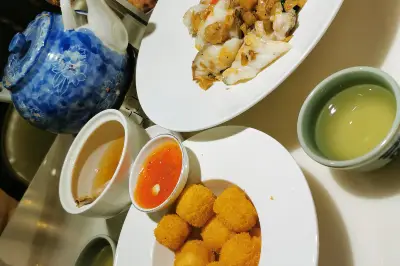
For dining, the buffet breakfast is on the second floor, from 7:00 to 9:30, with a decent spread. I particularly enjoyed the wontons. Dinner at the second-floor restaurant was good; I especially recommend the crystal chicken — tender and smooth, icy and perfect for summer.
※ Nansha Garden Hotel: A Design-Forward Instagram Hotspot
Checking into the Guangzhou Nansha Garden Hotel, I was amazed by its strong design sense. As the most luxurious hotel in Nansha, it has also created 12 Instagram-worthy spots.
Recommended photo locations:
Rainbow Lobby: When we entered at noon, we were stunned to see rainbow-colored spots on the lobby floor. Looking up, there’s a set of irregular transparent prisms. A total of 1,618 transparent prisms hang at varying heights across the seven-story atrium, refracting and reflecting incoming natural light into rainbow halos, materializing the echo of sunlight’s journey to earth — like a flowing light art space, breathtaking.
The front desk’s background wall relief uses irregular geometric surfaces with different textures and colors, doubly reflected by natural and built-in light to create a visual effect of flowing time.
Honeycomb ceiling: The ceiling features a honeycomb-shaped metal mesh, presenting varied textures and shadows, pleasing to the eye.
The lobby observation deck is also a fantastic spot for sunrise and sunset. No matter when you visit, it’s a great vantage point. You can read in the lobby bar while enjoying the outside view, or sip coffee on the terrace, soaking up nature.
The hotel has 365 panoramic rooms, each offering a different beautiful view. From a drone, the hotel’s overall shape resembles a butterfly. Rooms come with balconies, also a great vantage point; each room sees a curved section of the 'wings.' The sea-view rooms on the seaside overlook the vast Lingdingyang and the busy Humen Bridge nearby.
The interior design is minimalist and stylish, with no unnecessary frills, making everything clear. The large bathtub, scenic sofa, LCD TV, and desk are fully equipped, meeting various guest needs.
Bringing the rainbow indoors, the Nansha Garden Hotel is not just accommodation but a fantastic photo destination, with all facilities included — super enjoyable for a vacation.
※ Nansha Grand Hotel: A Classic Luxury Hotel
The Nansha Grand Hotel is arguably the oldest luxury hotel in the Nansha area, opened in 2005. Its most notable event: on November 10, 2012, Guo Jingjing and Huo Qigang held their grand mainland wedding here.
The hotel’s overall style is traditional Chinese, facing Lingdingyang and backed by Puzhou Mountain, with the Humen Bridge stretching before it. Even from your room, you can see a stunning scenic line.
It leans toward a business style. Rooms have large writing desks and two chairs, allowing two people to work simultaneously — a thoughtful touch.
The bathroom includes a bathtub, well-appointed.
If you have time, try the hotel’s dining. The hotel boasts Nansha’s premier all-sea-view restaurants, where you can savor fine cuisine while enjoying the blue sea and sky, fully experiencing the ultimate blend of Eastern and Western flavors.
Known as the 'bird paradise' and the kidney of the earth, Nansha, Guangzhou, offers the culturally rich Tianhou Palace, verdant wetland parks and waterbird worlds, and sumptuous cuisine from land to sea. The cruise music festival ignited the seaside summer night.
Come to Nansha — eat well, have fun, and be in good spirits!