A Date with Nansha: Scenery and Cuisine Await
Let me tell you about this trip. When Guangzhou comes to mind, young people think of the trendy Tianhe District, while those seeking authentic old Cantonese flavors think of Yuexiu District. Guangzhou is big with many districts, and there's one I hadn't been to before but fell in love with on my first visit — Nansha District. What's fun in Nansha? It's not just fun; there's also a lot of delicious food. In this travelogue, follow my steps to explore Nansha District.
Southeast Asia's Largest Mazu Temple
When it comes to Nansha Tianhou Temple, everyone knows it. It is the largest Mazu temple in Southeast Asia. Nansha Tianhou Temple was modeled after the Mazu ancestral temple in Meizhou, Putian, Fujian, covering 100 hectares. The overall buildings are in a Qing Dynasty palatial style, solemn and magnificent, with a distinctly imperial aura. Lush green trees surround the temple, giving a transcendent feeling once you step inside.
The palatial complex follows Qing-style mountain-side construction, with symmetrical layouts arranged at varying heights, evoking the style of Beijing's Forbidden City and the grandeur of Nanjing's Sun Yat-sen Mausoleum. On the rear hill stands the soaring Nanling Pagoda, truly spectacular. As you climb the broad entrance stone steps, the large inscription "Nansha Tianhou Temple" by Mr. Zhao Puchu on the archway shines brightly, along with the couplets.
The huge stone statue of Tianhou in the square is carved from 365 pieces of granite, holding a ruyi scepter, her gaze meeting the sea and sky as if watching over the nearby Lingdingyang Channel. It symbolizes the goddess protecting favorable weather and peace for the nation all 365 days of the year.
Nansha Tianhou Temple was originally built in the Ming Dynasty, first known as Tianfei Temple. It was renovated during the Qianlong reign of the Qing Dynasty and later named Yuanjun Ancient Temple for worshiping Empress Tianhou. The old temple could not escape the ravages of war, damaged during Japan's invasion in the 1940s. The current Tianhou Temple was rebuilt in 1995 through a donation by renowned Hong Kong entrepreneur Henry Fok.
When visiting the temple, besides paying respects, you can buy cultural creative items. There are cartoon Mazu umbrellas based on her image, as well as small sachets, scarves, and fine wine.
Largest Free Forest Park in Guangzhou
Huangshanlu Forest Park in Nansha District is Guangzhou's largest free-access forest park, located in the central urban area of Nansha, named after its Huangshan Main Peak and Lushan Main Peak. The park spans about 1,200 hectares, with the main peak at 295 meters — the highest point in southern Guangzhou — offering a panoramic view of Nansha.
The park includes a nature leisure walking area, forest oxygen bar health zone, cultural landscape viewing area, Baishui Lake fishing area, golf course, and forest adventure camping area. With a vegetation coverage rate of 99.9%, its mountains, forests, lakes, sea, and wetlands generate abundant negative oxygen ions. A netizen once launched a "Find Guangzhou's Best Air" poll on Weibo, and Huangshanlu Forest Park was voted first.
Within the park lies a natural reservoir — Danti Lake, which functions like a giant natural water purifier. Here you can sit back, fish, or take a family stroll after dinner. The park also has cherry blossoms. Every year from late February to early March, a romantic pink blossom avenue appears. Sadly, this time we missed the season, but I hope to come back and enjoy the cherry blossoms another year.
Guangzhou's Largest Wetland Park
If you ask what flower people love to admire in summer, the lotus is a must. Nansha Wetland Park is the perfect spot for summer lotus viewing. Since we're in Nansha, how could we miss the lotus flowers? Nansha Wetland Park, at Guangzhou's southernmost tip, is the largest wetland park in the city and an important stopover for migratory birds.
The wetland area has two main parts: a boat tour zone and a wild walking zone. You can take a cruise to see mangrove forests, reed marshes, lotus ponds, bird nests, and feeding areas, or explore by sightseeing car, bike, or on foot through the banyan-shaded greenways, seaside promenades, and wild walking areas. Here, you'll experience the mood of "winding reed beds, birds resting in mangroves, vast beds of beautiful lotus, people and birds joyfully roaming together."
The park hosts over 30,000 birds year-round; on a boat trip you can also see the egret roosting forests. From a distance, flocks of white egrets rest by the water, their graceful silhouettes skimming the surface. As the boat glides through the channels, egrets fly low over the water or circle in the air, displaying their elegant flight. It's often said that summer is the best time to visit Nansha Wetland Park, and that's absolutely right — you can admire both lotuses and egrets. A gentle summer breeze will leave you reluctant to leave.
A Fun-filled Waterbird World
Near Nansha Wetland Park, there is a fascinating Waterbird World, a new eco-themed park combining breeding, science education, viewing, and recreation of 48 species of nationally protected Class I and II animals. It includes six islet scenic spots: Rainforest Island, Flower Tree Island, Palm Island, Maze Island, Gold Silver Island, and Thousand Crane Islet.
Right at the entrance, we were attracted by a recent Southeast Asian art exhibition, as if transported to Southeast Asia, complete with Southeast Asian percussion music. The bamboo woven crafts, wood carvings, and distinctive Southeast Asian-style stone carvings made it feel like a time warp.
"Swan Lake" is at the main entrance. The swans, introduced from the Netherlands, are known as model couples in the animal kingdom — always in pairs, faithful for life — placing them among the top five of the "Top Ten Love Birds."
Leaving Swan Lake, you cross a "Plain Sailing Bridge" where you'll meet the Waterbird World's "popularity king" — Kang Kang, a pelican. He plays a "road bully" on the bridge, teasing visitors every day. He'll gently hold a visitor's arm in his big beak for a moment, or use his beak to lift young ladies' skirts — after all, Kang Kang is a young male. When interacting with pelicans, you can hold their beak and gently stroke their head; just never squat down when their beak is open to avoid getting poked in the eye.
Under the bridge is where pelicans hang out, and there's an exciting daily show of pelicans scrambling for small yellow fish.
The "Flower Tree Island bushes" in the transitional grassland between Flower Tree Island and Palm Island are home to West African crowned cranes. These are Nigeria's national bird and a Class II protected species in China. Their graceful, haunting postures and light dance steps make visitors linger.
"Only envy the mandarin ducks, not the immortals" comes true here. This adorable and love-devoted bird has been a favorite of Chinese literati since ancient times. In the Maze Island's Mandarin Duck Play Pool, there are many mandarin ducks, though I noticed one lone duck swimming sadly alone.
Nansha Waterbird World Ecological Park gives you the illusion of vacationing in Bali. The environment is delightful, with many Southeast Asian-style structures surrounded by greenery and hundreds of migratory birds to see. It's perfect for family fun. And for girls who love photos, this is a fantastic spot to get great shots everywhere.
China's First Sunflower-Themed Garden Park
Ladies who love flower-field portraits shouldn't miss a place in Nansha — Million Sunflower Garden. It's China's first sunflower-themed garden park, planted with one million sunflowers. Stepping into the golden sea of sunflowers feels like entering a fairy tale.
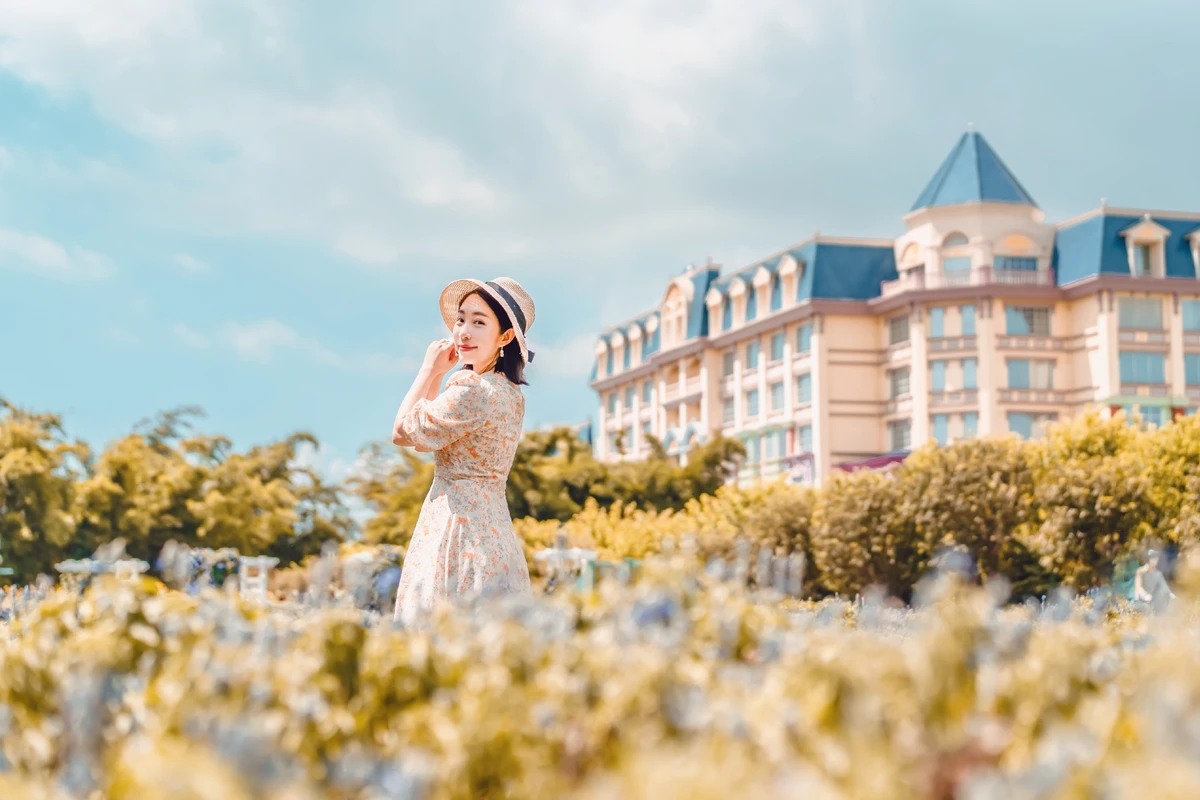
Beyond the enchanting sunflowers, the Lavender Love Garden of Eden is also intoxicating. Rows of arched Roman pillars and flower trellises, finely carved from white marble, curve around the lavender fields. It exudes a highly noble European palace atmosphere, with a French romantic flair — as if you're a royal relaxing carefree.
Guangzhou's Southernmost Tip
Where is Guangzhou's southernmost point? It's the Nineteenth Yong. Many outsiders misread it as "yǒng" but it's actually "chōng" — in Guangdong, river branches are often called "chōng".
The mighty Pearl River flows a thousand miles, creating sandy expanses at its southern outfall, forming vast sandy shoals. In the Zhiqing (sent-down youth) era, they reclaimed land and built embankments; to facilitate irrigation, water access, and transport, they left channels between each reclamation — from the First Yong all the way to the Nineteenth Yong.
Today, the Nineteenth Yong is a tourist spot, a fruit and vegetable production base, and a seafood wholesale market, rich in papaya, star fruit, bananas, sugar cane, lotus root, and more. Here you can not only eat fresh, delicious seafood but also take a boat out to sea. The seafood street and fruit market buzz with activity daily, with live seafood jumping in the market — incredibly fresh.
Besides fresh seafood, all kinds of dried seafood products are available: scallops, dried mussels, fish maw, starfish... all generously sized. Buying some dried goods as souvenirs for friends and family back home is a great choice.
The fruit market is equally lively, with many tropical fruits. Mangoes bigger than your palm and various banana varieties astonish visitors — "Fire Dragon Banana," "Apple Banana," and "Milk Banana" are rare finds. Some fruits we couldn't even name and had to ask the shopkeeper one by one.
The First International Cruise Homeport Bay Area Music Festival
During our days in Nansha, we happened upon the Nansha Bay Area Cruise Music Festival. Full of curiosity, we had to join the fun. It's the first international cruise homeport Bay Area music festival, blending Lingnan customs with world-style trendy music, and incorporating market culture, creative entertainment, and leisure tourism in modern urban fashion.
The festival's enthusiastic bands fired up the crowd; singer Xu Zhenzhen's appearance had fans continuously calling out "encore" and cheering, bringing extra joy to this Nansha summer night.
After enjoying fun places in Nansha, food is naturally a must. Everyone knows that "food is in Guangzhou." So, what good Cantonese delicacies does Nansha offer? Let me introduce them one by one.
The "Six Pots" Farmhouse has a simple name, but every dish left a deep impression — it's just so delicious you'll remember it.
Marinated platter is generally a Guangdong favorite appetizer. Goose gizzard, goose web, pork belly, tofu — all arranged in a sweet-and-sour platter to whet the appetite, making you look forward to the courses ahead.
Cantonese people's love of soup is famous, almost life-sustaining. No meal is complete without a pot of fine soup. The "Pork Bone and Lotus Root Soup" uses seasonal lotus root to simmer with pork bones; the broth is sweet and the lotus root tender. Lotus root is a famous Nansha product, so don't miss it.
"Yikou Ganxiang Huazhou Chicken" is a signature dish. Huazhou chicken is a classic Guangzhou sesame-oil chicken, done in the white-cutt style, with a unique "sesame oil sauce" that enhances tenderness. This dish uses a two-in-one method: part of the chicken is deep-fried to golden crispiness, while the rest is steamed with ginger and sesame oil to make the fragrant sesame oil chicken.
"Dianbo lao rice noodles" is a famous snack from Maoming, Guangdong. The noodles are handmade, crystal white, thin, tender, soft and slippery, tossed with chive oil and a secret sauce, leaving a wonderful aftertaste.
Highland rabbit, also called "vegetable rabbit," is known as "beauty meat," popular with young women as a beauty food. The "Secret-Recipe Highland Rabbit" is aromatic and delicious, chewy yet elastic, with every bite full of collagen.
Cantonese dining emphasizes wellness. This "Supreme Wellness Pot" contains konjac knots, crab sticks, baby cabbage, wood ear mushrooms, and cordyceps flowers. It looks light but is very nourishing and feels healthy to eat.
Stir-fried kale is common, but this restaurant's "Special Stir-Fried Kale" has a unique two-way preparation: the stems are drizzled with oil, while the leaves are chopped finely, deep-fried, and topped with dried shrimp, giving a crispy seaweed-like texture.
"Stir-Fried Fresh Scallops with Lotus Root and Celery" looks especially refreshing. Plump scallops are stir-fried with snow peas, celery, and Chinese yam. The scallops are sweet, the yam good for the stomach, and the crisp snow peas make every mouthful feel healthy.
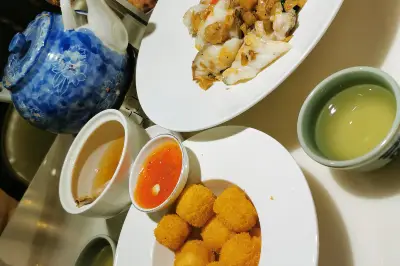
"Golden Three Delicacies" is my favorite. Golden fried shrimp cake, deep-fried cuttlefish cake until crispy, and crispy-on-the-outside, milky-on-the-inside fried milk — I couldn't stop my chopsticks.
Nansha's delicacies are endless. Mingliyuan Farmhouse is most famous for its chicken, duck, and goose. Located on a lovely hillside west of Huangshanlu Park, it has its own artificial lake, so many of the poultry and fish are home-raised — exceptionally sweet and tasty.
When eating here, don't miss "Tossed Chicken." Specially prepared chicken is mixed with peanuts, pickled shallots, cilantro, pickled chilies, onion, green onion, and secret sauce. The collision of tender chicken with bright flavors creates a sweet satisfaction on the tongue.
"Soy Sauce Sea-Flying Duck" is another must-try. Sea-flying ducks are free-range, with nutritious, flavorful meat. The best ingredients need only the simplest cooking: after frying the duck in oil to bring out aroma, add soy sauce for simple seasoning to present the pure duck flavor.
Cantonese cuisine can't be without roast goose, and this farmhouse's lychee wood roast goose is even better. Using lychee wood to roast the goose results in fatty meat with a fruity wood-fired sweetness, still juicy inside — a feast for the senses!
King eyebrow fish has a tight muscle fiber structure. Fried at a low 80°C oil temperature, it's crispy outside, soft and tender inside. Coated with breadcrumbs and fried golden, it also bears the beautiful name "Golden Fish."
Black truffle may be plain-looking, but its rich aroma enhances many ingredients. Usually a side dish, truffle can magically elevate food. This "Black Truffle Chinese Yam" is incredibly flavorful with that truffle uplift.
Summer calls for refreshing foods, so try the stone-ground rice noodles. Made by soaking rice and cooked rice together, grinding them into a slurry with a stone mill, steaming the slurry in a flat basket, and then hanging the noodle sheets on bamboo poles to dry. They are fresh, smooth, tender, and elastic — well worth a try.
Tanka people have been fishing at sea for generations. The sea provides them with all kinds of seafood ingredients, which their wisdom turns into unique deliciousness. Nansha has a famous Tanka restaurant; since we're here, of course we must taste it.
Many wonder what "banana bud congee" is. Nansha is rich in bananas and plantains. The tender plantain flower bud contains much protein and vitamins, with dampness-dispelling and stomach-soothing properties, creating a naturally sweet and fresh congee.
The signature staple here is "Maqiu Fish Roe and Dried Eel Claypot Rice." Lard is brushed in the claypot, washed rice added, the lid put on, and when it's 70% cooked, fish roe and eel are added, then it's slow-cooked. When opened at the table, the aroma floods out. Mixed well, the rice carries the seafood fragrance — you'll want several bowls.
For crab, plain steaming is best, and the whole crab is steamed without cutting to retain the roe. Immature female mud crabs (yanyai crabs) have a thin outer shell but a bulging inner shell filled with rich, creamy roe and meat.
Steamed eel with black bean sauce is a classic Cantonese dish, using river eel. The marinated eel is coiled into a circle on a lotus leaf, smothered with black bean sauce, and steamed over high heat. The flesh is well flavored and extremely elastic.
The worm-shaped "hock worm" is nicknamed "the cordyceps of the river" by fishermen. One must-order dish is "Pan-Fried Hock Worm". Just the name can be intimidating, but when served, you don't see the worm's original look; it's pan-fried with egg until fragrant and crispy.
Guanyin vegetable, also called blood-nourishing vegetable, is high in vitamin C. It can be eaten cold, in soup, or stir-fried. In soup, it's tender, slippery, refreshing, with a unique flavor.
"Pot-Juice Crab Roe Paste" is another must-order. The tiny crabs, called "xia la," have very little roe, requiring enormous manual labor to make a dish. But the sweet, soft, silky roe is packed with protein — each bite feels deeply nourishing.
When visiting Million Sunflower Garden, you can dine at the Flowers Love Restaurant and try their specialty: the famous sunflower chicken. Eating in the fairy-tale-like restaurant setting feels like stepping into a storybook.
The sunflower chickens are raised free-range in the garden, eating sunflower seeds, so the meat has a subtle sunflower fragrance.
Eating sunflower chicken is ritualistic with a three-step process: first, sip lemon water to freshen your mouth; second, eat a slice of cucumber or carrot to cleanse your palate; finally, taste the original white-cut sunflower chicken. Only by following this method do you get the true delicate flavor.
Every part of the sunflower chicken shouldn't be missed. We already tried the white-cut version; its kidneys, stir-fried with orchids, have a distinctive flavor.
Salt and pepper chicken cartilage is another popular dish: crispy cartilage with the aroma of salt and pepper, perfect with rice — you can't stop.
Thick soup with kelp is very refreshing. The sweet, rich broth paired with crisp, slippery kelp makes you feel comfortable and healthy, as if wellness factors fill your body.
Steamed sea bass is a famous traditional Cantonese dish using the steaming method. The timing is perfect; the fish is just cooked, tender and smooth, the pure flavor fully presented. The sauce carries the sweetness of rice wine and the fragrance of soy sauce — every mouthful a joy.
Malay sponge cake is a common dim sum in Guangdong tea houses, a type of cake. Authentic Malay cake is made from flour, eggs, lard, and butter, fermented for three days, then steamed. It's golden, fluffy, soft when fresh, with a subtle fragrance.
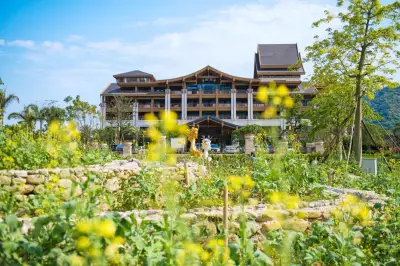
We've covered fun and food, so what hotel is worth checking into in Nansha? I recommend Nansha Garden Hotel. Its architecture resembles a cruise ship, full of stunning modern design. It has 365 luxury rooms with mountain and sea views, well-equipped with excellent software, giving a warm and comfortable feeling. The hotel's unique design lets you take stylish photos from any angle.
When entering the lobby at midday, you'll notice rainbow reflections on the floor, created by 1,618 transparent prisms hanging from the seven-story-high atrium, refracting natural light. As sunlight shifts throughout the day, the prisms produce different light and shadow effects, transforming the lobby into an artistic space flowing with light — truly breathtaking.
The lobby ceiling also has a unique design: a honeycomb ceiling made of a polygonal metal mesh, showing different textures and shadows. When lit at night, it exudes an artistic vibe.
The guest rooms are simply and stylishly designed. From the spacious balcony, you can admire the vast Lingdingyang Channel and gaze at the Humen Bridge in the distance. A large bathtub, viewing sofa, LCD TV, desk, etc., are all provided to meet the needs of different guests.
The outdoor swimming pool is the liveliest spot, where many parents bring their kids to splash about. Lifeguards are on duty, keeping a constant eye on the safety of every swimmer. Wearing a swim cap in the pool is mandatory, so hygiene is well assured.