First Visit to Nansha: Savor the Scenery and Cuisine
First encounter with Nansha, take good care of me!
The plum rain in Hangzhou has really dragged on. I always think this year’s rainy season has been particularly long; last year I barely noticed any plum rain (I spent the whole of July in Gansu, so I automatically overlooked Hangzhou’s rains). Fortunately, during the plum rain, the temperature in Hangzhou was still quite comfortable. Compared to the few days I’ve spent in Nansha this time, I find Hangzhou’s climate much more pleasant.
First encounter with Nansha, take good care of me. My impression of Nansha was close to zero. It was only before departure that I gathered a few bits and pieces—places like the Tianhou Temple, the 19th Creek, and so on. The rest came from on-the-spot exploration and checking information bit by bit.
Turning an unfamiliar place into a familiar one—how would you choose to begin? For me, the camera serves as a bridge, letting me gradually get to know a new place and record everything I experience. Of course, I always feel that I’m slow to catch on; it’s often after some time has passed, when I look back and revisit the memories, that I gain a deeper understanding. Maybe it’s because I haven’t done enough homework before the trip. In any case, to truly know a place, one visit is never enough. First time unfamiliar, second time you’re old friends; and the first time is always spent wandering in a beautiful haze.
And so, the memories of Nansha have begun!
On July 23, I flew from Hangzhou to Guangzhou. From the 24th to the 26th, I concentrated on touring Nansha’s representative spots. The itinerary was like this:
Day 1. July 23: Hangzhou – Guangzhou, checked into the Gogo Art Hotel (rested, and even took the chance to catch up with a classmate I hadn’t seen for years).
Day 2. July 24 morning: Nansha Tianhou Temple – Huangshanlu Forest Park – lunch at Six Claypot – afternoon Nansha Garden Hotel – dinner at Mingliyuan Farm.
Day 3. July 25: Departed from Nansha Garden Hotel – Nansha Wetland Park – Guangzhou Nansha Waterbird World Ecological Garden – lunch at Danjia Mei – Nansha Bay Cruise Music Festival – checked into Nansha Grand Hotel.
Day 4. July 26: Guangzhou Million Sunflower Garden Theme Park – 19th Creek – lunch at Million Sunflower Garden – afternoon return flight from Baiyun Airport to Hangzhou.
That’s basically the itinerary. After the round trip, I really did get tanned, but I also harvested Nansha’s blue skies and white clouds. I realized Nansha is quite large to explore; driving around is definitely the most convenient. The sightseeing spots roughly form two circles: Tianhou Temple, Huangshanlu Forest Park, and Nansha Garden Hotel are clustered near each other; the Wetland Park, Waterbird World, Million Sunflower Garden, and 19th Creek are another cluster.
First stop in Nansha: Touring the Tianhou Temple on a scorching day
My first Nansha stop was the Tianhou Temple. I could tell as soon as I stepped out in the morning that the weather would be brilliant—deep blue sky, drifting clouds dancing in the wind, a perfect day for time-lapse photography. Both the Gogo Art Hotel and Nansha Garden Hotel are close to the temple, so it didn’t take long to get there from the hotel.
Nansha Tianhou Temple sits at the southeastern foot of Dajiao Mountain in Nansha District, right by the Lingding Estuary where the Pearl River meets the sea. You can take in the whole scenic area at a glance—it consists of the Tianhou Square and the palace complex. As the largest Mazu temple in Southeast Asia, it’s extremely popular. Mazu (Lin Mo), the goddess of the sea revered along the southeastern coast, is a sacred and respected figure; countless devotees come here to worship.
After buying a ticket and entering the gate, a stone-paved path leads to the Tianhou statue on the square first. The 14.5-meter-tall statue is majestic and solemn; it’s said to be made of 365 finely carved granite pieces, symbolizing the goddess’s protection all year round. Past the stone-sculpture square is the distinctive palace complex. It has a roughly central-axis symmetrical design (I say ‘roughly’ because when I tried to take photos, I could never achieve perfect symmetry). Red walls and glazed tiles evoke the architectural style of the Forbidden City. The halls are built against the mountain, with three or four iconic structures rising step by step.
The highest point here is the Nanling Pagoda, 45 meters tall. From a distance, it looks quite distinctive, giving you an urge to climb up and take in the view. From up there, you can see the entire Tianhou Temple, the distant Lingding Estuary, and the surrounding modern cityscape: high-rises, bridges, and ferries.
Exploring this place doesn’t take too much time. Walk around with a reverent heart, learn about the legends and cultural background of the sea goddess Mazu, and appreciate the beauty of this coastal palace architecture. The seaside just outside the temple is also a great spot for a stroll, playing in the sand, or bringing kids.
Scholarly research on Mazu suggests that the belief evolved from the shamanistic traditions of Fujian and Zhejiang, absorbing other folk beliefs (like the clairvoyant and the keen-eared) along the way. As its influence grew, elements of Confucianism, Buddhism, and Daoism were incorporated, eventually making Mazu stand out among the many sea deities and become an essential element of the maritime culture of Fujian and Taiwan, and of East Asia.
She has been deified since the Northern Song dynasty, revered as Mazu (a respectful address for a female ancestor in local tradition). People built temples to worship her, and she was later officially recognized by Emperor Gaozong of Song as Linghui Furen (the Numinous Lady), becoming a state-recognized deity. The Mazu belief spread from Fujian to Zhejiang, Guangdong, Taiwan, the Ryukyus, Japan, and Southeast Asia (such as Thailand, Malaysia, Singapore, Vietnam), as well as to coastal areas of Tianjin, Shanghai, Nanjing, Shandong, and Liaoning, where Tianhou Temples or Mazu temples are found. I heard from a friend that because of the Tianhou Temple in Nansha, typhoons rarely wreak havoc here.
Tianhou Temple visiting tips!!!
Address: Southeastern foot of Dajiao Mountain, Nansha District, Guangzhou
Opening hours: 10:00–16:00
Ticket price: 20 yuan
Public transport: Metro Line 4, exit at Nanheng Station Exit B, walk to Nansha Olympic Garden stop and transfer to Nansha Route 4 or Nansha Route 54, get off at the Tianhou Temple East Gate terminal.
The temple is also quite photogenic: the near-symmetrical palace complex design and the changing light and shadow under a clear sky offer great opportunities for both detail shots and portraits.
A puzzling name – Huangshanlu Forest Park
Huangshanlu National Forest Park – at first hearing, I was curious how this name came about; it felt like a tongue twister depending on how you break it up. I later learned it’s because there are two mountains here: Huangshan and Lushan. The combined name became Huangshanlu Forest Park. Say it a few times, and it rolls off the tongue.
Honestly, strolling through a forest park is a leisurely and relaxing affair—perfect for a post-meal walk or a morning stroll. For nearby residents, it’s an excellent place for exercise. Huangshanlu Forest Park is free to enter, with about 5 kilometers of paved ring road around a lake and roughly 4 kilometers of hiking trails. You can hike up to the highest point at 295 meters, where you can gaze at the surrounding scenery: the Humen Bridge to the east, the Nansha Golf Course, and various real estate projects—a fine vantage point.
Plus, walking into a lushly wooded park in summer is pretty refreshing. The small shrubs on the ground, illuminated by dappled light filtering through the trees, feel even more vivid. It gives you something special to do while exploring the park, and you can even snap these kinds of photos with your phone.
An Instagrammable hotel – Nansha Garden Hotel
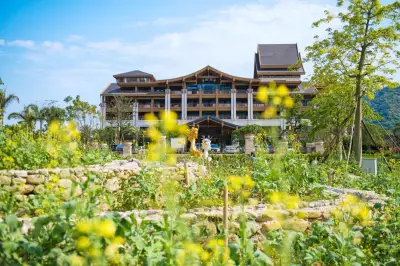
This was the second hotel we stayed at in Nansha, and it’s a very design-forward property. The hotel sits in a relatively secluded environment by the sea. It has 365 panoramic-view guest rooms, each with large floor-to-ceiling windows and a private balcony. From the room, you can really appreciate the beauty of sunrise and sunset.
The hotel also features parent-child themed suites designed specifically for families, plus a 365-square-meter presidential suite with an unbeatable 270-degree view, overlooking the Lingding Estuary where sea and sky merge into one. The hotel offers six excellent restaurants and bars: the Taoyuan Pavilion Chinese restaurant inherits the cultural legacy of the Garden Hotel in Guangzhou, while incorporating the waterside charm of Nansha’s fishing villages and continuing the Cantonese culinary essence of “Food in Guangzhou.” The whole hotel’s exterior resembles a giant cruise liner, with layers stacked one upon another. At sunrise or sunset, the floor-to-ceiling windows catch the golden light, making the whole building shine like gold.
The hotel is filled with design both outside and in; after seeing the exterior, I was equally moved when I stepped into the lobby. The hotel lobby is like an art space where light and shadow flow. The large-scale art installation “Echoes of a Light Second,” meticulously created by a German visual artist, uses 1,618 transparent prisms hanging in staggered layers from the seven-story atrium. They refract and reflect the natural light that enters the hotel throughout the year, creating rainbow-like patches of light that represent the echo of sunlight traveling to Earth. We checked into the hotel around two or three in the afternoon, and the sunlight streaming into the hotel felt very vivid; you could clearly see beams of rainbow colors cast into the lobby by the prisms.
Besides the awe-inspiring upward view from the ground floor, looking down from the eighth floor at the orderly, changing layers will also make you want to whip out your phone to snap pictures. As an emerging Nansha landmark and a trendy hotel, the property has set up over a dozen ‘Instagrammable’ spots. You can check them off one by one while staying here; it’s a great place for architectural shots or creative portraits.
The spiral white staircase, the design-conscious lobby, the layered exterior—almost every corner of the hotel is picture-worthy. Various room types cater to different needs. This time we stayed in a king-bed room, facing mainly east; from the balcony, you can directly see the eastern sunrise—too bad I overslept and got up half an hour late the next morning. Inside, the room was very cozy, with warm lighting; welcome fruit was provided. Even in a twin room, there was a workspace for two, so you’d never need to ask for an extra chair. Soundproofing and curtain blackout effect were excellent.
The hotel, viewed from above, has a butterfly-shaped footprint, bringing the four-direction scenery of “mountains, sea, lake, and garden” right before your eyes, giving each room nearly 180 degrees of unparalleled visual enjoyment.
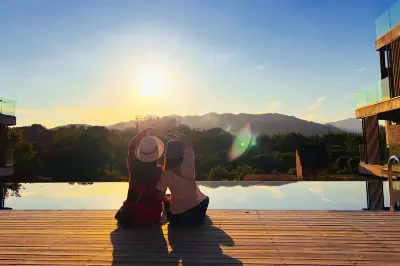
Apart from being photogenic, the hotel’s facilities are also top-notch: indoor and outdoor connected swimming pools, a children’s play area, an afternoon tea zone, a gym, etc. Coconut palms by the sea create a tropical vibe. Without even leaving the hotel, you feel like you could happily stay here for a long time.
Nansha Garden Hotel tips:
Address: No. 1, Dajiao Shan Er Road, Nansha District, Guangzhou
Transport: Take bus Nansha 4 or Nansha 54 to “Qinshui Park” stop, then walk 288 meters.
For photos, wearing solid-colored clothes against the hotel’s predominantly white and clean architecture yields better results.
Guangzhou’s Largest Wetland Park – Nansha Wetland Park
Wetland ecosystems play a vital role in a city. Just like Xixi Wetland Park in Hangzhou, Nansha Wetland Park has its own charm. This time, I explored the park mainly by boat and a little by electric cart. As the largest wetland park in Guangzhou, it sits at the city’s southernmost tip, where the Pearl River meets the sea, nestled between the 18th and 19th Creeks in Wanqingsha Town, Nansha. It covers 10,000 mu, though it’s still in the stage of simultaneous development and conservation.
The park is divided into boat tour and walking tour areas. This visit was mostly by boat, and during the ride we could clearly feel the cool breeze (despite the scorching sun). The waterways are intricate, lined with willows, reeds, and other vegetation. Waterbirds roost here and fly freely. The boat passes through a vast lotus field, sending ripples across the surface.
The Nansha Wetland scenic area is developed in two phases: Phase I covers about 3,400 mu and is a core ecological protection zone focused on scientific research and education; Phase II, about 6,000 mu, is a comprehensive eco-tourism zone, integrating sightseeing, education, culture, film, and leisure—a coastal wetland eco-tourism leisure area.
Perhaps because it was a scorching summer midday, there weren’t too many visitors, and even the lotus flowers were drooping in the sun. But after the tour, it was easy to see the biodiversity here.
Under the blue sky and white clouds, reeds swaying in the wind are a scenic sight in themselves—though such views are best seen from the boat.
Wetland Park tips:
Ticket: General admission 50 yuan; combo ticket 150 yuan per person.
Opening hours: The scenic area is open all year round, 9:00–17:00. Summer hours are extended: 9:00–18:30.
Boat schedules: 10:00; 11:00; 14:00; 15:00; 16:00. Boat tickets need to be booked two days in advance.
Public transport:
1. Guangzhou – Metro Line 4 to Jiaomen Station – transfer to Nansha Bus 23 to Nansha Wetland Tourist Area.
2. Haizhu Bus Terminal – Haizhu-Wanqingsha Express Line to terminal – walk about 300m to Zhujiang Jie stop – transfer to Nansha 23 or Nansha 25 to Nansha Wetland.
Wanqingsha Zhujiang Jie departures: 8:00-12:00, 16:00-19:00, every hour; weekends additional 13:00-15:00, every hour.
Haizhu Bus Terminal departures: 8:30-12:30, 16:30-19:30, every hour; weekends additional 13:30-15:30, every hour. Fare: 20 yuan, journey about 70 minutes.
3. Yuexiu South Bus Terminal – Nansha tourist bus (holiday tourist route) – Million Sunflower Garden – transfer to Nansha 25, 23, or 11 bus – Nansha Wetland.
4. Panyu (Shiqiao Bus Station) – Xinken special line – Xinken Station – transfer to Nansha 25, 23, or 11 bus – Nansha Wetland.
5. Panyu (Panyu Bus Passenger Transport Station) – Xinken special line – Xinken Station – transfer to Nansha 25, 23, or 11 bus – Nansha Wetland.
Adjacent to the wetland park is the Nansha Waterbird Ecological World. I call it artistic and vibrant for two reasons: first, 48 different bird species live here; if you went through each one, few people could name them all—and some birds are truly fascinating. Second, the place is dotted with many design-oriented bamboo artworks, said to be former award-winning pieces, each full of clever design, decorating this waterbird world.
The waterbird world is divided into different zones: waterside platforms + science promenade, Swan Lake, Yi Fan Feng Shun Bridge, Parrot Valley, Flamingo Beach, Flower Tree Island Jungle, Peacock Garden, Mandarin Duck Pool, Gold & Silver Pond, the Ostriches at Misty Rain Bridge, White Crane Beach, and Demoiselle Crane area. Each zone has its symbolic birds; I vividly remember the Great White Pelican and the West African Crowned Crane at the Yi Fan Feng Shun Bridge.
There was a pelican with a lot of personality. From the moment we stepped onto the bridge, this bird never gave us a moment’s peace, constantly teasing the young lady in our group with its huge beak. I discovered for the first time how big a pelican’s beak really is—you feel like it could swallow whole fish, and when it opens wide, it could even engulf a human head. The tour guide said this pelican is named Kang Kang; he’s friendly and playful. That’s probably why he’s allowed to “receive guests” freely on the bridge. Our whole group adored this bird and took plenty of photos with it.
A quick science note on the Great White Pelican: Also known locally as plow pelican, river pelican, gannet, pouch bill, or duck pelican. It breeds in southeastern Europe and winters in southwestern Asia and Africa. In China, it’s seen in Xinjiang (western Tianshan, western and southern waters of the Junggar Basin, Tarim River basin) and Qinghai Lake. So seeing this species here is quite special. Indeed, its gaping beak is massive; swallowing a whole fish is effortless.
Apart from this pelican, there was also an aloof peacock on the bridge. It wasn’t afraid of people at all—when you got close, it would glare at you with its tiny eyes, and if you came even closer, it would chase and peck you. Quite an amusing scene.
People often say they envy mandarin ducks more than immortals. After seeing these two West African Crowned Cranes, the phrase “in perfect sync” instantly popped into my head. The main reason was that the two cranes here moved and behaved in harmony; even when I pointed my lens at them, they both tilted their heads with the same puzzled, curious expression. It was really lovely. They also have beautiful appearances: male and female plumage is essentially the same. The bill is stout and straight, greyish-black, with nostrils in the middle, a protruding forehead covered in black down, and numerous yellowish-brown hairlike filaments radiating from the nape, forming a lovely velvety sphere called the crest. Apart from the ash-grey secondary flight feathers, the rest of the plumage is black. Legs and toes are bluish-black.
Quick science on Black-Crowned Crane: West African Crowned Crane generally refers to the Black-Crowned Crane, a non-migratory resident bird. They like to gather in flocks, often dozens or hundreds in open marsh areas. Known as the “song and dance” stars among cranes, both males and females sing and dance well, especially at dawn and dusk, often stretching their necks and flapping their wings in group displays. Their obedient and affectionate pair bonding, along with their beneficial role in eating harmful insects and reptiles, makes them a particularly beloved ornamental bird in Africa. Many Black-Crowned Cranes are raised in courtyards alongside other poultry. They are very docile and show attachment to their owners, often following them closely, even entering the house. They usually move in small flocks, foraging on dry ground, mainly eating insects. They consume vast numbers of grasshoppers and cicadas, plus small reptiles, frogs, other small vertebrates, and various seeds and shoots. Mainly distributed in Senegal, Ethiopia, Congo, Uganda, and Kenya. There are two subspecies: the nominate race mainly from Senegal to Chad and northern Zaire; the Sudan subspecies in Sudan and Ethiopia.
Besides these birds that left a deep impression, there were also large ostriches, baby peafowl (turns out peacock chicks look just like little chickens), flocks of flamingos (though this group didn’t look as brilliantly red but somewhat pale), and black swans chasing little girls for food.
In addition to bird watching, the place has a tropical rainforest climate feel and bamboo cultural architecture that seamlessly integrates with the bird world. As you observe the birds, you also encounter every unique bamboo artwork—almost like checking off Instagram hotspots. These artworks aren’t just lovely on their own; they also make great settings for portrait photography, truly turning the place into a trendy photo stop.
Waterbird World tips:
Adult ticket 80 yuan per person.
Public transport:
1. Metro Line 4 → Jiaomen Metro Station (next to bus terminal) → take Nansha Bus 2 to Million Sunflower Garden → transfer to Nansha Bus 11 to Nansha Wetland stop → walk back 50–100 meters, cross the 18th Creek bridge → arrive at Nansha Waterbird World Ecological Garden.
2. Metro Line 4 → Jiaomen Metro Station (next to bus terminal) → take Nansha Bus 23 (note: only available on Sat, Sun, and national holidays) to Nansha Wetland stop → walk back 50–100 meters, cross the 18th Creek bridge → arrive at Nansha Waterbird World Ecological Garden.
Self-drive:
1. Guangzhou (Xingan Route) → Nansha Waterbird World: Huanan Expressway (5 min) → Nansha Port Expressway → Lixinsha exit (turn left at the first and second traffic lights) → Million Sunflower Garden (Xinken 15 Chong).
2. Guangzhou (Xingan Route) – Nansha Waterbird World: Huanan Express (5 min) → Nansha Port Express (towards Nansha Port) → Shiliu Chong Steel Base (exit) → Nansha Waterbird World (between 17 and 18 Chong).
3. Guangshen Expressway – Nansha Waterbird World: Guangshen Expressway → Humen Bridge → Zhongshan direction → Hengli Interchange to Nansha Port Expressway → Wanqingsha / Nansha Port area direction → Shiliu Chong Steel Base (exit) → Nansha Waterbird World (between 17 and 18 Chong).
4. Zhongshan, Zhuhai – Nansha Waterbird World: Jingzhu Expressway → Sanjiao Town (exit) → Nansha Port Express (Nansha Port direction) → Shiliu Chong Steel Base (exit) → Nansha Waterbird World (between 17 and 18 Chong).
5. Foshan, Nanhai, Jiangmen, Zhaoqing, Sanshui, Taishan, Kaiping, Yangjiang, Maoming – Nansha Waterbird World: Guangfo Expressway → Huanan Trunk Line → Nansha Port Express (Nansha Port direction) → Shiliu Chong Steel Base (exit) → Nansha Waterbird World (between 17 and 18 Chong).
For photo-taking at the Waterbird World, I recommend wearing all kinds of pretty dresses; a tropical rainforest or beach resort style works very well. Nearby are the Million Sunflower Garden and the 19th Creek.
Million Sunflower Garden – Bring your kids here!
After visiting the Million Sunflower Garden, I jotted down this summary: “Saturation warrior strikes again. The Million Sunflower Garden in Nansha just can’t be expressed without high saturation—blues, greens, yellows, reds… the old and the young, the castle hotel, Ferris wheel performances, ice house water world… a great place to bring your kids or your girlfriend.” I call myself a saturation warrior not because I’m obsessed with highly saturated photos, but because amid the blue sky, white clouds, and golden sea of sunflowers, only bright saturation can do justice to the colors found here.
This is a colorful photo paradise, with a million sunflowers in bloom, a spectacular sight. Whether you’re inside the flower sea or standing outside it, the little train on its rail track winding through the flowers looks amazing from an aerial view—unfortunately, we didn’t see the train in motion, just the track and the little house in the flower field, but even that satisfied my urge to take pictures.
The sunflower field is the signature attraction, complete with an observation deck and scheduled daily performances. Flowers bloom here in all four seasons. The cycling seasons bring different expectations and different regrets. Key garden spots include sunflower fields, a rose garden, a lavender base, a fun zone, a squirrel park, a white-dove square, and a koi pond.
Because of the hot weather this time, I didn’t walk too far. I mainly photographed the iconic sunflower field and took a quick look around inside. I found this place is truly great for families with kids—there are so many playgrounds and facilities. Indoor swimming, a chocolate experience, slides, archery, an ice and snow world… If you bring your children here, they’ll likely have a blast all day.
Sunflowers symbolize hope. Many people wonder why sunflowers always turn to face the sun. It’s mainly because in the sunflower stem’s growth zone, there’s a substance called xanthoxin that inhibits cell elongation. Its concentration is opposite to that of auxin—higher on the light side, lower on the shaded side. So the flower head’s daily east-to-west movement is the result of the combined action of auxin and xanthoxin.
Million Sunflower Garden tips:
Located in Xinken Town, Nansha District, Guangzhou. Ticket 80 yuan (prices may vary; usually online advance purchase offers some discount).
Transport:
Guangzhou (Xingan Route) – Million Sunflower Garden: Huanan Express (5 min) → Nansha Port Express → Lixinsha exit (turn left at the first and second traffic lights) → Million Sunflower Garden (Xinken 15 Chong).
Shenzhen, Dongguan – Million Sunflower Garden: Guangshen Expressway → Humen Bridge → Guangzhou city direction → Nansha Port Express (Nansha District direction) → Lixinsha exit → turn left → Million Sunflower Garden.
Zhongshan, Zhuhai – Million Sunflower Garden: Jingzhu Expressway → Sanjiao Town → Fanzhong Highway → Hongqili Bridge → first traffic pole turn right → Wanqingsha Xinken Town → Million Sunflower Garden.
Foshan, Nanhai, Jiangmen, Zhaoqing, Sanshui, Taishan – Million Sunflower Garden: Guangfo Expressway → Huanan Trunk Line → Nansha Port Express (Nansha Port direction) → Lixinsha exit → turn left → Million Sunflower Garden.
Self-driving via Panyu Yingbin Road onto Jingzhu Expressway. Exit at the first exit “Lingshan”; ask staff at the toll gate for directions to the sunflower garden, then follow signs.
Visitors can also take a bus from Kecun Interchange bound for Zhongshan Shiqi (new route), get off at Wanqingsha intersection, then take the Xinken special line to the terminal, and rent a motorcycle to reach the garden.
This place is indeed very photogenic. If you bring your significant other, be sure to take lots of photos. Different seasons bring different blooms. The castle-like Floral Love Hotel is also worth a photo stop. And if you stay here, you can conveniently visit nearby Nansha Wetland, the 19th Creek, and other spots.
Nansha 19th Creek – A whiff of seafood liveliness
As a northern “landlubber,” coming to the 19th Creek was the first time I had ever strolled through a “wet market” with such an abundance of seafood. I love cooking at home, but I rarely see this many kinds of seafood in the markets I frequent. A row of coconut trees along the road separates the sea from a string of shops on the other side.
Venturing deeper, you start to notice stalls selling tropical fruits, dried fish, and more displayed at shop fronts. Then gradually you enter the seafood market itself, bustling with flowing crowds. Customers pick their favorite seafood, while vendors, busy handling the catch, call out “Hey, handsome!” to passersby.
The 19th Creek is at the southernmost tip of Guangzhou, often called the “South Pole” of the city, located in Xinken Community, Wanqingsha Town, Nansha District. Beyond the creek is the Lingding Estuary. There’s no sandy beach, only a stone embankment. The creeks from the 1st to the 19th were created during the reclamation and dike-building era of the youth corps; now they belong to the Nansha port zone of the Guangzhou Nansha Development Zone, serving as a migratory bird nature reserve, a fruit and vegetable production base, and a seafood wholesale market. They’re known for papayas, starfruit, bananas, sugarcane, and lotus roots.
The mighty Pearl River rushes over a thousand miles, and where it meets the sea in the south, sand accumulates into shoals, giving birth to Wanqingsha. The hardworking Shatian people cultivated and built dikes here, placing stones and constructing polders through a hundred years of wind and rain, turning vast waters into mulberry fields and mudflats into green oasis. To facilitate irrigation, water collection, and transport, they left waterways between the polders. By the late 1990s, from north to south, they had built their way to the very tip of Nansha—thus the 19th Creek, hailed as Guangzhou’s “South Pole.”
My Guangzhou friend said you can buy seafood here and have it cooked directly in the restaurants across the way; you just pay a processing fee. Thinking about it, from purchase to table, only the cooking time passes—enjoying fresh, delicious seafood like that is truly satisfying.
19th Creek tips: I won’t elaborate further. Just buy, buy, buy seafood, and eat, eat, eat.
Self-drive: Guangzhou – Ring Expressway (Luntou tollgate)/Keyun Road – Nansha Port Expressway (Xinlong) – Lingxin Avenue.
Zhongshan/Zhuhai – Jingzhu Expressway (Sanjiao tollgate) – Fanzhong Highway – Wanhuan West Road.
Metro: Exit at Jiaomen Station on Line 4, transfer to Nansha G1 bus, get off at 19th Creek stop.
Bus: Haizhu District Bus Terminal – Wanqingsha (20 yuan); Nansha Bus 25: Wanqingsha – 19th Creek.
Just in time for a lit music festival!
This was probably the first music festival I attended after the pandemic—though I haven’t been to many. Since this Nansha trip included it, I figured, let’s get hyped. In reality, with my tone-deafness, I couldn’t understand rap and hip-hop at all; I just went along with the beats and enjoyed myself. From entering in the afternoon until the show ended at night, the long hours made me forget how sore my feet were from standing. There were two stages across from each other: one side bursting with hip-hop and rap, the other with gentle folk music. As soon as one side finished, the other started, and the audience bustled back and forth between the two.
The festival vibe really came alive at night, with the added effect of lights and the fervor of the music. Everyone waved their glow sticks to the rhythm, sometimes swaying and jumping along. For me, capturing interesting and beautiful moments on and off stage was satisfaction enough.
About accommodations on this trip
I’ve basically covered all the sightseeing; let’s talk about the places I stayed. They’re all fairly representative Nansha hotels: the Gogo Art Hotel, Nansha Garden Hotel, and Nansha Grand Hotel. Though built at different times, the service was good in all of them. Gogo Art Hotel and Nansha Grand Hotel are essentially business hotels, while the Nansha Garden Hotel, as a new Nansha landmark and trendy spot, offers more novelty. The choice depends on your travel needs.
About Nansha cuisine on this trip
This Nansha journey probably made me gain several pounds because I ate so much delicious food here. Most meals were at a few distinctive local establishments: Six Claypot Farm, Danjia Mei, Mingliyuan Farm, and the restaurant at Million Sunflower Garden. Each had its own unique signature dishes and flavors, drawing in food lovers. For instance, at Danjia Mei and Six Claypot, the dining halls were packed with patrons.
Six Claypot Farm address: Beside the archway of Dongjing Village, Yingdong Avenue, Nansha District, Guangzhou, Guangdong Province.
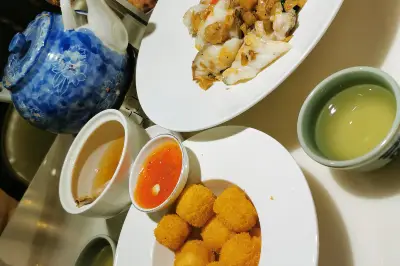
We ordered a full table of dishes. Here I’ve put nine representative ones. ‘Yi Pin Gan Xiang Huazhou Chicken’—as its name declares, it’s first-class; the taste was top-notch too. Different parts of the chicken were prepared differently, with ginger slices and sesame oil adding extra flavor. ‘Bone and Lotus Root Soup’ was also very representative; after simmering, the lotus root remained crispy and paired wonderfully with the meat. Other dishes like ‘Golden Three Platter’, ‘Dianbai Rice Rolls’, and ‘Marinated Meat Platter’ were all tasty and easy to enjoy. The venue has both a dining hall and private rooms.
Danjia Mei – we came here after visiting the Wetland Park; it’s about the same distance from the Million Sunflower Garden, located near Xinguang Avenue, 14th Chong Aquatic Products Center. Upon arrival, I saw the staff bustling at the entrance; inside the hall, many people were dining, a sign of its popularity. “Danjia cuisine” is the collective term for dishes cooked using the unique, generation-old methods of the Dan people of Guangdong’s sand flats. It’s known for its fresh, savory, tender, original flavors and rustic style.
This time, we really got to eat authentic Danjia fare. For example, the ‘Ponyfish Roe & Dried Eel Claypot Rice’ was loved by my fellow travelers. Each dish had its own distinctive name; to be honest, upon seeing the names, I realized there were several characters I didn’t recognize, and I couldn’t guess the ingredients just from the names. But every dish deeply tantalized my taste buds and made me eat freely. ‘Banana Bud Congee’ uses banana flower buds paired with taro, water chestnuts, and pork bones; it’s crisp and refreshing, with a unique culinary temptation.
Mingliyuan Farm – we went here for dinner, so it was dark and I didn’t get a clear look at the entrance. The parking lot was large and nearly full. We went up to the second-floor dining area. The address is at the intersection of the Shengke Kindergarten under the Jinling South Road viaduct, Dayong Village. It’s easy to find using map navigation. The dishes here are very generous. Their signature items, like the ‘Wang Mei Tou’ (a kind of fish), are said to be rare ingredients. The tossed chicken after it was mixed was especially delicious. I personally enjoy bitter melon; given the high heat in Nansha, that plate of ‘Iced Lychee and Bitter Melon’ was very appealing to me.
This was our last meal; we had a quick bite and then returned to Hangzhou. What still lingers is the ‘Sunflower Chicken’, the signature dish of the sunflower garden.
The delightful Nansha trip soon ended. I recorded its beautiful scenery, remembered its delicious food, and also captured its July blue skies, white clouds, and high temperatures. I’ll close with a few of my favorite photos from this trip. Life is full of picture-worthy moments, each with its own unique beauty. With a discerning eye, you can see different landscapes. Vertical composition has always been a favorite of mine. It conveniently frames Nansha’s blue skies and white clouds together with the ground landscape—like the Tianhou Temple pagoda, the little houses in the Million Sunflower Garden, the birds and bamboo huts in the Waterbird World, the pool and architecture of Nansha Garden Hotel, and more! Until we meet again! I’m Xiao Yuan, trading in the moving encounters and beautiful sights found along the journey!