Nansha Explorer: In the Freedom I Seek, Wind and Sea Abound
My joy is back.
If not for the pandemic, I’d probably be on the road already. After a long wait, the day I’ve been eagerly anticipating has finally arrived: inter-provincial travel has resumed, and my excitement is reignited. Going abroad is out of the question now, but I can honestly say there’s no need—there are still plenty of places in China that are well worth visiting.
Guangzhou’s Nansha, a hidden treasure beyond the bustling metropolis, a land of innovation, and an enviable coastal city, is like a piece of unpolished jade waiting to reveal its charm.
Nansha is more than the Free Trade Zone you know. It’s innovative yet reverent of nature. Here, new futuristic cities are built while old natural landscapes are protected. Here, I can see a vibrant city and also a thriving wetland.
It’s poetic, dreamy, yet warm and bustling with life. With all my curiosity about Nansha, I spent four days tasting the life I’ve longed for.
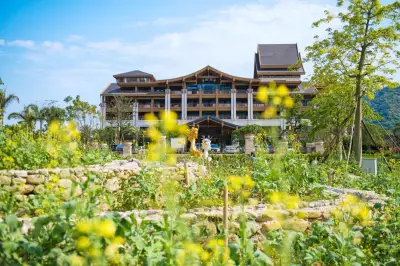
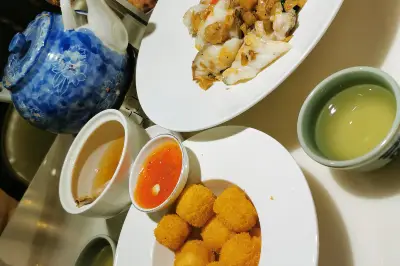
When I arrived at the hotel, night had already fallen. The Guge Yage Hotel is adjacent to Tianhou Palace and Huangshanlu Forest Park. That evening, I wasn’t in the mood for sightseeing; filling my stomach was priority. At that moment, I definitely needed an authentic Cantonese meal to soothe the fatigue from the journey.
Cantonese cuisine places great emphasis on seasonality. Chefs use seasonal ingredients to create dishes that are either light and fresh or appetizing, perfectly suited to the season, allowing us to feast even in the sweltering summer heat.
As the saying goes, ‘Eat in Guangzhou.’ Guangzhou is a tolerant city, where from morning dim sum to late-night stir-fried noodles, from soothing sweet soups to crispy roasted meats—everything represents and passes down the unique Cantonese culture. My deepest memory of a city always begins with taste.
Nansha is inclusive, and its cuisine, like the city itself, is a fusion. To cater to novelty-seeking youngsters and out-of-town visitors with different palates, Cantonese food—traditionally characterized by lightness and freshness—has gradually adopted seasonings like pickled peppers and bean paste, adding a touch of Sichuan flavor.
Whether steamed or cooked in soy sauce, each ingredient finds its own cooking method here. Every dish harmonizes in flavor, pairing, and presentation. After one bite, I couldn’t wait for the next.
A hotel with such an outstanding restaurant surely has rooms to match. The room was spacious and comfortable, with a Nordic style throughout. Simple yet refined, the elegance shone through in the details. A good meal and a good sleep make for a good trip—that’s always my requirement. I slept soundly, ready for the next day’s adventures.
On my first night in this city, the warm delicacies and cozy environment filled me with anticipation for Nansha, looking forward to discovering more of its charms in the days ahead.
The Tianhou Statue stands 14.5 meters tall, right in the center of Tianhou Palace Square. The entire temple is surrounded by swaying green trees, and incense smoke curls within its halls, giving you a sense of transcendence. Nanling Pagoda, at the highest point of Tianhou Palace, has eight floors and is 45 meters tall. From the top, you can take in a panoramic view of the entire eastern development zone, Tianhou Palace, the Pearl River estuary, and Lingding Ocean.
Nansha Tianhou Palace, right by the Lingding Ocean at the Pearl River estuary, sits at the southeastern foot of Dajiao Mountain. Nestled between mountain and water, its structures rise layer upon layer along the slope, with resplendent halls and majestic pavilions.
The huge stone statue of Tianhou standing in the square was built with 365 granite blocks, symbolizing the Goddess’s blessings for favorable weather and national prosperity all 365 days of the year.
At the center of Tianhou Square is the stone-carved Tianhou Statue, built in memory of the sea goddess Lin Mo. Architecturally, it blends the style of Beijing’s Forbidden City with the grandeur of Nanjing’s Sun Yat-sen Mausoleum. It is the largest of its kind in the world, honored as ‘the First Tianhou Palace under Heaven,’ and also the largest Mazu temple in Southeast Asia.
Listen to the tides, marvel at the sea breeze; nestled between mountain and water, praise the scenery. Surrounded by Tianhou Palace and a wetland park, the Guangzhou Nansha Garden Hotel resembles a luxury cruise ship docked ashore, enjoying this coastal paradise all to itself.
In the atrium lobby, you can see thousands of acrylic triangular rods suspended from the seventh floor. They have a beautiful name: ‘Echoes of Light and Shadow.’ It must be said, this hotel’s lobby is a work of art, and many people’s first action upon arrival is to whip out their phones for a photo op.
The hotel’s highly designed shape impressed me deeply, and the interior shows even more ingenuity. The room was spacious and bright, and a large scenic balcony effortlessly captured my affection. Standing on the balcony, letting the sea breeze blow—the summer wind, soft and lazy in July, carries a slightly salty dampness, the scent of the ocean.
Cantonese people often say ‘bu shi bu shi’ (don’t eat what’s not in season), or as the ancients put it, ‘eat according to the rhythm of the seasons.’ It means rejecting out-of-season fare, stressing that food should align with the seasonal cycle. For example, ‘crucian carp in winter, carp in summer, perch in autumn, and crab in frosty weather’—there’s wisdom behind that.
It’s well known that Cantonese love soup, but I’ve found that in summer, lotus root is their favorite soup ingredient. Probably because Nansha produces an abundance of it. ‘Xinken lotus root’ is named after the Xinken area in Wanqingsha Town, Nansha District, Guangzhou, and it’s one of the city’s top ten agricultural brands. Harvested in summer, the lotus root is tender, white, crisp, sweet, and refreshing—indeed a perfect soup companion.
At the Mingliyuan Mountain Villa where I had dinner, the most popular dish was Huangge roast pork. For Nansha locals, this golden-hued, crispy-skinned, tender meat that leaves a lingering fragrance is the familiar taste of home.
This century-old ‘hometown flavor’ roast pork has played an important role in almost every Huangge local’s life—sacrificial rites, weddings, funerals, festivals… For centuries, roast pork has witnessed all their major life events. Dip a piece in sugar and place it in your mouth; the crisp crackling sound makes it hard to tell whether it’s from tiny bubbles or the distinct grains of fine sugar. Bite after bite, it’s utterly addictive.
During my days in Nansha, I looked forward to every meal, because every dish and every bite brought surprises. It felt like discovering a new way to enjoy food. While eating, I’d wonder how to replicate them back home—since deliciousness can’t be taken away, but the taste is unforgettable.
The Nansha Wetland Scenic Area is located on the west bank of the Pearl River estuary at Guangzhou’s southernmost tip, an important migratory route for birds. As the core eco-tourism spot of Nansha, it’s the largest wetland in Guangzhou and a well-preserved estuarine wetland park in the Pearl River Delta, hailed as ‘the Kidney of Guangzhou.’
The Nansha Wetland area consists of two main parts: a boat cruise zone and a wilderness walking zone. On the boat, you can view mangrove forests, reed marshes, lotus ponds, bird nests, and foraging areas. By sightseeing car, bicycle, or on foot, you can explore banyan-shaded greenways, seascape corridors, and the wilderness walking area. Exploring here, you can enjoy the poetic scene of ‘winding waters among reed beds, birds resting in mangroves, vast expanses of beautiful lotus, and the joy of people and birds in harmony.’
July and August are the perfect time to admire lotus flowers. Nansha Wetland has thousands of mu of lotus—swaying in the wind, they dance among endless lotus leaves, exquisitely beautiful, forming an enchanting summer scene. The lingering lotus charm and fragrance carry for miles, lifting the spirit and making one want to stay forever.
The Waterbird World Ecological Park is adjacent to the Nansha Wetland Scenic Area. Nansha, reputed as a ‘bird paradise’ and ‘the kidney of the earth’, boasts rich wetland ecological resources and diverse flora and fauna. Here, white pelicans and African ostriches thrive carefree, while getting closer to visitors makes you feel like you’ve stepped into a natural jungle, touching the most authentic nature.
This bird, which looks like a relative of the red-crowned crane, is called the West African crowned crane. Its most distinctive feature is the golden, acacia-like crest on its head. Its graceful posture makes it seem as though it’s wearing a crown rather than feathers. A fun fact: they are birds that mate for life. West African crowned cranes live together from a young age, truly the divine couples of the avian world.
Beyond bird watching, the entire park is a highly Instagram-worthy spot full of Southeast Asian flair. One bamboo structure after another makes you feel like you’re in Thailand. The most eye-catching is the champion bamboo work ‘turtle’ from the 2019 ASEAN·Guangdong-Hong Kong-Macao Greater Bay Area International Construction Competition—well worth a visit.
Cruising through the wetlands and admiring the lake and mountain scenery, Nansha feels poetic at that moment. But when you stand at the cruise homeport, it feels young and vibrant. The cruise terminal is the largest international cruise homeport in China. Its design is inspired by a ‘whale boat’—the image of a leaping whale—and its facade draws from Nansha’s intangible cultural heritage, Xiangyunsha (gambiered Canton gauze), conveying a free, nonlinear architectural concept.
At this most cutting-edge place, the trendiest people naturally gather. The country’s first cruise homeport music festival kicked off here with enthusiasm. The futuristic stage and dynamic music instantly ignited the crowd.
Rap, electronic, rock, folk—all the music genres you can think of were on display. Performers like Xu Zhenzhen from ‘The Rap of China’ and the Chiye Band from Strawberry Music Festival, among others, delivered an audio-visual feast.
Is it really summer without beer and music? Feeling the sea breeze by the shore, holding an ice-cold beer, swaying to the music—could there be anything more exhilarating?
As dusk descended, the pink evening glow in the distance merged with the stage lights. ‘Cruise homeport + music’ is indeed a special combination, sparking brilliant collisions. The dazzling stage lights and rhythmic music, with a splash of beer foam, intensified the atmosphere. The urge to dance was ignited instantly; everyone swayed together, raised their glasses, and soaked in the pure exhilaration unique to this summer.
The ‘Tanka’ people are a collective term for the water-based residents along the coast. They live on the sea year-round, like eggs floating on the water, hence the name ‘Tanka’ (literally ‘egg household’). The Tanka themselves believe that because they constantly battle wind and waves, their lives are as fragile as eggshells, which is why they are called ‘Tanka.’
Located at Nansha’s Shisi Chong, the Dans’ Sister Tanka cuisine restaurant won the ‘Nansha Classic Banquet Gold Award’ in the 2019 Nansha District ‘Cantonese Chef’ Skills Invitational. It was the restaurant I most looked forward to on this trip, and the gold-medal chef’s skill certainly lived up to its reputation.
The Dans’ Sister’s whole steamed butter crab and steamed double-shelled crab each had their own merits. You must eat them hot; the moment you lift the shell, the aroma hits you, leaving a lingering fragrance on your lips and teeth.
As the waterborne people who know seafood best, the Tanka have a unique dietary culture. They stress eating only seasonal and fresh food, and seafood is part of every meal. So whether it’s sourcing seafood ingredients or cooking methods, no one is more adept than the Tanka.
Facing the vast, blue Lingding Ocean and backed by the lush Puzhou Mountain, the Nansha Grand Hotel’s location is unbeatable. At night, from the balcony, you can even see the Humen Bridge standing right before your eyes.
The hotel combines resort and business functions. It’s just a one-minute drive from Nansha Passenger Terminal, so if you have an early train, you can sleep in a bit longer—making it a top choice for business travelers. The rooms are cozy and clean, up to five-star standards, with an elegant touch.
Guangzhou Million Sunflower Garden, located in Wanqingsha Town, Nansha District, Guangzhou, is home to millions of sunflowers. It’s the first park to use sunflowers as ornamental plants and design a large-scale themed garden around them. Consisting of a sunflower garden, lavender garden, mysterious rose garden, and amusement park, it forms a vibrant flower-themed wonderland.
It’s amazing to find romantic scenery beyond the sea in a coastal area. The Million Sunflower Garden boasts vast flower fields: sunflowers turning to face the sun, lavender swaying in the breeze, and colorful castles evoking a European village. Here, Nansha feels dreamlike—castles and flower seas, everything straight out of a fairy tale.
No matter when you visit, you’ll see a variety of blooming flowers. In the blazing July and August heat, naturally, you’ll want to behold the sea of sunflowers, with the Ferris wheel in the distance across the fields—the romance is off the charts.
The colorful castles and blossoms complement each other beautifully; a casual snap yields a stunning photo. It’s also a paradise for kids: besides the Ferris wheel, there’s a large water world, offering a cool respite in the muggy summer.
‘No willow catkins fly in the wind, only sunflowers turn to the sun.’ Not all flowers can keep up with the sun’s rhythm. Sunflowers—plants that grow facing the sunlight—embody the most persistent determination and a heart that always holds onto ideals.
Visiting the sunflower garden isn’t just about the flowers; another major goal is to try the legendary ‘sunflower chicken.’ The sunflower chicken isn’t a new breed; it gets its name from the unique feed. The chickens are raised on feed made from fresh sunflower heads, leaves, and stalks, and even their drinking water is juice pressed from sunflower stalks.
Sunflower chicken features yellow skin, crispy bones, and sweet, tender meat, with a rich sunflower seed aroma in the marrow. It’s highly nutritious, with vitamin E content 8 to 10 times that of ordinary chickens. The poached chicken method best preserves its original flavor. The poached sunflower chicken boasts a golden, translucent skin—the very color of blooming sunflowers. First, taste a piece without dipping sauce; it’s smooth and refreshing, as if infused with the delicate fragrance of sunflowers. Even the bones can be easily crunched to extract the even sweeter marrow.
The sunflower chicken certainly didn’t disappoint, and the other dishes here maintain the same high standard. Against the beautiful scenery, the food tastes even better. For this dish alone, the Million Sunflower Garden is worth a visit.
Nansha Shijiuchong Fisherman’s Wharf is located in the Nansha Port Area of the Nansha Development Zone, right on the Lingding Ocean. Although it faces the open sea, there’s no beach—only stone embankments. It’s a comprehensive tourist spot combining dining, shopping, and leisure.
This place is famous for its seafood, known as ‘Seafood Street.’ In the bustling market, the down-to-earth vibe feels most comforting. The lively, wriggling seafood and the continuous calls of vendors made me unconsciously relax, just like stopping by to buy groceries on the way home from work.
Besides fresh and cheap seafood, there are also many local Nansha fruits. Walking from the archway of Fisherman’s Wharf all the way to the seafood trading dock, you’ll find rows of fruit stalls, mainly selling bananas, mangoes, and guavas. The mangoes are truly delicious; if eating them on the spot isn’t enough, you can have the vendor ship them directly to your home via courier.
With its simple fishing village charm, stunning sea views, and fresh seafood, it’s a perfect spot for Guangzhou locals to experience ‘fisherman’s joy’ on weekends. Standing at the wharf, you can see various fishing boats moored. If you come early enough, you can watch fishermen returning with their catch, the rustic atmosphere of a fishing family washing over you.
Seafood lovers must envy those living by the sea, who can eat fresh and cheap seafood anytime. People from inland who come here can not only order a table of seafood and feast to their hearts’ content, but also take home some dried seafood, leaving themselves with a longing for the sea.
Not being able to travel abroad might affect my work to some extent, but more importantly, it makes me return to my original intention—discovering those treasure-like destinations in China. I want to be like a sunflower, keeping a heart that always holds onto ideals, growing toward the light.
China is vast; there are many places I haven’t been, and many I’d love to revisit. Guangzhou’s Nansha is just such a place—for its scenery, and even more for its cuisine.