Escape the City Hustle with the Kids – Head to the Streams and Fields of Paitan Town to Rekindle Our Childhood Joys!
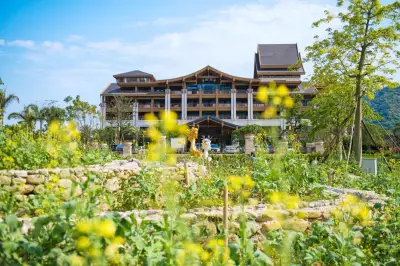
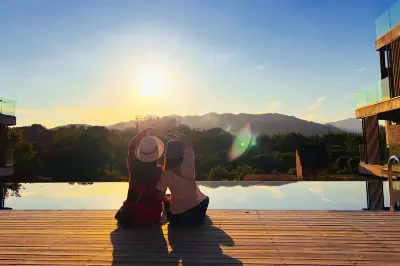
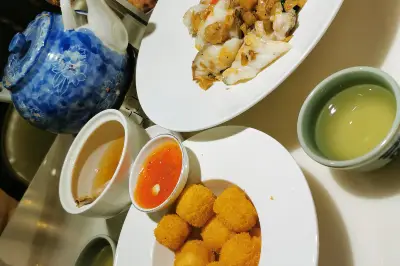
Studying, tutoring, hobby classes shouldn’t be the whole of childhood... That’s what my husband says all the time, so this weekend, our family of four hopped into our little car, armed with a well-researched plan, and set off for a two-day trip to beautiful Paitan Town in Zengcheng. 【Junji Bamboo Tube Rice】Our first destination was actually the famous Baishuizhai in Zengcheng, but thanks to the kids who love to sleep in, we didn’t get out the door until 10 a.m. By the time we drove to the foot of Baishuizhai, it was already past 1 p.m. So, on a friend’s recommendation, we stopped at Junji Hakka Cuisine at the base of Baishuizhai. Their bamboo tube rice, roast pork ribs, and roast chicken are all signature dishes. “Cut a length of bamboo, fill it with rice, roast it over fire until the bamboo chars and the rice is cooked – wonderfully aromatic.” – This method of making bamboo tube rice was recorded in ‘Travels in Yunnan’. Since many friends on social media kept asking about the prices, I’ve noted some down. At Junji, a portion of cured-meat bamboo tube rice costs 50 yuan. The delicate bamboo fragrance and fresh Zengcheng Simiao rice fill the air with aroma the moment it’s served. The oils from the cured pork and sausage seep into the rice – this is the taste of Zengcheng. The captivating rice aroma is something you rarely get in city rice. Watching the two sisters scramble for rice, I realize how rare such experiences are for kids raised in big cities. We also ordered seasonal late-season choy sum, a vegetable hailed as the ‘king of choysum’. Winter is its planting and harvesting season; it takes 90–120 days to mature and only hits the market in deep winter, much later than ordinary varieties, hence the name. Zengcheng’s superb geography gives this choy sum a refreshing sweetness and a tender, non-fibrous texture. Highly recommended. 【Baishuizhai Scenic Area, Zengcheng】When visiting Zengcheng, Baishuizhai tops most people’s lists. It lies in Paitan Town, Guangzhou Zengcheng, and is known as the ‘Emerald on the Tropic of Cancer’. The scenic area is thick with forests, the air fresher than fresh, and the abundant rainfall creates Baishuixian Falls – the waterfall with the greatest drop in mainland China. Even from the foot of the mountain, you can see the majestic cascade in the distance. 【9999 Steps – The No.1 Ladder in South China】Admission is 60 yuan for adults and 30 yuan for kids over 120 cm. Built along the hillside, the hiking trail known as the ‘No.1 Ladder in South China’ runs from base to peak, crossing three mountains and linking two alpine lakes. It stretches 6.6 km with exactly 9,999 steps. Before heading up, we bought butterfly nets, water pistols, and plenty of drinking water from a nearby shop. A tip: there are very few vendors on the mountain, and it’s hundreds of steps between each, so bring enough water and snacks. If you take the left-hand path up, you pass a Quirky Water Valley – a dedicated play area for children. Painted rocks dot the landscape, and Mimi, who’s a sucker for anything pretty, insisted on posing with every colorful boulder. There’s also a stream area where kids can splash about. Those not keen on climbing can easily spend a whole afternoon in the mountain water park, Quirky Water Valley, or the Fairytale Forest. We started our ascent. The waterfront plank path from step 99 to 299 is a real crowd-pleaser. It hugs the stream, leading deep into the valley under a canopy of green. Mimi was over the moon at her first sight of a small waterfall. Walking there, with crisp air, a cool autumn breeze, rolling greenery, and the murmur of flowing water, felt utterly soothing. We snapped many beautiful photos along the way, while the older sister charged ahead eagerly! At the Meeting Immortals Bridge on step 299, there’s a small platform where our little rascals played in the water and chased butterflies. Dad remarked that these are the pictures childhood should be made of. Winding further up the mountain path, the trail gets steeper. The two sisters held hands and trudged upward step by step. The stream beside us grew wilder. 【Twin Dragons Confluence】There are many waterfall-viewing platforms on the way, each framing a unique visual effect with the falls. The Twin Dragons Confluence is the first scenic viewpoint. At the Waterfall Viewing Terrace (step 1,425), the thundering cascade roars down right beside you, the sound like ten thousand galloping horses – utterly stirring. Climbing higher, the full force of Baishuixian Falls comes into view, plunging straight down from an alpine lake like a Milky Way spilling to earth; the crashing water resounds like thunder, thrilling to the core. Baishuixian Falls boasts a drop of 428.5 meters, making it the tallest waterfall in China’s interior. By step 2,199, both sisters wanted to push on, but this old mom’s legs gave out. We rested for twenty minutes under the magnificent negative-ion oxygen bar. That afternoon, the girls seemed to forget their phones entirely, lost in the simple joy of mountain and stream. 【Gaotan Roast Chicken】By the time we descended, night had fallen. Following a friend’s tip, we headed to Gaotan Roast Chicken, directly opposite the south gate of Gaotan Jinxiu Xiangjiang Health Valley. They serve roast chicken: regular chicken 78 yuan, free-range chicken 98 yuan. The dish didn’t appear immediately after we sat down – we waited a good twenty minutes. The freshly roasted chicken arrived piping hot, with crispy skin and tender flesh – well worth recommending. Another standout dish was the salted egg yolk stuffed pork belly, 48 yuan per portion. The savory egg yolk encased in the pork belly looks irresistible; the moment you taste that alluring salty fragrance, it’s unforgettable. Highly recommended. 【Floral Hotel · Yueji Season Guesthouse】After dinner, we checked into a guesthouse near Baishuizhai – a place with real character. Based on online reviews, we found Floral Hotel · Yueji Season near Xiashen Village, Shangjiu Po, Paitan Town, Zengcheng. Driving there at night, the area was deserted and deeply tranquil. The corridors and stairwells are adorned with charming Chinese-style murals and paintings. The meeting room and tea lounge on the ground floor, bathed in soft yellow light, exude warmth; the serene guesthouse has a way of calming the mind. The furniture is all rosewood, giving the antique-furnished rooms a sense of secluded forest-spring bliss and quiet retreat. The rosewood dressing table begs for classical-style photos. That evening, we ate seasonal Mishi red persimmons – as legendary, they were honey-sweet and bursting with juice. 【Mishi Red Persimmons】Mishi Village lies in the Baishuizhai provincial scenic area of Paitan Town, Zengcheng. Elevated and ringed by mountains, its red soil (a mix of sand and clay) has been home to persimmon cultivation for over three hundred years. The red persimmons are top-grade: fine-textured, seedless or with tiny seeds, juicy, and so sweet you can peel them without pulling away the flesh. Eating them fresh can help lower blood pressure, counteract alcohol, and soothe the bowels. To the music of insects outside, the slow-living ambiance of our space gave us urbanites a taste of poetic life. In the morning, bird calls and sunlight streamed into our room through the window. Both sisters went downstairs early for breakfast – a simple farmhouse-style meal: plain congee, glutinous rice cakes, Malay sponge cake, and eggs. The girls loved eating on the swing; kids really do appreciate atmosphere. After breakfast, they played in the courtyard the whole morning. This guesthouse at the foot of Baishuizhai is truly lovely. Right outside the gate stretches a wide rice paddy; just before leaving, we dashed down to enjoy it a while longer. ———Treasure everything, even if you own nothing / Remember you said home is the only castle / Running on as the fragrance of rice flows / Smile, the dreams of childhood I know / —‘Fragrance of Rice’ Zengcheng is famous for its Simiao rice, and rice paddies are everywhere. The girls saw for the first time what rice plants actually look like – the textbooks came to life before their eyes, fascinating. 【Red Heart Guava Orchard】Seeing how much they loved the farm, we wandered near the Baishuixian area of Baishuizhai, where many pick-your-own orchards dot the landscape. We picked a red heart guava orchard. The farmer was very friendly, showing us around and teaching the girls how to spot ripe fruit. He also showed Mimi how to use the butterfly net to cradle the fruit so it wouldn’t hit the ground. Here’s the blossom of a red heart guava – so pretty! Watch how delighted the sisters are picking the fruit. For me, the best part of fruit-picking is letting children truly connect with nature and teaching them gratitude for its gifts. The girls filled half a basket; the guavas were sweet and delicious. 【Zhou Ji Herbal Jelly Shop】Paitan Mesona – A specialty entwined with legend. During the Tang Dynasty, a severe drought hit Zengcheng; life was hard and many suffered sunstroke. A local herbalist in Paitan, distressed by the situation, heard that He Xiangu’s cave held a magical herb to cure heat ailments. Determined to save the people, he sought the herb from the immortal. After a grueling journey over mountains, he found He Xiangu playing chess. Moved by his compassion, she picked a handful of celestial grass, wove it into a straw horse, and gave it to him. The grass horse descended to the mortal world and healed many; later, it transformed into a plant forever staying among humans. This is the mesona, or ‘herbal jelly grass’, widely grown in Paitan. Older residents of Zengcheng always recommend Zhou Ji Herbal Jelly. Many have heard of it but don’t know the original location of the Zhou Ji Herbal Jelly Cooperative – tucked away in Hanhu Village. Stepping into the shop, you’re greeted by an array of mesona products plus certificates from the Chinese Culinary Association and Guangdong Culinary Association naming it a Famous Chinese Snack and Famous Guangdong Snack – a testament to its quality. Zhou Ji’s mesona jelly is made from grass irrigated with pure mountain spring water, using traditional methods that preserve the authentic flavor. It’s said to clear heat, detoxify, and help lower blood sugar and blood pressure. The pure waters of Paitan give this jelly its unique character. Flavors include condensed milk and honey – both excellent. Downstairs, kids can practice calligraphy and make tea; the upper floor has been converted into guesthouse rooms. The standout feature is the sweep of rice paddies right at the doorstep. The two sisters frolicked in the paddies, soaking up the warm autumn sunshine. And yes, this old mom posed for a few shots too – Dad’s white umbrella lens captured a truly atmospheric scene. The older girl isn’t into photos; she just loves chasing butterflies. Look what she discovered: in a child’s eyes, nature should be exactly this way. 【Shopping for Local Specialties at Paitan Market】On the way back, following tips from the guesthouse ladies, we stopped at Paitan Market for local specialties. The market brims with unique regional products. 【Paitan Specialties】<<< Mesona grass, Paitan white tea, Paitan kudzu, and black olives are all local treasures – and very affordable. Before heading home, we enjoyed a plate of fried Simiao rice with cured meat and the famous lidded rice noodles, rounding off a perfect trip. Childhood should be like this! Take the kids away from the city’s noise, out to the streams and fields. Let them listen to insects and birds, breathe fragrant blossoms, see golden wheat waves, and discover what dragonflies, butterflies, bees, and ants really look like. Together, let’s go find the simple joys of our own childhoods!