A Whirlwind 40-Hour Tour of Guangzhou
In the first half of the year, the pandemic was severe, making travel inconvenient. With things under control in the second half, I started planning trips. Originally, I had plans from July, but due to various reasons, it wasn't until the National Day holiday that I finally visited Suzhou and Hangzhou. After returning, I saw that I would have to be on duty over a weekend in November, which dampened my mood a bit, so I decided to get away before the duty started.
I didn't have extra vacation days, so I took a half-day off on Friday afternoon to leave early and return home on Sunday afternoon. From the moment my high-speed train landed at Guangzhou South Station at 10:00 p.m. on the first day to leaving Guangzhou at 2:00 p.m. on the third day, I had exactly 40 hours in the city. But that's fine—I've been to Guangzhou five times already, and I've basically covered all the popular, mainstream, and offbeat sights. This trip was just to wander around, sample some Cantonese snacks, and escape my daily routine for a bit.
Day 1, November 13
I took train G2928 from Anshun to Guangzhou, departing Anshun West at 5:00 p.m. and arriving at Guangzhou South at 9:55 p.m. This train started running after the Anshun–Liupanshui Intercity Railway opened; it originates at Kunming South and terminates at Shenzhen North, with stops only at Anshun West and Guiyang North, making it much more convenient for people in Anshun.
Upon arrival at Guangzhou South Station, there were still quite a few people, though fewer than during the daytime. No need to take detours to enter the subway station—temperature checks were mandatory. I quickly got to the platform and took Line 2 to Sun Yat-sen Memorial Hall Station. From there, it was about a 10-minute walk to my booked hotel, Hanting Ximenkou Metro Station Branch. Along the way, I passed Yinji Rice Noodle Roll Shop, a well-known chain of old-school rice noodle roll shops in Guangzhou. The quality is decent and the prices fair. Since I'd skipped dinner to eat right in Guangzhou, I was starving by then. I ordered a beef rice noodle roll, a mixed vegetable rice noodle roll, and a boat congee, and got them to go. Though it's a chain, the quality varies by branch—I felt the congee here wasn't as good as the one I had on Beijing Road.
Clearly I'd ordered too much for one person, but I wanted to try multiple flavors. After eating, I rested a bit and went to sleep, ready to start my real explorations the next day.
Day 2, November 14: Guangzhou Uprising Memorial Hall, Former Site of the All-China Federation of Trade Unions, Chunyang Taoist Temple, Guangzhou Metro Museum, Huangpu Ancient Village, Haizhu Tram, Haixinsha Island, Canton Tower, Beijing Road
I slept in until past eight in the morning, had breakfast at the hotel restaurant, then walked to the Guangzhou Uprising Memorial Hall. The memorial occupies the site of the Guangzhou Commune, part of the first batch of National Key Cultural Relics Protection Units, and is a component of the Guangdong Museum of Revolutionary History. After temperature checks and ID registration at the gate, entry is free.
On December 11, 1927, the Guangzhou Uprising broke out. After four days of struggle, it ultimately failed, but together with the Nanchang Uprising and the Autumn Harvest Uprising, it marked the great beginning of the Communist Party of China independently leading revolutionary wars and building a people's army.
The memorial currently houses one permanent exhibition—"Guangzhou Uprising Permanent Exhibition" displayed in the former headquarters of the Workers' and Peasants' Red Army—and one temporary exhibition—"Celebrating the 99th Anniversary of the Founding of the Communist Party of China: Revolutionary Cultural Relics Exhibition" in the former office building of the Guangzhou Soviet Government.
Because there were many written introductions, I spent about an hour and a half reading carefully. Afterward, I took a bus to the Former Site of the All-China Federation of Trade Unions, only to find the gate closed with a renovation sign inside, indicating it would reopen by May Day next year.
So I just snapped a photo at the gate to prove I'd been there.
I continued by bus to Chunyang Taoist Temple. For pandemic prevention, I scanned a mini-program at the entrance to reserve a visit to a religious site in Guangzhou, but since there were very few people, I could just scan and reserve on the spot—also free.
Chunyang Temple, said to be the largest Taoist temple in Guangzhou, was built in the Qing Dynasty and renovated in 2003. It now features main structures like the Hall of Guanyin, Wenchang Hall, Chunyang Treasure Hall, Mingche Pavilion, Chaodou Platform, and Yuan Chen Hall, plus a corridor of Taoist cultural steles. Though located amidst a commercial area, it's quite serene inside. The architectural style carries typical Lingnan characteristics. Since I just wanted a quick look at the architecture, it took only half an hour; believers might need more time.
I checked the time and figured I could reach the Guangzhou Metro Museum by about 12:30 p.m. if I took the subway, so I reserved a ticket on WeChat.
The area around Chunyang Temple is Guangzhou Zhongda Textile City. Once outside, everything was selling textile materials, along with all kinds of masks now a pandemic essential.
The Guangzhou Metro Museum is near Wanshengwei Station on Line 8; follow the signs after exiting. The museum mainly introduces the history of metro development in China and the subway construction process, along with driving simulations, making it a decent science education venue suitable for kids.
After visiting the museum, it was almost 2:00 p.m. Nearby was Wansheng Plaza with many dining options. In Guangzhou, I naturally had to try the local claypot rice. I chose a place called Xinminji, with a group-buy meal for 27 yuan including a two-topping claypot rice and a claypot soup—generous portions. Be sure to let the crust cool slightly before gently scraping it off with a spoon.
For the afternoon, I took a bus to Huangpu Ancient Village—note this is in Haizhu District, not Huangpu District. Attractions include the Yuehai First Pass Memorial Hall, Huangpu Ancient Port Site, and Ancient Port Park. There's a shop called Ancient Port Grandma's Ginger Milk Curd that's a social-media hotspot nowadays. As I passed, it was really crowded, but I was too full to stop; next time I'll definitely try it.
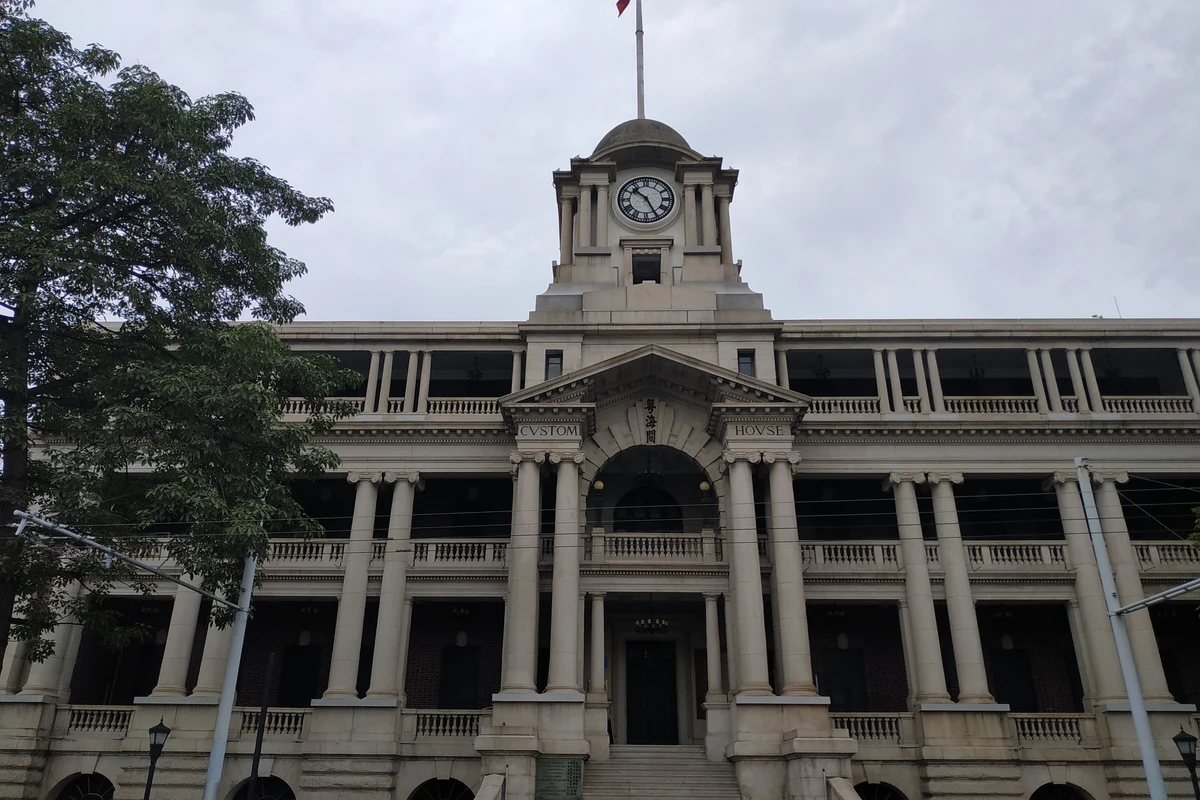
The Yuehai First Pass Memorial Hall features a major exhibition titled "Flowing Splendor," using photos, objects, models, wax figures, electronic screens, and DVDs to showcase Guangzhou's maritime Silk Road glory. The main buildings include a two-story front-and-back Huangpu Customs House, Yongjing Barracks, a comprador hall, and a memorial archway inscribed "Legacy of the Ancient Port."
Exiting the memorial hall, turn left and continue to the Huangpu Ancient Port Site, then left again into Huangpu Village—full of local life, with small vendors along the road. Southern China really values ancestral halls; I saw many along the way, some of which you could enter.
Since I had missed one attraction today, time was still early, so I decided to hop on the scenic Haizhu Tram. Starting at Wanshengwei and ending at Canton Tower, the fare is 2 yuan, payable by card, e-payment, or paper ticket. The full ride takes about 45 minutes.
Arriving at Canton Tower before 5:00 p.m., I checked my phone for routes to Haixinsha and found I could take a ferry across the river: Guangzhou Water Bus Line S11, from Canton Tower Fortune Pier to Haixinsha Pier, running from 7:00 a.m. to 6:00 p.m. The route is very short—just three minutes to Haixinsha. If you catch the 6:00 p.m. one, you might see the night scenery along both banks of the Pearl River.
Haixinsha is an island in the Pearl River. The 2010 Guangzhou Asian Games were held here, and now it's a public park. I sat in the park, waiting for darkness to take a few photos of Canton Tower—supposedly a great photo spot.
Around 5:40 p.m., dusk set in, and Canton Tower's lights began to glow. I took a few pictures and a short video of the changing lights. From the river-facing side, you can photograph the tower; the other side faces Huacheng Square, where you can capture Guangzhou's Twin Towers and the Guangdong Museum, among others.
On the left, Liede Bridge resembled a bottle opener.
After taking photos, with a light rain falling, I headed back. From Haixinsha during the day, you can take the water bus, but at night you need to take the APM line to Canton Tower or Huacheng Square for connections. I chose to go to Canton Tower, then transfer to Beijing Road for a stroll.
Liyin Rice Noodle Roll, another chain strongly pushed on foodie websites now. Wanting to try more, I just ordered a "Number One Scholar" rice noodle roll with beef and fresh shrimp. Honestly, I find all the major rice noodle roll chains in Guangzhou quite good, but I can't really tell which is superior.
The pork trotter rice sold around Guangzhou is also delicious. Since this trip was short, I had to hustle to sample more places, so I bought a pork trotter and poached chicken combo rice from a little alley opposite the Guangdong Provincial Department of Finance to take back to the hotel.
Day 3, November 15: Hualin Temple, Guangzhou Thirteen Hongs Museum, Shamian Island, Yongqing Fang
My train was at 2:00 p.m., so I only had the morning to explore, but that was fine—today's spots are all concentrated in Liwan District's old town. After breakfast, I headed to Hualin Temple.
Hualin Temple is at Xilai Main Street, Xiajiu Road, Liwan District, originally built in 527 AD during the reign of Emperor Liangwu. It's a site of Sino-Indian cultural exchange for Bodhidharma, the founder of Chinese Chan Buddhism, and ranks first among Guangzhou's four great Buddhist monasteries.
Near the temple entrance stands Jinlun Guild Hall, a surviving Qing-era trade guild hall, but it wasn't open.
Inside Hualin Temple, construction seemed to be underway—the left area was all cordoned off. I took a brief look and left.
I walked to the Guangzhou Thirteen Hongs Museum, located inside Guangzhou Cultural Park. Built on the original site of the Thirteen Hongs, it's free but you need to show ID at the left window of the museum to get a ticket.
Permanent exhibitions include the "Qing Dynasty Guangzhou Thirteen Hongs History Exhibition" and the "Special Exhibition of Thirteen Hongs Period Artifacts Donated by Wang Heng and Feng Jie." The history exhibition is divided into six sections: "Opening the Sea, Establishing Customs," "Sights of the Thirteen Hongs," "Thirteen Hongs Merchants," "Thirteen Hongs Trade," "East-West Convergence," and "Moving Toward Modernity." It uses numerous precious historical documents and surviving relics from home and abroad to depict the nearly century-long history of the Thirteen Hongs as a trading port from glory to decline, also reflecting foreign trade in China, the Guangzhou merchant community, the eastward spread of Western learning, and the westward spread of Eastern learning.
There's even an AR photo feature where you can pose with your favorite artifacts. I tried a few shots, but my selfies didn't turn out well.
Inside the cultural park, a chrysanthemum exhibition was underway with many creative displays; I casually snapped a few pictures.
Exiting the park, I crossed the street and walked along Dexing Road to its end at Yanjiang West Road. The Guangdong Customs Museum stands at the intersection, but it was closed, so I took two photos and moved on. Walking along the riverbank, Shamian Island wasn't far. I'd been there twice before, so I didn't take many photos. I saw the Guangdong Foreign Affairs Museum, also closed; a sign at the gate listed opening hours: Tuesday, Thursday, and Saturday. I should have checked earlier—yesterday could have worked. But leaving a little regret gives an excuse to come back next time.
A bit further, I spotted a bus labeled Yongqing Fang Route 1, kind of like a sightseeing bus painted red, with window stickers in Guangzhou style. The stops were mostly named after tourist spots, so I hopped on. Unexpectedly, no one else got on or off until the terminus at Yongqing Fang—I basically had a private charter.
Stepping off, this road is called Enning Road. Walking along Enning Road leads to Yongqing Fang; crossing the bridge at the end and continuing further takes you to Liwan Lake Park and the like. Running short on time, I had lunch at a roast meat shop called Jiamingyang at the end of Enning Road: Qingyuan soy-sauce chicken rice. To be precise, the "soy sauce" here is a specially blended seasoning. First time trying it, and it was okay, but I still prefer poached chicken.
After the meal, it was time to head to Guangzhou South Station by subway and go home.
This Guangzhou weekend trip wasn't entirely spontaneous—I had some plans beforehand. But upon arrival, my actual itinerary diverged a bit from the plan. Back home, I got ready for work the next day, and after this weekend shift, I'll pick another time to go to Liuzhou next.