A Two-Day, One-Night Self-Drive in Zengcheng, Guangzhou: Persimmon Picking, Rice Paddy Rambles, and Blissful Rural Charm
Let’s Talk About This Trip
When it comes to traveling in Zengcheng, the first place that comes to mind is Baishuizhai—a name so beautiful. Years ago, before I ever set foot there, I was filled with great anticipation. Once I finally went, I loved every moment. I've driven there four times now, sometimes with family, sometimes with friends, and each trip has been a blast. Climbing the 9,999 steps to reach the stunning mountaintop Tianchi Lake is a wonderful experience in itself.
In Paitan Town, besides Baishuizhai, there are many other spots worth lingering over—like the characterful guesthouses near Baishuizhai. On my fifth trip to the Paitan Town area in Zengcheng, I deliberately chose a special countryside guesthouse. In addition to hiking, staying put and soaking up the tranquil rural life was exactly the plan.
This Saturday, our casual weekend self-drive getaway kicked off. Before setting out, I booked a "Bamboo Seclusion" themed room at Huaxi Yushe in Paitan Town; everything else we left to spontaneity—after all, traveling as a duo makes things easy and flexible. When we got home, I summed up our itinerary.
DAY 1: Departure → Hengdi Jaboticaba Family Farm → Huaxi Yushe → Persimmon Picking → Hongkelai Restaurant
DAY 2: Breakfast at Huaxi Yushe → Pondside Stroll → Paitan Off-Road Club → Gaopotou Roast Chicken → Bougainvillea Garden → Paitan Market → Home
Hengdi Jaboticaba Family Farm
On the way to Baishuizhai in Zengcheng, we passed through Hanhu Village in Paitan Town. Looking for a farm-to-table lunch, we came across Hengdi Jaboticaba Family Farm, tucked right beside a country road with four parking spots under passion fruit trellises. The passion fruit was just about to ripen, and the hostess had picked a basketful. There was only one dining table, surrounded by fruit trees—truly a rustic farm lunch! Their signature dish is fig-infused chicken, but the owner picked loads of papaya, so we opted for papaya-infused chicken hotpot. Throw in a handful of greens, and it was sweet, tasty, and healthful!
Around the farm, you’ll spot all kinds of glass jars containing dried figs, fig wine, homemade jaboticaba wine, and more, plus seasonal passion fruit, papaya, and winter melon—authentic local treats. When jaboticaba picking season comes, I really want to go back!
[Farm Foodie Tips]
Restaurant Name: Hengdi Jaboticaba Family Farm
Address: Hanhu Village, Paitan Town, Zengcheng, Guangzhou
Getting There: Self-drive (free parking under 4 passion fruit shade structures)
Opening Hours: 10:00–22:00
Recommended Dishes: Fig-Infused Chicken, Papaya-Infused Chicken, Homemade Jaboticaba Wine
Ambience: Rustic farm vibe
Average Spend: 48 RMB per person
Nearby Attraction: Baishuizhai
Hengdi Jaboticaba Family Farm
Huaxi Yushe Guesthouse, Guangzhou
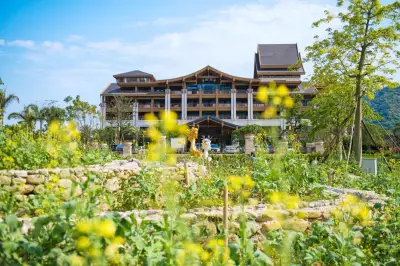
Huaxi Yushe is a countryside guesthouse nestled between rice paddies and bamboo groves. The single building houses just five guest rooms, ensuring a strong sense of privacy. Driving into Mishi Village, Paitan Town, you’ll find large swathes of golden rice fields—October is harvest season, and the whole village glows in shades of gold. We checked into the 4th-floor "Bamboo Seclusion" themed room with its huge floor-to-ceiling windows: one side overlooks rice paddies, the other bamboo forest. The rooftop open-air pool lets you swim amidst the reflections of white clouds. The room has an oversized bathtub perfect for a bubbly soak facing the bamboo—such a blissful weekend relaxation!
The room is incredibly spacious, featuring an ultra-comfortable double bed and a square tatami tea table at one end. The two massive floor-to-ceiling windows frame the fields outside, bathed in brilliant sunlight with an unparalleled view. You can soak up the sunshine while enjoying a cup of gongfu tea.
Huaxi Yushe: An Afternoon Tea Ritual
Busy work often causes us to overlook life’s little rituals. This weekend getaway, during afternoon tea at Huaxi Yushe, that sense of small happiness returned. Sweet mung bean soup, crunchy biscuits, fragrant tangerines—simple but heart-warming. The guesthouse girls smiled so sweetly, and the atmosphere was so cozy. Taking a sip of tea, I thought, yes, everything is just as it should be.
When in Zengcheng, you must try the local Baicha (white tea). I was just introduced to it: Baicha is a pure wild variety with low yields. Locals pick and sell it themselves, so it’s not widely promoted. Baicha isn’t actually "tea"—it’s a liana plant, and the finished product doesn’t undergo traditional tea processing like fixation, roasting, or fermentation. Living in the mountainous area, the people of Paitan go up the hills and harvest the leaves along with the stems. They cut it into inch-long pieces, dry it in the sun, and it’s ready to brew.
Paitan Baicha tastes slightly bitter at first but leaves a sweet aftertaste, with cooling, heat-relieving, and detoxifying properties. Based on production time, Baicha is categorized as new tea (1–5 years), aged tea (6–15 years), and old tea (20+ years). New tea is greenish-yellow, slightly cloudy, strong and astringent, with a powerful sweet aftertaste. Aged tea is yellowish-red, refreshing, similar to black tea, with a mellow aged flavor and good sweetness. Old tea is bright red, thick, mild, and smooth. "Cha Shi" (literally "tea excrement") is the ultimate rarity—rumored to be the digested excretion of tea worms that have eaten dried tea. It has an excellent taste, akin to top-tier pu’er tea, and is said to have extremely high medicinal value.
Yoga in the Countryside, Wandering Amidst the Rice Fields
Persimmon Picking in Mishi Village
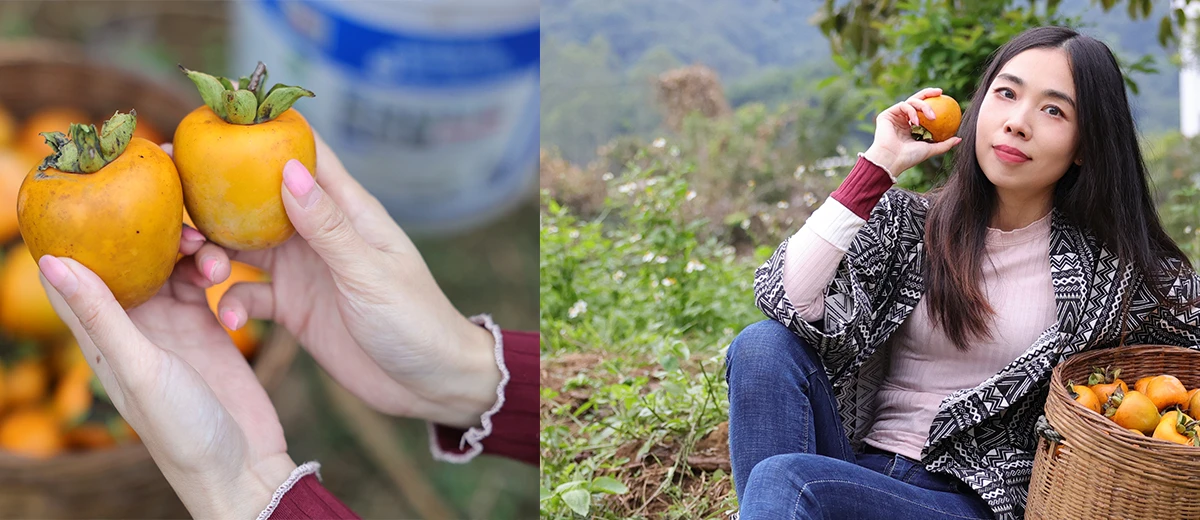
Why does everyone love autumn? Because it’s the harvest season! In Mishi Village, Paitan Town, Zengcheng, Guangzhou, there are many persimmon trees. From the balcony of Huaxi Yushe, you can see several trees with bright red fruit dotting the large canopies. The guesthouse lady told us the trees belong to villagers; if you really want to pick some, just ask the owner nicely, and upon getting the nod, you’re free to pick!
We went for a walk along the path behind the guesthouse. Ducks swam and played in the ditches. A few hundred meters behind, there’s Mishi Reservoir. The reservoir is surrounded half by persimmon trees, their red fruit hanging on the branches. Some diligent villagers were harvesting; even more fruit dangled high up, brilliantly red and delightful to the eye. We saw birds pecking at them, and fallen persimmons were gobbled up by chickens. Country life is full of such simple pleasures.
Dinnertime—let’s go find something! Staying in a village guesthouse, dinner naturally means eating in the village. By the roadside we found Hongkelai Restaurant, which seemed especially popular. In the evening, every seat was taken. We ordered their signature charcoal-grilled ribs, a pan-fried and braised Gaotan stuffed tofu, and a sliced pork and mulberry leaf soup. This simple but satisfying meal for two tasted absolutely delicious; we cleaned our plates. Judging by the crowd, you know it’s good—sincerely recommended. The restaurant’s courtyard is especially beautiful at night; I’d recommend couples to book an evening table—so romantic!
Pan-Fried and Braised Gaotan Stuffed Tofu
The Quiet Countryside Night
In the countryside evening, there were no car horns, just the constant hum of insects. The guesthouse has only a handful of rooms. Other guests gathered around a hotpot in the dining area, chatting and laughing loudly. A small gathering in this themed country guesthouse—I could see the joy on their faces, the unrestrained merriment of being freed from work. Work when it’s time to work, holiday when it’s time to holiday. Do the right thing at the right time; life should be arranged this cleverly.
A Morning Woken by Sunshine
In the morning, sunshine woke me. Outside the window were blue skies and white clouds, the bright sun shining on the rice paddies. Leisurely, we went downstairs for breakfast—rice porridge, pickled vegetables, fried rice noodles, lettuce, sweet potato, corn, eggs, and steamed buns. So abundant! Compared to a hotel buffet, eating what’s grown in the back garden while bathed in morning sun brings a little surge of happiness. A beautiful new day began; such a romantic weekend!
Guangzhou, Zengcheng, Paitan Town, Mishi Village
Sunday morning was bright and clear, with blue sky and white clouds setting off the golden rice fields. The village scenery was breathtakingly beautiful. After breakfast, we strolled along the lane behind the guesthouse. Geese frolicked in the creek, free-range chickens sauntered under the fruit trees, and elsewhere, geese pecked at rice grains—from field to mouth in one step! Bananas had turned yellow, persimmons red, and papayas still green. Mishi Reservoir teemed with fish; as soon as they saw people approach, they swam over. Around the reservoir were many fruit trees—chestnut, persimmon, star fruit, kumquat… The villagers here are so industrious, keeping the fruit trees and poultry in perfect order.
Huaxi Yushe is a boutique countryside guesthouse in Zengcheng, offering the feeling of being ensconced in rice paddies. Before the rice is harvested, go spend a quiet weekend, savor rustic cuisine, and tread the village paths. Behind Huaxi Yushe are a stream, vegetable plots, and bamboo groves. The large vegetable garden is lush and green, planted with rows of sweet potatoes, purple potatoes, peanuts, ginger and more, plus wild kudzu vine with lovely purple flower clusters.
Baishuizhai Sweet Potato is a distinctive agricultural brand of Zengcheng District. High in starch and aromatic, usually with a purple core and excellent texture, this variety has been grown on Hakka hillsides for ages. The pristine natural conditions of the mountains and the organic Hakka farming methods give these local products their superb, natural quality.
Baishuizhai Sweet Potato is a distinctive agricultural brand of Zengcheng District. It has an especially high starch content, a unique fragrance, and typically a purple core with great texture. Legend has it that He Xiangu, one of the Eight Immortals, passed by and created it to relieve the villagers’ hunger and ailments. The variety has a long history of cultivation on Hakka hillsides, with relatively large planting areas in mountain towns. The pristine natural conditions and Hakka organic farming practices ensure the finest, most natural quality for all farm produce. Scientific research has found that sweet potatoes are rich in protein, fiber, calcium, sodium, phosphorus, iron, carotene, and vitamins B1, B2, C, etc. The carotene content equals that of carrots, and vitamin levels match citrus fruits. Overall, their nutritional profile is superior to many other crops and has significant anti-cancer and health-protective functions. Thus, sweet potatoes are a health food and snack that combines grain, fruit, and vegetable. In December 2009, Paitan Town held the first Baishuizhai Sweet Potato Festival.
A flock of geese pecked at rice grains beside the paddy field—these geese have it so good here, with grains, fruit, meadow, ditches, and even their own shed.
Paitan Jungle Off-Road Club
Far from the city center, in Mishi Village, Paitan Town, there is actually a jungle off-road club. Riding a four-wheel ATV and speeding along rural dirt tracks–usually people ride on sand, but switching to the uneven village mud roads offers a totally different experience. Put on professional riding gear and a helmet to stay safe, then let loose and go off-roading! This club is just a few hundred meters from the guesthouse; we wandered over after seeing the sign. This kind of off-roading seems perfect for couples–sharing one vehicle is thrilling. If you’re interested, give it a try! Prices start at around 178 RMB per person.
At lunchtime, we passed a place with a yard full of cars—twenty or thirty of them—so we pulled in, too. Inside, there were no free tables, but two uncles at the door kindly offered to share, saying they were nearly done; that way we didn’t have to wait. I first thought it was a banquet, but no—the diners were all locals, with some passing tourists. It turned out to be a long-standing restaurant. We ordered just two dishes for the two of us; portions were generous and more than enough. The taste was pretty good; my companion remarked it was like food cooked by a village banquet chef—a high compliment! No let-down, highly recommended!
Bougainvillea Garden. A small garden we passed, looking like it could be fun to climb—saved for next time. We took a few photos at the entrance. Bougainvillea is, after all, just paper flower, right? They bloom a brilliant red, with a long flowering season—a nice spot for a stroll or a short hike.
On the way home from our Zengcheng Paitan self-drive, we stopped at Paitan Market to buy some local specialties and picked up ingredients for dinner. The market is fairly large and clean, with food displayed neatly. The cooked-food stalls had all kinds of stuffed eggplant, stuffed peppers, stuffed tofu, stuffed mushrooms… so much handiwork! The fruit stalls displayed crisp and soft persimmons, so enticing! It’s local persimmon harvesting season, so we bought some, plus sweet jujubes to munch in the car. Haha, what a happy weekend!
About the persimmons: Mishi Village has a 300-year history of growing red persimmons. Located within the Baishuizhai Provincial Scenic Area in Paitan Town, Zengcheng, the village sits at a high altitude, surrounded by mountains, with red loam soil (three parts sand, seven parts mud) rich in organic matter. The red persimmons produced here are top-quality and well-known. Mishi red persimmons are moderately sized, usually 200–300 grams each, with some reaching over 500 grams. The flesh is fine-textured, seedless or with tiny seeds, juicy and sweet. The skin peels off without taking any flesh, giving a "sweet, tender, smooth" mouthfeel. They keep for over a month.
Eating fresh red persimmons helps lower blood pressure, counteract alcohol toxicity, stop bleeding, and moisten the bowels. They can also be made into dried persimmon, persimmon cake, persimmon paste, and more. The white powder on the fruit surface is called persimmon frost, which can be refined into mannitol for treating sore throats and coughs. The calyx and dried fruit are both used medicinally. I also learned something new: unripe persimmons can be made into persimmon tannin, a good antiseptic and astringent, used for dyeing nets and as a decorative coating.
Besides Mishi red persimmons, Baishuizhai sweet potatoes, and Paitan Baicha, Paitan’s Zengcheng Simiao rice is another local specialty you can take home on the return trip—a rewarding journey indeed.
Farewell, Paitan. Happy times always fly by. The weekend was quickly coming to an end, and Sunday afternoon we were already on the road home. From Huadu District to Paitan Town in Zengcheng, the drive takes just over an hour—not far at all! Two days in the countryside relaxed both body and mind, so on Monday I can return to the office full of energy. A delightful little trip, nothing could be better!