2021 Year-End & New Year’s Guangdong Trip
The year-end is our little one’s birthday month. Amid the pandemic, we opted for safe travel destinations. In late September, we took the baby to Zhuhai Chimelong, and this time we intended to see the animals at Guangzhou Chimelong, plus ring in the New Year on Hailing Island.
Our itinerary was 6 days and 5 nights: 3 days at Chimelong, 2 on Hailing Island, and 1 in Guangzhou.
Flights & self-drive:
Right at Baiyun Airport we rented a car and drove ourselves.
Cuisine: Cantonese and Shunde dishes.
With a toddler in tow, we mainly stayed at well-known local hotels. Given the pandemic, the value was decent.
For Chimelong tickets, we chose a hotel package that was quite cost-effective. Other attraction tickets were minimal; Ctrip or on-site purchase both worked fine.
Day 1: Shanghai – Guangzhou
We decided to go on a whim. Airfare was reasonable, and we flew a big China Southern 787. Our plan was to let the baby have two fun days.
With the pandemic, the airport departure went smoothly. We picked up the car at the airport and drove across Guangzhou, checking into the Panda Hotel without a hitch. We booked a package with three-day park tickets plus that evening’s circus ticket. That night we ate at the hotel restaurant first. There were few tourists; apart from the buffet, the restaurant only stayed open until 6 pm. The dishes were standard Cantonese and quite good. After a full meal, we strolled over to watch the circus.
The circus venue was not as new as the one in Zhuhai, but the show was still stunning—highly recommended. It’s truly a high-caliber and heartfelt performance.
Day 2: Chimelong Safari Park
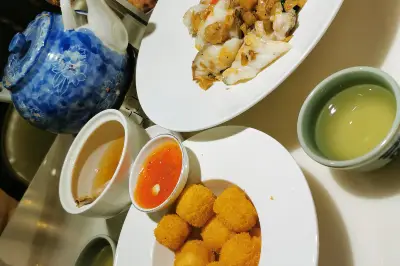
Today was our first day exploring Chimelong. The hotel didn’t include breakfast, so early in the morning we went to nearby Yucheng Restaurant for morning tea. It wasn’t far, but the surrounding roads were under construction. A classic old-school Guangzhou restaurant, the food was superb.
After eating and drinking our fill, we drove straight to the north gate of the zoo. With few visitors, parking was easy. Here you can also drive your own car into the park to see animals, following the same route as the park’s little train. We chose to walk in and took the little train from Swan Lake. The loop on the train was a nice experience, seeing various animals up close. After getting off, we trekked through Qinglong Mountain; the small animals, birds, and animatronic dinosaurs were all fun. We strolled and watched, timing it to catch animal shows at the performance venues, then continued to the Panda Triplets’ exhibition area. Beyond that was the cable car, which circles the whole park and lets you overlook all the animals.
The day’s sightseeing wasn’t too rushed. The baby happily bought souvenirs, and we lingered until dark before leaving the park for a short rest at the hotel.
In the evening, my wife wanted to go to Shunde to fulfill a wish from three years ago: having pig innards congee at Shunde Laoyouji. The drive took less than an hour. Thanks to the pandemic and cold weather, there was no queue—this place is hugely famous, opens at 9 pm, and was featured on CCTV’s "A Bite of Shunde." Before the pandemic, you’d usually wait at least two hours. Tonight we incredibly breezed through and had the pig innards congee, chive and pork blood soup, and sizzling pork liver. The taste? One word: sublime. Absolutely worth the trip.
The baby was a bit tired and didn’t eat much. We got back to the hotel past 11 pm, ending a hugely satisfying day.
Day 3: Chimelong Birds Park
We woke up early and had takeout breakfast. As it was the baby’s birthday month, the hotel sent many little gifts and surprises. We hung around the hotel with the baby until 10:30, then drove 10 km to Birds Park. I had assumed it was small and would be quick to see, but we discovered that although the area isn’t large, there are plenty of activities. You can join free guided talks and watch performances with the baby, all seamlessly scheduled. We took a boat to feed swans and pelicans, watched the magnificent flock of birds fly, and it was definitely worth a full day of fun.
Back at the hotel, we ate at the restaurant again—still delicious.
Day 4: Guangzhou Chimelong – Yangjiang Hailing Island
After breakfast and checking out, we went to Chimelong Paradise. This is an amusement park, and we made full use of our three-day tickets. There’s also a water park, but it’s closed in winter. The amusement park wasn’t crowded, and the rides were quite thrilling. We took the baby on some regular kiddie rides, and later tried the family roller coaster and the log flume. We didn’t dare to do anything too intense. We caught scheduled shows and a movie, which was quite enjoyable.
After wrapping up the three-day Chimelong visit, in the afternoon we drove over three hours to Hailing Island in Yangjiang.
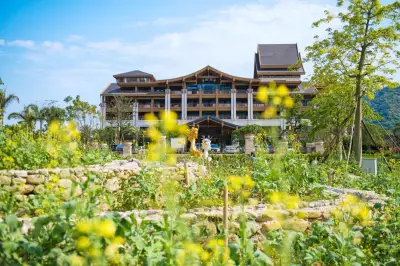
Hailing Island is the fourth largest island in Guangdong, located along the southwestern coast of Yangjiang. Expressway Zhaoyang and National Highway 324 connect it to the mainland. It’s been named one of “China’s Top 10 Most Beautiful Islands,” designated a national AAAAA scenic spot on October 8, 2015, and is one of China’s Ten Treasure Islands. The island wasn’t crowded. We drove straight to the Crowne Plaza Hotel.
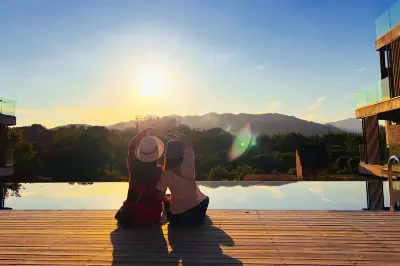
The hotel had an unbeatable sea view facing the South China Sea, excellent service, and delicious food at the restaurant. A truly comfortable place.
Day 5: Hailing Island
The weather was fine in the morning, very warm. After breakfast, we went next door to the Nanhai I Museum, which is an archaeological site where the Nanhai I shipwreck was placed after being salvaged.
The museum tickets weren’t cheap, but the interior was well done. This area is part of Yangjiang’s "Ten-Mile Silver Beach," backed by the South China Sea with gorgeous scenery. The museum, also called the Guangdong Maritime Silk Road Museum, highlights the cultural connotations of the Maritime Silk Road. It wasn’t crowded, and we strolled around with the baby. The central area features an archaeological glass room for the ancient ship; through the glass you could see staff still working on excavation.
After leaving the museum, we had an iced coconut and drove to Mawei Island for tide pooling. We passed Zhapo, the island’s commercial center. Along the way to Mawei Island, there were countless fish rafts and fishing boats by the sea—a unique scene.
Unfortunately, the road to Mawei Island was under repair and impassable, so we would have had to take a fishing boat there. We gave up. They say that at low tide a path appears to the island, but it gets submerged at high tide, so we never got to see it.
Luckily, the island is small, so we found another spot for tide pooling with the baby. Wasai Bay is supposedly an internet-famous tide-pooling spot. We parked by the road, bought sand tools from a small shop, and went straight onto the mudflat. There were shells, crabs, all kinds of snails, and shrimp—lots of marine life.
On the mudflat, local fishermen were also collecting seafood: raking clams, using electric prods for shrimp, with specialized tools—truly professional. We had a blast with the baby, and it wasn’t cold.
Next, we went to Tianlu Shanhai, a high vantage point and man-made scenic spot, an Instagram hot spot, but with excellent scenery. There were many wind turbines on the hill, and across the mountain was a radar base; supposedly Hailing Island was once a strategic military area.
A sightseeing cart took us to the summit. Walking and taking photos wasn’t tiring, and overlooking the sea toward Mawei was beautiful.
After that round, we ate at a seafood food stall near the hotel. We picked Qiujie Meishi; the seafood was really fresh, the cooking slightly simple, but the taste was good. Due to the pandemic, business was indeed quiet.
In the evening, we strolled on the hotel beach. Many vendors were selling fireworks. It was the 31st, year-end, and plenty of people set off fireworks on the beach—a nice vibe.
Day 6: Hailing Island – Guangzhou Huadu
Today was New Year’s Day, our last day on Hailing Island.
After packing, we headed to Shandi Ancient Village on the island. Upon arrival, we realized there was almost nothing to do. It seemed still under development; there must be some historical tales, but it wasn’t properly set up, so we just roamed and looked around briefly.
We continued to the next stop: the Tomb of Zhang Shijie, Grand Tutor of the Song Dynasty. This is on the eastern side of the island, one of the few historic sites. The tomb lies at the foot of Pingzhang Mountain, by the sea near Chikan Village. It faces east, backed by the mountain and looking out to sea, covering a sizable area. We paid our respects and had a quick look. Not far away was another good spot for tide pooling.
Not far from there is the Mangrove National Wetland Park. The park features subtropical mangrove wetlands, with an emphasis on ecological protection, plus sightseeing, leisure, and educational functions. It’s one of Hailing Island’s “New Eight Scenic Spots.” Inside the park is the province’s longest cross-sea wooden boardwalk, over a kilometer long. Walking along it, you face Mouse Hill in the distance.
The mudflats were full of people digging for oysters. The catch here was different from the previous day, mainly oysters and crabs. The baby had fun.
With that, we got ready to return to Guangzhou. We had originally planned to see a lion dance in Foshan, but with the pandemic, getting home safely was key. We chose the Atour Hotel in Guangzhou’s Huadu district, with Guangzhou Restaurant right downstairs. It was a 4-hour drive straight to the hotel, with little traffic. New Year’s Day seemed rather quiet too. Guangzhou Restaurant’s food was as good as ever.
Day 7: Guangzhou – Shanghai
In the morning, we again had morning tea at Guangzhou Restaurant—delicious.
After eating and checking out, we went to see Hong Xiuquan’s Former Residence nearby. This is one of Huadu’s New Eight Scenic Spots, located in Guanlubu Village, Dabu Township, Huadu District, Guangzhou. The residence was originally built during the Qing Dynasty but was burned down by the Qing army after the Jintian Uprising. In 1961, the Guangzhou archaeological team excavated the house’s foundations and reconstructed it based on Hakka dwelling styles. The whole scenic area is quite large, with a museum next door.
The protected area includes Hong Xiuquan’s former residence, the study pavilion, the Hong clan ancestral hall, and other structures, plus a longan tree planted by Hong in his youth, a stone lion unearthed at the study, the site of Hong Rengan’s residence, and village house foundations. The residence showcases the historical environment of peasant movement leader Hong Xiuquan’s early life, brimming with Hakka charm and pastoral scenery—a place for patriotic education, leisure, and recreation.
After the residence and museum, time was running short. We went to the airport for lunch at Taotaoju—still so delicious. Our flight was on time, and we got home smoothly.
Holiday time always flies. I hope the pandemic ends soon so we can travel happily again...