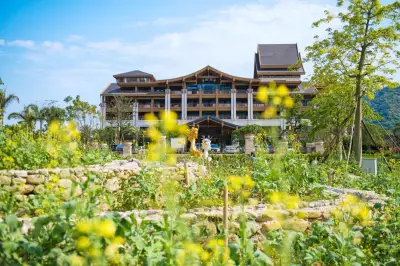
Episode 3131: Fine Trees, Dense Shade, Hidden and Unrevealed; A Miniature Masterpiece, Small Yet Exquisite
Jumbo Huang's Photographic Journey: Ancient Architecture of the Imperial Family
Episode 3131: Fine Trees, Dense Shade, Hidden and Unrevealed; A Miniature Masterpiece, Small Yet Exquisite
© Original images (The copyright of all images in this article belongs to Jumbo Huang's Photographic Journey; any form of reprinting must contact Huang_Jumbo or Jumboheritagelist). The images in this chapter have certain commercial value. All images in this album are strictly prohibited from any incomplete screenshot reprinting! Please respect this. In particular, any reprinting with manually superimposed commercial website watermarks is expressly refused!
All rights reserved for this work. The text in this work may not be used directly or indirectly for any profit-making commercial purposes. Violators will be held accountable. Some textual content in certain chapters of this album may be partially sourced from open networks or the public domain, solely for personal study, research, and appreciation, with no explicit commercial use. (©Image by Jumbo Huang, Part of Text citation resources was from public domain)
Your current temperament holds the paths you've walked.
For women, travel is not just about having fun; it's a practice that lets you live a better life.
Why do women love to travel? For a woman, regardless of wealth, youth, or age, the one thing she must accomplish in this lifetime is to travel.
I have visited Dongguan's Ke Garden and Suzhou's classical gardens before, but I was never particularly interested in the landscape gardens women adore. However, when I visited the massive ancestral hall of Nanpu Wu Gong Ci in Panyu, I suddenly developed a great interest in the Wu family. The pinnacle of their architectural achievements is Yu Yam Shan Fang. It is not only the most beautiful private garden in Guangdong, but even nationwide, few can match it.
But as I walked through the urban village of Nancun Town, I didn't realize that Yu Yam Shan Fang, emerging unstained from the filth, was hidden amidst a cluster of ugly, matchbox-like self-built rural houses.
Vernacular architecture is the simplest, most sincere, most life-infused, and most humane part of our traditional architecture. Chen Zhihua and others, after years of field research, wrote a series of books on ancient villages based on their personal experiences. As Chen said, "We are powerless to turn the tide. But we are determined to devote all our energy to urgently rescue some research on vernacular architecture. Though we can only scoop a tiny ladleful from the vast ocean, this ladleful still carries the full flavor of the sea. We hope this series will spark readers' interest in vernacular architecture, encouraging more to study it, and eventually enabling selective protection of its most valuable parts, sparing them from complete and utter destruction."
The overall feng shui patterns of most rural areas in Guangdong have been severely damaged. Surviving ancient architectural complexes like Yu Yam Shan Fang are windows through which we can understand the exquisite buildings of the feudal era.
In China, because the value of vernacular architecture remains unrecognized, the plight of many experts in this field has not improved. Ancient villages of immense cultural and historical worth are being demolished continually, replaced by European-style "ugly foreign houses."
China's vernacular architecture bears witness to its agricultural civilization, especially evident in ancestral halls, temples, and cultural education buildings, which respectively correspond to clan organization, pantheistic worship, and the imperial examination system—all absent in Western civilization. This summarizes the significance of China's vernacular architecture from the perspective of world civilization history.
Chen Zhihua had been calling for this for over forty years, but still we must urge: establishing a complete and detailed legal framework for heritage protection is urgent! Western experience and practices have matured; we should learn from them. Sadly, Chen Zhihua has passed away. He is gone, truly gone, bidding farewell to years of fighting against unscrupulous profiteers, and has gone to heaven to report to his mentor Liang Sicheng...
Yu Yam Shan Fang is a conscientious attraction, with an entrance fee of just eighteen yuan. It is also an authentic ancient building complex, unlike those counterfeit ancient towns across China where most scenic fake reconstructions are shoddy imitations, yet the ticket prices are exorbitant—often fifty or two hundred yuan—fooling shallow, selfie-snapping tourists.
Yu Yam Shan Fang holds a fatal attraction for women. As we know, women love to travel because it broadens their horizons, expands their hearts, refines their temperament, and gives them more charm. If a woman is always circling around children, husband, and household chores, then even when exhausted, what lingers is still a life composed of pots, pans, clattering noises; if a woman has seen sun-drenched snowy mountains, grasslands dotted with livestock, and ancient towns in the sunset glow, then when she is sad, she can recall the grandeur of ancient architecture and the vastness of life.
Travel is like a window, helping women open up a larger world. A woman who has seen the world knows better how to engage with it, and in any situation, she will have an extra measure of composure compared to others.
The landscapes we experience on the journey may be forgotten, but what we learn on the road will forever reside in a woman's heart.
You must have heard of our most familiar stranger, our most distant neighbor: Afghanistan. This country is perpetually ravaged by war, but heartbreakingly, those we know who dare to travel to Afghanistan are not macho men, but Chinese women.
You've heard of "A Stranger in Afghanistan," right? The author is Banzhuo, a female teacher whose real name is Liu Mouhua. She is a very down-to-earth woman. When it comes to clothing, her only requirement is simplicity. She is decisive and highly capable. I am truly, truly glad that some child has such a wonderful teacher.
When I think back, it's been over a decade since I first read "A Stranger in Afghanistan." Banzhuo's book was published in 2005. At that time, there were many travelers, but travel books were not yet widely published. "Travel stories" had none of today's marketing or packaging. Such a good book remains obscure, which is a pity. Online, I've seen many who love this book just as much, sighing that its profound beauty has few appreciators.
The stories in Banzhuo's book are utterly ordinary. The protagonist of each story is just an ordinary person Banzhuo encountered during her travels in Afghanistan. A distant and unfamiliar Afghanistan becomes delicate, vivid, rich, and real through a civilian's eyes, accessible and close to readers. After all, for most people, "Afghanistan" is merely a word that appears frequently in the news but instantly conjures associations with "turmoil," "poverty," and "hardship."
Ultimately, the most touching depth of this book lies not in its setting being the complex Afghanistan, nor in how many kind and sincere people the author met, but in the simple fact that there was such a traveler, quietly passing through this world with such a gentle, unassuming posture—within her power. Her courage and confidence are beyond that of ordinary women. (Douban: Whose Afghanistan is it?)
"Hello, Afghanistan" is a travelogue by Liangzi. This book records what a Chinese woman saw, heard, felt, and thought during over two hundred days in Afghanistan after the mutual fighting war. Before the 15th century, this was a hub of trade and cultural exchange between Europe, the Middle East, and India and the Far East. In modern and contemporary times, Afghanistan became a battlefield for imperialist powers and world superpowers vying for dominance. Jiang Hua is a Chinese American born in Beijing. She went to the U.S. in 1990 and obtained an MBA from a California university in 2002. Over fifteen years abroad, she lived and worked in eight countries, with footprints in twenty countries.
The author of "Afghanistan: The Thorn of the Burqa" is Yuan Laomo, also a Chinese female compatriot. A burqa, called Burka by the British and Chardari by Afghans, is a floor-length veil with mesh fabric over the face, also the outside world's stereotypical image of Afghan women. Yuan Laomo, whose real name is Yuan Wei, was born in 1986. She is a contributing photographer and writer for several magazines such as "Chinese National Geography." In 2014, she published a photo collection titled "There's a Camel in My Heart." Her footprints span over sixty countries in Africa, the Middle East, Europe, Central and South America, and South Pacific island nations, especially favoring places that haven't been assimilated by Western civilization yet. She stayed three months in Pakistan to photograph the northern mountainous areas and the Kalash people, and lived for half a year each in Mozambique in southern Africa, Stockholm in Sweden, and Georgia in the Lesser Caucasus.
Starting in September 2013, Yuan Laomo focused on Afghan humanistic documentary. Over five years, she made four round trips to various Afghan provinces, eating and living with locals, photographing and interviewing local women to document their lives. She records this country, burdened with so much prejudice from the world, from an equal and honest perspective. At the end of her time living in Georgia in 2013, Yuan Laomo cracked her left ankle bone. Soon after, she had to go to Iran. At Tbilisi airport, hobbling on crutches and unable to get a wheelchair, she faced all sorts of difficulties going through exit procedures...
Yuan Laomo says: "The most memorable experience would be all the memories from my four trips to Afghanistan over the past few years. From the anticipation before going, the awe upon seeing Afghanistan's natural scenery, the emotional touch after interacting with locals, to discovering the true humanity after deeper acquaintance, then resistance, reflection, and finally acceptance of that humanity, eventually being able to document contemporary Afghan women from an equal perspective. This entire incremental process has shaped who I am today. I'm truly grateful for this experience."
Back to the point, when I arrived at Yu Yam Shan Fang, most of the visitors I encountered were also women. Perhaps men need to support their families and are busy working in factories and companies, while women have relatively more free time. Coupled with their love for taking photos, Yu Yam Shan Fang's business is booming. This is a virtuous cycle.
Before entering the scenic area, I admired from outside the walls the gray sculptures of lions on the sloping ridges, the stone lions on the arched 'shrimp bow' beams, and the irregular bracket sets of Yu Yam Shan Fang. In front of Yu Yam Shan Fang is a road, with a canal squeezed by the road (likely once quite wide earlier). The two-lane road is lined with shady trees; opposite Yu Yam Shan Fang is a construction site where an entire urban village has been torn down, leaving a few ancestral halls behind. What I saw demolished were mostly matchbox-like self-built rural foreign-style houses, so I had nothing to say about that.
The environment surrounding Yu Yam Shan Fang is really nothing to boast about, but once you step inside the walls, it becomes another world. It's much like when I traveled in India: outside the Taj Mahal, you think India is all filthy and chaotic, but once inside the Taj Mahal, you realize that even the most chaotic place can have its paradise.
After the rural area opposite Yu Yam Shan Fang is redeveloped, it will become a pseudo-ancient street district, with some high-rises built. Looking at the design plans, there's much to look forward to. But such a transformation will take at least several years, if not over a decade, to see results.
Before entering Yu Yam Shan Fang, the security guard required QR code scanning. One code turned out to be rogue; scanning it automatically redirected to an ad program, which was extremely disgusting. I had visited many ancestral halls in Panyu before, and during those visits I rarely encountered other tourists. But Yu Yam Shan Fang is an exception; there were many visitors here. It truly is a holy land for internet-famous check-ins and probably the most famous attraction in Panyu.
One service at Yu Yam Shan Fang is renting out court costumes. Many women rent ancient-style attire for photo shoots, and business is booming. Women love beauty, after all, and the older they get, the more they love taking photos (this isn't mere vanity; it's self-appreciation).
According to the Yu Yam Shan Fang Cultural Tourism Development Center in Panyu District, Guangzhou, the owner of Yu Yam Shan Fang was Wu Bin (1824–1897), also known as Wu Jibin, courtesy name Yantian, the only son of Wu Baiyang. In the 23rd year of the Daoguang reign (1843), he ranked first in the county examination (at age 19). In the fourth year of the Xianfeng reign (1854), he entered official career, being appointed as a secretary in the Grand Secretariat. Soon, he was selected in a grand election to serve as a vice director of the Zhejiang Bureau in the Ministry of Justice, with an acting appointment as a secretary in the Ministry of Justice (at age 30). In the fifth year of the Xianfeng reign (1855), for his meritorious service in 'assisting the royal affairs,' the Xianfeng Emperor honored him with the title of Tongfeng Dafu (at age 31).
In the eighth year of the Xianfeng reign (1858), unhappy with officialdom, he used his mother's old age as a pretext to request leave and return to his hometown to inherit the family business. Skilled in commerce, he became extremely wealthy. He was diligent and studious, proficient in music, chess, calligraphy, and painting, a man of many talents. In the sixth year of the Tongzhi reign (1867), he passed the provincial examination as a juren. That same year, clan members rewarded him with leftover land from building ancestral halls to construct a garden (at age 43), as a place for his leisure in old age. In the ninth year of the Tongzhi reign (1870), his eldest son Wu Baoquan passed the juren exam. In the tenth year of the Tongzhi reign (1871), Yu Yam Shan Fang was completed. Wu Bin was charitable, generous, and righteous, setting up stations in the village to distribute porridge, food, rice, winter clothes, and quilts to the poor, and providing coffins for those who could not afford a funeral.
Between the first and tenth years of the Guangxu reign (1875–1884), he accomplished three notable deeds recorded in history: First, he discussed with fellow villagers to establish the Cejin Bureau to raise funds for printing examination papers for candidates. Under Wu Bin's initiative, they purchased several hectares of land in Dashatou, using the rental income to fund the bureau and establish schools to educate village youths, fostering local cultural and educational development. Second, the Shajiao Bureau (Bennan Academy) faced financial difficulties. Wu Bin established the Guangyi Association, investing in seven hectares of paddy fields in Jiang'ou to support Bennan Academy's operations. He also coordinated seven villages to found the Dongshan Society as a self-governance foundation to defend against bandits and raiders. Third, he donated to the Aiyu Charity Hall in the provincial capital and the Tung Wah Hospital in Hong Kong, earning recognition from authorities who constructed a 'Joy in Philanthropy' memorial arch in his honor.
Wu Bin's eldest and second sons also passed the provincial examinations successively, thus the saying: 'One family, three juren; father and sons shared the laurels.'
Wu Bin was a native of Nancun Town, Panyu, Guangzhou. In the 23rd year of the Daoguang reign (1843), he ranked first in the county examination at just nineteen. In the fourth year of the Xianfeng reign (1854), he began his official career by purchasing an official title, becoming a secretary in the Grand Secretariat, a seventh-rank post. Not long afterward, he was chosen in a grand election to be a vice director of the Zhejiang Bureau in the Ministry of Justice, a fifth-rank (b) post, serving as a secretary. In the fifth year of the Xianfeng reign (1855), for 'assisting the royal affairs,' he was honored by the Xianfeng Emperor as Tongfeng Dafu, an official rank up to the second grade (b). During his tenure in the capital, it was the heyday of garden building. The ruling class in the north and official-scholars in Jiangnan were enthusiastically constructing governmental residences and private gardens. Influenced by this gardening trend, Wu Bin was deeply touched. He dreamed that one day, after resigning and returning home, he would build a garden and live a life of reclusive leisure—a truly great joy. He thus commissioned painters from Suzhou and Hangzhou to draw landscape garden plans, waiting for the day he could retire and implement them. In the eighth year of the Xianfeng reign (1858), Wu Bin resigned on the pretext of his mother's old age and returned to his hometown. While managing the family estate wholeheartedly, he continued studying diligently. In the sixth year of the Tongzhi reign (1867), he passed the provincial examination. That year, clan members granted him about three mu of leftover land from building the Qianju Wu Gong Ci and Shanyan Wu Gong Ci ancestral halls. Wu Bin then referred to the garden plans drawn by the painters and a watercolor painting gifted by a prince during his time in the capital, while also drawing on the gardening techniques of Guangzhou's 'Haishan Xianguan.' Using this land, he adapted measures to local conditions and built Yu Yam Shan Fang. After five years and an expenditure of thirty thousand taels of silver, it was completed in the tenth year of the Tongzhi reign (1871), adding another radiant pearl of Lingnan gardens to Guangdong, following the Liang Garden in Foshan, the Qinghui Garden in Shunde, and the Ke Garden in Dongguan. With its 'fine trees and dense shade, hidden but not revealed; a dragon shrunk to an inch, small yet exquisite,' it is acclaimed as a masterpiece of small private Lingnan gardens.
In the tenth year of the Guangxu reign (1884), his mother (née Wu) passed away; Wu Bin was 60. In the 23rd year of the Guangxu reign (1897), Wu Bin passed away at the age of 73. In the 27th year of the Guangxu reign (1901), his second son Wu Baoying passed the provincial examination. The saying 'One family, three juren; father and sons plucked the laurels together' became a much-told tale in the village. His family enjoyed smooth official careers, a truly glorious matter at the time.
On the front corridor pillar of the Deep Willow Hall hangs a couplet composed by Wu Bin, with the second line reading: 'In this humble snail shell I lodge, wishing to gather famous scholars in rain capes and clogs, old friends coming, new friends coming.' This shows that after its completion, the garden served as the primary venue for the Wu family's social activities and daily life. The owner often hosted poets and literati in the garden.
After Wu Bin passed away in the 23rd year of the Guangxu reign (1897), the estate of Yu Yam Shan Fang was inherited by his second son, Wu Baoying. After Wu Baoying died, his son Wu Qinggui inherited the property until 1949. In the early years after the founding of the People's Republic, a work team from Panyu County stationed in Nancun to organize and carry out land reform activities. According to the then-practice of confiscating landlords' property, Yu Yam Shan Fang, as a property of Wu Qinggui's family, one of the ten major landlords in Nancun, was confiscated, marking the end of its 79-year history as a private garden from its completion in 1871 until local takeover in 1950.
As time passed, the functions of Yu Yam Shan Fang changed. The Shanyan Wu Gong Ci ancestral hall was successively used as the site for Bennan Middle School and Panyu No. 2 Middle School. After Panyu No. 2 Middle School moved to Shawan in 1952, the ancestral hall was taken over as office space for the district office, with some rooms used as warehouses for the Nancun Supply and Marketing Cooperative. Yu Yam Shan Fang long served as a government office. Although its function changed and lacked dedicated personnel for regular maintenance of garden facilities and greenery, this was still far better than some historical sites being used as factories, residences, or warehouses. Because the staff had relatively good ideological quality and cultural awareness, they cherished such a beautiful garden environment as their workplace. The commune even allocated funds in 1959 for a large-scale minor repair of the garden, striving to minimize human damage to this garden.
After 1968, to protect Yu Yam Shan Fang from destruction by the Red Guards, villagers covered the stone plaque inscribed 'Yu Yam Shan Fang' above the entrance with light gray mortar. The wood carvings on the crossbeams of the ancestral hall's main gate were entirely wrapped in iron sheets. The walls of the altar platform were whitewashed and written with the character 'Zhong' (loyalty) to fit the atmosphere of 'establishing the new.' The famous wooden couplet inside the garden, 'A space of three bows filled with red rain; a corner of shade so deep with green clouds,' was covered with mortar, then rewritten in gold lacquer with the poem: 'The Chinese sons and daughters have many wondrous aspirations, daring to make the sun and moon exchange a new sky.' Through such alteration in appearance, these thematic masterpieces were preserved.
Villagers also protected valuable wood carvings, such as the 'Birds Returning to the Nest' in the Exquisite Water Pavilion, the 'Pine and Crane Prolonging Years' and 'Squirrels and Grapes' large decorative screens in the Deep Willow Hall, the eight sandalwood carvings of calligraphy by Qing dynasty masters, and the Manchurian lattice windows in the Sleeping Gourd Studio, all sealed with paper on both sides, then pasted with colored wax paper bearing the notice: 'Dormitory Area, No Entry Without Permission.' They did everything possible to safeguard the cultural relics.
Villagers also organized an exhibition on 'smashing the Four Olds,' mobilizing various villages to send physical items of the Four Olds, such as incense burners, spirit tablets, talismans, divination books, and containers, for a centralized display. They also invited art teachers to draw comics on 'Smashing the Four Olds, Establishing the Four News,' exhibiting them together to help the red masses discern what truly constituted the 'Four Olds.' In those passionate, blazing years, without the courageous intervention of a group of dedicated individuals like Dai Qitian, Feng Yunping, and Su Weigao, the fate of Yu Yam Shan Fang would have been unimaginable.
Time brings vast changes, the world ever in flux. The fervent haze that hung over the divine land was finally dispelled by the spring thunder of December 1978. The fortune of Yu Yam Shan Fang, a gem of Lingnan gardens, began to take a turn. On August 13, 1983, the Guangzhou municipal government announced Yu Yam Shan Fang, including the Shanyan Wu Gong Ci and the Yu Garden, as the second batch of cultural relics protection units of Guangzhou. Thus, the protection of this classical garden was officially brought under legal management. In 1984, the Panyu County government allocated funds for the first large-scale renovation of Yu Yam Shan Fang since the founding of the PRC. To improve the surrounding environment, a new back garden showcasing pastoral scenery was created beyond the garden walls. Based on traditional Chinese geomancy principles, a Linggui Pool was dug in front of the Shanyan Wu Gong Ci square for visitors' enjoyment. After nearly a year's effort, the renovation was completed on February 28, 1985, and it opened to the public, drawing a continuous stream of visitors.
Facts proved that the artistic charm of Yu Yam Shan Fang deeply moved visitors from all quarters. Its historical and scientific value increasingly captured societal attention. In June 2002, the Panyu District Tourism Bureau took over management of Yu Yam Shan Fang. Over 150 years since its completion, although comprehensively restored in 1985, this heritage building, exposed to the elements, suffered long-term wind and rain erosion, insect and ant damage, leaving it scarred again. Some structures and components were severely damaged: wood rotted, iron rusted, paint peeled, and bricks and tiles weathered.
To protect this cultural legacy, the Panyu District again hired skilled craftsmen to follow the principle of 'restoring the old as old,' striving to preserve and restore its original form, structure, materials, and craftsmanship. On the basis of maintaining historical appearance, meticulous work was done to make it 'robust in old age' and 'prolong its life.' Meanwhile, extensive plant adjustments were carried out throughout the garden. The halls of each building were appropriately furnished with Qing dynasty classical furniture, further enhancing the landscape effect of the garden architecture and giving this national-level classical garden a new look, bidding farewell to its previous dilapidated state. With its splendid yet elegant, radiant yet understated new posture, it refreshed the eyes of visitors.
To more effectively protect this garden gem, in December 2004, the first phase of supporting protection works for an area named Wenchang Garden, with Chinese Wenchang culture as its design theme, broke ground. After over a year of effort, the Wenchang Garden scenic area, embodying the cultural characteristics of Lingnan gardens, was officially completed and opened to the public on October 1, 2006. This expanded Yu Yam Shan Fang's area to over ten thousand square meters, further enhancing its environmental, economic, and social benefits. It became a teaching practice base for some higher education institutions. Young students visiting the garden were deeply moved by its superb gardening artistry and profound cultural heritage, stirring a patriotic sentiment of national pride from the bottom of their hearts. In November 2008, with its beautiful garden environment, deep historical and cultural deposits, and high-quality tourism services, Yu Yam Shan Fang was once again voted as one of the 'New Eight Sights of Panyu,' named 'Yu Yam's Lingering Splendor.' In 2011, it was selected among the 'New Guangzhou's Best' one hundred beautiful sights. With dawn ahead, this radiant pearl of Lingnan gardens, Yu Yam Shan Fang, will present to the world a new posture where 'the ancient is abundant, and today's meaning is wondrous.'
Episode 3132: Lingnan Garden Yu Yam Shan Fang, Hidden Bamboo in the Sandwich Wall, Orchid and Osmanthus Together Fragrant