This Hidden Gem Near Guangzhou Is So Good I Almost Want to Keep It Secret! Few Tourists, Delicious Food, and Cheap Prices!
As a full-time travel sharer, I always feel torn when I discover a truly off-the-beaten-path treasure: if I share it, I’m afraid too many people will find out; if I don’t... well, I might as well change careers. Lately, I really haven’t been anywhere — just staying home quietly except for going downstairs for PCR tests. I genuinely needed (under strictly following pandemic prevention rules) to get out and breathe some fresh air.
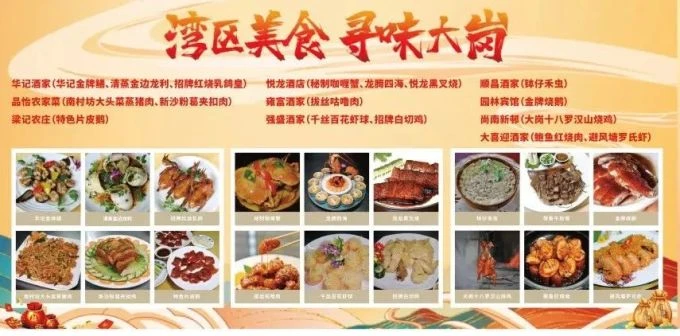
Just before the National Day holiday, I was invited to shoot a food feature called “Dagang’s 18 Signature Dishes” in Nansha’s Dagang Town, Guangzhou. That was the first time I learned about and visited this place — not far from the sea and right next door to Shunde. As a foodie, I fell in love at first bite and solemnly vowed to make a trip there with family and friends. Not long ago, I finally did it! After several days of daily PCR tests and armed with a 24-hour negative result, we hopped into the car and headed out. Back home safe and sound, I just couldn’t contain my volcano-like urge to share, so I decided to write down every detail from those two days — with a sincere wish to recommend it to you.
Guangzhou Nansha Dagang
A Quick Q&A Guide
Why Nansha Dagang?
Let’s take Cash Jiejie as an example: starting from Liurong Road, it’s only about 50 kilometers and 60 minutes by car. From downtown areas like Fangcun, it’s even closer — about 40 minutes. By public transit, take the metro to Panyu Square, then a taxi for roughly 60 yuan.
Food: A land of fish and rice, crisscrossed by waterways and close to the sea, so fresh river and seafood are abundant. Next door to Shunde, where excellent chefs and solid techniques are the norm.
Value: A no-frills small town where everything is affordable and delightful.
Safety: Dagang has a low population density, meticulous pandemic prevention, strict venue-code checking and nucleic acid validity scans. The town is built around the national 3A scenic spot “Shiba Luohan Mountain” (formerly known as Lingshan Mountain), and the air is incredibly fresh!
How much did it cost?
- Three full meals plus one breakfast: around 300 yuan per person.
- Hotel: A room with a private soaking pool cost 450 yuan, a garden-view room 260 yuan. Accommodation per person ranges from 130 to 225 yuan, depending on your style.
- Expressway tolls: About 18 yuan one way; split among a carful of people, it’s almost negligible.
So the total cost is roughly 500 yuan per person for a short getaway bursting with delicious food and pure relaxation!
Can you give a sample itinerary?
This was a two-day, one-night trip: leave the city centre at 10 am Saturday, head back at 2:30 pm Sunday. Self-driving all the way, eating and drinking without a shred of restraint.
Day 1:
10:00 – Depart from the city
11:00 – Arrive at Dagang Huaji Restaurant
13:00 – Check in at Dagang Garden Hotel, a brief siesta
14:30 – Walk to Shiba Luohan Mountain Forest Park, take a stroll
17:30 – Return to the hotel, relax in the private pool, wait for dinner
18:30 – Walk to Qiangsheng Restaurant for dinner
20:30+ – Back to the hotel room for board games and drinks, or head to the hotel’s karaoke room for some fun
Day 2:
09:00 – Morning tea at Hongyun Restaurant inside the Garden Hotel (foodies can wake up for this, or just sleep in)
11:30 – Go to Dagang Market to buy seafood, then have it cooked at Runji Farmhouse while enjoying views of the river
13:30 – Pay respects at Dagang’s “Immortal Temple” (Caishen Miao, the God of Wealth Temple), then head back
Since a light rain began after lunch, we decided to skip the temple and drove back to Dagang Market instead. There, we bought some hairy crabs — plump with bright orange roe — for only 25 yuan each, a spontaneous “shopping stop,” before hitting the road home. We still haven’t visited the God of Wealth Temple, nor tried the Shiba Luohan Mountain roast chicken... plenty of wishes left for next time. After all, there will be many more chances; we’ll definitely return to Dagang.
Now, what’s worth highlighting among the food, accommodation, transport, sightseeing, shopping, and entertainment mentioned above? Let me go through them one by one.
Where to Stay: Dagang Garden Hotel
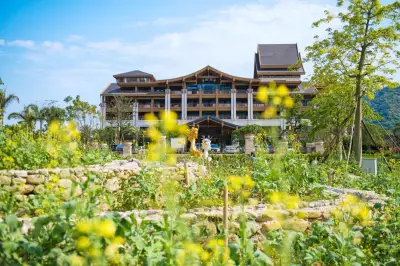
I first learned about this hotel during that food video shoot. A local insider led us winding up the hillside to the hotel’s Chinese restaurant, Hongyun Restaurant. While waiting to film, I caught a glimpse of their courtyard and was instantly transported back to the classical hotels of the late ’80s and early ’90s. I assumed it would be priced like something in downtown Guangzhou, like the Guangdong Yingbin Hotel, but when I checked Ctrip, I was stunned: a SPA king room with a private soaking pool at this price, or a garden-view room with a view of the mountain at this price. I booked it on the spot and promised myself I’d come stay for real.
Right upon entering the Garden Hotel lobby, the imposing vaulted ceiling made an impression. Although I’d carefully studied photos of the room interior beforehand (no chance to peek earlier), my only basic requirement for such an affordably priced hotel was cleanliness.
One of my travel buddies is a seasoned hotelier, and she said: “Before opening the door, my expectation was 50 points; after stepping inside, it shot up to 150.” I especially recommend the garden-view rooms — they were renovated within the last two years. Compared to the older sections of this 30-plus-year-old hotel, these rooms offer a nostalgic classical courtyard ambiance combined with a sleek, clean new Chinese-style aesthetic.
For example, I stayed in a garden-view SPA room with a soaking pool, located on the first floor in Area A. The room isn’t huge, but it’s open, bright, and almost impossible to hide dirt given its white color palette. The layout is well-zoned, with separate areas for washing, showering, and the toilet. Toiletries come in large pump bottles — shampoo, conditioner, and shower gel — plus various small amenities, all complete.
The hotel collaborates with a mattress brand called “Australian Kangaroo King” (there’s even a QR code for the mattress shop in the minibar), and all beds use high-quality latex mattresses. Pillows are a mix of latex and pure cotton, and the linens are densely woven for superb comfort. It’s hard to believe this could be a hotel in a small town, priced between 250 and 450 yuan!
USB ports are conveniently placed beside the bed. Our hotel-expert friend again nailed the description: “I’ve stayed in plenty of trendy hotels costing over 2,000 yuan a night, and many feel all show and no substance. This hotel, by contrast, is practical to the core — almost no superfluous frills, maximising living space while weaving in a ‘less is more’ aesthetic.”
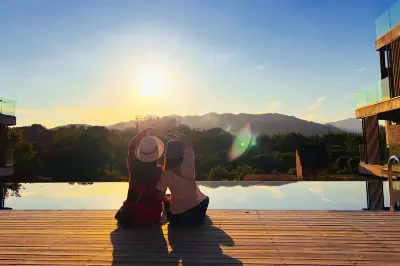
The SPA room comes with a round massage soaking pool, with an inner diameter of about 120–130 cm, big enough for two adults and two kids without any problem! There’s a small backyard with beach chairs and a table. When we entered, the beach chairs were still wet — a sign that room cleaning actually washes them (even if they didn’t wipe them dry, which is a tiny flaw but shows real effort).
At check-in, you’ll receive a water card; swipe it to unlock 800 litres of water. According to a friend who soaked for two straight days, the card lasts about three full soaks, or maybe four if you stretch it — plenty to prune up your skin. I only soaked once myself.
No, it’s not hot spring water! Just good old hot tap water at about 40°C, not scalding, which is exactly why you can lounge in it for ages. While we were soaking, a light rain was falling — pitter-patter, very atmospheric. Next time, I plan to bring some essential oils, bath bombs, or flower petals and make my own spa water.
A lovely touch: every soaking pool comes with cleanser, a brush, and even a high-pressure spray gun. If you’re not totally satisfied with the cleaning, you can just do it yourself — rustic and charming, in an earnestly practical way.
That said, the hotel has only a few SPA room types (about five on this ground-floor side). Apart from the room at the very end (room 6216, though this one has a larger backyard), you might be visible when lounging outside; the others are more private thanks to the terrain.
Eating Without Restraint in Dagang
Morning Tea · Hongyun Restaurant @ Dagang Garden Hotel
Hongyun Restaurant is the hotel’s Chinese restaurant and a venerable, well-known establishment in Dagang. Since residents in a down-to-earth town vote with their feet, arriving at 11 am on a Saturday and finding absolutely no parking spots — the road outside the car park entrance packed with cars — pretty much speaks to its popularity.
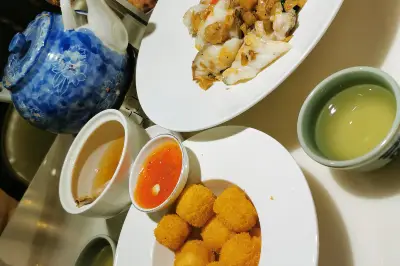
Being hotel guests, we chose to come for its morning tea. It had been ages since I’d had morning tea in a proper tea house! Legend has it they used to serve from dim sum trolleys; perhaps due to pandemic precautions, they’ve now switched to a self-service stamp card system, which is itself a nostalgic sight. This is exactly the ordering method I remember from my teenage years — after the trolley era faded away.
I’d done some “homework” and knew their youtiao (Chinese crullers) were famous. A companion also grabbed a salty doughnut; a fitness fanatic like him said it had been way too long since he last indulged in a breakfast carb-fest! That wave of happiness flattens all your stresses... The youtiao is made in the traditional style using old-dough leavening, soft and pillowy inside, without the tongue-coating astringency of chemical leavening agents.
All the other dim sum were notable too. In an age when most places rely on semi-finished products and fresh handmade dim sum is only found at high prices, everything here shows pure sincerity. I highly recommend the fresh congee! All kinds of ‘raw-rolling’ congee, with a carefully simmered base. With a big-eater teammate who devoured five baskets of dim sum and two pots of congee by himself, we all staggered out, and the final bill came to only 53 yuan per person! I ask you — isn’t that incredible?
You can also choose Hongyun Restaurant for proper meals. Their roast goose is superb — one of “Dagang’s 18 Signature Dishes”!
Main Meal · Qiangsheng Restaurant
This restaurant!! Is one reason I decided to bring family and friends back to Dagang!! Because the food is too delicious!!! I even forgot to take photos of the setting! — It’s that kind of traditional old banquet hall, with a large dining space, big private rooms, and the big ones even have their own bathrooms.
Back to the dishes. Here are the dishes our whole group voted the absolute best, including two from the “Dagang 18” list:
White Cut Chicken: Crispy skin, silky meat, with good chew and a real chicken flavor. Managing the heat so that the bones don’t show any pink yet the meat isn’t dry — truly masterful! Dip it in scallion-ginger paste, unbeatable!
Thousand-Thread Flower-Blooming Prawn Ball: A classic Cantonese dish you rarely see anymore because it’s so labor-intensive. Minced fresh river prawns are formed into balls, then wrapped with thin shreds of spring roll wrapper. Slowly deep-fried in low-temperature oil, each ball has a hollow center that perfectly catches the fresh prawn juices released during frying. First, a shatteringly crisp exterior, then a springy bounce, and finally a burst of juice!
Nanru Pork: A hidden menu item — not on the regular menu, so ask the floor manager; you might be able to order it, 68 yuan per serving. Pork belly is marinated in red fermented tofu paste, then fried, paired with a unique, slightly tart dipping sauce (I suspect there’s smoked plum in it), and served with cucumber, scallion whites, and hot wheat wrappers to bundle it all together. Fascinating, and quite different from the version at the Michelin Bib Gourmand restaurant Xinji.
Roast Goose and Anchovy: Special mention for the steamed anchovy with black olive and minced garlic. The fish has very few bones and incredibly tender flesh!
We also ordered lamb with bamboo shoots, braised beef brisket with radish, kai-lan with ginger juice, and hand-pounded fish balls in superior broth with watercress. Praise for the fish balls: soft, slightly glutinous, with a gentle springiness — a perfect match for the crisp watercress!
When we finished, the floor manager gave us a complimentary house-made pumpkin cake. Inside, a spongy, steamed-cake texture; bottom, a thin crackly layer of caramelized sugar. That explosion of bliss makes it hard to forget this dish or this restaurant.
Because there was both a birthday banquet and a wedding banquet that evening, the restaurant got quite rowdy. To be honest, the food quality slipped a tiny bit compared to my first visit — as anyone in the restaurant business knows, walk-in diners tend to suffer when big events are on — but it still thoroughly amazed my companions who were there for the first time.
Old-school restaurant, old-school service. The floor manager was warm and adorable, happy to chat. We’d called an hour ahead to book, so she reserved the largest 20-person room for us... spacious and novelly thrilling.
Main Meal · Huaji Restaurant
Another decades-old establishment, located right by the river. Several dishes from the “Dagang 18” are on their menu, mainly traditional craft dishes. Here we spotted a long-lost treat: “duck wrap” — a bundle of various cured meats tied together with duck intestines; you can order them individually here. We got three to simmer with watercress, infusing the dish with a rich cured-meat aroma.
The decor is classic Cantonese old-banquet-hall resplendence: gold and glitter. Since we came specifically for the Dagang 18, we ordered two dishes:
Braised Pigeon: Crispy skin, thick flesh, dazzlingly juicy! They use 8-tael pigeons, so they’re especially toothsome. The seasoning is delicate, miles better than those famous chain restaurants.
Huaji Dry-Fried Crispy Eel: Dry-fried eel that’s not at all dry or tough; the fish remains tender. Bite through the crispy shell to reveal snowy white flesh that’s both mildly salty and springy — a multi-layered texture experience.
Beyond these two big plates, we also ordered a Wo Chong (sandworm) pan-fried egg! Richly aromatic, fatty but not fishy, a high-protein little bomb. All you need is to get over the mental hurdle.
Other recommendations: lemon-ribbon ribs ordered by the piece, heavily-spiced marinated goose intestine, their homemade “floor-pan” tofu, and lotus root and mung bean soup with newly-reclaimed lotus root from Xinken. All are solidly made; even if they don’t reach “stunning” levels, they definitely won’t disappoint and will leave an impression.
We admittedly ordered a little too much this meal, but at 85 yuan per person it still shocked everyone around.
Main Meal · Dagang Market + Runji Farmhouse
There are plenty of excellent restaurants in Dagang, but on Day 2, after just drinking morning tea, everyone’s appetites were flagging. While soaking in the hotel pool, we suddenly decided — hey, let’s just have seafood! — Yep, doesn’t sound like we’d eaten too much at all.
So we asked a local Dagang friend, Brother Liang. He advised: if we wanted an economical meal, buy the seafood ourselves at the market, then take it to a farmhouse to cook. So we split into two teams. One headed to Dagang Market: Brother Liang recommended “Shujie Seafood Stall” there. We bought 3 jin of razor clams, 10 extra-large hairy crabs, and 1.5 jin of spotted snails — all for 300 yuan! Then, led by Sister Shujie, we also bought a few blue crabs and a jin of wild large river prawns. With roughly 600 yuan worth of seafood in hand, we regrouped with the team already at Runji Farmhouse, who had been ordering home-style dishes.
Runji Farmhouse is right beside the Jiaomen Waterway, with its own little fish pond and lotus pond — easy to imagine how beautiful it must be in summer. Even in winter, you can sit beside the woods and lotus pond (even without blossoms) and enjoy hotpot, which is quite charming.
First, a word about Runji’s cooking technique. Apart from the black bean sauce razor clams, which were a little scorched perhaps because the wok hadn’t been properly cleaned, everything else was up to standard. I highly recommend the wild river prawns, which you can’t always find — not the tiny dried-shrimp kind, but genuinely impressive large river prawns, sweet and crisp, utterly sublime! And of course, the hairy crabs were stunning — enough that after the meal some in the group drove straight back to Dagang Market to buy more from Sister Shujie.
Compared to the seafood processing, Runji’s country-style dishes were truly outstanding! Large-plate steamed chicken: sweet, with crispy skin. Lamb belly clay pot: thoroughly Cantonese-style, rich sauce without any gamey flavor. And the braised goose: the mint leaf on top was a stroke of genius! I usually complain goose meat is too dry and tough, but here it was incredibly tender, smooth, and springy — the best I’ve ever had! After the meal, they even served a complimentary Lingnan specialty: real turtle jelly! Not the grass-jelly imitation, but genuine guilinggao — its bittersweet taste was perfect for soothing dryness and cooling down.
A seafood feast plus farmhouse fun, including food purchases, came to just 96 yuan per person!!!
Take a Leisurely Hike at Shiba Luohan Mountain
One of our companions actually grew up near Shiba Luohan Mountain (known in ancient times as Lingshan Mountain). While hiking on the afternoon of Day 1, he even shared stories about how some of his ancestors once rested on this mountain after passing away before their family moved away.
Shiba Luohan Mountain is a national 3A scenic area, free to enter. Just follow the pandemic prevention rules posted at the gate. Since our hotel was only 300 meters on foot from the North Gate of the scenic spot, we chose to enter via the main gate (2 km away; you can drive, with free parking) and exit from the North Gate, so we didn’t have to retrace our steps.
Because the mountain is quite vast, it’s divided into several themed zones. For example, the North Gate area has various flower and fruit woodlands, while the central-south section features the Shiba Luohan Pagoda. As you walk, you’ll come upon a few small ponds, serene and lovely.
Eventually, we reached the namesake Shiba Luohan area — the Shiba Luohan Pagoda. Seven stories high, you can climb to the top on foot. From up high, enjoy a panoramic view of Dagang’s beauty, with a gentle breeze making it all very pleasant. The day we went was overcast, and later a fine drizzle set in; but empty hills after fresh rain bring their own slow-paced charm.
From the pagoda’s foot, looking back along the path we’d come, we saw a lively family, with lush green all around. Life surely should be lived with more cheer! Go, Guangzhou!
Suggested hiking time: 2–3 hours.
And that’s pretty much my Dagang trip. Actually, when I vacation on my own, I’m usually lazy and just snap pictures with my phone. But the experience of shooting that food feature in Dagang left a deep impression — I felt it deserved more serious photos and a proper write-up to do justice to all these delicious dishes. When I sat down to draft this, I originally planned to jot down a few impressions with some photos, maybe around a thousand words. But the more I wrote, the more I wanted to say, and now it’s hit 5,000 characters...
If you’ve read this far, truly thank you for your patience. I hope you, too, will get a chance to explore Nansha Dagang, because it really is so worth it! After all, Nansha is now a land of promise under the spotlight of national policies — a place with a bright future.
This extra-long post was a labour of love, with perhaps a few oversights or typos I didn’t catch in time. If anything caught your eye or raises questions, feel free to tell me in the comments!