Guangdong Travel | Explore a Different Flower City, Discover Authentic Guangzhou
For me, Guangzhou has always been a city rich in heritage and vibrant energy. Whether through the multiple roadshows here or the days of cultural exploration I’ve experienced recently, I can truly feel its unique charm. Now, let me share a springtime Guangzhou with you from a tourist’s perspective.
Many outsiders know Guangzhou as the “City of Rams,” but it actually has another nickname: “Flower City.” This isn’t just because blossoms bloom all year round in this happy city of lush flowers, but also because as early as the Han Dynasty, the locals developed the traditions of planting, admiring, cherishing, and protecting flowers. With spring’s arrival, Guangzhou erupts in a riot of color. The city boasts ten top flower-viewing spots, and I visited one of them—the Sun Yat-sen Memorial Hall—to soak in the beautiful spring scenery.
The Sun Yat-sen Memorial Hall sits on Dongfeng Middle Road in Yuexiu District, Guangzhou. Originally, it was the presidential office when Mr. Sun Yat-sen served as Provisional President in 1921. Unfortunately, it was razed to the ground by artillery fire from the rebel Chen Jiongming in 1922. The memorial hall we see today was funded by the people of Guangzhou and overseas Chinese to commemorate Mr. Sun. Standing tall in front of it is a recast bronze statue of Mr. Sun, five meters high—a landmark of the complex.
Designed by the renowned architect Lü Yanzhi, the hall blends traditional Chinese palatial style with modern Western planar design. It features white granite bases and steps, light cyan marble dados, and cream-colored tile-clad walls. Four double-eaved hip-and-gable pavilions support the huge octagonal spire at the center. The entire structure is imposing and magnificent, one of Guangzhou’s most iconic buildings.
The memorial hall also serves as a major venue for large-scale gatherings and performances. The interior auditorium is vast, with 4,729 seats on two levels in front of the stage, supported without obstruction by eight massive pillars concealed in the walls. It feels extraordinarily spacious. Look up, and you’ll see an exquisitely crafted dome. Encircling the seating area is a museum that tells the story of Mr. Sun’s life and explains the hall’s internal structure.
Beyond the building itself, the flowers surrounding it are a highlight. Blossoms of various shapes and colors are scattered in every corner, competing in beauty when spring arrives, full of vitality.
Among all the flowers, one kapok tree deserves special mention. As the city flower of Guangzhou, kapok is known to everyone, yet the oldest kapok tree in the city stands right here inside the memorial hall. A record from the Ming Dynasty describes it: “The kapok is like a ten-zhang coral, its blossoms redder than morning clouds. All trees in the south are aflame, yet none match the loveliness of the climbing branch.” Each spring, this tree glows fiery orange-red, a spectacular sight.
As our country develops rapidly and high-rises spring up like mushrooms, somewhere in the city’s corners, places carrying the memories of older generations still remain. The so-called “Xiguan” in old Guangzhou is one such area—always evoking nostalgia and carrying too much of the past. Yongqing Fang is precisely the old Xiguan site, rich in Guangzhou’s urban cultural heritage.
Yongqing Fang lies along Enning Road in Liwan District, Guangzhou. It connects to the landmark Shangxiajiu shopping street to the east, and to the south lies another popular tourist destination, Shamian. Take Metro Line 1 or 6 and get off at Changshou Lu, Huangsha, or Ruyifang stations—all within walking distance. Enning Road was built in 1931, so it has nearly a century of history. Here, you can see the roots of Guangzhou as a thousand-year commercial capital and experience the essence of Lingnan culture.
Walking into any alley, you’ll see clusters of flowers—truly worthy of the “Flower City” name. The residential houses scattered along the lanes reveal many authentic “Guangzhou flavors,” such as the distinctive “tanglong” door. This wooden frame with a dozen horizontal logs served as both an ancient anti-theft door and a playground for children to climb on, while still allowing ventilation. One can’t help but admire the wisdom of the ancients.
However, with urban development, the once-prosperous Xiguan lost its hustle and bustle. To preserve its cultural heritage and continuity, the restoration and protection of Yongqing Fang became urgent. Through a “micro-renovation” approach, the old streets have been revitalized. On the existing urban fabric of lanes and neighborhoods, the arcade buildings and former residences of notable figures in Xiguan have been preserved and restored. It’s not just a nostalgic symbol for locals but also a great spot for visitors to take photos.
The first thing restored was the Enning Road arcade. It uses traditional Guangzhou architectural elements, especially the characteristic Xiguan features like grey bricks, Manchu windows, tanglong doors, and granite slab roads, recreating the look of the early Republic era. Praised as the “most beautiful arcade in Guangzhou,” it runs through Yongqing Fang as the main thoroughfare, with many buildings lining both sides.
Next is the Cantonese Opera Art Museum, built to protect and pass on Guangdong’s only UNESCO Intangible Cultural Heritage—Cantonese opera. Designed as a Lingnan-style garden compound, it features six courtyard clusters around the central Wansha Lake, connected yet independent. As you learn about the history and development of Cantonese opera, you can also enjoy regular Cantonese opera and song performances on the water stage, Guangfu Tai.
Of course, Xiguan produced many notable figures. Bruce Lee’s ancestral home is here too—it was the residence of his father, Lee Hoi-chuen, a famous Cantonese opera star. He rose to fame in the 1930s performing “ragged clothes” roles and was ranked among the “Four Great Clowns” of Cantonese opera in the 1940s. A special exhibition on Bruce Lee’s ancestral home now stands here, retaining the typical architectural style of a grand Xiguan house and detailing his life and film career.
Other historical buildings include the former residence of Zhan Tianyou, the Golden Sound Cinema, and the Bahe Guild Hall. Modern elements like boutique hostels, cultural experience shops, specialty dining, creative offices, and art performance spaces have been introduced, making it a tourism area where history and contemporary life blend harmoniously.
If you don’t want to rush between attractions during your trip to Guangzhou but prefer to experience the “Cantonese slow life,” you must visit Shamian. This sandbank island formed by the Pearl River was once called “Shicuizhou” (Pick-up Emerald Isle). It’s flat, shaded by over 150 ancient trees, and has been a key trading port and sightseeing spot since the Song, Yuan, Ming, and Qing dynasties—a truly beautiful environment.
Thanks to its charm, over the past century, more than ten countries, including Britain, France, the United States, and the Soviet Union, set up consulates on Shamian. Nine foreign banks and more than forty foreign firms operated here, such as Swire (British), Standard Oil (American), Mitsubishi (Japanese), HSBC, and Standard Chartered—financial giants still active today. The Canton Customs Club, Guangzhou Club, and other institutions were established, along with churches, a post office, a hospital, hotels, and residences. In total, over 150 well-preserved buildings remain, their unique European architectural styles earning Shamian the nickname “Little Europe.” Simply find any wall, and you’ll snap a photo with European flair.
It’s worth noting that while these buildings were mostly built in the late 19th century with Western styles, they are far from uniform. They showcase a variety of styles: Neo-Baroque, Gothic Revival, arcade, Neoclassical, and Sino-Western blends. The Neoclassical style—with a rusticated base, classical columns and their combinations as the main body, and fine decorative details—is particularly prominent. Examples include the Taiwan Bank at 26 Shamian Avenue, HSBC at 54 Shamian Avenue, the Banque de l’Indochine at 18 Shamian South Street, and the British Anglican Church at 60 Shamian South Street.
A prime Gothic Revival example is the Notre Dame de Lourdes Catholic Church at 14 Shamian Avenue. Although structurally a post-and-beam building, it mimics Gothic forms. The gables of the main doors and windows, plus the small spires at the four corners of the towers, reflect the church’s aspiration to reach “heaven.” The main hall, priest’s house, convent, and Grotto of Our Lady are largely intact. Its ornate aesthetics make it a favorite spot for photography and wedding shoots, arguably one of the most popular places on the island—it’s common to see queues for photos.
Shamian’s architectural diversity extends far beyond: the Guangdong Foreign Affairs Museum at 20 Shamian South Street is a Baroque building, originally the French Consulate during the Republic era, now China’s first provincial foreign affairs museum displaying over 200 precious gifts from 122 sister provinces and states worldwide. There’s also the British Ice Factory in early modernist style, the Soviet Consulate in British Victorian style, and the Customs House in European rural castle style—making the island a veritable open-air architectural museum.
Shamian is free to enter. Get off at Metro Huangsha Station Exit F, then walk over to Cultural Park Station for a full loop. Along the way, you’ll see many visitors drawn here for photos. Shamian has been listed as one of the “Seventh Batch of 20th-Century Chinese Architectural Heritage Sites,” a must-visit destination in Guangzhou.
Times have changed. Most of these buildings have lost their original functions but survive in new roles, witnessing the transformations of Guangzhou’s modern history.
As one of China’s earliest cities to open up to the outside world, Guangzhou saw intense clashes between Chinese and Western cultures, resulting in many exquisite buildings. Whether you’re a local or a tourist, there’s one place you probably won’t miss: the Sacred Heart Cathedral (Shishi).
Located at 56 Yide Road, Yuexiu District, it is the most magnificent and distinctive cathedral in the Guangzhou Catholic diocese. Since its foundation stone was laid on June 18, 1863, it has been nearly 160 years. Despite several renovations, the exterior remains perfectly preserved and gorgeously ornate. It is also one of China’s key national cultural relic protection sites.
Among the three main branches of Christianity, Catholicism boasts countless church buildings, yet the Sacred Heart Cathedral in Guangzhou is a gem even on a global scale. Why? First, the twin soaring spires on the front facade reach 58.5 meters from the ground to the tip—a classic feature of Gothic cathedral architecture. The spires are hollow octagonal cones, symbolizing the ascent to heaven and conversion to God, with a three-story structure below. This makes it one of China’s most majestic surviving twin-spire Gothic buildings.
Second is the material. The name “Shishi” (Stone House) hints at something special: although the exterior looks like ordinary bundled columns, all walls and pillars are built from granite blocks. You can imagine the enormous labor and precision involved. Thus, it is one of only four all-granite Gothic cathedrals in the world, the other three being Notre-Dame de Paris, Westminster Abbey, and Cologne Cathedral.
The cathedral’s construction was commissioned by the French church, with two French architects designing it after the St. Clotilde Basilica in Paris. Naturally, it carries a French flair, but look closely and you’ll spot many Chinese elements: the roof drainage outlets are carved as Chinese lions, the floor tiles are the large Guangdong-style bricks instead of the originally planned stone, and even the main door is decorated with Guang-style woodcarving. Reportedly, many traditional Chinese techniques were used during construction—for instance, sticky glutinous rice-lime mortar instead of cement, and iron rods threaded through holes drilled in the double-layered vault stones. The result is a cathedral that blends Chinese and Western beauty.
Beyond architecture, as a tourist attraction, the Sacred Heart Cathedral is well worth visiting. Admission is free, and it’s easily accessible via Metro Line 6, Yide Road Station Exit A, or multiple bus routes. I’ve heard that the 2035 Guangzhou urban master plan proposes creating three major city living rooms, one of which will center on the Sacred Heart Cathedral Square, with comprehensive upgrades. I’m looking forward to that day.
I’m delighted to have been a guest at this “Guangzhou Super Tourism Destination Annual Gala” and to share springtime Guangzhou with you. For me, Guangzhou has always been a city rich in heritage and vibrant energy. Whether through the multiple roadshows here or the days of cultural exploration I’ve experienced recently, I can truly feel its unique charm. The event also gave me the opportunity, from a tourist’s perspective, to share my view of Guangzhou with the guests.
The gala’s theme was “Guangzhou Welcomes You – Flowering Guangzhou, Blooming Towards the Sun,” focusing on flower viewing. Ten flower-viewing routes were recommended, covering many spots across the city: tulips, purple trumpet trees, and bauhinia at Baiyun Mountain Scenic Area; kapok at Sun Yat-sen Memorial Hall; camellias, candy corn flowers, peonies, and orchids at the South China National Botanical Garden; cherry blossoms, peach blossoms, and yellow trumpet trees at Shimen National Forest Park; lotuses and peach blossoms at Panyu Lianhua Mountain Tourist Area; magnolias, bauhinia, poppies, and cherry blossoms at Haizhu National Wetland Park; candy corn flowers at Tianlu Lake Forest Park; yellow trumpet trees at Zhudong Village in Huadu; cherry blossoms at Conghua Tianshi Cherry Blossom Park; and peach blossoms and cherry blossoms at the Eighteen Arhats Mountain Forest Park in Nansha.
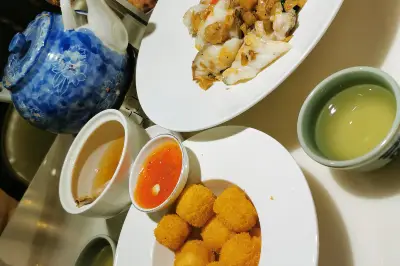
Additionally, the gala showcased Guangzhou’s food culture and intangible cultural heritage. “Food is the paramount necessity of the people.” Cantonese cuisine, one of China’s eight great culinary traditions, is exceptionally distinctive, and as the gathering place for Cantonese cuisine, Guangzhou offers countless delicacies: char siu buns, shrimp dumplings, pineapple buns, chicken feet, lotus leaf sticky rice, claypot congee, and more—all worth trying.
On the intangible cultural heritage front, “Cantonese embroidery,” one of China’s four famous embroidery styles, was a highlight. With a history spanning over a thousand years, it dates back to the Tang Dynasty, when a record in “Du Yang Zabian” by Su E mentions a young girl from Nanhai who was incredibly skilled, able to embroider the entire Lotus Sutra on a foot of silk. Cantonese embroidery features a wide range of subjects, rich colors, and masterful use of light and shadow. Portrait embroidery and bird-and-flower embroidery are its specialties, and it is recognized as a national-level intangible cultural heritage.
I also enjoyed a spectacular lion dance performance. Guangdong lion dance is another national intangible cultural heritage, but this troupe was special—it was an all-female lion dance team. Their performance was less rugged but more agile. Who says women can’t match men? They were equally brilliant, proving that women aren’t inferior.
Of course, Guangzhou has far more to offer. The iconic Canton Tower (nicknamed “Slim Waist”) and the historic Huangpu Military Academy site are both worth visiting. At night, you can take a Pearl River cruise to experience the city’s modern prosperity. I won’t elaborate on everything here. Flowering Guangzhou, blooming toward the sun—this spring, Guangzhou awaits your discovery.