First-time Guilin Travel Guide - All Dry Goods
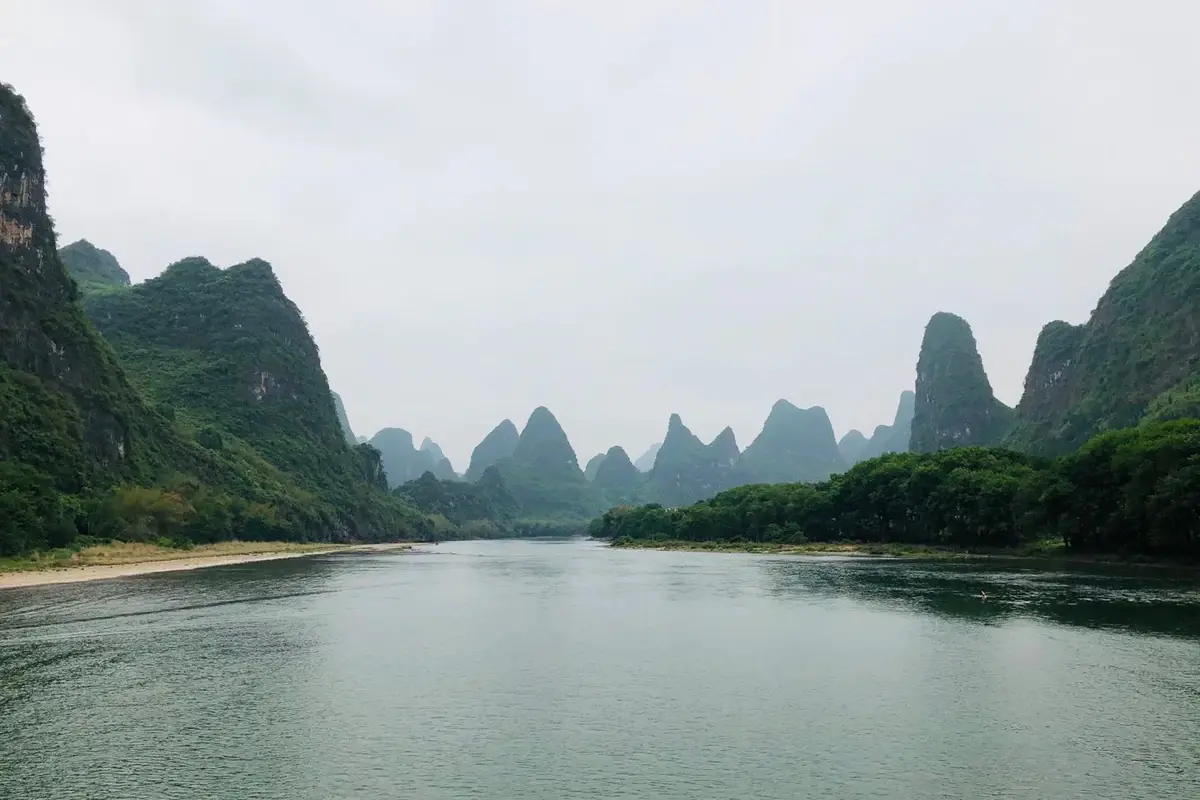
The saying goes, 'Guilin's landscape tops those of the world.' For years I longed to visit Guilin, and finally made it happen during this Qingming holiday. Before the holiday, I stumbled upon round-trip high-speed train tickets from Chengdu to Guilin. Without time to plan, I took off on a spontaneous trip. The high-speed train from Chengdu to Guilin takes about 6-7 hours one way. Boarding around noon, you arrive before dinner—quite convenient. Guilin Station is in the city center, and a Didi or taxi for about 10 yuan can get you to most downtown destinations. I stayed at a hotel near the Two Rivers and Four Lakes area, which made it easy to get anywhere. Let me first share the practical tips, and I'll describe the scenery later. The guide is mainly divided into two parts: the Li River cruise and downtown Guilin. Starting with the Li River section. Since I didn't prepare in advance, I chose the most hassle-free option: the full Li River cruise. It turned out to be the best choice for a first-time visit. I recommend booking a boat from a cruise company. You can find them on Ctrip—the three-star and four-star cruise ships. They seem a bit pricey, but the prices are clear and transparent, saving time and worry. The cruise lasts 4 hours. The four-star boat includes a transfer to the pier and a lunch, which is also convenient. The morning transfer service is a must, because the boarding pier is very far from the city center—about 10-20 kilometers. There's also a VIP ticket, 50 yuan more, for seats at the front of the upper deck. It doesn't differ much from the back of the upper deck, so choose as you like. During the cruise, there's a photography service: 100 yuan for 8 photos, and 10 yuan for each extra. I think it's decent—the photographers are skilled, and it's convenient for group photos. In the end, you can get all the photos for about 200 yuan. Thanks to modern technology, you get a printed album right after disembarking, and the digital version is available by scanning a QR code. There are also 'Li River Highlight' tours that only cover a short segment of the river, with the rest of the journey by bus—which involves a lot of transfers and trouble. Plus, those highlight tours use small bamboo rafts, which can only start after the cruise ships have passed, usually after noon. So I still recommend taking the full cruise. Let me emphasize the post-cruise itinerary. I only learned the day before boarding that the ticket is one-way: after disembarking in Yangshuo, you need to return to Guilin on your own. We didn't plan to stay overnight in Yangshuo, so we had to take a shuttle bus back to Guilin that same day. Key point: The shuttle buses from Yangshuo to Guilin depart from Yangshuo Bus Terminal. The last bus is at 6:00 PM, taking about 70 minutes and costing 35 yuan. It arrives at Guilin South Bus Station, from where you need to take a taxi into the city. The cruise docks at Yangshuo's Shuidongmen Pier, where Yangshuo West Street is located. If you want to explore West Street, it's just a 500-meter walk from the pier. Because we needed to return to Guilin and weren't interested in West Street, we directly took a sightseeing bus to Yangshuo Bus Station first to buy return tickets, then headed to the Ten-Li Gallery. The pier is about 2-3 kilometers from the station, and sightseeing buses are available for 15 yuan per person. After buying return tickets at the main bus station, walk a few minutes ahead to Fengming Bus Station, which is the transfer point for the Ten-Li Gallery and Yulong River. There's a sightseeing bus every half hour into the scenic area—currently free. Alternatively, you can rent an e-bike or bicycle. Since we were short on time, we took the sightseeing bus. We calculated the timetable: we took the 2:30 PM bus in and planned to return by 4:30 PM. It was very convenient. During the Qingming holiday, the Ten-Li Gallery wasn't too crowded, and the scenic area's transport capacity was more than sufficient. The sightseeing bus has a transfer point at Gongnong Bridge. If you want to go rafting on the Yulong River, you change buses there—also free for now. After riding the full route, we decided to fly a drone over Gongnong Bridge. The most scenic part of the Ten-Li Gallery is here, and the drone's perspective offered a different view. Now for downtown Guilin. As the city emblem, Elephant Trunk Hill is a must-see. I initially planned to photograph it up close with a drone, but the wind was strong those days, so I didn't dare fly over the river. I kept looking for a better viewing spot. Not very interested in other attractions, I decided to focus only on Elephant Trunk Hill. In the end, I went to Zizhou Park, which is across the river from Elephant Trunk Hill. It offers the best full view of the hill. The park also has a large lawn. I flew the drone there—though I didn't get a close-up of the trunk, I captured a magnificent view of Guilin's two rivers, which was also great. When it comes to food in Guilin, it can be roughly divided into rice noodles and everything else. For the rest, you can try beer fish—just a taste. The local specialties aren't very special, so there's no need to buy them deliberately. I was surprised that as a long-established tourist city, the refrigerator magnets here are so ugly—full of 'Yiwu feel,' very careless. With such a great resource as Elephant Trunk Hill, they haven't produced a distinctive magnet. Overall, I feel that the essence of Guilin's tourism lies in the Li River, with Elephant Trunk Hill as a bonus. That's enough. Note: Although this was my first time in Guilin, I only chose the Li River, Yangshuo's Ten-Li Gallery, and downtown's Elephant Trunk Hill. I decisively skipped Yangshuo West Street, karst caves, and various shows—because I'm genuinely not interested in those. So overall, I had a good experience. After returning, I heard many complaints about Guilin tourism—various problems and scams that spoiled a wonderful trip. I completely understand. Travel experiences vary greatly from person to person. Apart from accumulating travel know-how, choosing what suits you best is the most effective way to avoid pitfalls.


![Mountains and Waters Meet Again [Guilin Yangshuo] Let's Rock the Boat of Friendship](/img/624178c28a221adb_s.webp?src=https%3A%2F%2Fdimg04.c-ctrip.com%2Fimages%2F0104n120009cnhkrdD720_W_320_0_Q80.jpg)


