Encountering the Beautiful China, Experiencing Poetry and the Distant Horizon - Walking the Motherland Series Part 5: Guangxi Chapter (1) Longji Rice Terraces
Encountering the Beautiful China, Experiencing Poetry and the Distant Horizon - Walking the Motherland Series Part 5: Guangxi Chapter (1) Longji Rice Terraces
Guangxi - Longsheng - Longji Rice Terraces
Guangxi - Longsheng - Longji Rice Terraces
Guangxi - Longsheng - Longji Rice Terraces
Guangxi - Longsheng - Longji Rice Terraces
Guangxi - Longsheng - Longji Rice Terraces
Guangxi - Longsheng - Longji Rice Terraces
Guangxi - Longsheng - Longji Rice Terraces
Guangxi - Longsheng - Longji Rice Terraces
Longji Rice Terraces are located in Longsheng Various Nationalities Autonomous County, Guilin City, Guangxi. They are a large-scale group of terraced fields in the Guilin region, about 80 kilometers from Guilin city and over 20 kilometers from Longsheng county town. Here lie several ancient ethnic minority villages, inhabited by the Zhuang and Yao peoples. Famous villages are Ping'an Village, Jinkeng Dazhai, Ancient Zhuang Village, and Huangluo Yao Village.
Longji Rice Terraces were first built in the Yuan Dynasty, took shape in the Ming Dynasty, and were completed in the early Qing Dynasty, with a history of nearly 700 years. They embody the wisdom and strength of the local people in understanding nature and building their homeland.
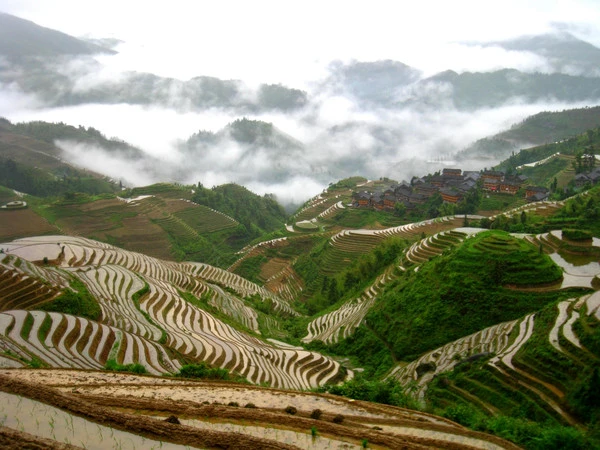
The highest altitude of Longji Rice Terraces is 1,180 meters, the lowest is 380 meters, with a vertical drop of as much as 800 meters. They are like linked chains and ribbons, spiraling from the foot to the top of the mountain. Small hills resemble conches, large hills like towers, layered and staggered. Viewed from above, the graceful curves of the terraces, one by one, line by line, either parallel or intersecting, winding like spring conches, draped in mist like cloud towers, display a breathtaking beauty of curves. Their lines flow like clouds and water, natural and smooth; their scale is magnificent and imposing, earning them the reputation of 'the crown of world terraced fields'.
Guangxi - Longsheng - Longji Rice Terraces
Guangxi - Longsheng - Longji Rice Terraces
Guangxi - Longsheng - Longji Rice Terraces
Guangxi - Longsheng - Longji Rice Terraces
Guangxi - Longsheng - Longji Rice Terraces
Guangxi - Longsheng - Longji Rice Terraces
Guangxi - Longsheng - Longji Rice Terraces
Guangxi - Longsheng - Longji Rice Terraces
The main developed scenic areas of Longji Rice Terraces include Ping'an Zhuang Terraced Fields, Longji Ancient Zhuang Village Terraced Fields, and Jinkeng Red Yao Terraced Fields.
When visiting Longji Rice Terraces, Ping'an Village is a classic destination, with earlier tourism development and more complete facilities for food, drink, and entertainment. The terraces are mostly composed of small plots, with a quiet and beautiful scenery. In autumn when crops ripen, a golden expanse appears, making the autumn terraces especially beautiful. The viewing platforms in the scenic area include the unique landscapes of 'Nine Dragons and Five Tigers' and 'Seven Stars Accompanying the Moon.' Here, 'Nine Dragons' refer to nine small hills separated from the main dragon vein of Longji, and 'Five Tigers' refer to five slightly raised hills. Both 'Nine Dragons' and 'Five Tigers' are surrounded by terraces. 'Seven Stars Accompanying the Moon' refers to seven small hillocks left from the original field construction, like seven little stars accompanying the moon-like terraces.
Guangxi - Longsheng - Longji Rice Terraces
Guangxi - Longsheng - Longji Rice Terraces
Guangxi - Longsheng - Longji Rice Terraces
Guangxi - Longsheng - Longji Rice Terraces
Guangxi - Longsheng - Longji Rice Terraces
Guangxi - Longsheng - Longji Rice Terraces
Guangxi - Longsheng - Longji Rice Terraces
Guangxi - Longsheng - Longji Rice Terraces
Longji Ancient Zhuang Village is one of the ancient villages with a long history in the scenic area, dating back to the Wanli period of the Ming Dynasty. Due to poor transportation and late development, it retains original terraced field landscapes, and the traditional stilted wooden houses (ganlan-style) distributed along the ridge, authentic and original, form a unique scenery.
Guangxi - Longsheng - Longji Rice Terraces
Guangxi - Longsheng - Longji Rice Terraces
Guangxi - Longsheng - Longji Rice Terraces
Guangxi - Longsheng - Longji Rice Terraces
Guangxi - Longsheng - Longji Rice Terraces
Guangxi - Longsheng - Longji Rice Terraces
Guangxi - Longsheng - Longji Rice Terraces
Guangxi - Longsheng - Longji Rice Terraces
At Jinkeng Red Yao Terraced Fields, besides the magnificent terrace scenery, the long hair of Red Yao girls is another beautiful sight. When touring, you can choose to go up the mountain along the stone slab path, first to the 'Thousand-Layer Heavenly Ladder' viewing platform to see the layered terraces stacked up to the clouds like a heavenly ladder, very spectacular. Continuing upward, there is the 'Xishan Shaole' viewing platform, where you can overlook the panoramic view of the terraces, magnificent. If you want to go to the 'Golden Buddha Summit' viewing platform to see the magical scene of the whole mountain sitting like a Maitreya Buddha, you need to take the cable car directly from the Jinkeng Dazhai at the foot of the mountain.
Guangxi - Longsheng - Longji Rice Terraces
Guangxi - Longsheng - Longji Rice Terraces
Guangxi - Longsheng - Longji Rice Terraces
Guangxi - Longsheng - Longji Rice Terraces
Guangxi - Longsheng - Longji Rice Terraces
Guangxi - Longsheng - Longji Rice Terraces
Guangxi - Longsheng - Longji Rice Terraces
Guangxi - Longsheng - Longji Rice Terraces
Watching sunrise and sunset over the terraces is a must for many visitors, and even many photography enthusiasts come specifically for the sunrise and sunset. In Jinkeng Red Yao Terraced Fields, there are three sunrise and sunset viewing spots: the 'Xishan Shaole' viewing spot, which is farther away but has a wider view, great for both sunrise and sunset, and many promotional videos of Longji Rice Terraces are filmed here; the 'Thousand-Layer Heavenly Ladder' viewing platform is closer to the foot of the mountain, where you can see Yao villages and feel the integration of humanity and nature, suitable for sunset; 'Golden Buddha Summit' is the spot for shooting sunset. Because it is far and the mountain road is difficult, not many people used to come here for photos. In recent years, a cable car has been opened from the Jinkeng Dazhai scenic area entrance directly to Golden Buddha Summit, making it much more convenient for photography.
Guangxi - Longsheng - Longji Rice Terraces
Guangxi - Longsheng - Longji Rice Terraces
Guangxi - Longsheng - Longji Rice Terraces
Guangxi - Longsheng - Longji Rice Terraces
Guangxi - Longsheng - Longji Rice Terraces
Guangxi - Longsheng - Longji Rice Terraces
The scenery of Longji Rice Terraces varies with the seasons. Mid-April to mid-May: the terraces start to be filled with water for spring plowing, and the water reflects the mountains and clouds beautifully, suitable for shooting sunrise and sunset. Mid-May to mid-June: just after transplanting rice seedlings, the scenery is picturesque. Mid-July: rice is just growing, a lush green expanse. Around Mid-Autumn Festival: rice ripens, a golden expanse. When it snows in winter: there are only one or two snowfalls each year, and the terraces in snow are even more distinct, but it's a rare encounter.
Guangxi - Longsheng - Longji Rice Terraces
Guangxi - Longsheng - Longji Rice Terraces
Guangxi - Longsheng - Longji Rice Terraces
Guangxi - Longsheng - Longji Rice Terraces
Guangxi - Longsheng - Longji Rice Terraces
Guangxi - Longsheng - Longji Rice Terraces
1. Come to Longji Rice Terraces from mid-April to mid-May, when the terraces are filled with water, and the lines and contours are very clear, presenting magnificent scrolls before people. Around Mid-Autumn Festival, there is a golden harvest scene all over the mountains, also worth seeing.
2. The roads to Longji Rice Terraces are almost all winding mountain roads. During peak season, there is considerable traffic, so self-driving needs special attention to safety. Many mountain paths in the scenic area are stone slab roads, very difficult to walk. Only bring a small amount of luggage up the mountain, never bring a suitcase, it's too inconvenient.
3. There are villagers who use back baskets to help tourists carry small luggage up the mountain. It is a good choice to let them help carry some luggage and guide the way. If you stay directly at a homestay or family inn on the mountain, the terraces are right at your doorstep, very convenient for morning and evening viewing and photography (the terraces are most beautiful at dawn and dusk).
4. Visiting Longji Rice Terraces generally takes 2 to 3 days. One day for Ping'an Zhuang Terraced Fields scenic area (including Longji Ancient Zhuang Village Terraced Fields); one day for Jinkeng Red Yao Terraced Fields scenic area, etc., staying one night at each of the two scenic areas.
5. The distances between various scenic spots within the area are far, and there are many forks in the road. It is easy to get lost if you walk on your own. You can spend a little money to hire a villager as a guide to show the way, which will make visiting and viewing much more convenient, and you won't miss some beautiful sights along the way.
Guangxi - Longsheng - Longji Rice Terraces
Guangxi - Longsheng - Longji Rice Terraces
Guangxi - Longsheng - Longji Rice Terraces
Guangxi - Longsheng - Longji Rice Terraces
Guangxi - Longsheng - Longji Rice Terraces
Guangxi - Longsheng - Longji Rice Terraces


![Mountains and Waters Meet Again [Guilin Yangshuo] Let's Rock the Boat of Friendship](/img/624178c28a221adb_s.webp?src=https%3A%2F%2Fdimg04.c-ctrip.com%2Fimages%2F0104n120009cnhkrdD720_W_320_0_Q80.jpg)


